
In less than a decade, Blinkit transformed from a struggling online grocery platform into India’s quick commerce leader. What began as Grofers in 2013 evolved into a brand that changed urban consumption habits, turning “instant delivery” from a luxury into an expectation. Today, Blinkit is not just a delivery app. It is a symbol of India’s fast-moving digital economy, aggressive execution, and changing consumer psychology.
The company’s journey reflects a mix of reinvention, operational risk-taking, smart branding, and relentless focus on customer convenience.
The Early Days: Solving India’s Grocery Problem
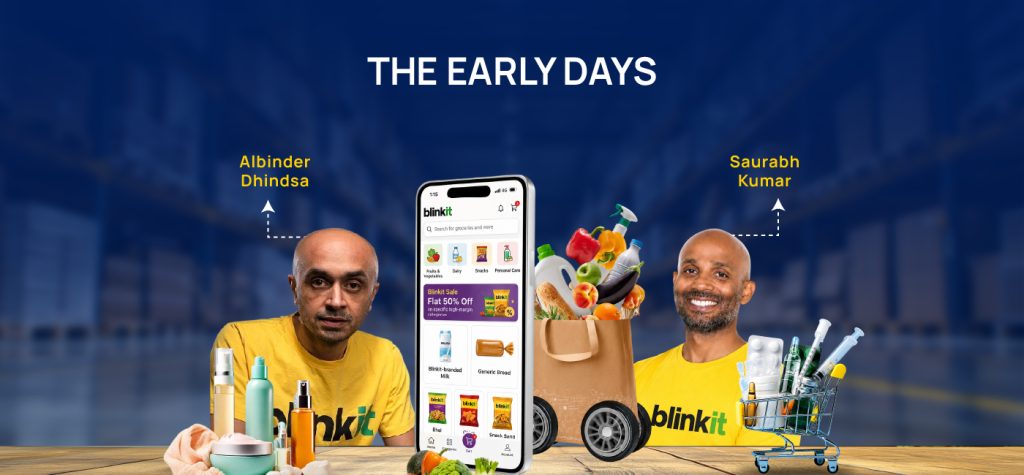
Blinkit was founded in 2013 by Albinder Dhindsa and Saurabh Kumar under the name Grofers. At the time, India’s e-commerce market was still dominated by electronics and fashion. Grocery delivery was considered difficult because of thin margins, supply chain complexity, and consumer dependence on neighborhood kirana stores.
Yet the founders identified a major urban problem: people hated spending time buying daily essentials.
The original Grofers model focused on scheduled grocery deliveries. Consumers could place orders online and receive products later in the day. While the idea attracted attention and investor funding, scaling the business was difficult. Operational costs were high, customer loyalty was low, and competition intensified.
The company realized that convenience alone would not create a breakthrough. Speed would.
The Big Pivot That Changed Everything
The turning point came during the pandemic era when online grocery adoption surged across India. Consumers no longer wanted next-day delivery. They wanted essentials instantly.
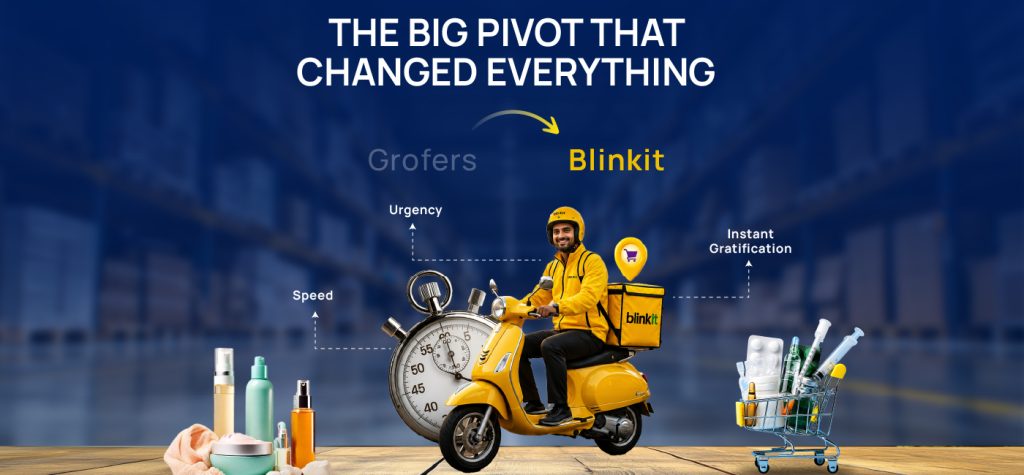
Grofers responded by rebranding itself as Blinkit in 2021. The new name symbolized speed, urgency, and instant gratification. The company promised deliveries in minutes instead of hours.
This was more than a cosmetic rebrand. It was a complete strategic transformation.
Blinkit invested heavily in “dark stores,” localized warehouses designed to fulfill orders rapidly within specific neighborhoods. This hyperlocal model reduced delivery time dramatically and created a competitive edge in densely populated Indian cities.
The strategy worked.
Consumers embraced the convenience of ordering milk, snacks, medicines, chargers, and even forgotten household items within 10 minutes. Blinkit became deeply embedded in urban lifestyles, especially among young professionals and dual-income households.
Zomato Acquisition and the Growth Explosion
In 2022, Zomato acquired Blinkit in an all stock deal valued at nearly $568 million.
At the time, the acquisition faced criticism. Many investors questioned whether quick commerce could ever become profitable. High delivery costs, cash burn, and intense competition raised concerns.
But the acquisition proved strategically important.
Zomato’s logistics expertise, customer ecosystem, and financial backing accelerated Blinkit’s expansion. The company rapidly increased its dark store network and strengthened last mile delivery efficiency.
By 2025, Blinkit emerged as India’s quick commerce market leader with roughly 46% market share.
Its growth numbers reflected the scale of transformation:
- Blinkit recorded 127% year on year growth in net order value during Q1 FY26.
- Revenue reportedly touched ₹2,400 crore in a single quarter.
- The platform expanded to more than 1,500 dark stores across India.
- Blinkit began outperforming Zomato’s core food delivery business in terms of order value growth.
These milestones positioned Blinkit as one of India’s most influential consumer internet businesses.
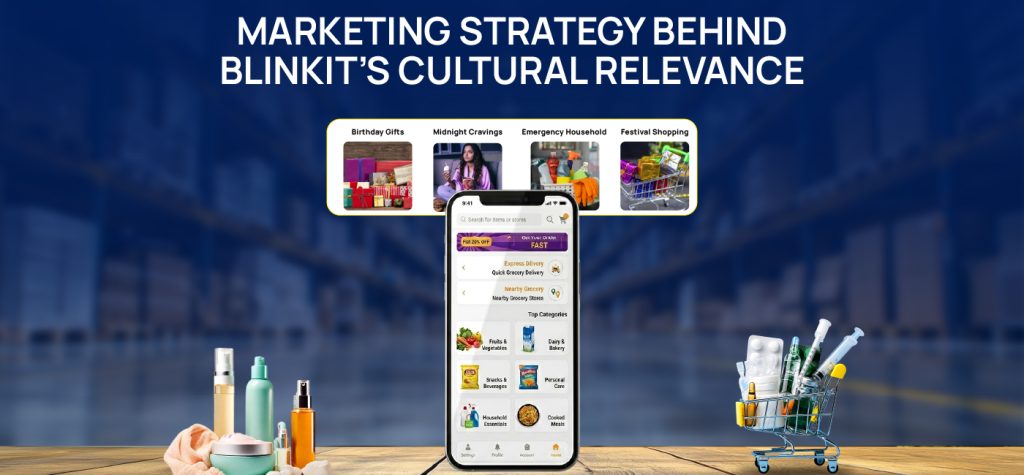
The Marketing Strategy Behind Blinkit’s Cultural Relevance
Blinkit’s success was not built only on logistics. Its marketing strategy played a major role in building emotional consumer connection.
The brand understood a simple truth: modern consumers value saved time more than saved money.
Instead of advertising groceries, Blinkit marketed relief, convenience, and spontaneity.
Its campaigns focused on relatable urban situations:
- Forgotten birthday gifts
- Midnight cravings
- Emergency household needs
- Last-minute festival shopping
The company’s communication style was youthful, witty, and digitally native. Blinkit mastered social media engagement with meme-driven marketing and a fast response culture.
The bright yellow branding also improved recall value. Over time, Blinkit became associated with instant problem-solving rather than just grocery delivery.
This emotional positioning helped the company build brand loyalty in a highly competitive market.
Challenges Behind the Rapid Rise
Despite its growth, Blinkit’s journey has not been easy.
Quick commerce remains an expensive business model. Maintaining dark stores, subsidizing deliveries, and managing inventory creates constant financial pressure.
The company also faces fierce competition from platforms like Swiggy Instamart, Zepto, BigBasket, Flipkart, and Amazon.
Another challenge has been profitability. Reuters reported that rising investments in expansion and fulfillment centers impacted margins despite strong revenue growth.
Worker welfare concerns have also surfaced. Questions around delivery pressure, rider safety, and gig economy working conditions continue to shape public conversations around quick commerce.
Yet Blinkit continues to prioritize scale and customer acquisition, betting that operational efficiency and market leadership will eventually strengthen long-term profitability.
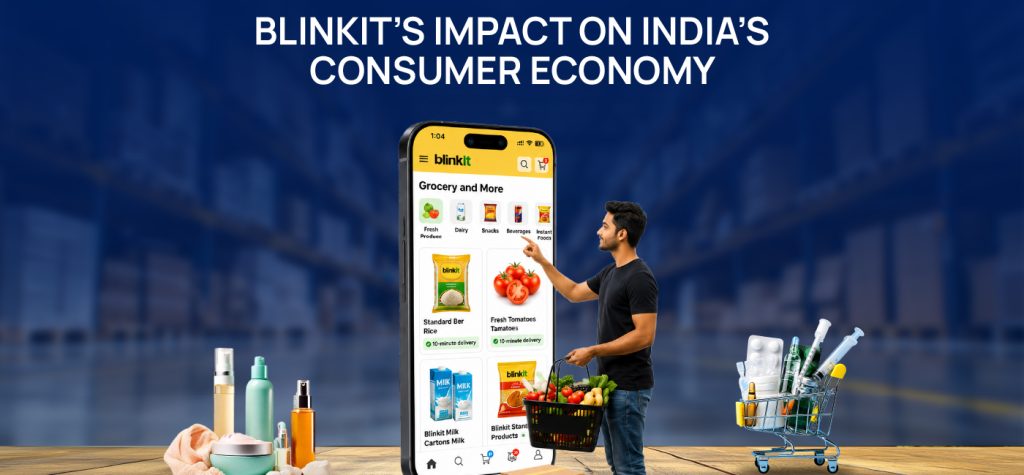
Blinkit’s Impact on India’s Consumer Economy
Blinkit’s biggest achievement may be how it changed consumer behavior in India.
The company normalized ultra-fast commerce.
Today, millions of Indians expect groceries, electronics, beauty products, and essentials within minutes. This shift has forced retailers, e-commerce companies, and logistics players to rethink delivery expectations entirely.
Blinkit also accelerated the rise of India’s quick commerce sector, which is projected to grow rapidly over the coming years.
For business leaders, Blinkit represents a case study in strategic reinvention:
It created cultural relevance through everyday utility.
It pivoted before competitors fully recognized the market shift.
It transformed operational speed into a brand identity.
It leveraged acquisition synergies effectively.
Conclusion
Blinkit’s journey from Grofers to India’s quick commerce leader is a story of adaptation, timing, and consumer insight. The company did not succeed because it delivered groceries faster. It succeeded because it understood how modern urban consumers value convenience.
In a market where attention spans are shrinking and expectations are rising, Blinkit turned speed into an emotional promise.
Its rise also reflects a larger transformation in India’s digital economy, where businesses are no longer competing only on price or product selection, but on immediacy and experience.
As quick commerce continues evolving, Blinkit’s legacy may ultimately be remembered not just for 10-minute deliveries, but for redefining how India shops.

Parvati Rai is the Vice President of the Research team at Equentis. She has over 15 years of equity-research and strategy-consulting experience. A specialist in deep-dive valuations, financial modelling, and forecasting, she has built research desks from the ground up, by steering buy-side, sell-side, and independent coverage across sectors. When she isn’t fine-tuning models, Parvati unwinds on nature treks and mentors aspiring analysts.