
Milky Mist Dairy Food shares made a strong stock market debut on August 18, 2026, listing at ₹165 on the NSE and BSE, around 17.86% above the IPO issue price of ₹140. The stock then hit the ₹181.50 upper circuit, taking its gain from the issue price to nearly 30%. The strong debut reflects healthy investor interest, but the key question after such a sharp opening is whether the Milky Mist share price still offers a reasonable entry point or whether investors should wait for the business to deliver further earnings growth.
Milky Mist IPO Listing: What Happened?
Milky Mist Dairy Food’s ₹1,553 crore IPO opened for subscription between August 11 and August 13, with a price band of ₹133 to ₹140 per share. The issue comprised a fresh issue of approximately ₹1,428 crore and an offer for sale of ₹125 crore. The shares were listed on August 18.
The market response was stronger than the IPO issue price suggested. Shares opened at ₹165, giving IPO allottees an immediate gain of ₹25 per share. The stock subsequently moved to ₹181.50, where it hit the 10% upper circuit during the session.
This means investors who received one IPO lot of 107 shares at ₹140 paid ₹14,980. At the ₹165 listing price, that holding was worth ₹17,655 before charges and taxes. At ₹181.50, its value would be about ₹19,420.
Why Did Milky Mist Get a Strong Listing?
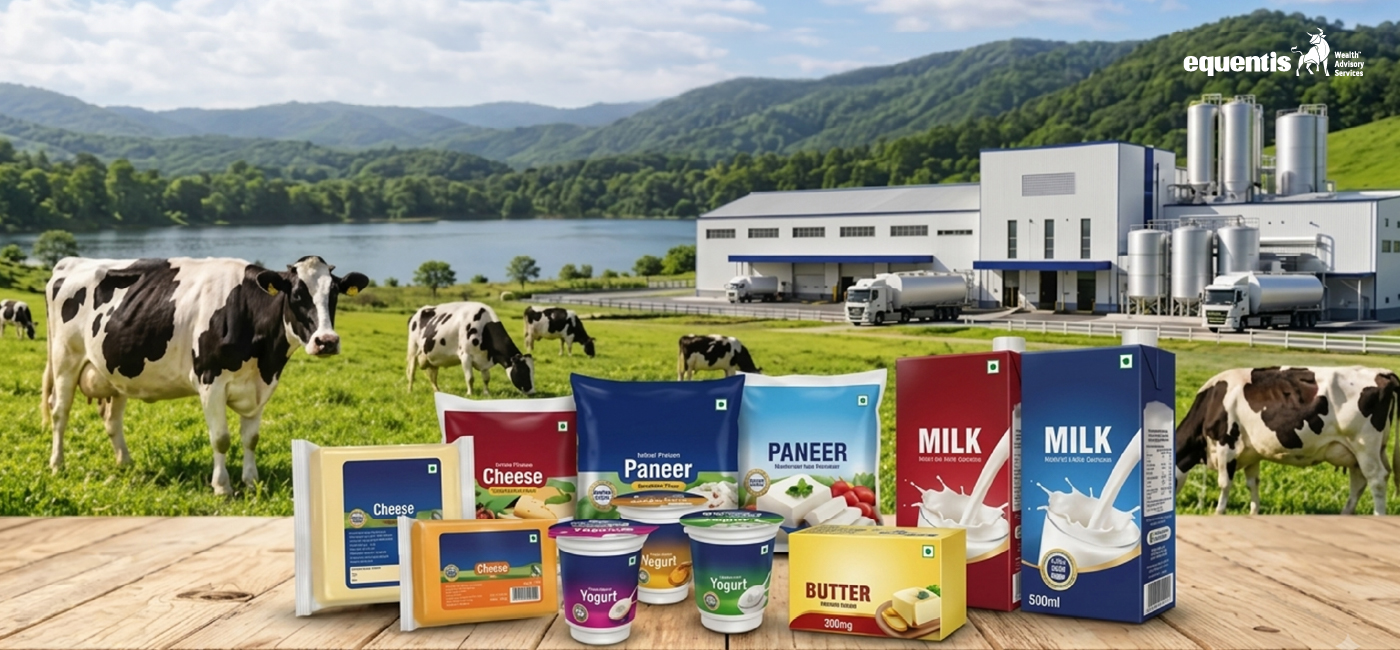
One reason is the company’s focus on value-added dairy products rather than liquid milk. Its portfolio includes paneer, cheese, butter, curd, yogurt, ghee, ice cream and other processed dairy products. This segment can offer better scope for branding and product differentiation than basic liquid milk.
Milky Mist has also been expanding beyond its traditional southern India base. Reuters reported that the company’s products were available through more than 375,000 retail outlets nationwide, while the company has been targeting further expansion in value-added categories.
Investor interest was also visible during the IPO process. The issue was fully subscribed by the second day of bidding, while market reports subsequently showed strong overall demand.
The company’s association with Temasek has also attracted attention. Temasek’s indirect subsidiary Jongsong Investments participated in a pre-IPO transaction of around ₹482 crore earlier in 2026.
How Are Milky Mist’s Financials?
The company’s financial performance has improved meaningfully in recent years.
According to Reuters, Milky Mist reported revenue of around ₹3,138 crore for the financial year ended March 31, 2026, representing a 34% increase from the previous year. Profit increased 176% to approximately ₹127 crore.
This improvement is important because the company’s IPO valuation is based not only on its brand presence but also on expectations of continued earnings growth.
The company intends to use a significant portion of the fresh IPO proceeds for debt repayment and expansion of its manufacturing infrastructure. Its planned investments include capacity expansion in areas such as whey protein, yogurt and cream cheese, along with improvements to its cold-chain network.
Is Milky Mist Stock Expensive After Listing?
This is where investors need to be more careful.
At ₹140, the IPO valued Milky Mist at roughly ₹10,778 crore at the upper end of the issue price, according to Reuters’ pre-listing calculations. Following the move to ₹181.50, the market value has increased substantially, meaning investors are now paying a higher price for the same underlying earnings.
A strong listing does not automatically mean the stock is expensive. Equally, a popular IPO does not automatically justify buying after listing.
The relevant question is whether future revenue and profit growth can keep pace with the valuation investors are currently assigning to the company.
Milky Mist IPO: Buy, Sell or Hold?
For investors who received an IPO allotment, the situation is different from someone considering buying the stock after listing.
IPO allottees already have a significant listing gain. They may evaluate whether the company’s long-term fundamentals justify continuing to hold the shares rather than focusing only on the first-day movement.
For new investors, chasing the stock after a sharp listing-day rise carries a different risk. The share price can become volatile once the initial enthusiasm around the IPO fades.
A more fundamental approach would be to track revenue growth, profit margins, debt reduction, capacity utilisation, distribution expansion and the performance of newer value-added dairy products.
Opportunities and Risks
Milky Mist has several factors working in its favour. India’s packaged and value-added dairy market has room for expansion, while products such as cheese, paneer, Greek yogurt and other protein-focused foods can benefit from changing consumption patterns.
The IPO proceeds could also strengthen the balance sheet through debt repayment and support additional manufacturing capacity.
However, investors should also consider raw milk prices, competition from established dairy companies, execution risks associated with expansion and the possibility that high growth expectations become difficult to maintain.
The stock’s sharp listing-day rise introduces another factor: valuation risk. A business can perform well while its stock still deliver weaker returns if investors have already priced in substantial future growth.
What Should Investors Watch Next?
The next few quarterly results will be more informative than the first-day listing gain.
Investors should watch:
- Revenue and volume growth across product categories
- EBITDA and net profit margins
- Debt reduction after the IPO
- Capacity utilisation at new facilities
- Expansion beyond southern India
- Growth in premium dairy products
- Cash flow generation
- Competitive intensity in the dairy market
These indicators can help determine whether the post-IPO valuation is supported by improving business fundamentals.
Conclusion
The Milky Mist IPO listing delivered a strong debut, with shares opening at ₹165, nearly 18% above the ₹140 issue price, before hitting ₹181.50 during the session. The response reflects strong investor interest in the company’s value-added dairy portfolio, growth prospects and expansion plans.
However, the listing gain alone does not answer whether the stock should be bought or sold. For IPO allottees, the decision depends on their investment horizon and assessment of the company’s future earnings. For investors entering after listing, valuation and execution become particularly important.
The next few quarters will show whether Milky Mist can convert its strong revenue growth and expansion plans into sustained profitability and cash generation.
Frequently Asked Questions
1. At what price did Milky Mist shares list?
Milky Mist Dairy Food shares listed at ₹165 on both the NSE and BSE on August 18, 2026. This represented a gain of approximately 17.86% over the IPO issue price of ₹140. The stock subsequently moved higher and touched ₹181.50 during the session.
2. What was the Milky Mist IPO issue price?
The Milky Mist IPO had a price band of ₹133 to ₹140 per share. The final issue price was fixed at ₹140 per share. The IPO raised approximately ₹1,553 crore through a combination of a fresh issue and an offer for sale.
3. How much did Milky Mist stock gain on listing day?
Milky Mist shares gained about 17.86% when they opened at ₹165 compared with the ₹140 IPO price. The stock later hit ₹181.50, representing an increase of nearly 30% from the issue price.
4. What is the Milky Mist IPO lot size?
The IPO lot size was 107 shares. At the upper issue price of ₹140, one lot required an investment of ₹14,980, excluding applicable charges. Investors who received an allotment therefore had exposure to 107 shares from the IPO.
5. Why is Milky Mist attracting investor interest?
Milky Mist focuses on value-added dairy products such as paneer, cheese, yogurt, butter and ice cream rather than liquid milk. Its expanding distribution network, product portfolio, revenue growth and plans to expand capacity have contributed to investor interest in the company.
6. What will Milky Mist use its IPO proceeds for?
The fresh issue proceeds are intended to support business expansion and strengthen the company’s financial position. Planned uses include debt repayment and expansion or modernisation of manufacturing facilities. The company has also outlined investments in products such as whey protein, yogurt and cream cheese, as well as cold-chain infrastructure.
7. Is Milky Mist stock a buy after its listing?
There is no single answer for every investor. After the stock’s sharp listing gain, investors should consider its valuation against expected earnings growth rather than relying on listing momentum. Revenue growth, margins, debt reduction, cash flows and execution of expansion plans are important factors to assess before making an investment decision.
8. What are the major risks for Milky Mist investors?
Key risks include fluctuations in milk and other input costs, competition from established dairy companies, execution risks from capacity expansion and the possibility of slower-than-expected earnings growth. A high post-listing valuation can also increase the risk of price volatility if business performance does not meet market expectations.
9. How did Milky Mist perform financially before its IPO?
Milky Mist reported approximately ₹3,138 crore in revenue for FY26, up 34% year-on-year, while profit increased 176% to about ₹127 crore, according to Reuters. The sharp improvement in profitability is one of the factors investors are likely to monitor as the company begins its life as a listed entity.
10. What should investors watch after the Milky Mist IPO listing?
Investors should monitor quarterly revenue growth, volume trends, margins, debt reduction, cash flows, capacity utilisation and expansion outside southern India. The performance of premium and value-added dairy categories will also be important. These indicators can help investors assess whether the company’s earnings growth is keeping pace with its post-listing valuation.
Disclaimer Note: The securities quoted, if any, are for illustration only and are not recommendatory. This article is for education purposes only and shall not be considered as a recommendation or investment advice by Equentis. We will not be liable for any losses that may occur. Investments in the securities market are subject to market risks. Read all the related documents carefully before investing. Registration granted by SEBI, membership of BASL & certification from NISM in no way guarantee the performance of the intermediary or provide any assurance of returns to investors.

Parvati Rai is the Vice President of the Research team at Equentis. She has over 15 years of equity-research and strategy-consulting experience. A specialist in deep-dive valuations, financial modelling, and forecasting, she has built research desks from the ground up, by steering buy-side, sell-side, and independent coverage across sectors. When she isn’t fine-tuning models, Parvati unwinds on nature treks and mentors aspiring analysts.