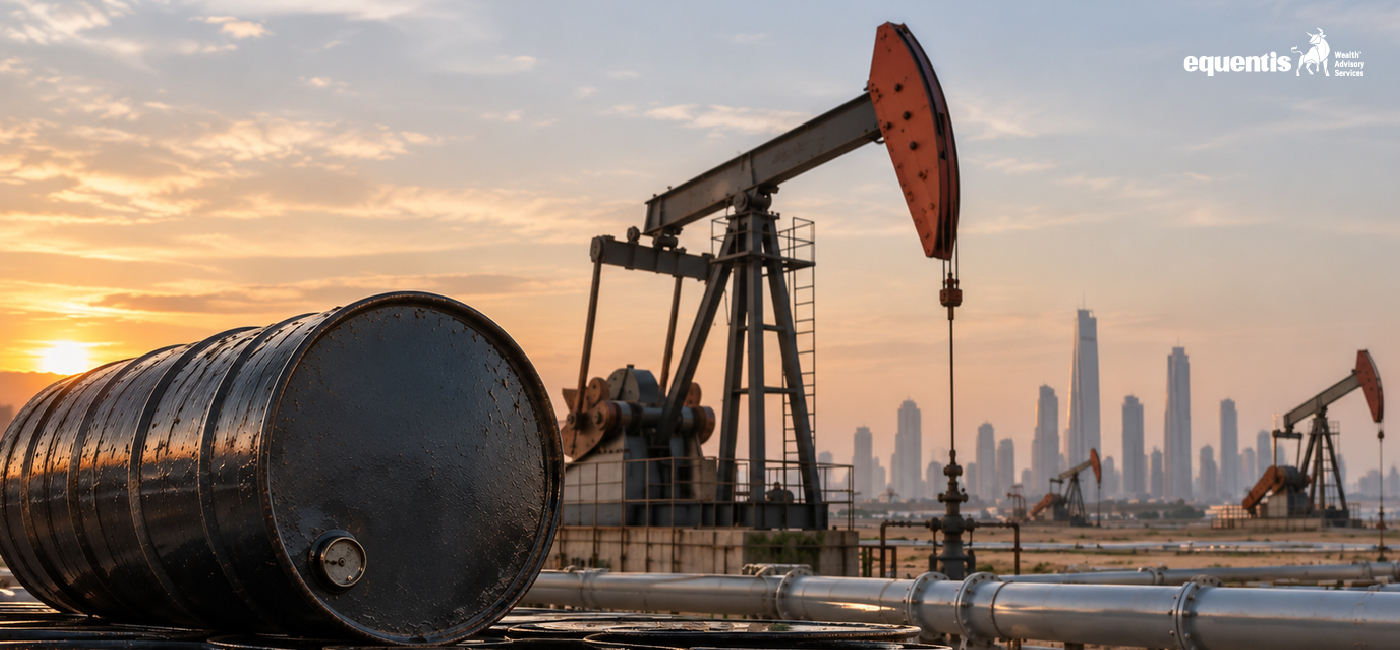

Oil prices have witnessed a sharp decline, with Brent crude falling over 10% and crude oil prices dropping nearly 6% in a week, raising expectations of relief for India’s economy and stock market. Lower crude prices can reduce India’s import bill, ease inflationary pressures and improve profitability for several businesses. However, the impact on the Nifty 50 depends on whether the decline continues, how the rupee performs and whether global economic concerns are driving the sell-off.
Why Are Oil Prices Falling?
Crude oil prices are influenced by global demand, supply conditions, geopolitical developments and expectations about economic growth.
When traders expect weaker demand or greater availability of oil, prices generally come under pressure. Similarly, easing geopolitical concerns or expectations of increased production can reduce the risk premium embedded in crude prices.
The recent decline in Brent crude and other oil benchmarks has brought energy prices back into focus for Indian investors. Since India imports a significant portion of its crude oil requirements, movements in international oil prices have a direct bearing on domestic economic conditions.
A sustained decline in crude prices could provide meaningful relief to businesses and consumers, although the benefits depend on currency movements, refining costs and government policies.
How Do Falling Crude Oil Prices Affect India?
1. Lower India’s Oil Import Bill
India is one of the world’s largest crude oil importers. When international oil prices decline, the country can potentially spend less on importing crude, assuming import volumes and other factors remain unchanged.
A lower oil import bill can help reduce pressure on India’s current account deficit. The current account deficit represents the excess of payments made to other countries over receipts from them in certain transactions.
Reduced demand for dollars to pay for oil imports can also support the Indian rupee, although currency movements depend on several other factors, including foreign investment flows and global dollar strength.
2. Inflation Could Moderate
Crude oil is an important input for transportation, manufacturing and several industrial activities.
Lower oil prices can reduce fuel and freight costs over time, potentially easing inflationary pressures. This can support household purchasing power and reduce operating expenses for businesses.
However, consumers may not immediately benefit from falling international crude prices because retail petrol and diesel prices depend on taxes, marketing costs and pricing decisions by oil marketing companies.
What Does Falling Crude Oil Mean for Nifty 50?
Lower crude prices can influence the Nifty 50 through multiple sectors. Some industries benefit directly, while others may face different consequences.
Which Nifty Sectors Could Benefit?
| Sector | Potential Impact |
|---|---|
| Aviation | Lower aviation turbine fuel costs may improve operating margins |
| Paints | Reduced input costs for petroleum-based raw materials |
| Tyres | Potential relief from synthetic rubber and other crude-linked inputs |
| FMCG | Lower packaging and transportation expenses |
| Chemicals | Potential reduction in certain feedstock costs |
| Logistics | Lower fuel expenses can support profitability |
These benefits are not automatic. Companies may face competitive pricing, weaker demand or other input cost increases that offset the advantages of cheaper crude.
Oil Marketing Companies
Oil marketing companies such as Indian Oil Corporation, Bharat Petroleum and Hindustan Petroleum could benefit from lower crude prices if refining margins, inventory conditions and marketing margins remain favourable.
When crude prices decline rapidly, companies may also experience inventory losses because the value of previously purchased crude and petroleum products falls.
Therefore, lower crude prices do not necessarily translate into higher profits for every oil marketing company.
Which Stocks Could Remain Under Pressure?
While falling crude prices generally benefit India, certain businesses may face challenges.
Upstream oil producers such as ONGC and Oil India could experience pressure on earnings because lower crude prices may reduce realisations from oil production.
Similarly, energy companies with significant exposure to crude-linked revenues may see profitability affected.
Investors should distinguish between upstream producers, which extract oil, and downstream companies, which refine and market petroleum products. Their earnings respond differently to changes in crude prices.
Impact on Investors and the Indian Economy
The decline in crude oil prices could have several implications for Indian investors.
Potential Benefits
- Lower inflation: Reduced energy costs can help moderate inflation over time.
- Improved corporate earnings: Fuel-intensive businesses may experience better operating margins.
- Reduced import expenditure: India could benefit from a lower oil import bill.
- Currency stability: Lower import-related dollar demand may provide support to the rupee.
- Consumer spending: Lower transportation and production costs could support household purchasing power.
These factors can improve the economic environment and potentially support corporate earnings growth, which is an important driver of equity valuations.
Opportunities and Risks: Will Nifty Rally Further?
The relationship between crude oil prices and the stock market is not always straightforward.
A decline in crude driven by increased supply or easing geopolitical tensions can be positive for India. However, if oil prices fall because investors expect a global economic slowdown, the impact could be more complicated.
Weaker global growth can reduce demand for Indian exports, affect corporate earnings and trigger foreign investor selling.
Investors should monitor the following developments:
- Brent crude price movements and whether the decline continues.
- The Indian rupee’s movement against the US dollar.
- Foreign institutional investor buying and selling activity.
- Corporate earnings across aviation, FMCG, paints and energy.
- Inflation data and the Reserve Bank of India’s policy outlook.
- Global economic growth expectations and geopolitical developments.
A sustained decline in oil prices could improve India’s macroeconomic outlook, but it cannot independently guarantee a rally in the Nifty 50.
Conclusion
The sharp fall in crude oil prices, with Brent declining over 10% and crude nearly 6% in a week, could provide relief to India’s economy and several corporate sectors.
Lower energy costs may support inflation moderation, improve margins for fuel-intensive businesses and reduce pressure on India’s import bill. Aviation, paints, FMCG and logistics are among the industries that could potentially benefit, while upstream oil producers may face pressure.
For investors, the key takeaway is that falling crude prices are broadly favourable for India, but their impact on Nifty depends on the reason behind the decline, currency movements, global demand and earnings performance. The sustainability of lower oil prices will be more important than a temporary fall in energy markets.
Frequently Asked Questions
1. Why are crude oil prices falling?
Crude oil prices can decline because of weaker global demand expectations, increased production, easing geopolitical tensions or changes in inventory levels. Traders also react to economic growth forecasts and expectations about future oil consumption. The exact reason behind a particular decline depends on the combination of supply, demand and geopolitical developments influencing the market.
2. How does falling crude oil benefit India?
India imports a significant share of its crude oil requirements. Lower international oil prices can reduce the country’s import expenditure, ease inflationary pressures and potentially support the rupee. Cheaper crude can also lower transportation and manufacturing costs, benefiting businesses and consumers over time.
3. Will falling crude oil prices make Nifty rise?
Falling crude prices can support the Nifty 50 because India is a major oil importer. Lower energy costs may improve corporate earnings and economic conditions. However, the index may still decline if crude prices fall because of global recession concerns, weak earnings or foreign investor selling. The broader market environment remains important.
4. Which Indian stocks benefit from falling crude oil prices?
Aviation, paints, FMCG, tyre manufacturing and logistics companies may benefit from lower crude-linked input and fuel costs. Oil marketing companies can also benefit under favourable refining and marketing conditions. However, actual earnings depend on inventory movements, competitive pricing, demand and other operating expenses.
5. Why do aviation stocks benefit from lower crude oil prices?
Aviation turbine fuel is a major operating expense for airlines in India. When fuel prices decline, airlines may experience lower operating costs and improved profit margins, provided passenger demand, ticket pricing and other expenses remain supportive. The benefit may not be immediate because fuel prices and operating contracts can adjust with a lag.
6. Do ONGC and Oil India benefit when crude prices fall?
ONGC and Oil India are upstream oil producers that earn revenue from producing petroleum. Lower crude prices can reduce their oil realisations and potentially affect profitability. Their performance also depends on production volumes, gas prices, operating costs and government policies. Therefore, falling crude prices can be negative for upstream producers.
7. Will petrol and diesel prices fall in India when crude prices decline?
Not necessarily. Domestic petrol and diesel prices depend on international petroleum prices, taxes, refining and marketing costs, and oil marketing companies’ pricing decisions. Even when crude prices decline significantly, retail fuel prices may remain unchanged. Consumers may not immediately receive the full benefit of lower international oil prices.
8. How do falling oil prices affect inflation in India?
Lower crude prices can reduce transportation, manufacturing and logistics costs, helping moderate inflation. They can also reduce pressure on energy-related expenses. However, the impact depends on how much lower oil prices are passed through to consumers and businesses, alongside food prices, exchange rates and other inflationary factors.
9. What happens to the Indian rupee when crude oil prices fall?
Lower crude prices can support the Indian rupee by reducing the country’s oil import expenditure and potentially lowering demand for dollars. However, the rupee also depends on foreign investment flows, US dollar strength, interest rates and global market conditions. A decline in oil prices does not guarantee currency appreciation.
10. What should investors watch after crude oil prices tumble?
Investors should monitor Brent crude prices, the rupee-dollar exchange rate, foreign institutional investor activity, corporate earnings and global economic growth expectations. Sector-specific developments are also important because lower crude prices affect oil producers, airlines, FMCG businesses and energy companies differently. A sustained decline driven by supply improvements is generally more favourable for India than one caused by collapsing global demand.
Disclaimer Note: The securities quoted, if any, are for illustration only and are not recommendatory. This article is for education purposes only and shall not be considered as a recommendation or investment advice by Equentis . We will not be liable for any losses that may occur. Investments in the securities market are subject to market risks. Read all the related documents carefully before investing. Registration granted by SEBI, membership of BASL & certification from NISM in no way guarantee the performance of the intermediary or provide any assurance of returns to investors.

Parvati Rai is the Vice President of the Research team at Equentis. She has over 15 years of equity-research and strategy-consulting experience. A specialist in deep-dive valuations, financial modelling, and forecasting, she has built research desks from the ground up, by steering buy-side, sell-side, and independent coverage across sectors. When she isn’t fine-tuning models, Parvati unwinds on nature treks and mentors aspiring analysts.