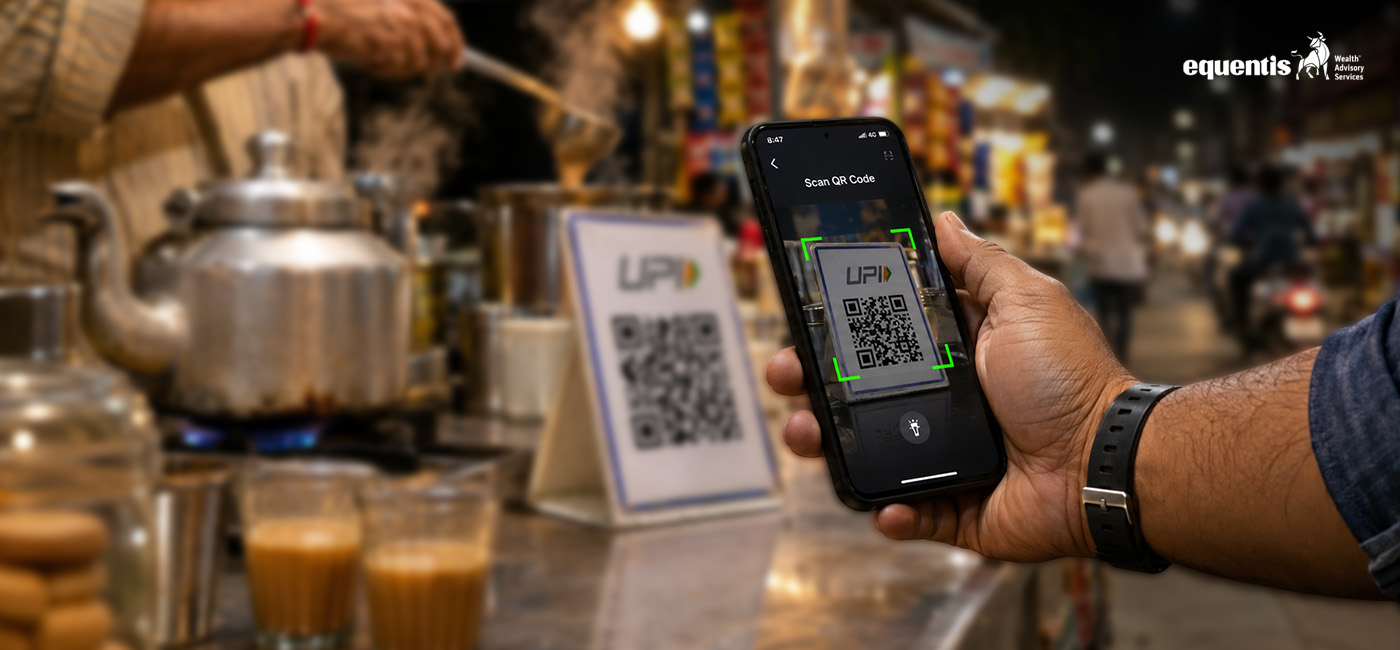

The proposed UPI MDR charges in India may face another delay, as the government, Reserve Bank of India (RBI) and National Payments Corporation of India (NPCI) have yet to finalise an implementation date. Originally scheduled for October 15, 2026, the revised merchant discount rate (MDR) framework was postponed until after Diwali. However, concerns over merchant opposition, business costs and upcoming state elections could push the rollout further into 2027. For now, UPI payments continue under the existing applicable charging framework.
Why Are UPI MDR Charges Being Delayed Again?
The proposed introduction of UPI transaction charges has become a sensitive issue for India’s digital payments ecosystem. While the new framework is intended to create a revenue stream for banks and payment service providers, merchants have raised concerns about the additional costs of accepting digital payments.
According to reports published on November 19, discussions between the government, RBI and NPCI have not resulted in an agreement on the revised rollout date.
The government is reportedly considering the potential reaction from traders and business associations before implementing the changes. Upcoming assembly elections in five states during the first half of 2027 have also added to the uncertainty.
Although the operational groundwork for introducing MDR has progressed, the authorities have not announced a confirmed date. A further postponement beyond the 2027 elections is being considered as a possibility, not a confirmed decision. NDTV Profit+2
What Is UPI MDR and Why Is It Being Introduced?
MDR, or Merchant Discount Rate, is a transaction processing fee that merchants pay for accepting digital payments through certain payment instruments.
For example, when a customer pays a shop using a card, the merchant may have to pay a percentage of the transaction value to the payment ecosystem. This fee is shared among relevant participants involved in processing the payment.
For several years, UPI payments funded directly through bank accounts have operated under a zero-MDR framework. This helped make QR-code payments attractive for businesses, particularly small retailers, street vendors and local shops.
However, maintaining the UPI ecosystem involves costs related to banking infrastructure, payment processing, cybersecurity, technology and customer support.
The proposed MDR framework aims to provide financial support to the institutions responsible for maintaining and expanding this infrastructure.
The government has also clarified that MDR is not a tax or a fee collected by the government. It is distributed among payment ecosystem participants. Press Information Bureau+1
What Are the Proposed UPI MDR Charges?
Under the revised framework announced in September 2026, selected person-to-merchant (P2M) UPI transactions will attract processing charges.
The key proposed provisions include:
| Transaction category | Proposed MDR treatment |
|---|---|
| Person-to-person (P2P) transfers | Remain free |
| Merchant payments up to ₹2,000 | Zero MDR |
| Eligible merchant payments above ₹2,000 | 0.4% MDR |
| Eligible transactions of ₹75,000 and above | Maximum ₹300 per transaction |
| Qualifying small merchants | Continue under zero-MDR framework |
Certain categories, including railways, telecom, insurance and fuel, have also been assigned a separate flat MDR of ₹5 on eligible transactions above ₹2,000.
The framework is expected to leave approximately 96% of merchant transactions unaffected. Small merchants receiving up to ₹1 lakh per month through UPI QR codes under the eligible small-merchant category will also continue to receive zero-MDR treatment. Press Information Bureau+2
Will Customers Have to Pay for UPI Transactions?
One of the biggest concerns among consumers is whether the introduction of MDR will make everyday UPI payments expensive.
The proposed framework does not introduce a direct transaction fee for individual customers. Person-to-person transfers will remain free, irrespective of the amount, while eligible small-value merchant payments will also remain outside the MDR framework.
The government has clarified that merchants should not pass these processing charges on to customers.
For example, if someone purchases groceries worth ₹1,500 and pays through UPI, the transaction will remain free under the proposed framework. The same applies to sending money to friends or family members.
Therefore, the proposed changes are primarily directed at payment acceptance costs for selected merchant transactions rather than everyday consumer payments. Press Information Bureau+1
Why Are Merchants Opposing the New UPI Charges?
Merchant associations and trade bodies have raised concerns that additional transaction costs could affect businesses operating with limited profit margins.
For large retailers, the proposed 0.4% fee may appear manageable. However, businesses handling thousands of transactions every day could see their overall payment processing expenses increase.
Distributors have also reportedly sought exemptions for merchant-to-merchant transactions, arguing that additional charges could affect business-to-business payments and squeeze already thin margins.
Another concern is the potential impact on digital payment adoption. One of the reasons UPI became popular across India was its low-cost acceptance model, allowing even small roadside businesses to accept payments without investing in expensive payment infrastructure.
Merchants fear that introducing charges, even on selected transactions, could create confusion and affect their willingness to accept digital payments.
This opposition has become an important consideration for policymakers deciding when and how to introduce the revised framework. BusinessToday+2
How Will the UPI MDR Delay Affect Payment Companies?
The delay also has implications for companies operating in India’s digital payments industry.
Payment platforms, banks, payment aggregators and technology providers have invested significantly in building and maintaining UPI infrastructure. However, generating sustainable revenue from bank-account-funded UPI transactions has remained a challenge under the zero-MDR structure.
The proposed MDR framework could create a new revenue opportunity for these businesses.
According to a Reuters report, the delay affected investor sentiment towards listed digital payments companies on November 19. Paytm’s parent One 97 Communications, Pine Labs and Mobikwik witnessed declines in their share prices.
The uncertainty is particularly relevant because investors are assessing how much the proposed MDR framework could contribute to future earnings.
However, the actual financial impact will depend on the final implementation date, applicable rates, eligible transaction volumes and revenue-sharing arrangements. Reuters+1
Opportunities and Risks: What Happens Next?
The proposed MDR framework presents an opportunity to improve the financial sustainability of India’s digital payment ecosystem.
A predictable revenue model could help payment companies and banks invest in cybersecurity, technology upgrades, infrastructure resilience and merchant services.
NPCI has also introduced the UPI Vyapaar Saksham scheme to support digital payment acceptance among small merchants, including QR-code and soundbox deployment.
However, the delay highlights several challenges. Merchant opposition could require changes to the framework, while uncertainty over the rollout date makes financial planning difficult for payment companies.
There is also a broader policy challenge: introducing transaction fees without discouraging digital payment adoption.
The government and RBI will need to balance the commercial interests of payment service providers with affordability for merchants and consumers.
Conclusion: When Will UPI MDR Charges Be Implemented?
The implementation of UPI MDR charges remains uncertain as the government, RBI and NPCI continue discussions over the rollout timeline. Although the original October 15, 2026 deadline was postponed until after Diwali, no fresh implementation date has been officially announced.
A further delay into 2027 is possible, particularly given merchant opposition and upcoming assembly elections. However, this remains a reported possibility rather than a confirmed policy decision.
For consumers, everyday UPI payments are expected to remain free under the proposed framework. For merchants and payment companies, the next important developments will be the final rollout date, any changes to the proposed rates and the treatment of different transaction categories.
The larger question is how India can maintain affordable digital payments while ensuring that the infrastructure supporting UPI remains financially sustainable.
Frequently Asked Questions
1. What are UPI MDR charges?
UPI MDR charges refer to the Merchant Discount Rate, a processing fee paid by merchants for accepting eligible digital payments. Under the proposed framework, selected UPI merchant transactions above ₹2,000 will attract a 0.4% charge. The fee is intended to support banks and other participants maintaining the digital payments infrastructure.
2. When will UPI MDR charges be implemented in India?
The revised MDR framework was originally scheduled to begin on October 15, 2026, but NPCI postponed its implementation until after Diwali. As of November 19, 2026, no fresh rollout date has been officially announced. Discussions between the government, RBI and NPCI are continuing.
3. Why has the government delayed UPI MDR charges?
The government is reportedly considering opposition from merchants and trade associations, along with the potential impact on businesses. Upcoming assembly elections in five states in 2027 have added another consideration. Authorities are yet to reach a consensus on a suitable implementation date.
4. Will UPI payments remain free for customers?
Yes. Under the proposed framework, individual customers will not pay MDR on person-to-person UPI transfers. Merchant payments up to ₹2,000 will also remain free. The government has clarified that merchants should not transfer the MDR processing cost to customers.
5. Will UPI transactions above ₹2,000 attract charges?
Selected person-to-merchant transactions above ₹2,000 will attract a proposed MDR of 0.4%. The framework also provides a maximum charge of ₹300 for eligible transactions of ₹75,000 and above. The charges will not apply universally to every UPI transaction exceeding ₹2,000.
6. Will small shopkeepers have to pay UPI MDR charges?
Qualifying small merchants receiving up to ₹1 lakh per month through UPI QR codes under the P2PM category will continue to enjoy zero MDR. This provision is intended to protect neighbourhood shops, street vendors and small businesses from additional digital payment costs.
7. What is the difference between UPI MDR and a UPI transaction fee?
MDR is a processing charge paid by merchants for accepting eligible payments. A customer transaction fee would be an additional amount charged to the person making the payment. The proposed framework introduces MDR for selected merchant transactions, not a general fee for individual UPI users.
8. How will UPI MDR charges affect Paytm and other payment companies?
The proposed MDR framework could create a revenue opportunity for payment companies, banks and payment aggregators. However, further delays may postpone expected earnings from these charges. The actual impact will depend on implementation, transaction volumes, applicable rates and the distribution of MDR revenue.
9. Can UPI MDR charges be delayed until after the 2027 elections?
Yes, a further delay beyond the 2027 assembly elections is being considered, according to industry reports. However, this is not an officially confirmed timeline. The government, RBI and NPCI have yet to announce a final implementation date.
10. Where can consumers check the latest UPI MDR rules?
Consumers and merchants should follow official announcements from NPCI, RBI and the Ministry of Finance for confirmed changes. They should also check notifications from their banks and payment service providers to understand which transactions are covered, when the rules take effect and whether any exemptions apply.
Disclaimer Note: The securities quoted, if any, are for illustration only and are not recommendatory. This article is for education purposes only and shall not be considered as a recommendation or investment advice by Equentis . We will not be liable for any losses that may occur. Investments in the securities market are subject to market risks. Read all the related documents carefully before investing. Registration granted by SEBI, membership of BASL & certification from NISM in no way guarantee the performance of the intermediary or provide any assurance of returns to investors.

Parvati Rai is the Vice President of the Research team at Equentis. She has over 15 years of equity-research and strategy-consulting experience. A specialist in deep-dive valuations, financial modelling, and forecasting, she has built research desks from the ground up, by steering buy-side, sell-side, and independent coverage across sectors. When she isn’t fine-tuning models, Parvati unwinds on nature treks and mentors aspiring analysts.