From a single bottling plant in Jaipur in 1996 to becoming one of PepsiCo’s largest franchise bottlers globally, Varun Beverages Limited (VBL) has built an impressive growth story over three decades. With revenue rising from ₹8,823 crore in CY2021 to ₹21,685 crore in CY2025, the company’s journey reflects its strong distribution network, strategic acquisitions, and expanding international presence. But what has driven this remarkable growth, and how is VBL positioning itself for the future of India’s beverage industry? Let’s take a closer look.
Introduction: The Bottle Behind Every Summer
Think of a roadside dhaba in July, a cricket match on a dusty ground, or a wedding buffet in a small town. Somewhere close by, there is a chilled Pepsi, Mountain Dew, or Aquafina. Most Indians never think about who put it there. That company is Varun Beverages Limited (VBL).
VBL is one of PepsiCo’s largest franchisees in the world outside the US. It handles roughly 90% of PepsiCo India’s beverage sales volume. In CY2025, it sold 1,213 million cases and earned net revenue of ₹21,685 crore. This is the story of how a bottler built a brand legacy without owning a single famous brand name.
1995: A Bet on Thirsty India
VBL was incorporated as a public limited company in 1995, part of Ravi Jaipuria’s RJ Corp group. A year later, its first plant began operating in Jaipur. By 1999, it had added Alwar, Jodhpur and Kosi.
The early years were about one thing: proving reliability to PepsiCo. In 1997, Jaipuria became the only Indian to win PepsiCo’s International Bottler of the Year award. That trust became the company’s most valuable asset.
It was not glamorous work. It meant trucks leaving before dawn, crates stacked in small-town warehouses and salesmen convincing shopkeepers to make room for one more cooler. But every delivery made on time built a reputation that would later unlock entire states.
Building a Bottling Empire: The Milestones That Defined Growth
VBL grew by doing what PepsiCo needed most: taking over territories and running them better.
- 2015: Acquired PepsiCo India’s business in Uttar Pradesh, Uttarakhand, Himachal Pradesh, Haryana and Chandigarh.
- 2016: Listed on the NSE and BSE.
- 2017–2018: Added Odisha, Chhattisgarh, Bihar, Jharkhand and parts of Madhya Pradesh, plus a greenfield plant in Zimbabwe.
- 2019: Took over sub-territories in West and South India, completing a near-national footprint.
- 2022: Began making Kurkure Puffcorn for PepsiCo and distributing snacks in Morocco.
Today, VBL holds franchise rights across 27 states and 7 union territories in India, along with markets including Nepal, Sri Lanka, Morocco, Zambia, Zimbabwe and South Africa.
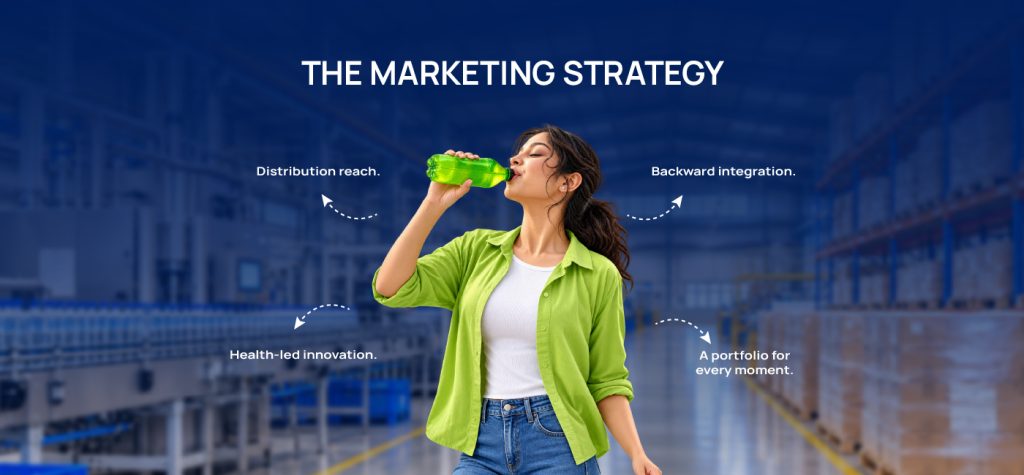
The Marketing Strategy: Winning the Last Mile, Not the Billboard
PepsiCo owns the brands and runs the celebrity campaigns. VBL’s growth strategy works where those campaigns end: at the shop counter. Its consumer connection rests on four pillars.
1. Distribution reach. VBL serves more than a million retail outlets. Visi-coolers and frequent delivery keep drinks cold and in stock, in towns and villages alike.
2. A portfolio for every moment. Pepsi, Mountain Dew, Sting, 7UP, Nimbooz, Tropicana, Gatorade and Aquafina cover fizz, energy, juice and water.
3. Health-led innovation. Low-sugar and no-sugar products made up 88% of India volume in Q3 CY2026, up from 44% a year earlier.
4. Backward integration. VBL makes its own preforms and caps, protecting cost and supply in peak summer.
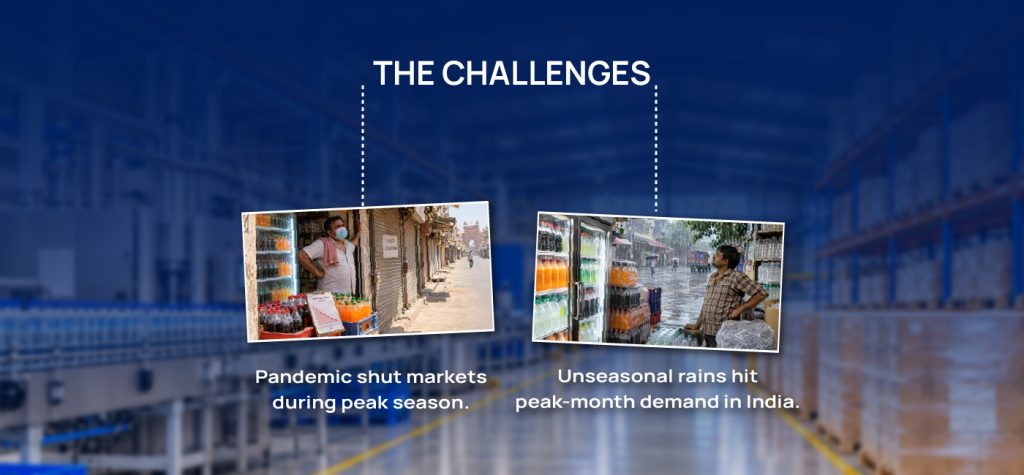
The Challenges: When the Weather Becomes a Competitor
A beverage business lives and dies by summer. In CY2020, the pandemic shut markets during peak season and revenue fell about 10%. In CY2023 and again in CY2025, unseasonal rains hit peak-month demand in India.
Costs bite too. In Q3 CY2026, higher packaging costs cut gross margin by 334 basis points to 53.1%. And as a franchisee, VBL’s future is tied to its PepsiCo relationship. The company has answered with discipline: heavy capex ahead of demand, debt-free India operations and a CRISIL AAA rating.
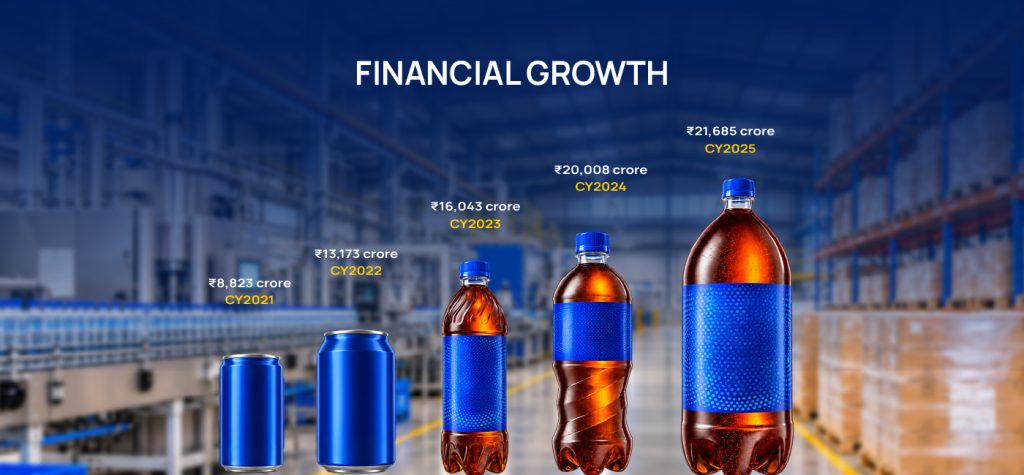
Financial Growth: From ₹8,823 Crore to ₹21,685 Crore
VBL’s revenue grew about 2.5 times in four years, and profit grew roughly four times. VBL follows a January–December financial year.
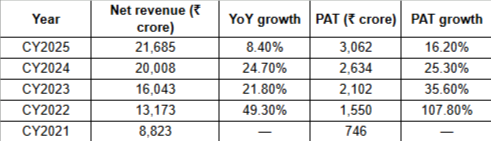
Volume tells the same story. Sales rose from 802 million cases in CY2022 to 1,213 million cases in CY2025. Profit has grown faster than revenue, a sign of better margins and scale.
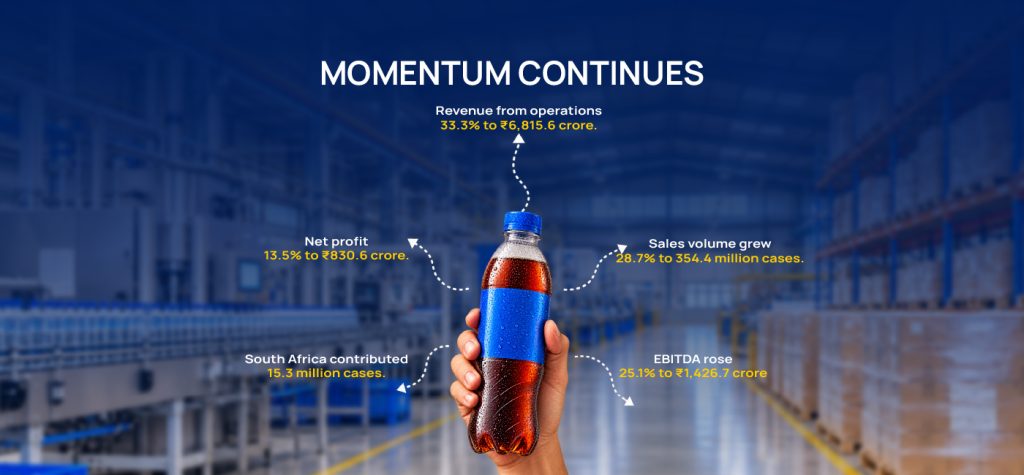
CY2026 So Far: Momentum Continues
The September 2026 quarter showed the strategy working at scale:
- Revenue from operations rose 33.3% to ₹6,815.6 crore.
- Net profit rose 13.5% to ₹830.6 crore.
- Sales volume grew 28.7% to 354.4 million cases, with India up 22.5% and international markets up 39.9%.
- The newly added Twizza business in South Africa contributed 15.3 million cases.
- EBITDA rose 25.1% to ₹1,426.7 crore, even as margins softened to 21.6%.
- The board declared an interim dividend of ₹0.50 per share.
VBL now runs about 50 production facilities worldwide. Its own words capture its reach: it serves PepsiCo beverages to one-fifth of the world’s population.
The Road Ahead: Africa, Health and Scale
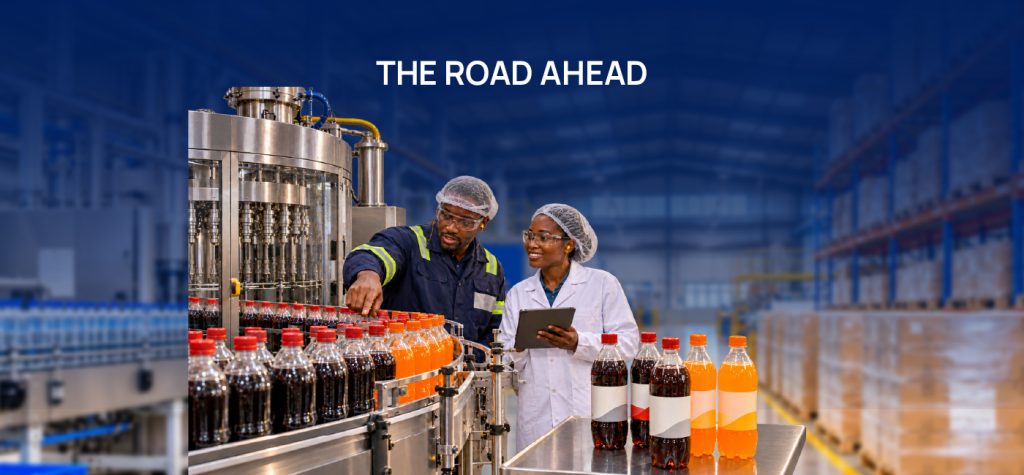
VBL’s next chapter is being written abroad and on the label. Africa is now its fastest-growing frontier, with South Africa and Kenya opening new markets. At home, rising incomes and hotter summers should keep demand growing, while low-sugar drinks keep the portfolio in step with changing tastes. New plants and in-house packaging should also help VBL absorb cost swings and turn rising volumes into stronger operating leverage.
Conclusion: A Brand Legacy Built One Bottle at a Time
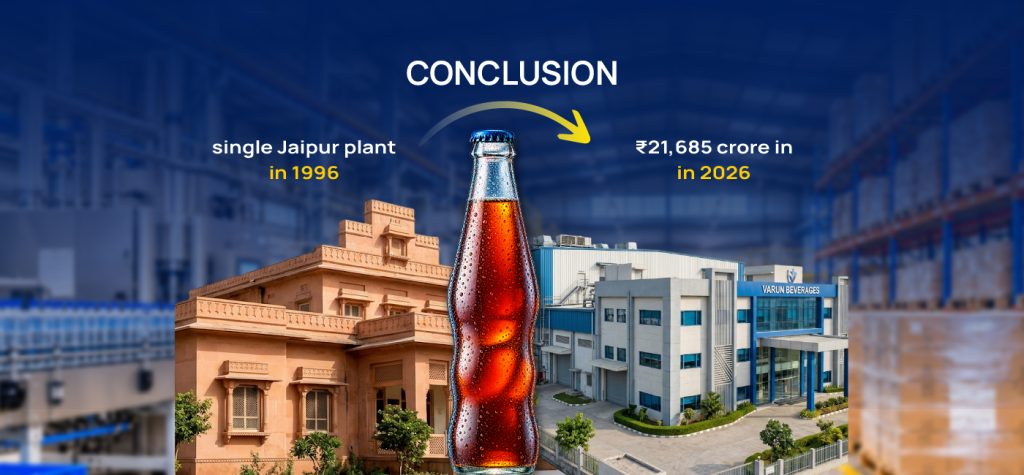
From a single Jaipur plant in 1996 to ₹21,685 crore in revenue, Varun Beverages shows that brand legacy is not only built in advertisements. It is built in supply chains, cold storage and trust earned over three decades.
For business readers, the lesson is clear. Consistent execution, bold acquisitions and close consumer connection can turn a franchisee into a market leader. The next time you open a chilled Pepsi, remember: there is a 31-year growth story inside that bottle.

Parvati Rai is the Vice President of the Research team at Equentis. She has over 15 years of equity-research and strategy-consulting experience. A specialist in deep-dive valuations, financial modelling, and forecasting, she has built research desks from the ground up, by steering buy-side, sell-side, and independent coverage across sectors. When she isn’t fine-tuning models, Parvati unwinds on nature treks and mentors aspiring analysts.