
Introduction: Why the AI Doomsday Narrative Is Grabbing Attention
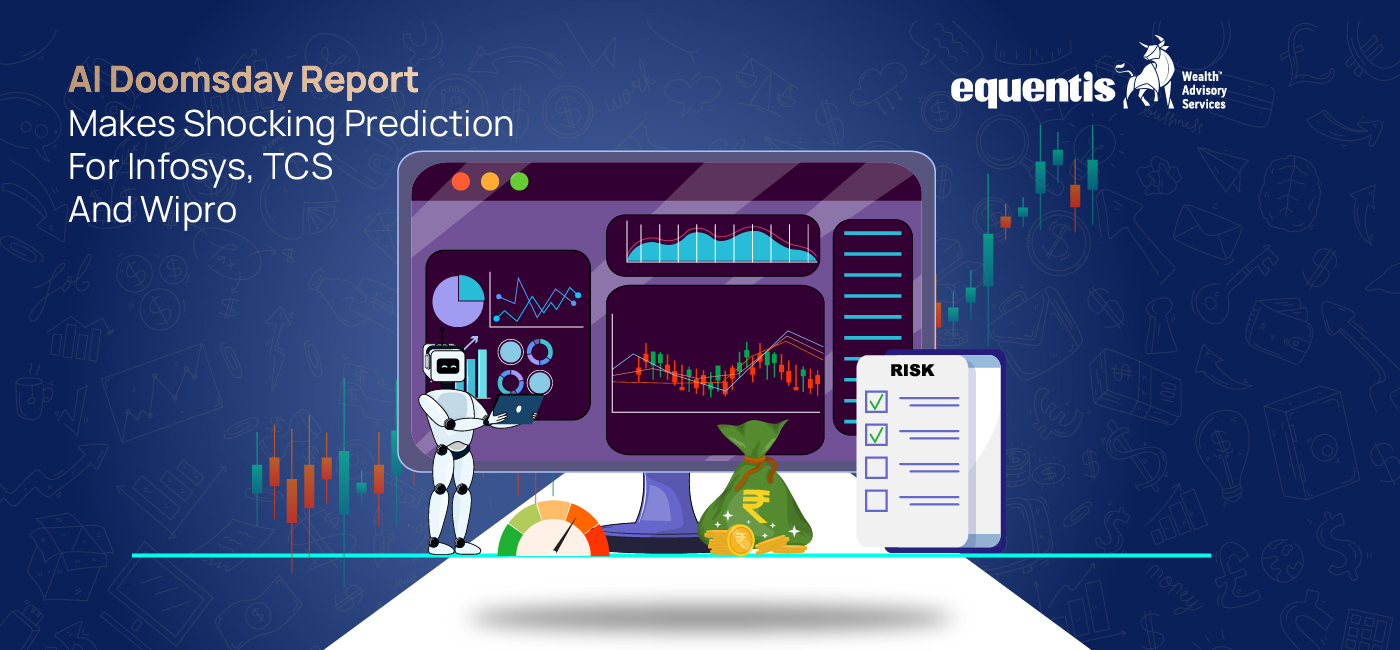
A recent AI doomsday-style report has triggered intense debate across global tech circles, making unsettling predictions about the future of traditional IT services. For Indian markets, the focus has quickly shifted to heavyweight IT firms like Infosys, Tata Consultancy Services, and Wipro.
The report suggests that rapid advances in artificial intelligence could significantly disrupt large-scale IT outsourcing models. For investors and professionals alike, this matters because these companies have long been seen as stable pillars of India’s technology ecosystem. If AI truly reshapes demand patterns, the implications could be far-reaching.
Context and Background: How AI Entered the IT Disruption Debate
Artificial intelligence is no longer a futuristic concept. Over the past few years, enterprises across banking, retail, healthcare, and manufacturing have adopted AI-driven tools to automate tasks, analyse data, and reduce costs.
Traditionally, Indian IT companies thrived by offering cost-efficient services, large workforces, and long-term outsourcing contracts. However, the AI doomsday report argues that automation and generative AI could reduce the need for large teams handling repetitive coding, testing, and support work.
This concern is not entirely new. Every major technological shift, from cloud computing to automation, has raised questions about job displacement and revenue sustainability. What makes this moment different is the speed at which AI capabilities are evolving and being adopted by global clients.
Key Insights from the AI Doomsday Report
The report highlights three core risks for large IT services firms. First is revenue pressure. As AI tools automate routine tasks, clients may demand lower billing rates or smaller project teams. This directly challenges the traditional effort-based pricing model.
Second is margin compression. AI investments require spending on talent, infrastructure, and platforms. While productivity may improve over time, the initial phase could see higher costs without immediate revenue benefits.
Third is workforce disruption. A significant portion of the existing IT workforce may need reskilling. Roles focused on basic coding or maintenance could shrink, while demand rises for AI architects, data scientists, and domain specialists.
However, the report also notes that the pace of disruption will vary. Legacy systems, regulatory complexity, and enterprise risk concerns mean that full-scale automation is unlikely to happen overnight.
Impact on Investors and the Indian IT Sector
For investors, the AI doomsday narrative introduces a new layer of risk assessment. Stocks of Infosys, TCS, and Wipro are often valued for their predictable cash flows, strong client relationships, and steady dividends. Any threat to long-term revenue visibility naturally affects sentiment.
In the short term, market reactions tend to amplify headlines. AI-related fears can trigger volatility, especially during periods of global uncertainty. In the medium term, investors will closely track deal wins, pricing trends, and commentary on AI-led efficiencies.
For the broader Indian IT sector, the concern is not collapse but transition. Companies that fail to adapt their service offerings may lose relevance, while those that successfully integrate AI into their delivery models could protect margins and market share.
Opportunities Hidden Within the Disruption
While the report paints a cautious picture, it also indirectly points to opportunities. Large IT firms already have deep enterprise relationships, domain knowledge, and global delivery capabilities. These strengths can be leveraged to offer AI transformation services rather than just manpower.
Infosys, TCS, and Wipro have all announced investments in AI platforms, internal automation tools, and employee upskilling programs. As enterprises struggle to implement AI responsibly and securely, trusted IT partners may actually see new demand.
There is also an opportunity to move up the value chain. Instead of billing for hours worked, companies can shift towards outcome-based pricing, consulting-led engagements, and industry-specific AI solutions.
Risks That Cannot Be Ignored
Despite these opportunities, risks remain real. Client budgets are under pressure globally, and AI adoption could lead to shorter project cycles. Competition from niche AI firms and global consultancies is intensifying.
Another risk is execution. Reskilling tens of thousands of employees is complex and costly. Cultural resistance and talent attrition can slow transformation efforts. Additionally, regulatory scrutiny around AI ethics and data usage could delay enterprise adoption in certain sectors.
Investors and stakeholders should avoid extremes. Neither blind optimism nor doomsday pessimism offers a clear view of what lies ahead.
Conclusion: A Turning Point, Not an Endgame
The AI doomsday report serves as a wake up call rather than a final verdict on India’s IT giants. Infosys, TCS, and Wipro are not facing an immediate collapse, but they are entering a phase of structural change.
AI will reshape how services are delivered, priced, and staffed. Companies that adapt quickly, invest wisely, and align with client needs can turn disruption into relevance. Those that cling to old models may face gradual erosion.
For investors, the key takeaway is to track execution, not just headlines. The future of Indian IT will be defined less by fear of AI and more by how effectively these firms use AI as a tool for reinvention.
Disclaimer Note: The securities quoted, if any, are for illustration only and are not recommendatory. This article is for education purposes only and shall not be considered as a recommendation or investment advice by Equentis – Research & Ranking. We will not be liable for any losses that may occur. Investments in the securities market are subject to market risks. Read all the related documents carefully before investing. Registration granted by SEBI, membership of BASL & certification from NISM in no way guarantee the performance of the intermediary or provide any assurance of returns to investors.

Jaspreet Singh Arora is the Chief Investment Officer at Equentis, where he heads a seasoned team of equity analysts and turns two decades of market experience into portfolios that consistently beat the benchmark. A go-to voice on cement, building-materials, real-estate, and construction stocks, Jaspreet previously ran research desks at leading brokerages, honing an eye for the metrics that truly move share prices. His plain-spoken analysis helps investors cut through noise and act with conviction. When he’s not deep-diving into earnings calls, you’ll find him unwinding over sports, weekend cricket or a good history podcast.