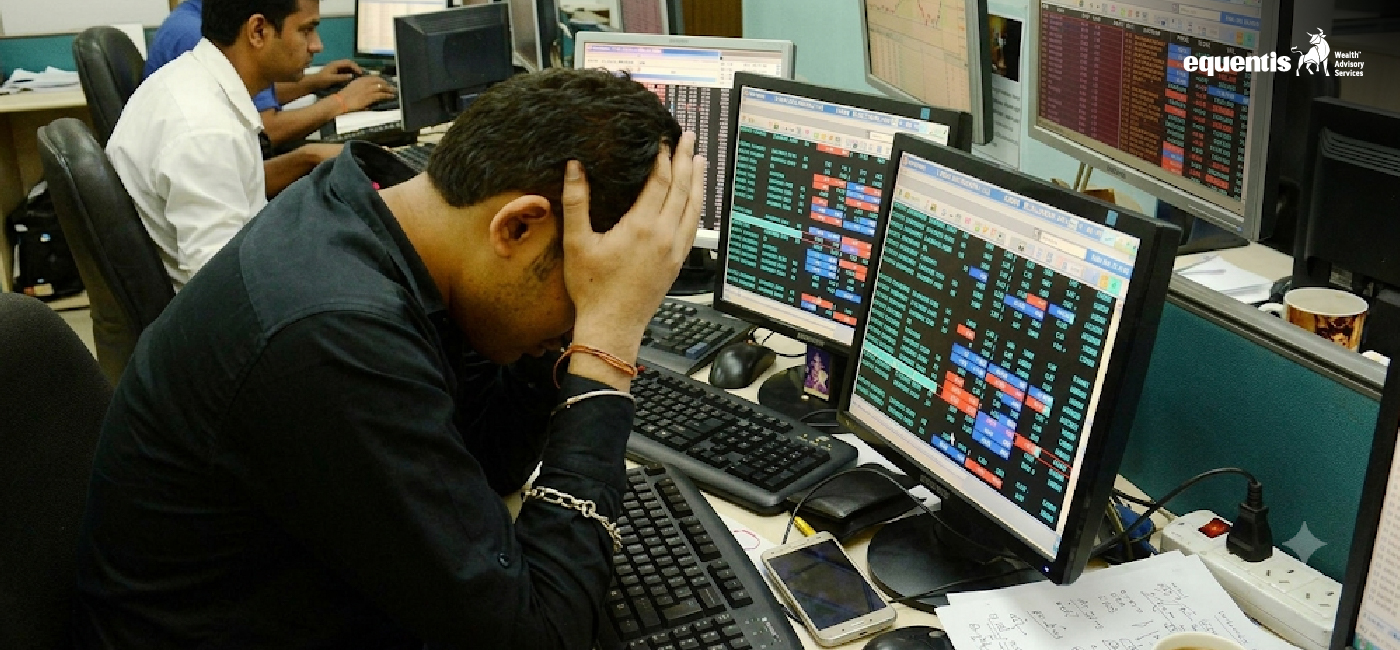

Asian markets mirrored Wall Street’s sharp sell-off on November 6, 2026, as concerns over artificial intelligence (AI) investments and technology valuations triggered heavy selling across the region. However, the Indian stock market showed relative resilience, with the Sensex closing higher despite global volatility. For Indian investors, the immediate takeaway is that global market weakness can influence sentiment, but domestic earnings, institutional flows, crude oil prices and sector-specific developments also determine how Nifty and Sensex perform.
Introduction
Global financial markets witnessed a sharp reversal after US technology stocks experienced their steepest decline in months. The selling spread across Asia, particularly Japan, South Korea and Taiwan, where technology and semiconductor companies faced significant pressure.
India, meanwhile, displayed a different pattern. Although weak global cues initially created uncertainty, domestic buying in heavyweight stocks helped the benchmark indices recover. This divergence highlights an important aspect of investing: international markets influence Indian equities, but they do not always move in exactly the same direction.
Context and Background: Why Did Wall Street Crash?
The US stock market witnessed a sharp decline on November 5, 2026, led by technology and AI-linked companies.
The Nasdaq Composite plunged 5.52% to 24,315, while the S&P 500 declined 4.36% to 7,353.73. The Dow Jones Industrial Average fell 3.44% to 51,523.06. These were the indices’ steepest single-day declines since April 2025. ndtvprofit.com+1
What triggered the global sell-off?
The primary concern was the outlook for AI infrastructure spending.
Investors worried that political developments in the United States could result in greater regulatory scrutiny of AI investments and potentially slow the expansion of data centres. This raised questions about whether technology companies would continue spending aggressively on AI infrastructure.
High valuations also made technology stocks vulnerable to profit booking. When investors begin questioning future earnings expectations, even companies with strong business prospects can experience sharp price corrections.
Asian Markets Mirror Wall Street’s Decline
The pressure quickly spread across Asian financial markets on November 6.
- Japan’s Nikkei 225: Fell more than 6% during the session, entering bear market territory after declining over 20% from its June peak.
- South Korea’s Kospi: Dropped sharply, triggering a temporary trading halt after losses crossed the circuit breaker threshold.
- Taiwan’s markets: Faced heavy selling in semiconductor and technology companies.
- Asian technology stocks: Samsung Electronics, SK Hynix and other chip-related companies experienced substantial declines.
The sell-off reflected Asia’s strong exposure to global semiconductor demand and AI infrastructure investments. Countries supplying chips, memory components and data-centre equipment were particularly vulnerable to concerns about slower spending. Markets News – Business Standard+2
What Does the Global Market Crash Mean for Nifty and Sensex?
1. Global sentiment can influence Indian market openings
Indian markets often react to overnight movements in US equities and early Asian trading.
A sharp decline in global indices can influence GIFT Nifty, potentially signalling a weaker opening for the Nifty 50 and Sensex. Traders may also reduce exposure to equities when uncertainty rises.
On November 6, GIFT Nifty indicated a cautious start following the Wall Street sell-off. However, Indian benchmarks showed resilience during the session rather than following the scale of losses seen in Asia. moneycontrol.com+1
2. Indian IT stocks may react differently
A decline in US technology stocks does not automatically mean Indian IT companies will experience the same price movement.
US semiconductor businesses and Indian IT service providers have different revenue models. While semiconductor companies depend heavily on chip demand and AI infrastructure spending, Indian IT firms largely provide technology services, consulting and enterprise solutions.
This distinction can influence how investors assess the impact of global technology weakness on Indian IT stocks.
3. Foreign investor activity remains important
Foreign Institutional Investors (FIIs) can influence Indian equity markets through their buying and selling activity.
Heavy global selling may encourage overseas investors to reduce exposure to emerging markets. However, strong domestic institutional buying and improving corporate earnings can help absorb some of this pressure.
On November 5, FIIs bought Indian equities worth approximately ₹14,975 crore, providing support during the domestic market rally. moneycontrol.com+1
Impact and Implications for Indian Investors
Large-cap stocks may remain relatively resilient
The Sensex and Nifty are influenced significantly by large companies, particularly banks, financial services businesses and major industrial firms.
If domestic investors continue supporting these companies, benchmark indices may remain comparatively stable even when smaller stocks experience greater selling pressure.
On November 6, Indian IT stocks and selected heavyweight companies supported market performance, while several broader market segments remained under pressure. India Today+1
Mid-cap and small-cap investors should monitor volatility
Global uncertainty can affect investor appetite for stocks with higher valuations or lower liquidity.
Mid-cap and small-cap shares may experience sharper movements than large-cap stocks because they can be more sensitive to changes in risk appetite. Investors should therefore avoid assuming that resilience in the Sensex automatically reflects strength across the entire market.
Crude oil prices are another important factor
India imports a substantial share of its crude oil requirements. A sustained increase in international oil prices can raise the import bill, affect inflation expectations and put pressure on the rupee.
Brent crude moved back towards $100 per barrel during the November 6 session, adding another factor for domestic investors to monitor. upstox.com+1
Opportunities and Risks: What Should Investors Watch?
The global correction presents both risks and potential opportunities, depending on market conditions and individual investment objectives.
Factors that could support Indian equities
- Continued buying by domestic institutional investors.
- Improvement in corporate earnings and business outlooks.
- Relative stability in crude oil prices.
- Continued foreign investor interest in Indian equities.
- Strong performance from banking, financial services and selected domestic sectors.
Risks that could increase market pressure
- Further weakness in US technology stocks.
- Continued declines in Asian equity markets.
- Rising crude oil prices and currency volatility.
- Renewed foreign investor selling.
- Higher volatility in mid-cap and small-cap stocks.
- Disappointment in corporate earnings or future guidance.
Investors should distinguish between temporary market corrections and changes in a company’s underlying business fundamentals. A falling share price alone does not necessarily make a stock attractive.
Conclusion
The Asian markets sell-off following Wall Street’s crash highlights how interconnected global financial markets have become. Concerns about AI investments, technology valuations and regulatory uncertainty triggered significant declines across several Asian indices.
However, the Indian stock market demonstrated resilience on November 6, supported by buying in selected large-cap stocks and domestic market factors.
For Nifty and Sensex, the next direction will depend on global technology sentiment, institutional investment flows, crude oil prices and corporate earnings. Investors should focus on market fundamentals, maintain a suitable investment horizon and avoid making decisions solely based on overnight international market movements.
Frequently Asked Questions
1. Why did Asian markets crash after Wall Street fell?
Asian markets declined because investors became concerned about slowing AI infrastructure investments and possible regulatory restrictions in the United States. Technology and semiconductor companies in Japan, South Korea and Taiwan were particularly affected because their businesses depend significantly on global chip demand and technology spending.
2. How much did Nasdaq fall on November 5, 2026?
The Nasdaq Composite declined 5.52% on November 5, 2026, closing at 24,315. The S&P 500 fell 4.36%, while the Dow Jones Industrial Average declined 3.44%. The sell-off was primarily driven by technology stocks and concerns about the future of AI-related investments.
3. Why did the Nikkei 225 enter bear market territory?
Japan’s Nikkei 225 declined more than 20% from its June peak, meeting the commonly used definition of a bear market. The November 6 sell-off accelerated this decline as investors reduced exposure to technology and semiconductor stocks amid concerns about AI infrastructure spending.
4. Will the Wall Street crash affect Nifty and Sensex?
Yes, global market weakness can influence Indian equities through investor sentiment, foreign fund flows and overnight market indicators. However, Nifty and Sensex do not necessarily follow Wall Street movements completely. Domestic earnings, institutional buying, crude oil prices and economic conditions can influence their performance independently.
5. Why did Indian stock markets remain resilient despite Asian market crashes?
Indian equities received support from domestic buying, improving investor sentiment and heavyweight stocks. India’s relatively different exposure to semiconductor manufacturing and AI infrastructure investments also contributed to the divergence. Nevertheless, resilience in benchmark indices does not mean every Indian stock or sector remained unaffected.
6. What is the impact of a global stock market crash on Indian IT stocks?
The impact depends on the nature of the global sell-off. Indian IT companies primarily provide technology services rather than manufacture semiconductors. A correction in AI infrastructure stocks may affect valuations and sentiment, while changes in enterprise technology spending could influence IT companies’ future revenues.
7. What is GIFT Nifty, and why do investors track it?
GIFT Nifty is a futures contract traded at NSE International Exchange in Gujarat’s GIFT City. Investors track it because its movements can provide an indication of how Indian benchmark indices may open after overnight global market developments. However, it is an indicator rather than a guaranteed prediction of market opening levels.
8. How do foreign institutional investors affect Nifty and Sensex?
Foreign institutional investors influence Indian equities through their investment flows. Large purchases can support market sentiment and liquidity, while substantial selling can increase pressure on share prices. Their activity is important, but domestic institutional investors and retail participation can also influence market movements.
9. Should investors buy stocks during a global market crash?
A market correction may create opportunities in companies with strong fundamentals and reasonable valuations, but falling prices do not automatically indicate attractive investments. Investors should assess business performance, financial strength, valuations and risk tolerance instead of making decisions based solely on market declines.
10. What should investors watch after the Asian markets sell-off?
Investors should monitor US technology stocks, Asian market movements, foreign institutional investor flows, crude oil prices, the rupee, India VIX and corporate earnings. These indicators can help explain changes in market sentiment. The sustainability of domestic buying will also be important in determining how Nifty and Sensex respond to global uncertainty.
Disclaimer Note: The securities quoted, if any, are for illustration only and are not recommendatory. This article is for education purposes only and shall not be considered as a recommendation or investment advice by Equentis . We will not be liable for any losses that may occur. Investments in the securities market are subject to market risks. Read all the related documents carefully before investing. Registration granted by SEBI, membership of BASL & certification from NISM in no way guarantee the performance of the intermediary or provide any assurance of returns to investors.

Parvati Rai is the Vice President of the Research team at Equentis. She has over 15 years of equity-research and strategy-consulting experience. A specialist in deep-dive valuations, financial modelling, and forecasting, she has built research desks from the ground up, by steering buy-side, sell-side, and independent coverage across sectors. When she isn’t fine-tuning models, Parvati unwinds on nature treks and mentors aspiring analysts.