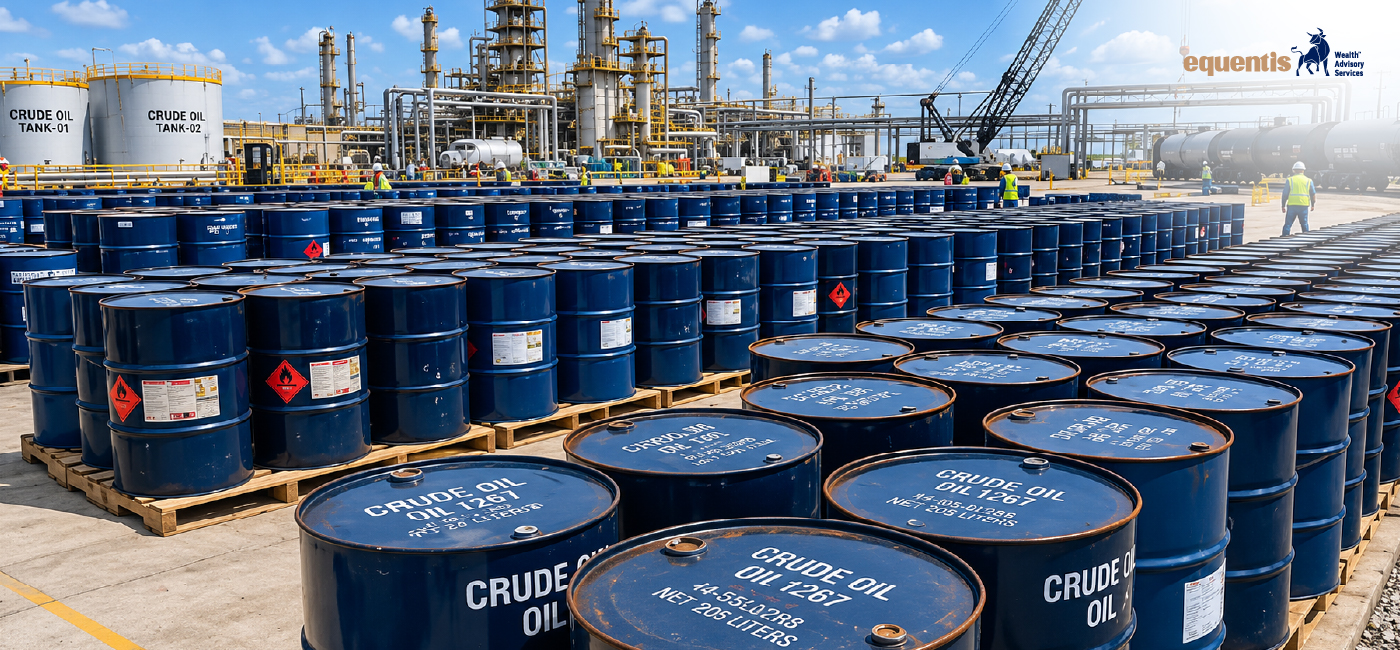

Crude oil prices today are recovering after a sharp weekly decline, with Brent crude trading near $99 per barrel on November 6, 2026, despite remaining on track for a weekly fall of nearly 13%. The recovery is being driven by renewed concerns over tanker attacks in the Middle East, uncertainty surrounding the US-Iran conflict and traders reassessing whether the recent sell-off was excessive. For India, the movement matters because crude oil prices directly influence inflation, fuel costs, the rupee and corporate earnings.
Introduction
The global oil market has experienced significant volatility this week. Brent crude fell sharply after investors began anticipating a possible diplomatic resolution to the conflict involving the United States and Iran. However, fresh shipping incidents and continued geopolitical uncertainty have prevented prices from declining steadily.
The rebound highlights an important reality: crude oil prices are currently being influenced by both expectations of improved supply and persistent risks to energy transportation.
Context and Background: Why Did Crude Oil Prices Fall?
US midterm elections changed market expectations
One of the major triggers behind the recent crude oil sell-off was the US midterm election outcome.
Democrats secured control of both chambers of Congress, increasing political pressure on President Donald Trump over the conflict with Iran. Investors interpreted the outcome as potentially improving the chances of diplomatic negotiations and reducing the risk of prolonged disruptions to Middle Eastern oil supplies.
This expectation encouraged traders to remove part of the geopolitical premium previously built into crude prices.
Brent crude fell more than 8% on Wednesday, November 4, settling at $94.62 per barrel. West Texas Intermediate (WTI), the US crude benchmark, declined 8.3% to $88.12. Both benchmarks touched their lowest settlement levels since August 31. ndtvprofit.com+1
What is a geopolitical risk premium?
A geopolitical risk premium is the additional amount investors pay for a commodity because of the possibility of supply disruptions caused by wars, sanctions or political tensions.
When traders fear that oil shipments could be interrupted, prices may rise even before an actual shortage occurs. Conversely, expectations of peace or improved supply can reduce this premium quickly.
Key Insights: What Is Driving the Brent Crude Recovery?
1. Tanker attacks are raising supply concerns
The most immediate factor supporting crude oil prices is renewed uncertainty around commercial shipping in the Persian Gulf and the Strait of Hormuz.
Several vessel-related incidents have been reported in the region, including attacks on oil-carrying ships. These developments have reminded markets that the risk of supply disruption remains despite hopes for diplomatic progress.
The Strait of Hormuz is particularly important because it connects major Gulf oil producers with international energy markets. Any sustained disruption could affect crude shipments and transportation costs. ndtvprofit.com+1
2. Traders are reassessing the possibility of a quick peace agreement
Although the US election outcome encouraged optimism, a diplomatic resolution has not been confirmed.
Iran continues to demand conditions related to the naval blockade, sanctions and frozen assets before fully reopening the Strait of Hormuz. Meanwhile, Washington has yet to confirm a lasting agreement.
This uncertainty has encouraged traders to reconsider aggressive bets on falling oil prices.
3. Technical recovery after heavy selling
Crude oil prices also recovered after an unusually sharp midweek decline.
When prices fall rapidly, some traders may consider the market oversold and begin buying futures. Others may close short positions, adding temporary upward pressure.
However, such movements do not necessarily indicate that a sustained upward trend has begun.
Impact and Implications for India
India imports a substantial portion of its crude oil requirements, making international oil prices an important economic indicator.
What does rising crude mean for Indian consumers?
A sustained increase in crude oil prices can increase the cost of importing petroleum products. Depending on government taxes, refinery costs and marketing margins, this may influence domestic petrol, diesel and other fuel prices.
Higher fuel costs can also affect transportation, logistics and manufacturing expenses, potentially increasing prices for everyday goods.
However, a short-term movement in Brent crude does not automatically translate into an immediate change in petrol and diesel prices in India.
Impact on the Indian stock market
Crude oil movements can create different outcomes across sectors.
| Sector | Potential impact of rising crude |
|---|---|
| Oil marketing companies | Higher crude costs may pressure marketing margins if fuel prices remain unchanged |
| Aviation | Higher aviation turbine fuel costs can increase operating expenses |
| Paint companies | Higher input costs may affect profitability |
| Tyre manufacturers | Synthetic rubber and other petroleum-linked inputs can become costlier |
| Upstream oil producers | Higher crude prices can support revenue realisation |
| Oil refiners | Impact depends on refining margins, crude sourcing and product prices |
For investors tracking Nifty and Sensex, crude oil is particularly important because energy costs influence several large listed businesses.
Impact on the Indian economy
Higher oil prices can increase India’s import bill and put pressure on the current account deficit.
If international crude prices remain elevated, demand for US dollars to purchase energy imports may increase. This can contribute to rupee depreciation pressures, depending on capital flows and other currency factors.
Lower crude prices, on the other hand, can support India’s inflation outlook and provide relief to businesses dependent on petroleum-based inputs.
Opportunities and Risks: What Should Investors Watch?
The current crude oil recovery presents both possibilities and uncertainties.
Factors that could push prices higher
- Further attacks on commercial vessels in the Gulf.
- Renewed military escalation involving Iran.
- Disruptions to shipments through the Strait of Hormuz.
- Higher transportation and insurance costs for oil cargoes.
- A breakdown in diplomatic negotiations.
Factors that could push prices lower
- A credible US-Iran diplomatic agreement.
- Improved shipping security and normalisation of oil exports.
- Greater availability of Middle Eastern crude.
- Weak global energy demand.
- Increasing oil inventories or a sustained supply surplus.
Investors should also distinguish between a temporary price rebound and a fundamental change in global oil supply conditions. A two-day recovery following a sharp correction does not necessarily establish a long-term bullish trend.
Conclusion
Crude oil prices today reflect a market caught between hopes of geopolitical de-escalation and continuing supply risks. Brent crude’s recovery towards $99 per barrel after a steep weekly decline demonstrates how quickly sentiment can change when shipping security becomes uncertain.
For India, the direction of crude prices remains important for inflation, fuel expenses, the rupee and corporate profitability. Investors should monitor developments around Iran, the Strait of Hormuz, global oil demand and supply conditions before interpreting the latest recovery as a lasting trend.
Frequently Asked Questions
1. What is the crude oil price today?
On November 6, 2026, Brent crude was trading around $99 per barrel, while US WTI crude was trading near $91 to $92 per barrel. Prices recovered after a sharp midweek decline, although both benchmarks remained on track for substantial weekly losses.
2. Why are Brent crude prices rising today?
Brent crude is recovering because fresh tanker incidents in the Persian Gulf have renewed concerns about oil supply disruptions. Traders are also reassessing whether diplomatic negotiations between the United States and Iran will deliver a quick resolution. These developments have supported prices after the recent sharp correction.
3. Why did crude oil prices fall nearly 13% this week?
Crude oil prices declined as investors anticipated that political developments in the United States could increase pressure for a diplomatic resolution to the Iran conflict. Expectations of improved Middle Eastern oil supplies reduced the geopolitical risk premium, triggering significant selling in crude futures.
4. What is the difference between Brent crude and WTI crude?
Brent crude is an international oil benchmark widely used for pricing seaborne oil supplies. WTI, or West Texas Intermediate, is a US crude benchmark primarily associated with oil delivered in the United States. Both influence global oil pricing, although their prices differ because of location, quality and supply conditions.
5. Why is the Strait of Hormuz important for crude oil prices?
The Strait of Hormuz is a major maritime route connecting Persian Gulf oil producers with international markets. A disruption can delay shipments, increase transportation costs and create concerns about global oil availability. Consequently, developments affecting shipping security in this region can significantly influence crude oil prices.
6. How do crude oil prices affect India?
India imports a large proportion of its crude oil requirements. Higher international prices can increase the import bill, influence inflation, affect the rupee and raise operating costs for fuel-intensive businesses. Lower crude prices can provide economic relief, although the benefits depend on domestic pricing, taxes and other factors.
7. Will falling crude oil prices reduce petrol and diesel prices in India?
Not necessarily immediately. Domestic petrol and diesel prices depend on international crude prices, refining costs, marketing margins, taxes and pricing decisions by oil marketing companies. A sustained decline in crude may improve the scope for lower fuel prices, but it does not guarantee an immediate reduction at petrol pumps.
8. Which Indian stocks are affected by rising crude oil prices?
Oil marketing companies, aviation businesses, paint manufacturers, tyre companies and logistics businesses can face higher costs when crude prices rise. Upstream oil producers may benefit from stronger crude realisations. The actual impact depends on individual company operations, pricing power and input cost exposure.
9. Can crude oil prices rise again after a sharp weekly decline?
Yes. Crude oil prices can rebound quickly when geopolitical developments create supply concerns or when traders reverse positions following heavy selling. However, a short-term recovery does not necessarily indicate a sustained price increase. Global demand, inventories, production and shipping conditions remain important factors.
10. What should investors watch next for crude oil prices?
Investors should monitor US-Iran diplomatic developments, tanker security in the Strait of Hormuz, global crude inventories, oil production levels and demand forecasts. These factors can help explain whether the recent recovery is temporary or reflects a meaningful change in global supply and demand conditions.
Disclaimer Note: The securities quoted, if any, are for illustration only and are not recommendatory. This article is for education purposes only and shall not be considered as a recommendation or investment advice by Equentis . We will not be liable for any losses that may occur. Investments in the securities market are subject to market risks. Read all the related documents carefully before investing. Registration granted by SEBI, membership of BASL & certification from NISM in no way guarantee the performance of the intermediary or provide any assurance of returns to investors.

Parvati Rai is the Vice President of the Research team at Equentis. She has over 15 years of equity-research and strategy-consulting experience. A specialist in deep-dive valuations, financial modelling, and forecasting, she has built research desks from the ground up, by steering buy-side, sell-side, and independent coverage across sectors. When she isn’t fine-tuning models, Parvati unwinds on nature treks and mentors aspiring analysts.