Economy

This section offers content on things happening in the country. Any news update on India, its GDP, plans and levels globally will be included in this section.

We have been reading about long-term investing for some time now. So, we thought of sharing a fantastic story that became a part of case studies for financial investors. 

Before we share the story, here is a Warren Buffet quote that sums up our sentiments exactly.

“Only buy something that you’d be perfectly happy to hold if the market shut down for 10 years.”

 Our story began in the unknown town of Quincy, Florida in the middle of the great depression in 1920. The story tells us how a relatively small town became one of the richest in America. Quincy is the Secret town of Coco-Cola millionaires even today.

During the great depression banker, Mark ‘Pat’ Munroe found the townsfolk willing to spend their last cent on a chilled glass of Cola even when they struggled to survive every day. Pat realized, that despite the consumer demand, brand image, revenues, and favourable market position Coco-Cola enjoyed, it was still trading lower than cash in the bank, and the shares were cheap. So, he invested in Coco-Cola but didn’t stop there.

He advised his customers and neighbours to invest in the company and then hold onto the shares no matter what happened. As a trusted banker, people followed his recommendations and bought equity shares in Coco-Cola. He even offered loans to depositors who were willing to invest.  

Munroe’s strategy paid off. His idea of convincing the townsfolk to invest and keep investing when the market was down; saved the town when the rest of the U.S. was struggling to make ends meet.

The Coco-Cola dividends helped new shareholders survive the downturn even when their crops failed and every economic crisis after that. As a result, Quincy became the richest town per capita in America with at least 67 residents called the Coco-Cola millionaires.

These millionaires amassed fortunes from these early shares and passed them on-to future generations. A visit to this town and you will find several signs of Coco-Cola’s legacy over the years. The bank where this story began has Coco-Cola on display. As of 2009, the bank had a massive 65% of its trust assets under management still invested in Cola.

Can you guess how much a 1919 share would be worth? 

One share of Coco-Cola bought at $40 in the 1919 IPO is worth more than $10 million, including dividend reinvestment. The investment would yield $270,000 in pre-tax cash dividends, sent to investors every quarter. These earnings were six times the average American earnings. Amazing what long-term investing can do for you. Remember -the magic of compounding is at play here.

What was different about Quincy? 

In Quincy, the residents ignored the stock market volatility completely. They focused only on the profits Coco-Cola generated and the percentage of that profit distributed as dividends.

The people continued to buy the stock as long as the profits and dividends increased each year and there was no change in the competitive position of Coco-Cola. But they did not sell the shares -a staggering 102 years since the public offering in 1919. This growth is what the phrase ‘it only takes one good idea in life to get rich means.

How does this story help YOU?

We have very few stories like Pat Munroe’s town of Quincy and its millionaires in India. A shining example is Wipro Ltd, which has generated returns better than Coca-Cola but finding the original shareholders except for the promoters today is not easy. Stories of how Rs. 10,000 invested in Wipro pre-independence has grown multi-fold, while the dividend income is multiple times the original investment, which is lost in the drama of buy and sell calls put out every day. Wealth creation is possible only if YOU consider long-term equity investments.

Does this story resonate with you? Would you prefer to be a long-term investor?  If yes, subscribe to our 5 in 5 Wealth Creation Strategy today 

Disclaimer*

The information and the stocks mentioned in the article are just for information purposes only. A reader/investor/trader should not consider it a buy/sell/hold recommendation from Research & Ranking.

Read more:  How Long-term investing helps create life-changing wealth – TOI

We’ve come to the concluding chapter of our investing series on LIC’s Road to IPO. In this chapter, we look at the Life Insurance Corporation of India’s investments and why it’s important for you to know.

LIC is the biggest market player in the insurance sector with over 66% market share. It has over 29crore policyholders with 37.94 crore policies in force. So it’s safe to say that LIC generates a huge sum in revenues as premiums.

Have you ever wondered what LIC does with the money it generates?

It does not keep the money idle in the lockers. Well, if LIC kept the money in the locker, how would you get your sum assured? It invests in equities, mutual funds, government bonds, lends to individuals, and more.

This is just like banks make use of the deposits to issue loans and invest in the capital markets.

Per Prime Info Database’s recent study, LIC owned over 1% stake in 278 NSE-listed companies as of December 31. It alone held 77% share of investments in equities by insurance companies.

Also Read: CNC Full Form in Share Market

Look at LIC’s Holdings

You may not know but not only is LIC the #1 insurance player, but it is also the biggest domestic institutional investor (DII). At the end of Q3, LICs equity investments slid to 3.67%, its lowest ever. However, the investment value jumped 1.46% to reach Rs. 9.53 lakh crore.

download 2025 11 12T114945.609

LIC holds a major stake in IDBI bank at 49.24%. It invested in IDBI when it was troubled with losses. When the bank had over quarter of the book consisting bad loans, LIC invested Rs. 21,600crores for a 51% stake in IDBI. LIC claimed it was a strategic investment in a bank selling insurance. This investment provided the insurer with a pool of IDBI’s 800 branches to sell LIC insurance policies.

download 2025 11 12T115010.240

In value terms, LIC held Rs. 95,274crores in the country’s most valuable company Reliance industries at the end of Q3FY22. Next biggest investments are in the top two IT firms in India. LIC held Rs. 95,488crores worth of investments in TCS and Infosys combined.

There are many other companies LIC invests in. Deepak Nitrite, JSW Steel, Coforge, Power Grid, Hindustan Motors, Sterlite Technologies, Central Bank of India, Steel Authority of India, and Bombay Dyeing are also part of the LICs equity portfolio.

In fact, LIC increased its stake in Deepak Nitrite in the December quarter. This was a strategic move as the specialty chemical player was available at a bargain.

Long story short, LIC invests in most of the companies you know or have heard of. Also, if an institution like LIC strategically invests in equity markets to maintain and grow its wealth, this should increase your faith in this asset class. Click here to know a strategic investment plan to create wealth.

Concluding note

At the time of writing this article, LIC’s newly rejigged board was expected to meet to decide on the Country’s biggest IPO ever. The insurer is expected to file its DRHP with the market regulator SEBI after the board approval.

Per brokerages, LIC is expected to be valued around Rs. 13-15 lakh crore, with the insurance titan raising between Rs. 70,000 and Rs. 1,00,000 crore from the public issue.

The LICs IPO is most-watched for one more reason. As you are aware, LIC policyholders will get the shares at a discounted price, this move will translate into the addition of new Demat accounts.

The government is expecting at least 1 crore new Demat accounts to open post the launch of LIC IPO.

We hope equity markets become a household thing for most investors and they consider investing to create long-term wealth.

Let us know if you are planning to invest in the LIC IPO.

In the meantime, subscribe to our 5 in 5 Wealth Creation Strategy to strategically invest in the already listed companies.

Read More: LIC IPO – Government Made BIG Changes Over The Last 2 Years

Read more:  How Long-term investing helps create life-changing wealth – TOI.

The first chapter in the series -LICs Road to the IPO, is here.

In the previous chapter, we gave you a flavour of LIC’s massive size as well as its stature as one of India’s most recognizable brands.

LIC does not follow the same rules as other insurance players in the country. The government owns 100% of the PSU established after merging 243 companies under a parliamentary act. The government will divest around 25% of its stake in LIC to generate as much as $12bn.

The amount will help to bridge the deficit gap in FY22.

Disinvestment has not been easy, and the government hopes to list the largest insurer LIC by the end of this financial year 2021-22. With just a month left before its launch, the preparation for the public offer is in full swing.

The IPO of this insurance behemoth is daunting; harried bankers are racing against the clock to complete the mammoth task of assigning a valuation to India’s largest insurer. The government officials are burning the midnight oil to put an initial offering that will rival other public offers in Asia. LIC alerted policyholders via front-page newspaper ad campaigns and SMS titled – Be prepared.  

Well, this IPO may not be as simple as putting together the DHRP and announcing the dates like other companies. The governing structure, the books, FDI, and policy structure must change before the listing.

Let us look at the changes made to ensure LIC lists successfully. 

download 2025 11 12T114902.655

Changes to the LIC Act: After cabinet approval for the disinvestment, the LIC Act, 1956 was amended to increase the capital base before the listing. The paid-up capital of LIC was 100 crores before the amendment. The government also approved raising LICs authorized share capital to Rs. 25000 crore. The government did not receive a dividend in the last financial year as LIC used its free reserves to increase its paid-up capital to Rs. 6,325 crore.

LIC will not be renamed Company after listing: Initially, the government expected to rename LIC –Company instead of Corporation. But the change may not be possible considering LIC would like to retain its sovereign guarantee provision. As per Section 37 of the LIC Act, it is the only insurer to offer such a guarantee to its policyholders, i.e., the government guarantees every policy LIC sells. Moreover, the Companies Act 2013 does not allow for the sovereign guarantee if LIC becomes a Company.

Reorganizing the Investment book: Insurance companies have two books of accounts; the policyholder investment book and the shareholder investment book. LIC had a shareholder investment of Rs. 685 crore, while policyholder investment was Rs. 30.1 lakh crore as of Q1FY21. The consultants will reorganize the investment books to clearly define the debt and equity investments in the book, especially the ULIP portfolio that has both equity and debt investments.

LIC and the consultants SBI Capital and Deloitte are working to simplify the books to make it easier for public investors to understand the financial aspects of the insurer.

Changes in Public disclosures: Insurance companies must maintain a high degree of financial and investment book disclosures compared to other businesses. Considering the sheer size of LIC, the corporation must ensure it discloses the exact nature of its investment in listed companies, including corporate debt, downgraded investments, and the action taken against them.

LIC will now have to disclose its equity stake in all listed companies. Another IRDA mandate it has to fulfill is to outline its role in the voting process at such companies and the rationale behind the decisions.

Changes in LIC itself: The Department of Financial Services under the Finance Ministry amended LIC Employee’s Pension rules and a few other rules under the LIC Act, 1956.

The insurer always had a Chairman since its launch. It will now have a CEO and MD instead of the chairman. Yet, the government will still appoint the Chief Executive and Managing Director under section 4 of the LIC Act. The Department of Economic Affairs amended the Securities Contracts (Regulation) Rules.

Changes to the FDI policy: India currently allows FDI up to 74% in the insurance sector. But, this policy does not apply to LIC since the LIC Act governs it. The government is awaiting the Cabinet’s approval to changes in the FDI policy. The new policy will allow 20% FDI during LICs public offer. The government is the only one that can hold over a 5% stake in LIC now. 

Also Read: CNC Full Form in Share Market

The new rule will let foreign funds invest in the mega IPO and buy more shares after listing. The regulators have made other changes like tightening rules that govern share sales by anchor investors.

LICs share-based employee benefit schemes or ESOPs will be aligned with the Companies Act to avoid contradiction with other laws.

These changes will help smoothen LICs road to the IPO. The government and LIC executives are leaving no stone unturned to ensure the initial public offer is a success. A successful listing will set the stage for listing other PSUs to fulfill disinvestment targets the government has set down in the budget.

What do you think of the article? Email us on createwealth@researchandranking.com and let us know.

Read more: Reliance, TCS, Infosys Are Some Of LICs Blue Chip Investments – Know Its Investment Value Today

Read more:  How Long-term investing helps create life-changing wealth – TOI

“The longer you have to wait for something,

The more you will appreciate it when it finally arrives.”

The wait is finally over!

The mother of all IPOs LIC may file its DRHP today. Everyone has been talking about this IPO all of last year.

Investors have been looking forward to investing in the largest IPO of all. Their patience has finally paid off; and, the government announced holding the IPO before 31st March this year. Of course, now that we have a final timeline, we are sure LIC will dominate the headlines till the IPO dates are announced.

Last year, the finance minister Nirmala Sitharaman, announced that the government will file for the public issue of Life Insurance Corporation of India by the end of FY22.

A little more about LIC to know

LIC was incorporated on 1st September 1956 after merging 243 Companies under the Insurance Act, 1956 by the Parliament. The Insurance Act 1938, LIC Act 1956, LIC Regulations 1959, and Insurance Regulatory and Development Authority Act 1999 govern LIC.

It has 8 Zonal Offices, 113 Divisional Offices, 2048 Branch Offices, 73 Customer Zones, 1401 Satellite Offices, and 1227 Mini Offices in India with overseas operations in 14 countries.

LIC has over 30 different plans for sale. It caters to different categories such as Endowment, Term insurance, Children schemes, Pension, Microinsurance, Health insurance, and Market-linked products. It is the largest insurance company in India with about 37.94 crore policies in force equal to a sum assured of Rs. 68.24lakh-crore. During FY2021 LIC received the annual premium worth Rs. 2.78 lakh crore. LIC had investments valued at Rs. 36.76 lakh crore on March 31st, 2021.

LIC has also revamped its website with the latest technological platforms to augment the digital experience and offer more online services. You can download the LIC Mobile App from Google and iOS platforms. The app has over 800,000 active users, while the new customer portal has over 100 lakh registered users.

We at Research & Ranking have been keeping a close eye on how LIC is preparing to walk the D-street. The PSU and the government are doing plenty to ensure this IPO is a massive success from changes in FDI rules, management structure, and more.

Through our weekly series LIC’s Road to the IPO, we will dive deep into the process and what it could mean for the policyholders, employees, and the government.

Keep an eye out for the first chapter.

In the meantime, subscribe to the 5 in 5 Wealth Creation Strategy and start creating wealth today.

Read more:  How Long-term investing helps create life-changing wealth – TOI

In the introductory chapter, we promised you a deep dive into the Budget FY23. But before we get into details, a look at India’s economic survey is a must.  

What is the Economic Survey and why does it matter? 

The Chief Economic Advisor of India puts forth the Economic Survey every year before the Budget presentation. The survey evaluates the trends in economic factors such as employment, agricultural and industrial production, infrastructure, money supply, prices, imports, exports, foreign exchange reserves, and other relevant economic factors that affect the Budget.

Yes, the survey looks at these whole host of factors. 

The economic survey helps in the effective mobilization of resources and their allocation in the Union Budget.

Now that we know what the economic survey is. Let us look at the highlights.

Finance Minister Nirmala Sitharaman tabled the Economic Survey 2021-22 in Lok Sabha. The report projected the economy would grow by 8-8.5% in FY23. She declared India is well-placed to meet the future challenges based on the widespread vaccine coverage, supply-side reforms, easing of regulations, robust export growth, and the opportunities to ramp up capital spending.

Highlights of the Economic Survey

  • The survey expects the economy to grow by 9.2% during FY22. It signifies a recovery to the pre-COVID19 levels from the 7.3% contraction in 2020-21 due to the pandemic and subsequent nationwide lockdowns to control the spread of coronavirus.
  • The projected GDP growth for FY23 is 8-8.5%. These estimates are based on forecasted oil prices of USD 70-75 per barrel in the next financial year against the current price of USD 90.
  • India will follow an agile policy instead of the traditional waterfall policy that introduced front-loaded stimulus packages most economies adopted in 2020.
  • Higher CAPEX that will support growth in the next fiscal will be possible due to robust growth in FY22 Exports.
  • Private sector investment will grow as the financial system is strong enough to support the economic revival.
  • Government finances will witness consolidation in FY22 after the deficit and debt increased in the previous year.
  • India moved from the ‘Fragile Five’ nations tag to become an economy with the fourth-largest forex reserves, giving the agile policy room for strategic maneuvering. 


  • High WPI inflation partly due to the base effect may even out. However, the imported inflation caused due to rising global energy prices may be a cause for worry.

Summarizing the Survey highlights

The highlights above offer a positive outlook for FY23. However, the survey did not consider the uneven nature of economic recovery, continued distress in the labor market, the sharp rise in inequality, and the lingering financial issue among the MSMEs (Micro, small and medium enterprises), especially those operating in the informal economy.

This survey correctly flagged the issues with IMF’s assessment of 9% growth and World Bank, which expects India to grow at 8.7%. The survey believes the external environment will not be as kind, and financial conditions will tighten considerably.

In its recent World Economic Outlook, the IMF has downgraded its global GDP growth rate from 5.9 percent in 2021 to 4.4 percent in 2022 as they expect global trade volumes growth to plummet in 2022. The threat of another wave of infections and its repercussions on economic activity is looming. However, the survey strongly defended the policy response to these concerns.

What can you expect?

You can expect continued government support for the economy. Based on the trends, the government has enough money to sustain support and ramp up capital expenditure when required. The sharp rise in the central government revenues will allow it to increase spending. But the government will have to consider the limits placed by the rising government debt of 89.3% in FY22BE (budgeted estimates), up from 74.6% in FY20.

We have shared the most pertinent details of what the economic survey found. This report was the basis for the blueprint for the Amrit Kaal the Finance Minister spoke of in the Budget presentation on the 1st February.

We hope you find this article interesting and look forward to reading more about the Budget and its implications.

Read more:  How Long-term investing helps create life-changing wealth – TOI

India’s Finance Minister Nirmala Sitharaman finally presented The Budget on 1st February 2022.

The multiple speculations, expectations, expert opinions on what the Budget should address are over.

But wait, it is now time for a complete breakdown of the things left unsaid.

The rise of ‘Amrit Kaal’

Creating a Budget that make everyone happy is difficult, so the FY2023 Budget did not try to pacify any specific section. It was a straight-up plan to aid growth and maintain the recovery momentum the country has been on since the second wave in 2020. The finance minister declared that India will grow at 9.27% during FY2023.

The Budget focused on four pillars of development -comprehensive development, augmented productivity, energy transition, and climate action. It presents the economic blueprint for India from its 75th-year to 100 years of Independence dubbed the Amrit Kaal.

The Budget forecasts effective capital expenditure of the Central government at Rs 10.68 lakh crore in 2022-23, amounting to 4.1 per cent of the GDP. The gross GST collections for January 2022 were the highest at 1,40,986 crores since its inception in 2017.

Addressing the elephant in the room – digital assets

In a major boost for digital currency and the economy, the finance minister said the RBI will issue ‘digital rupee’ using blockchain 2022-23. What’s more, the budget took cognizance of cryptocurrencies and virtual digital assets. The income from the transfer of virtual assets will be taxed at 30 percent.

We are just skimming the cream off the top.

But we’ve decided to begin February with a deep dive into the budget and what it could mean for the country.

Interestingly, did you know the finance minister’s attire on budget day also makes a difference?

Well, the late finance minister Arun Jaitley sported Nehru jackets while the current Nirmala Sitharaman is known for her love for local like her red-and-cream silk Pochampally with ikat print pallu.

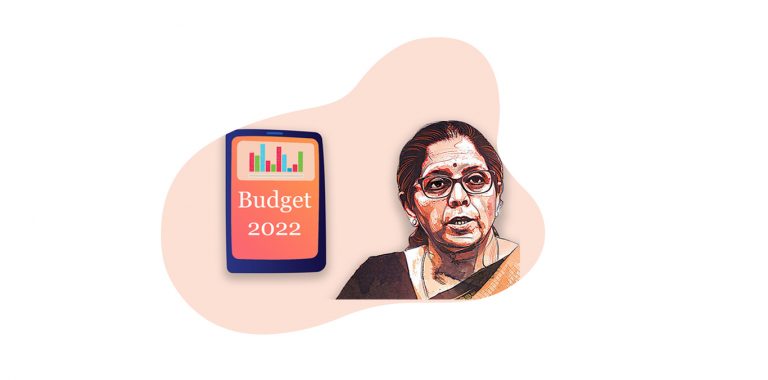
This year she walked in carrying a tablet to present the Budget. Those watching the live session felt it was the government’s emphasis on digital is what prompted this change.

Well, we hope you find it interesting like we do.

In the meantime, subscribe to the 5 in 5 Wealth Creation Strategy and create wealth.

Read more:  How Long-term investing helps create life-changing wealth – TOI

January is almost over and for those who follow the budget closely, it means 1st Feb is that much closer. 

Well, before we get to the best part of this article today here are few details you may want to know. 

Budget presenter: FM Nirmala Sitharaman 

When: 1st February 2022 at 11 am.

Where: Lok Sabha TV (Live). The other channels will also telecast the Budget. 

Now that the pertinent details are out of the way, let us get on to the most interesting part. We are sure you are as fascinated as us by the countless articles that have been gracing the headlines all January in the run-up to the Budget. 

What makes it interesting are the expectations from everyone right from experts, investors, businesses to manufacturers, retailers, shop owners, and the general public. 

All have a wish list that doesn’t seem to end. We thought putting these wishes all together in a neat list would give you a better idea of what people expect from FY2023 Budget. 

Here we go… 

Expectations of the industry: People expect the finance minister to announce plans that may help kindle India’s capex cycle while laying the roadmap for economic consolidation. They expect the government to announce a higher outlay on capital expenditure, new healthcare schemes to cement India’s place in the global supply chain. 

A tax-neutral GST, whether the rate implies tax rate hikes for various sectors is still unknown. Moreover, there are chances of excise duty reduction on petroleum products. Investment experts believe the markets expect more support for sectors like housing, auto, auto ancillaries along with improved PLI-measures in multiple sectors. 

The MSME sectors expect more financial support from the government along with reforms for import substitutes that encourage self-reliance and domestic manufacturing. If these policies include green energy, they will help to create a sustainable economy reducing domestic reliance on energy imports. 

Tax expectations: Tax experts expects the PPF limit to increase from Rs 1.5 lakh under 80C as it was intact in the last budget. They expects Ttax relaxations can to boost the real estate sector and lower GST rate on raw materials. 

The working population expects a rise in the standard deduction while the tax-free income slab increases from two lakh now to five lakhs. Given the changes in working patterns most expect a WFH allowance to be announced. Experts want an increase of Fifty thousand rupees Rs. Fifty thousand in the tax benefit on home loans for interest and principal repayment from the 2-lakh and 1.5-lakh, respectively. Investors expect the government to take steps to reduce tax litigation and encourage compliance through better oversight of transactions. 

Market and Investing expectations: The digital payment industry played a vital role in bringing in transparency and formalization in the economy. Many investors expect this trend to continue and want the government to consider incentivizing Venture Capitalists (VCs) and Private Equity (PEs) players and investors to fund R & D, and technology upgradeation in India. 

Experts believe the government must offer incentives to fintech companies that lend to the under-credited segment as it could help uplift the society and economy too. 

Bond investors feel India’s inclusion in the global bond indices is crucial from a long-term capital availability point of view. 

Investors expects measures that will make India globally competitive allowing labor-intensive sectors a level playing field, promote exports of value-added products, etc. Monetization of public assets, disinvestment of PSUs stake is the need of the hour. However, an increase in the spending for social and health welfare initiatives and capex in railways and infrastructure are crucial for economic revival. 

We’ve tried to offer a general view of what people expect. However, whether these expectations will be met, or the finance minister has more reforms in the kitty will remain a mystery till the 1st of February. 

Read more:  How Long-term investing helps create life-changing wealth – TOI

A fortnight ago, people felt things would be dreary in 2022. The world is recovering despite the rising inflation, supply chain issues, Omicron-led flight cancellation, an extension of work from home, curfews, and curtailed travelling,

The World economy has grown and will reach $100tn in 2022, says the Centre for Economic and Business Research (CEBR) in its 2022 report. The analysts foresee global economic growth at 4.2% better than expected before.

This growth will push the World’s GDP to over $100tn, higher than its level before the pandemic and two years before its previous deadline of 2024.

Not just the world, but India may overtake France again and become the sixth-largest economy in the world. Moreover, the CEBR report predicts a reversal of the historic mean with China and India moving up the league table by 2031. The GDP of the US is $22tn, which is larger than the combined GDP of 150 countries today.

Japan, China, the US, and Germany account for 50% of the world GDP. Although, the economic conditions are changing with the economic gravity shifting towards Asia. China, Japan, India, and Korea accounted for $26tn in 2021.

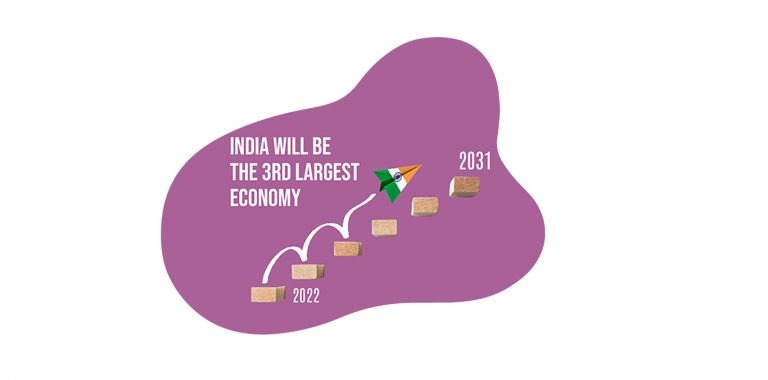
Experts forecast China will overtake the US to top the table in 2030, while India will overtake Germany to become the 3rd largest economy by 2031.

Will India really become the third-largest economy?

Well, like all economic forecasts these ratings are contingent of several other factors too.  

Let’s look at the factors that drive GDP in India

India is the second-largest country population-wise globally. In 2020, India’s per capita GNI was $6,284, making it a lower-middle-income country. Even though India is a large exporter of cars, chemicals and clothing, the services sector with flourishing industries in IT and software account for most of the economic activity.

India had been losing its growth momentum just before the COVID-19 crisis. However, the pandemic knocked India off course, and its GDP sank to a ten-year low of 4.2%. As a result, after surpassing the UK in 2019, the UK overtook India again in 2021.

Causes of slowdown

The instability in the banking system, adjustment to reforms, and a slowing of global trade were some factors that led to a slowdown in India’s growth. And then, the COVID-19 struck, causing both economic and human losses. India had ~140,000 deaths by mid-December, i.e., ten deaths per 10,000 cases.

The nationwide lockdown, curbs on economic activities, drying up global and domestic demand led to a slide when India’s Q2 2020 GDP fell 23.9% below its 2019 level.

However, as lockdowns lifted, the economic activities and growth rose gradually. The agricultural sector was a key driver in India’s recovery buoyed by a bumper harvest.

The CEBR Forecasts: 

The CEBR report said India’s GDP would fall 3% in 2020 and rise 8% in 2021. Per the Union Ministry of Statistics and Program Implementation, India’s GDP grew 8.4% in Q2 2021-22 compared to a 7.4% contraction in the same quarter in 2020.

Analysts foresee the UK staying ahead till 2024 before India takes over again, while the UN expects India’s population to overtake China’s in 2027.

CEBR estimates India’s economy will expand 7.0% in 2022.

Growth will naturally slow as India becomes more economically developed, with an annual GDP that may sink to 5.8% in 2035.

This growth trajectory will see India become the world’s third-largest economy by 2030, overtaking the UK in 2025, Germany in 2027 and Japan in 2030.

download 2025 11 12T114259.186

India’s road to reach the third spot on the WELT

The development of the COVID-19 pandemic domestically and internationally will influence India’s pace of fiscal recovery. India manufactures most of the world’s vaccines, and its 42-year-old vaccination programme that targets 55 million people each year will help it roll out the vaccines successfully and efficiently in 2022.

The medium to long-term benefits of reforms like the 2016 demonetization will deliver economic benefits. The government’s stimulus spending in response to the COVID-19 crisis was substantially more controlled than most other large economies, though the debt to GDP ratio rose to 89% in 2020.

Most of India’s workforce is engaged in the agricultural sector, so the changes must be gradual. These reforms must balance long-term efficiency gains with the need to support incomes in the short term.

An increase in infrastructure spending will help India unlock substantial productivity gains. So, any benefits the country accrues will depend on the government’s approach to infrastructure spending.

These are forecasts dependent on several global and domestic factors. We will have to wait and see whether India surpasses the UK and Germany to become the third-largest economy.

While we consider the economy, let’s do our part and invest wisely for the long term. Subscribe to our 5 in5 Wealth Creation Strategy and begin your journey today.

Read more:  How Long-term investing helps create life-changing wealth – TOI.

India is on its way to becoming the fastest growing economy globally.

Is this just speculation or rumor? No, it is a fact.

India’s economy has grown since October, with expansion in services, manufacturing, and exports.  The demand during the festive season added to the economic momentum.

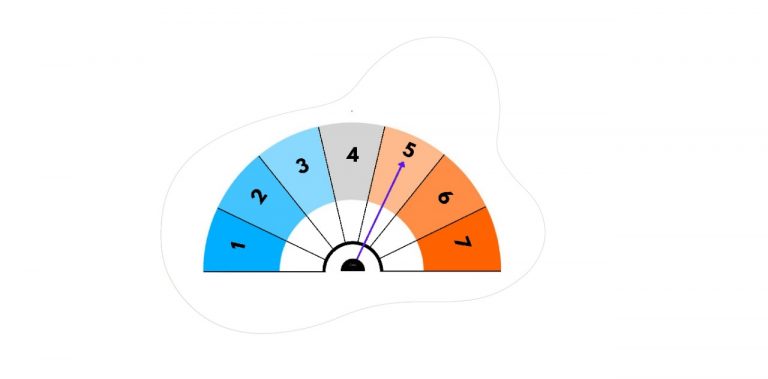
As a result, the momentum remained steady at a 5 on the Bloomberg News “Animal Spirits” gauge of indicators.

The indicators looked at are:

  • Markit India Composite PMI
  • Output Price Index
  • Order Books Index
  • Citi Financial Index
  • GOI data on exports, industry, and infrastructure sectors
  • RBI data on demand for loans.

The Bloomberg study considers a three-month weighted averages to even-out the instability in one-month readings in services, new orders, and growing exports.

Wondering what Animal Spirits have to do with economic recovery and finance?

Renowned British economist John Maynard coined the term Animal spirits to define how people decide on financial matters. It includes the buying and selling of securities; during economic stress or uncertainty.

These animal spirits denote human emotions of confidence, hope, fear, and negativity. Such emotions affect financial decisions that can fuel or hamper growth.

When public spirits are low, the confidence is low, driving down a promising market despite strong economic fundamentals. Similarly, when the spirits are high, buoyancy in the economy is high. This confidence helps the market prices soar. 

Now that you have a brief idea of what animal spirits mean. Let\’s see what is helping India stay on its growth trajectory.

The steady growth in several industry sectors, great demand in the services and a rebound in exports will help India stay on the path toward being the world’s fastest-growing economy this year. A Bloomberg survey due on 30th November is likely to show the GDP in Q2FY22 grew 8.2% from the same period year ago, after a high 20.1% growth the previous quarter.

The sectors that added to the high confidence of Animal Spirits.

Business Activity: An IHS Markit survey of purchasing managers of factories and services witnessed robust inflow of new orders helped the business activities grow. They kept the composite index growing for the third month in a row.

The shortage of raw materials and high commodity prices led to an acceleration in input cost inflation. It nullified the advancement new orders gave. Business activity, order books, and output prices score 7, on the Bloomberg ASI based on three-month weighted indicator averages against the 30-month historical data.

Exports and Imports: The exports grew 43% YOY in October. It was nearly double the growth in September due to rising demand for petroleum products, Indian coffee, and engineering goods. However, a surge in the inbound shipment of pulses, coal, crude oil, and newsprint led to a jump of 63% in imports too. Despite the increasing trade deficit, the Indian exports continued to hold onto the growth momentum scoring a 7 on the Bloomberg ASI.

Consumer Activity: Retail auto sales, an indicator of consumer activity, fell 27% to yoy as global chip shortage played havoc with production schedules. Moreover, two-wheeler sales, an animal spirits indicator in smaller towns, declined.

Yet, per RBI data, the bank credit grew 6.8% in October from 6.7% in the previous month. The liquidity in the market is still surplus leaving room for more loans and advances. The credit demand has improved, so consumer activity scored 7 on the Bloomberg ASI.

Industrial Activity: The Government data showed that industrial production rose 3.1% in September. It was a slow pace of growth compared to the first five months of FY22 due to the declining low base effect the pandemic caused.

Likewise, the output at infrastructure industries that makes up 40% of the industrial production index rose 4.4% in September, while the demand for cement, coal and natural gas continue to drive activity. Despite the slower pace of expansion, industrial activity is growing.

You can see the positive effects of stable growth in various activities. Though the pace is slow, it does not mean our economic activities have declined. We may not be jetting off, but India is still moving up on its way to becoming the strongest-growing economy in the world.

Do not fear the recent 5–10% correction in the market as it is transitory. The country’s growth story is still intact. As the economy grows, the financial markets will follow suit.

One must consider the current situation as a buying opportunity. Wondering how to begin, connect with us; we shall get you started on a wealth creation journey.

Read more:  How Long-term investing helps create life-changing wealth – TOI

Just when the markets were skyrocketing, economy was gaining momentum, and money trickling in, reports of Omxicron –the newest strain of the coronavirus appeared.

Does this feel like the beginning of the third-wave of COVID-19?

This time around, the government is alert and has taken pre-emptive steps like barring international travel to 14 countries including the UK, South Africa, some parts of Europe, etc.

Pfizer, BioNTech, Moderna, Johnson & Johnson, and AstraZeneca have begun studying the virus to protect against the strain. Proactive steps now will help us fight the virus better.

In the meantime, rapid growth in several sectors since the easing of lockdown has left the markets buoyant and businesses optimistic about recovery in the final quarter of this calendar year.

Data shows this quarter will be the highest since the second quarter of CY2014. The construction sector is optimistic about its selling price, inventory, and hiring.

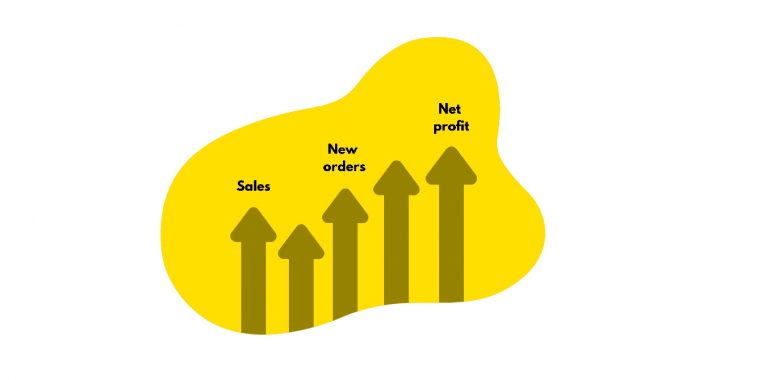
Adding a boost to this positive outlook is the Dun & Bradstreet Composite Business Optimism Index (BOI). The BOI for the final quarter stands at 94.6%, 27.4% higher than Q3CY2021. Per the survey, five out of six indices –the volume of sales, net profits, selling prices, new orders, inventories, and employees have grown compared to Q3 levels.

The Dun & Bradstreet’s Global Chief Economist says, “GDP growth during October-December quarter of 2021 will be strong as the BOI surged to an eight-year high.”

Per the survey, 79% of the respondents expect the sales volume to increase in Q4 2021 compared to the 67% in Q3 2021. 62% of the respondents expect net profits to grow in Q4 2021, compared to 48% of respondents in the previous quarter.

The director of National Institute of Public Finance and Policy, Pinaki Chakraborty, believes the current macro-economic situation in India is better than a year earlier. He anticipates growth despite elevated inflation owing to significant economic and financial expansion in the last 18 months and the looming COVID-19 third wave.

The IMF forecasts a growth rate of 9.5% in 2021 and 8.5% in 2022.

What is fuelling this positive outlook?

There can be several reasons why businesses believe the Q4 will be better for business, but the top few reasons are-

  • Boost in consumption in all sectors,
  • Easing of lockdown limitations
  • Bottled-up and festive demand
  • Payment of dearness allowance arrears
  • Improving consumer confidence in the economic growth

What could hamper recovery?
Several reasons like inflationary pressure, supply chain issues, high deficits of the Centre and the States, and the resource allocations may hamper recovery despite the optimistic outlook businesses have.

However, better management of inflationary pressures and supply will help businesses maintain their positive outlook. The Director, NIPFP Pinaki Chakraborty says, “If we manage deficits in a way that it doesn’t become an issue later, then recovery will be durable and sustainable.”

Read more:  How Long-term investing helps create life-changing wealth – TOI

Frequently asked questions

Get answers to the most pertinent questions on your mind now.

[faq_listing]
What is an Investment Advisory Firm?

An investment advisory firm is a company that helps investors make decisions about buying and selling securities (like stocks) in exchange for a fee. They can advise clients directly or provide advisory reports and other publications about specific securities, such as high growth stock recommendations. Some firms use both methods, like Research & Ranking, India’s leading stock advisory company, specializing in smart investments and long-term stocks since 2015.

An investment advisory firm is a company that helps investors make decisions about buying and selling securities (like stocks) in exchange for a fee. They can advise clients directly or provide advisory reports and other publications about specific securities, such as high growth stock recommendations. Some firms use both methods, like Research & Ranking, India’s leading stock advisory company, specializing in smart investments and long-term stocks since 2015.

An investment advisory firm is a company that helps investors make decisions about buying and selling securities (like stocks) in exchange for a fee. They can advise clients directly or provide advisory reports and other publications about specific securities, such as high growth stock recommendations. Some firms use both methods, like Research & Ranking, India’s leading stock advisory company, specializing in smart investments and long-term stocks since 2015.

An investment advisory firm is a company that helps investors make decisions about buying and selling securities (like stocks) in exchange for a fee. They can advise clients directly or provide advisory reports and other publications about specific securities, such as high growth stock recommendations. Some firms use both methods, like Research & Ranking, India’s leading stock advisory company, specializing in smart investments and long-term stocks since 2015.