Fundamental Analysis of Stocks

Fundamental analysis of stocks based on the quarterly and annual reports of the companies.

Introduction

Zomato! This word makes one think about food – Chicken Biryani, Shahi Paneer, Chole Bhature, Momos, and whatnot! So you name it, and it will satisfy all your food cravings. That is probably why it was the first startup unicorn to list on the stock markets, and its IPO was oversubscribed 38 times.

Zomato stock has been in the limelight for one reason or another since its IPO. So let us try to understand what the future looks like and whether it makes sense to invest in this company.

Zomato Overview

Zomato is an Indian multinational food delivery company that provides a platform for users to search for and discover restaurants, order food online, and make reservations. The company was founded in 2008 by Deepinder Goyal and Pankaj Chaddah and is headquartered in Gurugram, India.

Initially, it started as a restaurant review and discovery platform but has since expanded to offer online food ordering and delivery services. The company has acquired other food delivery companies like Uber Eats in India and a majority stake in Grofers (now renamed Blinkit), an online grocery delivery platform.

Currently, the company is one of the leading food aggregators in India, with an FY22 Gross Order Value (GOV) of Rs. 213 billion and average monthly transacting users of ~14.7m. It had a presence across 1,000+ cities in India with over >180k active delivery restaurants in FY22.

Zomato Company Journey

The journey began in 2008 when its founders launched the company as “Foodiebay,” a restaurant directory for the National Capital Region in India. The company initially focused on collecting and aggregating restaurant menus and reviews to help people make informed dining decisions. Following is a timeline of the major events in the company’s history:

  • In 2010, the company rebranded as Zomato and expanded its reach to other cities in India. The company also began offering online ordering and table reservations, which helped it gain popularity and grow its user base.
  • In 2012, the company launched its mobile app, which made it easier for users to search for restaurants and place online orders from their smartphones.
  • In 2015, it launched its online food ordering and delivery service in India, which became a significant source of revenue for the company. The company also expanded its international operations, focusing on the Middle East and Southeast Asia.
  • In 2018, it acquired Runnr, a hyperlocal logistics startup, which helped it strengthen its delivery capabilities.
  • In 2020, it acquired the Uber Eats India business, which made it the largest food delivery player in India.
  • In July 2021, Zomato went public, raising $1.3 billion in its initial public offering (IPO), making it one of the biggest IPOs in Indian history.
  • In June 2022, The board approved the acquisition of Grofers (later renamed Blinkit) for INR 4,447 crore in an all-stock deal.

Zomato Management Profile

Mr Deepinder Goyal is the Founder, MD, and CEO of Zomato. Deepinder holds an integrated master’s degree in technology in mathematics and computing from the Indian Institute of Technology, Delhi. Before founding Zomato, he worked with Bain and Company.

Mr Akshat Goyal is the CFO. Akshat holds a bachelor’s degree from Delhi College of Engineering and a master’s from IIM Bangalore. He is a co-founder of Pinnacle Capital Solutions Pvt Ltd. He headed the corporate development at Zomato before becoming CFO.

Ms Akriti Chopra heads people development at Zomato. Before this role, she was the CFO of the company. She is a Chartered Accountant who has worked with Zomato for 11 years.

Mr. Albinder Dhindsa is the Founder & CEO of Blinkit. Albinder holds a bachelor of technology degree from Indian Institute of Technology, Delhi, and a master’s from Columbia Business School (Columbia University). Previously, he worked with Zomato from Dec ’11 to May ’14 as the Head of International Operations.

Mr Rishi Arora is the Co-Founder of Blinkit. Rishi has been with Blinkit for over eight years and was heading operations before being promoted to Co-Founder. He completed his master’s degree from the IE Business School.

Quite a few executives from the senior management team have left the company recently, including Mr Pankaj Chaddah (Co-Founder), Mr Mohit Gupta (Co-Founder), Mr Rahul Ganjoo (Head of New Initiatives) at a time when the food tech major saw one of the steepest declines in market capitalization among new-age tech stocks in 2022.

Zomato Shareholding Pattern

image 15
Source: Screener.in

Zomato Business Segments

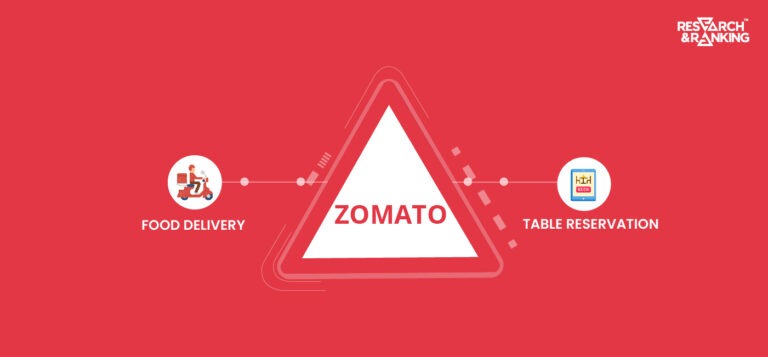
Zomato’s technology platform serves multiple needs by connecting customers, restaurant partners, and delivery partners. Customers use Zomato’s platform to search and discover restaurants, read and write customer-generated reviews, view and upload photos, order food delivery, book a table, and make payments while dining out at restaurants.

Zomato has four core offerings –

  • Food Delivery:  The Company generates most of its revenue from food delivery and related commissions charged to its restaurant partners for using its platform. Restaurant partners also spend on advertisements on its platform.
  • Hyperpure (B2B supplies): Through Hyperpure, Zomato supplies ingredients spanning fruits and vegetables, groceries, dairy, poultry, meats and seafood, bakery items, gourmet and packaged foods, beverages, and packaging to its restaurant partners. As the company expands into the quick commerce segment, its built-in Hyperpure capabilities will come in handy. As of March 2022, Hyperpure had a presence across ten cities and provided supplies to 51,000 unique restaurants.
  • Dining-out, Zomato Pro (membership/loyalty program), and others: This comprises Dining-out and the sale of subscription programs (Zomato Pro). Dining out is monetized through advertisements by restaurants for visibility on the platform. In August 2022, the company announced discontinuing its ‘Pro’ and ‘Pro Plus’ programs for its customers and replaced that with a new loyalty plan called Zomato Gold.
  • Quick Commerce Segment: Zomato announced the acquisition of Blinkit to foray into the quick commerce segment. Blinkit operates in the quick commerce business and delivers a wide range of essential spending, including groceries, fruits and vegetables, beauty and personal care, OTC medicines, and stationery items, among others, within a few minutes.
image 16
Source: Annual Report FY22 & Q3 FY23 Shareholders’ Letter

Zomato Fundamental Analysis

Food Delivery Business:

The online food delivery business of Zomato can be understood using the image below. Any improvement in Monthly Transaction users and frequency will boost the number of orders. In addition, any improvement in Average Order Value and take rate (commission charged by Zomato) will further add to the growth in Gross Order Value.

image 17

Online food delivery users are still a tiny portion of the total online users in India. For example, only 8% of the internet users in India use online food ordering v/s 53% and 38% in China and the US, respectively.

As a result of this under-penetration Indian online food delivery market is expected to post high growth in the coming years. Zomato has witnessed a ~4x jump in Gross Order Value from FY19 to FY22 and is expected to keep growing in the future as well. This growth in GOV was primarily driven by healthy growth in order volumes, while the average order value jumped from Rs. 282 in FY19 to Rs. 398 in FY22.

image 18
Source: Zomato Annual Report FY22 and Q3FY23 Shareholders’ Letter

Although the Online Delivery business is still loss-making, Adjusted EBITDA has improved considerably over the last four years.

image 19

Note* Adjusted EBITDA = EBITDA (+) share payment expense (-) rental paid for the period as per ‘Ind AS 116 leases’

Hyperpure business:

Hyperpure is Zomato’s farm-to-fork supplies offering for restaurants in India. Hyperpure supplies fruits and vegetables, groceries, dairy, poultry, meats and seafood, bakery items, gourmet and packaged foods, beverages, and packaging to its restaurant partners.

The company has invested in building infrastructure for the Hyperpure business over the past few years. This segment is seeing increased adoption by restaurant partners for its timely and high-quality B2B supplies. It believes that the Hyperpure business could become larger than its food delivery business because the addressable market is potentially massive.

Hyperpure has expanded its presence across 10 cities and 51000 unique restaurants as of March 2022.

image 20
Source: Zomato Annual Report FY22

The company kick-started its operations in 2019 and reported an exponential Revenue CAGR of ~230% between FY19 and FY22. Hyperpure’s annualized revenue run-rate is INR 16 bn with 9M Adj. EBITDA margin of -15%.

image 26
Source: Zomato Annual Report FY22 & QF3Y23 Shareholders’ Letter

Quick Commerce Business:

Zomato recently acquired Blinkit to expand its presence in the quick commerce segment. Quick commerce is a natural extension of its food delivery business since it caters to customers’ needs to quickly deliver essentials and other products. In addition, it increases Zomato’s addressable market manifold allowing it to cross-leverage its existing customer base and hyperlocal delivery fleet.

That being said, Quick Commerce is still in its early days and is highly competitive. Moreover, investors were not sure of the incremental cash burn from Blinkit.

Quick Commerce – Key Operating MetricsQ1FY23Q2FY23Q3FY23
Monthly Transacting customers (mn)2.22.63.1
Orders (mn)22.226.131.6
AOV (INR)528568553
GOV (INR bn)11.7214.8217.49
Revenue (INR bn)1.642.363.01
Adjusted EBITDA (as a % of GOV)-27.8%-17.5%-13.0%
Source: Q3FY23 Shareholders’ Letter

Key Strengths of Zomato:

  • Strong Network Effect: Like most internet businesses, Zomato has benefited immensely from the network effect. It focuses on a unique content strategy and a continuous rise in restaurant listings. This strategy feeds into the transaction funnel and creates a strong flywheel effect that leads to more customers, and more customers will lead to richer content.
  • More customers on the platform would also increase the number of restaurant food orders, making more restaurants available for food delivery. More restaurants on its platform improve the choices available to its customers leading to growth in the number of customers. Zomato’s platform has seen customer stickiness and increased GOV by the customers over the years.
  • Improving unit economics and growing at the same time: While Zomato’s business has grown rapidly, the unit economics of the food delivery business has also improved consistently. Zomato could be profitable in the next 2-3 years if this trend continues.

Zomato Financial Analysis

Revenue:

Zomato posted Adjusted Revenue of INR 23.63 bn in Q3FY23 as against INR 14.22 bn in Q3FY22, a y-o-y increase of 66%. This increase is partly also due to revenue coming in from the acquisition of Blinkit. It has grown its revenue consistently, as shown in the chart below. Currently, most of the revenue comes from Food Delivery, followed by Hyperpure and Quick Commerce.

image 23
Source: Annual Report FY22 and Q3FY23 Shareholders’ Letter

EBITDA Margin:

Adjusted EBITDA for Q3FY23 came in at INR -2.65 bn as against INR -2.72 bn for the same quarter last year. Adjusted EBITDA as a % of Adjusted Revenue was -11% for Q3FY23 compared to -19% for Q3FY22.

As you can see below, the Adjusted EBITDA margin has improved significantly over the last few years as various segments have scaled up.

image 24
Source: Annual Report FY22 and Q3FY23 Shareholders’ Letter

Zomato Share Price Analysis

From a market cap of over INR 1 Lakh Cr ($14 Bn) after its listing in July 2021, Zomato has lost over 50% of its market value. Its current market cap is INR 55K Cr ($6.8 Bn) as of 9th May 2023, down more than 60% YTD.

The stock has corrected on the back of valuation concerns and due to global tech stocks selloff. The stock also became the target of panic selling after the mandatory lock-in period for the pre-IPO anchor investors ended on July 2022.

Zomato’s shares also came under selling pressure after the company announced the acquisition of Blinkit, another loss-making firm, in June 2022.

image 25
Source: TradingView

Zomato Share Price Target Future Growth Potential

The food delivery business is still at a nascent stage in India with a long runway of growth. Increased penetration, higher order frequency, and higher AOV could drive strong growth for Zomato over the medium term.

Improvement in unit economics across various businesses (Food Delivery, Hyperpure, and Blinkit) will give better visibility of the path to profitability. It shall also be a huge trigger for any significant improvement in the stock price.

Reduction of competitive intensity on the quick commerce side (similar to what happened in the Food delivery market) can also help the company return to profitability faster than anticipated.

Key Risks:

  • Loss of market share to Swiggy: Swiggy continues to invest aggressively in growth, and a higher focus on becoming profitable could impact the market share of Zomato adversely.
  • Quick commerce bet may not play out as expected: Quick commerce is a highly competitive space. Besides, it is difficult to rationalize the delivery fleet due to time constraints in quick commerce that hinders profitability.
  • Macro challenges: Macro slowdown, higher inflation, higher interest rates, and lower liquidity could hurt the spending patterns and adversely impact Zomato.

Disclaimer Note: This article’s stocks and financials are for education only. They shouldn’t be considered as a recommendation by Research & Ranking. We will not be liable for any losses that may occur. The securities quoted, if any, are for illustration only and are not recommendatory.

FAQs

Is Zomato overvalued?

Although Zomato is consistently growing its topline, it is still not profitable. The stock price has corrected over 60% from all-time highs post the IPO as the market felt the stock was overvalued. The company has improved its margins and is expected to turn profitable. Brokerage houses believe that it is a good play in the long run, but investors may need to optimize for their entry into this stock.

Is Zomato a safe stock to buy?

Experts believe Zomato is a promising company with a positive outlook. Given that the company is still burning cash, investors must closely evaluate the future performance of the company before investing. Investors should look for a certain margin of safety to protect their capital in this stock.

Who is the promoter of Zomato?

Zomato, in its red herring prospectus, has mentioned that it has no promoter and is a professionally run company.

Read more: About Research and Ranking
How Long-term investing helps create life-changing wealth – TOI

Introduction

Deepak Nitrite led the Chemical stocks during the Covid-19 bull run and became almost a 10x multi-bagger between March 2020 and October 2021. The company is also considered the poster boy for China plus one and import substitution. Let us understand what the company does and analyze the share price of Deepak Nitrite.

Deepak Nitrite Overview

Deepak Nitrite started in 1970, is a diversified chemical manufacturer; their essential products, Sodium Nitrite, Sodium Nitrate, Xylidines, Toluidines, DASDA, Optical Brightening agents, Phenol, Acetone, Iso Propyl Alcohol, etc., hold market leadership globally.

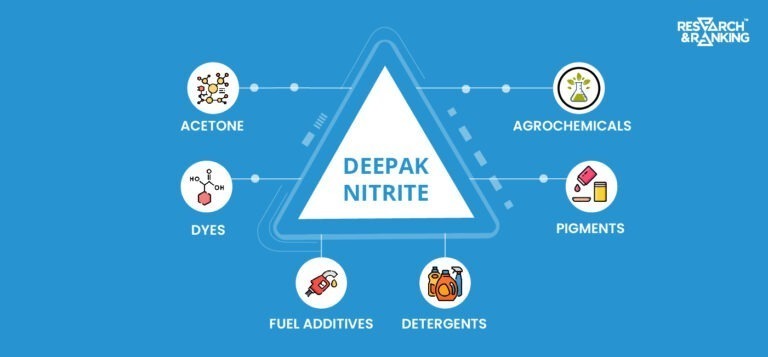
Deepak Nitrite’s products find applications in diverse industries like agrochemicals, pharmaceuticals, dyes, pigments, textiles, paper processing, detergents, explosives, etc.

Deepak Nitrite’s manufacturing presence is spread across six facilities in India, having strong customer relationships with BASF, Loreal, HPCL, BPCL, Henkel, Clariant, EASTMAN, Reliance, Bayer CropScience, etc.

Deepak Nitrite Company Journey

Deepak Nitrite has had a journey of planned transformation. Its expansion, in terms of product portfolio and geographical presence, is already taking share and bearing fruits for various stakeholders. Today, Deepak Nitrite is a robust and diversified company with a strong position in India and globally. Following is a timeline of how the company has evolved over the last 40+ years:

  • 1970: Incorporation of Deepak Nitrite Ltd
  • 1971: Listed on BSE with landmark over-subscription
  • 1972: Commissioned Sodium Nitrate and Nitrate Plant at Vadodara, Gujarat
  • 1984: Acquisition of Sahyadri Dyestuffs and Chemicals unit from Mafatlal Industries
  • 1992: Commissioned Nitro Aromatic Plant at Nandesari
  • 1995: Commissioned a full-fledged Hydrogenation Plant at Taloja
  • 2003: Acquisition of management & control of Aryan Pesticides Ltd
  • 2007: Acquisition of DASDA Division from Vasant Chemicals at Telangana
  • 2010: Foray into the Fuel Additives business
  • 2012: Accredited with Responsible Care, a global benchmark of environment, safety, and health management
  • 2013: Brownfield expansion for manufacturing Sodium Nitrite & Nitrate at Nandesari; Turnover crosses INR 1,000 crore
  • 2014: Commissioned a world-class facility to manufacture Optical Brightening Agents (OBA)
  • 2015: Promoted Deepak Phenolics Limited for manufacturing of Phenol & Acetone
  • 2016: Raised INR 83 crore via QIP (1st Round) to fund the phenol project
  • 2017: Raised INR 150 crore via QIP (2nd Round) to fund the phenol project
  • 2018: Raised INR 150 crore via QIP (3rd Round) to fund the phenol project. Deepak Phenolics Limited’s commercial production starts
  • 2019: Deepak Phenolics reached 2000 Cr. Revenue
  • 2020: Deepak Phenolics commissioned IPA plant (Isopropyl alcohol)

Deepak Nitrite Management Profile

Mr Deepak C Mehta is the Chairman of Deepak Nitrite. His business acumen, leadership skills, and dynamism have enabled Deepak Nitrite to quickly progress and achieve many milestones in the last 40 years. An active participant in industry forums, he has been the Chairman of the National Chemicals Committee at FICCI. He is a science graduate from the University of Bombay.

Mr Maulik Mehta has been the Executive Director and CEO of the company since June 2020. He has 14 years of experience in business development, strategy, human resources, external relations, patent, and product development. He has been responsible for the day-to-day business of the Company, as well as formulating the Group strategy.

Mr Sanjay Upadhyay is the Group CFO of the company. He has over 40 years of experience in Finance, Treasury, Taxation, Commercial, Secretarial, and Corporate Restructuring. He oversees risk Management, Governance, Investor Relation, and IT functions. Apart from these, he has expertise in growth strategy, acquisitions, restructuring, etc.

Mr Meghav Mehta has been Deepak Phenolics Ltd.’s Executive Director since May 2019. He is an astute strategist and was instrumental in commissioning the Phenol plant as the Company’s wholly-owned subsidiary, Deepak Phenolics Limited. In addition, he has spearheaded multiple digital transformation initiatives in the Deepak Group.

Deepak Nitrite Shareholding Pattern

image 2
Source: NSE Website

Deepak Nitrite Company Analysis

From a bulk commodity products manufacturer, Deepak Nitrite Ltd. (DNL) has evolved into a speciality chemical company operating in four critical divisions as follows:

  1. Bulk Chemicals and Commodities: These are standard products manufactured in bulk quantities
  2. Fine & Specialty Chemicals: These are specialized products customized to the client’s specifications
  3. Performance products: These are products with stringent requirements in terms of performance in the manufacturing process
  4. Phenolics: These are high-volume import substitutes
image 3
Source: FY22 Annual Report

Revenue contribution of various business segments:

image 4
Source: Deepak Nitrite Annual Reports (FY18-FY22)

Bulk Chemicals and Commodities (Basic intermediates):

High-volume products across organic and inorganic chemicals characterize Deepak Nitrite’s basic chemicals division. The essential products in the Basic Chemicals segment include

  • Nitro toluene which is consumed in colorants, agro-chemicals, and rubber chemicals,
  • Fuel additives used in refineries and
  • Sodium nitrite is consumed in dyes/pigments, pharma intermediates, food colors, and colorants.

DNL has been the largest sodium nitrite and sodium nitrate producer since 1972. Revenue share from Bulk Chemicals & Commodities stood at 18% in FY22. The following chart shows revenue growth and EBIT margins for this business segment.

image 5
Source: Deepak Nitrite Annual Reports (FY18 to FY22)

Fine & Speciality Chemicals:

The Fine and Specialty Chemicals division (FSC) product profile includes xylidines, cumidines, oximes, nitro oxylene, having applications in agrochemicals, pharmaceutical intermediaries, and personal care sectors.

DNL is the sole manufacturer of thermal paper chemicals in India. Revenue share from Fine & Speciality Chemicals stood at 12% in FY22. The following chart shows revenue growth and EBIT margins for this business segment.

image 6
Source: Deepak Nitrite Annual Reports (FY18-22)

Performance Chemicals:

The performance products division consists of two products: optical brightening agents (OBA), where the company enjoys a 75% market share in India, and Di-amino Stilbene Di-sulphuric acid (DASDA), with a market share of 60% in India and 20% globally.

image 7
Source: Company Annual Reports

DNL is the only fully integrated manufacturer of OBA with vertical integration from toluene to para nitro toluene (PNT) and further into DASDA and OBA. Key application areas for OBA are detergents, paper, and textiles.

Revenue share from Performance Chemicals stood at 8% in FY22. The following chart shows revenue growth and EBIT margins for this business segment.

image 8
Source: Deepak Nitrite Annual Reports (FY18-FY22)

Phenolics:

India was one of the major importers of phenol, with ~80% of the demand being catered through imports and the remaining 20% by domestic players like Hindustan Organics Ltd and Schenectady Herdillia Ltd (SI Group).

Deepak Phenolics Limited (DPL) is a wholly owned subsidiary of Deepak Nitrite, formed to seize the import substitution opportunity in India’s chemical industry. It manufactures phenol, acetone, and IPA and has reportedly achieved a more than 50% market share in the country by substituting most phenol and acetone imports. As a result, revenue share from the Phenolics division stood at 62% in FY22. The following chart shows revenue growth and EBIT margins for this business segment.

image 9
Source: Deepak Nitrite Annual Reports (FY18-22)

Deepak Nitrite Fundamental Analysis

Manufacturing facilities of Deepak Nitrite:

The company has six manufacturing facilities across key chemical hubs of the country.

image 10
Source: FY21 Annual Report/ Investor Presentation
  1. Nandesari, Gujarat – Bulk and commodity product manufacturing
  2. Dahej, Gujarat (2 separate facilities) – Full spectrum stilbenic Optical Brightening Agents (OBAs) production and  Phenol and Acetone manufacturing facility
  3. Taloja, Maharashtra – Hydrogenation and noble metal catalysis speciality
  4. Roha, Maharashtra – Multispecialty site specializing in pilot plants
  5. Hyderabad, Telangana – Manufactures DASDA for captive use and commercial sales

Deepak Nitrite’s growth can be categorized into three stages:

  • FY11-FY15: De-risked business model through product diversification: During FY11 to FY15, DNL entered into newer products in the Fine and Specialty segment, strengthened its product portfolio, and increased its export.
  • FY15-FY19: Expansion of Performance Chemicals and entry into Phenol Acetone:

During FY15-19, DNL forayed into Performance Chemicals, becoming the only company having a fully integrated OBA manufacturing facility [with vertical integration from toluene to para nitro toluene (PNT)]. As a result, DNL enjoys a 75% market share in OBA and a 60% in DASDA (an input RM for OBA).

DNL further started trading in Phenol Acetone products in the year 2017. Deepak Phenolics Ltd was incorporated in 2015 by DNL as a 100% subsidiary to enter into the Phenol-Acetone manufacturing business (import substitute). The plant got operational in November 2018 and today contributes more than 60% of the revenue for the company.

  • FY19-FY25 Value-added products, capacity expansion, and Phenol-Acetone downstream chemistry are expected to drive growth. The company is also looking to get into new chemistries.

Deepak Nitrite Company Financial Analysis

Revenue:

In FY22, Deepak Nitrite posted revenue of INR 6,802 Cr, 56% higher than FY21 revenue of INR 4,360 Cr. While in Q3FY23, the company reported revenue of INR 1,991 Cr, 15.6% higher than Q2FY22 revenue of INR 1,722 Cr. Deepak Nitrite has delivered a five-year revenue CAGR of 38% on the back of significant expansion in the Phenolics business. Revenue growth is expected to normalize going forward due to reduced product prices in the phenol business. 

image 11
Source: Deepak Nitrite Annual Reports (FY18-FY22)

Operating Profit & Operating Margin:

In FY22, Deepak Nitrite posted an EBITDA of INR 1,646 Cr, 29.71% higher than the FY21 EBITDA of INR 1,269 Cr. This translated into an EBITDA margin of 24% in FY22 against 29% in FY21.

Margins have declined over the last six quarters and have come down to 16% in the most recent quarter (Q3FY23) from a high of 31% in Q4FY21.

Net Profit & Net Profit Margin

Deepak Nitrite posted a Net Profit of INR 1,067 Cr in FY22, translating into a PAT Margin of 10.88%. PAT margin peaked during Covid-19, and FY21 was the best-ever year for the company, with a PAT margin of 17.8%.

Deepak Nitrite Key Financial ratios

Return on Capital Employed (ROCE)

Deepak Nitrite has consistently improved its ROCE ratio year-on-year from a low of 10% in FY18 to reach 40% in FY22. ROCE has been enhanced on the back of higher profitability and better utilization of assets.

image 12
Source: Deepak Nitrite Annual Reports (FY18-FY22)

Debt to Equity Ratio

Deepak Nitrite has significantly reduced its long-term borrowing from a high of INR 870 Cr in FY19 to as low as 95 Cr in the Sep 22 quarter. Consequently, the Debt to Equity ratio has reduced to 0.07, which is a massive positive for the company. This allows the company to plan for more capital expenditure going ahead.

Deepak Nitrite Share price analysis

In the last ten years, the chemical stock price increased from INR 17.40 (close price on 21st October 2011 on NSE) to INR 1,858 (comparable price on 26th April 2023 on NSE) — registering around a 10578% rise in this period.

If an investor had invested INR 1 lakh in this multibagger stock ten years ago, buying Deepak Nitrite shares at INR 17.40 levels, and had remained invested in this stock until its INR 1 lakh would have turned to INR 106 Cr as of 26th April 2023. This reflects how important patience is for stock market investors.

image 13
Source: TradingView

Deepak Nitrite Share Price Target and Growth Potential

To date, Deepak Nitrite has strategized its growth story on the backs of

  • New product expansion in Basic Chemicals and Fine Speciality segments
  • Targeting the optimum mix of performance chemical products and customers for higher margins
  • Successful commissioning and scaling of Phenol Acetone plant

Going forward, the company is looking to grow on the back of

  • Creating value and developing value-added products of Phenol and Acetone
  • Adding new chemistry platforms like fluorination and photo chlorination and
  • Investing in upstream and downstream integration projects to improve margins

These measures will further diversify the product portfolio, widen the customer base and increase value-addition across the product portfolio. Moreover, Deepak nitrite will gain significantly from immense opportunities in the sector through the ‘Make in India for the World’ initiative and the strong recurrence of the China+1 strategy.

Key risks

  • China’s step towards self-sufficiency in Phenol and increased competition in the region could result in a structural glut in the overall market, which could lead to a reduction in phenol division margins
  • Unavailability or procurement challenges of key petrochemicals – Benzene and Propylene
  • Failure to adhere to environmental practices and Safe, Health related compliances can call for immediate attention from environmental authorities.
  • Risks associated with macro parameters like Crude oil prices and USD/INR equation can cause a significant dent in margins.

Disclaimer Note: This article’s stocks and financials are for education only. They shouldn’t be considered as a recommendation by Research & Ranking. We will not be liable for any losses that may occur. The securities quoted, if any, are for illustration only and are not recommendatory.

FAQs

Is Deepak Nitrite suitable for the long term?

Deepak Nitrite is expected to be a massive beneficiary of China+1 and import substitution. In addition, the company is expanding into existing and new chemistries. The company’s fundamentals look strong; hence, one can expect the company to do well in the long term. That being said, one has to be cautious about their entry valuation, even in outstanding companies.

Is Deepak Nitrite debt free?

As of April 2023, the company is debt free. It has borrowings of INR 270 Cr, cash of 64 Cr and Investments of INR 425 Cr. So, to conclude, the Net debt of the company is zero.

What is the Face Value of Deepak Nitrite?

Deepak Nitrite has a face value of INR 2 per share.

Read more: About Research and Ranking
How Long-term investing helps create life-changing wealth – TOI

The power sector is the most critical sector of any economy because any country’s long-term economic development requires adequate, reliable, and affordable power supply around the clock.

Over the last two decades, India’s power sector has gradually improved, with increased private sector participation in power generation and transmission. Companies such as Adani Power, Tata Power, and Torrent Power are investing heavily in expanding their generation capacity to meet India’s rising demand for power.

This article will analyze India’s largest private thermal power producer. But first, let’s check the long-term growth potential of Adani Power share price.

Adani Power Company Journey

Unlike its peers, the footprints of Adani Power in India’s power sector are not very old, and its journey started in 2006 with the setup of the first power plant in Mundra, Gujarat. However, the company was incorporated in June 1996 by Mr Gautam Adani, Mr Rajesh Adani, and other relatives.

Over the years, Adani Power’s generation capacity has increased to 13,650 MW, making it India’s largest private-sector thermal power generation company. It is in the process of building and operationalizing an additional 3,200 MW of power plants by 2028.

With its strong project execution skills, Adani Power is now leading in setting up coal-based thermal plants based on ultra-supercritical technology, known for having low carbon footprints and higher efficiency. As a result, it became the world’s first company to set up a coal-based supercritical thermal power project under the Kyoto Protocol’s Clean Development Mechanism.

At present, Adani Power is India’s most profitable thermal power generation company and has shown excellence in operational capabilities. For example, a unit (330M MW) in its 4,620 MW Mundra power plant set a national record by running continuously for 600 days in March 2017, showcasing its might to achieve high operational efficiency. The company had a market cap of ₹79,318 crore as of 26th April 2023.

Business Overview of Adani Power

It has segregated its business into two following segments:

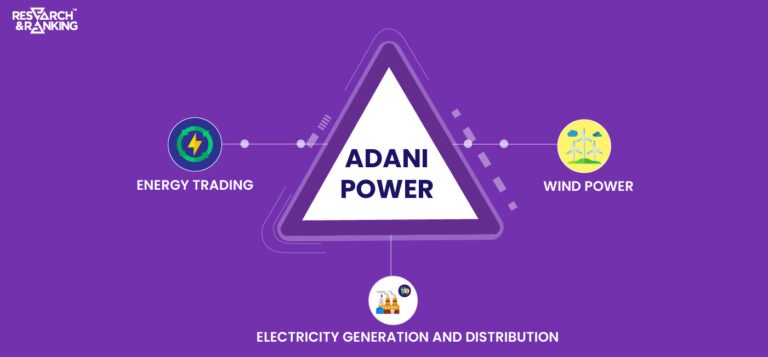
  • Power Generation and related activities
  • Trading and Investment activities

Power Generation and related activities account for over 90% of the turnover. Of the 13,650 MW of installed power generation capacity, 40 MW is the solar plant. In addition, the company built 9,620 MW of thermal capacity on its own and acquired four financially stressed thermal plants of 4,370 MW.

On April 10th 2023, Adani Power commissioned the first 800 MW unit of the 1600 MW Godda thermal plant in Jharkhand and started supplying the power to Bangladesh from this plant. The company has a 25-year-long power purchase agreement with the Bangladesh government from this plant.

It is also constructing a 1600 MW ultra-supercritical thermal plant in Singrauli, Madhya Pradesh.

Plant Load Factor (PLF)

Adani Power has the most super-efficient and modern power generation units, with 74% of the total installed capacity being supercritical or ultra-supercritical units. As a result, it helps maintain a higher plant load factor, an important metric to measure the power plant’s capacity utilization.

In FY22, the average plant load factor was 52%, which aligns with the average all-India PLF. However, due to increased fuel costs and insufficient domestic coal supply, the average PLF declined to 42.1% in Q3, FY22.

Adani Power Management Profile

Adani Power is led by Chairman Mr Gautam Adani and Director Mr Rajesh Adani, who sit on the company’s Board of Directors.

Mr Anil Sardana, the Managing Director and CEO, has over three decades of experience in power and infrastructure. He began his career with NTPC before moving on to various leadership positions with BSES and Tata Power. Before joining Adani Power, Mr Sardana was MD and CEO of Tata Power.

Mr Shersingh B. Khyalia is the Chief Executive Officer (CEO), a Chartered Accountant by profession, bringing over 32 years of experience in the power sectors. Before joining Adani Power, he was Managing Director at Gujarat Power Corporation.

Mr Shailesh Sawa is the Chief Financial Officer (CFO) and joined Adani Power in July 2020. Earlier, he was with HCC and Essar. He is a Chartered Accountant and Cost Accountant by profession.

Adani Power Shareholder Profile

image
Source: BSE India

As of 31st March 2023, the promoter and promoter group has pledged 25.15% out of the 74.97% stake in Adani Power.

Adani Power Financials

Revenue

In FY22, Adani Power reported net consolidated revenue of ₹27,711.18 crores, up 5.6% from ₹26,221.48 crores in FY21. While, in 9MFY23, the company reported net consolidated revenue of ₹28,531 crores, up by 66.7% from ₹17,113.40 crores registered in 9MFY22.

Segment-wise Revenue Breakup

Segments9MFY23 (in cr.)9MFY22 (in cr.)FY22 (in cr.)FY21 (in cr.)
Power Generation and Related Activities₹28,423.19 (+66.7%)₹17,042.76₹27,221.79 (+5.2%)₹25,870.60
Trading and Investment Activities₹108.05 (+53%)₹70.64₹489.40 (+39.47%)₹350.88
Source: Adani Power Q3FY23

EBITDA

In FY22, consolidated EBITDA grew by 30% to ₹13,789 crore from ₹10,579 crore in FY 21. For 9MFY23, the consolidated EBITDA came in 103% higher at ₹11,851 crores compared to ₹5,847 crores in 9MFY22 because of improved tariffs and higher one-time revenue realization. However, breaking further, the Q3FY23 EBITDA stood marginally lower at ₹1,996 crores compared to ₹2,003 cores in Q3FY22, mainly due to higher fuel costs

image 1
Source: Adani Power Q3FY23

Net Profit

In FY22, profit after tax increased by a little over four times to ₹4,912 crores, compared to ₹1,240 crores in FY21.

While in Q3FY23, consolidated profit after tax nosedived to ₹8.77 crores from ₹218.49 reported in Q3FY22 on account of higher tax expenses. Profit before tax for the period is ₹211.90 crores.

Adani Power Key Financial Metrics

Current Ratio: In FY22, the current ratio marginally improved to 0.95 times from 0.90 times in FY21.

External Debt to EBITDA: Due to higher EBITDA and lower external debt level in FY22, the External Debt to EBITDA ratio improved to 3.07 times from 4.37 times in FY21.

Debt-to-equity Ratio: During FY22, the consolidated debt-to-equity ratio improved to 8.89.22 times from 99.58 times in FY21.

Net Profit Margin: The net profit margin improved to 17.72% in FY22 from 4.84% in FY21 on account of higher realization due to increased tariffs.

Return on Net Worth: The consolidated return on net worth reduced to 89.48% in FY22 from 255.22% in FY21.

Adani Power Share Price Analysis

Adani Power’s initial public offering (IPO) was launched on July 28, 2009, and was offered to the public at a price range of ₹90-100 per equity share, raising ₹3,016.52 crores. As of April 26th, 2023, the stock was listed at a discount, and the holding period return (4,999 days) on the listing price is 101%, while on the offer price, the holding period return (5017 days) is 111%.

Adani Power share price made an all-time high of ₹432.50 on 22 August 2022, before crashing down.

Adani
Source: Trading View

The stock has never undergone a split, or the company has issued any bonus shares or paid dividends to shareholders since its listing.

Adani Power Fundamental Analysis

Adani Power is India’s most financially stable and profitable private-sector thermal power producer. The key to its financially stable operation is power-supply agreements with long-term power-purchase agreements (PPA) with buyers, including regular tariff increases.

Power Purchase Agreements

The company’s 78% of the installed and upcoming greenfield capacities are tied to PPAs, enabling revenue visibility, and 73% of domestic coal requirement is met through long-term fuel supply agreements (FSAs). Also, imported coal-based PPA includes provisions of fuel cost passthrough, thus enhancing cash flow stability.

Technologically Advanced Power Plants

The second factor plays a huge role in modern and technologically-advanced power plants. For example, 68% of the installed capacity is supercritical or ultra-supercritical power plants. And by 2027, the share of supercritical power plants will increase to 74%. These technologically advanced plants can produce electricity most efficiently with minimum pollution.

Deep Backward Integration and Geographical Advantage

Adani Power has deep backward integration with the mine-to-logistic company and dedicated teams with strong domain expertise in O&M, fuel management, power sector regulation, project management, and business development, which helps to keep costs under control.

And power plants are located closer to the demand zone, and fuel sources are helping it to reduce wastage and transportation costs.

All these factors and arrangements play a crucial role in providing visibility of revenue and profits for the next few years, helping it plan the capex and operations. However, despite favorable operational conditions, Adani Power faces multiple business risks which can affect the long-term growth potential of Adani Power share price.

Risks

Adani Power is a pure thermal power generation company; the government’s growing focus on increasing the share of renewable and sustainable energy in India’s installed capacity could limit thermal power generation.

Almost 22% of Adani Power’s installed capacity is exposed to short-term market risks due to the absence of fuel-supply agreements. Non-availability of coal from state-owned coal suppliers renders plants to operate at lower efficiency. And volatile international coal price impacts the merit order position of PPAs with coal price passthrough.

A higher debt level may hamper its ability to undertake huge capex, and high finance costs can drag the company’s profitability.

Opportunities

Over the last decade, India’s installed power capacity has increased 8.1% CAGR to 416059 MW as of March 31, 2023, with coal and lignite-based power plants accounting for nearly 51% of coal and lignite-based power plants’ installed capacity. However, despite adding capacities yearly, the country faces a power deficit in peak periods.

The power deficit increased to 0.5% in FY23 from 0.4% in FY22, indicating strong demand and increased economic activity. On the other hand, the national power deficit had decreased significantly since FY13, when it was 8.7%. Therefore, players like Adani Power will likely continue to benefit from the strong power demand outlook.

The average plant load factor at Adani Power is hovering around the 50% level. Therefore, greater domestic coal availability could result in higher PLFs and higher income.

Proven capabilities of turning around stressed power assets acquisitions like Mahan Energen Limited, acquired from Essar, and Raipur Energen Limited, acquired from GMR Chhattisgarh, helping Adani Power to diversify geographically and increase revenue while avoiding execution risks.

Adani Power Share Price Future Growth Potential

Recently, stocks of Adani Group companies, including Adani Power, witnessed a meltdown after Hindenburg Research accused the firm of severe corporate governance lapses and misuse of funds.

Keeping aside the concerns raised by Hindenburg Research, Adani Power share price long-term growth outlook looks positive. The commissioning of 2400 MW power plants in the next three years will add to the top and bottom lines.

The key triggers that will aid in the rise of Adani Power share price are the release of pledged shares by promoters and a reduction in debt level, currently making it vulnerable to increased market volatility.

Large capex plans on hold due to the evolving scenario may impact growth. Still, close monitoring of Adani Power financial performance in the coming quarters is critical to assessing the company’s financial stability.

Disclaimer Note: This article’s stocks and financials are for education only. They shouldn’t be considered as a recommendation by Research & Ranking. We will not be liable for any losses that may occur. The securities quoted, if any, are for illustration only and are not recommendatory.

FAQs

Is Adani Power a profitable company

Yes, Adani Power is a profitable company. It reported a net profit of ₹4,912 crores and a net profit margin of 16% in FY22.

How has Adani Power share price performed in the last three years?

Adani Power share price has given good returns to investors. Adani Power IPO was launched in July 2009 at an offer price of ₹100 per equity share. As of 26th April 2023, Adani Power share price is trading at ₹211, making an all-time high level of ₹432 on 22nd August 2022.

When was Adani Power established?

Adani Power was incorporated in June 1996, and it set up its first power plant at Mundra in July 2006.

Read more: About Research and Ranking
How Long-term investing helps create life-changing wealth – TOI

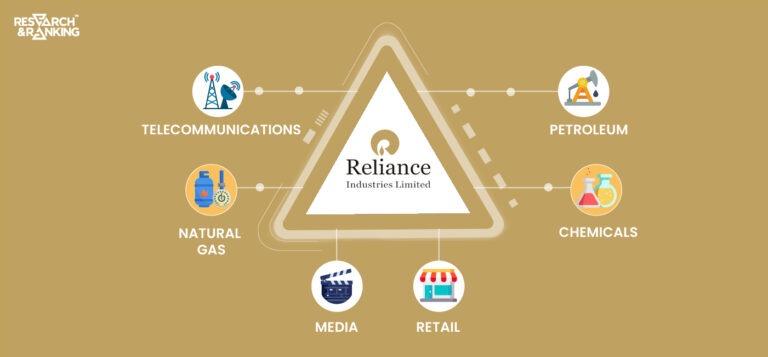
Reliance Industries

Reliance Industries operates on a massive scale. It became India’s first corporate to cross $100 billion in annual revenues. The company alone accounted for nearly 8.4% of India’s merchandise exports in FY22. It also continued to be the largest tax-payer in India. Reliance’s contribution to the national exchequer through various direct and indirect taxes is a massive INR 1,88,012 crore and keeps growing yearly.

It stands at 104th position on the latest Fortune’s Global 500 List 2022, and it has been on the Fortune 500 list for 19 years now.

The company continues to invest in new businesses and aims to double its market value by 2027. First, it brought a revolution in the telecom industry, and now it is on the path to disrupting Indian retail and finance. Reliance is a perfect example of how a company should evolve with changing market conditions. The company has built itself as one of the leaders of digital change in the country. The Reliance Industries Share Price is Rs. 2361.90 as on 26th April 2023.

Let us try and understand what the company is doing and how it will change the business in the future.

Reliance Industries Overview

Reliance Industries is one of the largest private sector companies in India. It is vertically integrated across the oil & gas supply chain, with activities spanning exploration & production, refining and marketing petroleum products, and manufacturing petrochemicals and textiles. Its Jamnagar refining complex, with a capacity of 1.4Mbpd (million barrels per day), is one of the world’s largest and most complex single-location refineries. In addition, Reliance is the world’s largest polyester yarn and fiber producer and among the top 5 to 10 producers in the world in major petrochemical products.

Reliance Industries has evolved from being a textiles and polyester company to an integrated player across energy petrochemicals, textiles, natural resources, retail, and telecommunications and operates world-class manufacturing facilities nationwide. As a result, RIL’s products and services portfolio touches almost all the needs of people daily across economic and social spectrums.

Reliance Industries Journey

Dhirubhai Ambani and his brother, Champaklal Damani, founded a small textile manufacturing unit in 1960. However, the company expanded rapidly under the leadership of Dhirubhai Ambani, who is widely credited for revolutionizing the Indian business landscape.

In the 1970s, RIL diversified into petrochemicals, oil refining, telecommunications, and retail. In 1977, the company went public, and over the years, it has become one of the largest publicly traded companies in India.

Dhirubhai Ambani passed away in 2002, and his sons Mukesh Ambani and Anil Ambani took over the company. However, in 2005, the company was split into two parts, with Mukesh Ambani retaining control of the flagship company, RIL, while Anil Ambani took control of Reliance Communications, Reliance Infrastructure, and other businesses.

Under Mukesh Ambani’s leadership, RIL continued to expand into new sectors and markets. In 2016, the company launched its telecom venture, Reliance Jio Infocomm, which disrupted the Indian telecom market by offering free voice calls and cheap data plans. As a result, reliance Jio soon became the largest telecom company in India by subscriber base.

Following is a timeline of some of the critical years in the company’s history:

  • 1960: Reliance Industries is founded by Dhirubhai Ambani and his brother, Champaklal Damani, as a small textile manufacturing unit in Mumbai, India
  • 1977: The company goes public with an initial public offering (IPO) that is oversubscribed by seven times
  • 1985: Reliance Industries diversifies into petrochemicals and sets up a petrochemicals plant in Hazira, Gujarat
  • 1991: The company enters the refining business by acquiring a controlling stake in the Jamnagar Refinery in Gujarat
  • 1992: Reliance Industries becomes the first Indian company to raise money in the international markets through a global depository receipt (GDR) issue
  • 1995: The company launches Reliance Infocomm, a telecommunications venture that would later be spun off into Reliance Communications
  • 2002: Dhirubhai Ambani, the founder of Reliance Industries, passes away
  • 2005: The company is split into two parts, with Mukesh Ambani taking control of Reliance Industries and Anil Ambani taking control of Reliance Communications, Reliance Infrastructure, and other businesses
  • 2006: Reliance Industries acquires the assets of the Indian Petrochemicals Corporation Limited (IPCL) and becomes the largest producer of petrochemicals in India
  • 2010: The company sets up Reliance Jio Infocomm, a broadband and telecommunications venture
  • 2016: Reliance Jio launches its services and quickly becomes the largest telecom operator in India by subscriber base
  • 2020: Reliance Industries raises over $20 billion in investments from global technology companies, including Facebook, Google, and Qualcomm, for its digital and retail businesses

Reliance Industries Management Profile

Mr Mukesh Ambani is the Chairman & MD of Reliance Industries. He has been on the Board of RIL since 1977. He initiated Reliance’s backward integration journey – from textiles to polyester fiber – to petrochemicals and petroleum refining, then went upstream into oil and gas exploration and production.

Mr Hital Meswani is the Executive Director. His overall responsibility spans the petroleum refining & marketing business, petrochemicals manufacturing, and RIL’s several corporate functions, including HRM, IT, research & technology, and capital projects execution.

Mr Nikhil Meswani is the Executive Director. He is primarily responsible for the petrochemicals division and has significantly contributed to Reliance becoming a global petrochemical leader. Between 1997 and 2005, he handled the company’s refinery business.

Mr PMS Prasad is the Executive Director of the company. He has been with Reliance for about 40 years, holding various senior positions in the company’s fiber, petrochemical, refining & marketing, and exploration & production businesses.

Reliance Industries Shareholding Pattern

image 77
Source: Trendlyne

Reliance Company Analysis

Reliance has operated in several spaces since its inception, from trading yarn to oil to telecom and now to digital transformation and retail segment. One of the critical aspects of any business is how they adapt to the changing times. Reliance is a perfect example of how a company should evolve with the market in the changing business environment.

Various business segments are:

  • Oil to Chemical
  • Oil & Gas
  • Reliance Retail
  • Digital Services
  • Others

Revenue Breakup Contribution of Business Segments

In Percentage20192020202120229M FY23
Oil to Chemical (O2C)73.3%61.5%51.5%56.8%55%
Retail16.9%22.2%25.4%22.7%24.1%
Digital Services6.3%9.5%14.5%11.4%11.1%
Oil & Gas0.6%0.4%0.3%0.8%1.5%
Others2.9%6.4%8.2%8.3%8.4%
Source: BSE India

The table shows how the revenue contribution from the refining and petrochemicals segment has been falling. At the same time, digital services and retail have been on a continuous uptrend. Reliance Industries Ltd aims for net-zero carbon emissions by 2035.

Oil to Chemical Business (O2C): 

The oil to chemicals (O2C) business of Reliance Industries Limited (RIL) involves the conversion of crude oil into high-value chemicals, such as olefins, aromatics, and polymers. This business is a significant contributor to RIL’s overall revenue and profitability.

RIL’s O2C business includes refining, petrochemicals, fuel retail, and aviation fuel. The refining segment comprises Jamnagar Refinery, one of the world’s largest single-site refineries with a capacity to process over 1.4 million barrels of crude oil daily. The petrochemicals segment includes the production of chemicals like polyethene, polypropylene, and PVC, among others.

In addition, RIL’s fuel retail business operates a network of over 1,460 petrol pumps across the country. RIL is also involved in producing and selling aviation fuel through its subsidiary Reliance Aviation.

image 78
Annual Report & Quarterly Results

Oil & Gas E&P

Reliance Industries Limited (RIL) is also involved in oil and gas exploration and production (E&P). RIL’s upstream oil and gas operations focus on developing domestic and international assets.

In India, RIL holds a 60% stake in the KG-D6 block, located in the Krishna-Godavari basin off the east coast of India. This is one of the most significant gas discoveries in India and has the potential to produce substantial volumes of oil and gas. RIL also holds stakes in several other oil and gas blocks in India.

Internationally, RIL has exploration and production assets in the United States, Colombia, and Peru. In the United States, RIL’s subsidiary Reliance Eagleford Upstream Holding LP has a significant presence in the Eagle Ford shale play in Texas.

RIL’s E&P business is integral to its overall energy portfolio and complements its downstream refining and petrochemicals business. The E&P business also provides RIL with a source of long-term, stable revenue streams and helps the company to diversify its energy portfolio.

image 79
Source: BSE India

Digital Services:

Reliance Jio Infocomm Limited, commonly known as Jio, is a subsidiary of Reliance Industries Limited (RIL). Jio, India’s largest telecommunications company, offers various digital services, including wireless broadband, mobile data services, digital commerce, media and entertainment, and more.

Jio was launched in 2016 and quickly disrupted the Indian telecom industry with its low-cost data and voice plans. Jio’s 4G network is one of the largest and fastest in the world, with coverage across all 22 telecom circles in India. Jio’s affordable data plans and high-speed internet have helped to bring millions of Indians online and connected.

As of Dec 2022, Reliance Jio had the largest market share of 37.14% with 432.9 million subscribers, followed by Bharti Airtel (32.16%) and Vodafone Idea (21.11%).

image 80
Source: TRAI- Dec 22

Digital Services also includes Jio Fiber. 5G rollout and FTTH (Fiber to home) momentum to accelerate market share gains.

image 81
Source: Annual reports & Quarterly Presentations

The number of subscribers and Average revenue per user has consistently increased over the last few years, leading to higher revenue and profitability for Reliance Jio.

image 82
Source: Annual Reports & Quarterly Results

Reliance Retail:

Reliance Retail operates a vast network of retail stores offering various products across categories such as groceries, consumer electronics, fashion and lifestyle, and more.

Reliance Retail’s grocery retail chain, Reliance Fresh, offers a wide range of fresh fruits and vegetables, dairy products, bakery items, and other grocery products. The company also operates supermarkets under Reliance SMART, which offers a wide range of grocery products and home and personal care items.

Reliance Digital is the consumer electronics retail chain of Reliance Retail, offering a wide range of electronics products such as mobile phones, laptops, cameras, and other gadgets. The company also operates fashion and lifestyle retail chains under the brand names Reliance Trends and AJIO, offering a range of clothing and accessories for men, women, and children.

Reliance Retail has also ventured into e-commerce through JioMart, an online platform offering grocery and other household products.

image 83
Annual reports & Quarterly Presentations

Reliance is also focusing on building its portfolio of private labels by launching its brands and acquisitions. Following is a snapshot of the private labels within various categories. The company also recently launched its indigenous made-for-India consumer packaged foods brand “Independence” in Gujarat. In addition, it also launched Campa (a carbonated drinks brand) in competition with large global brands like Coca-Cola and Pepsi.

image 72
Source: Company Annual Reports & Investor Presentations
image 73
Source: Company Presentation

Reliance also leverages its merchant network in Jiomart to expand the B2B business. It acquired Metro Cash & Carry for INR 28bn to expand the store network for servicing Kirana stores.

image 84
Source: Annual Reports & Quarterly Results

“Other” Business Segment:

These are new emerging business segments within the Reliance Industries Group. The contribution of the “Other” business segment has increased from 2% in 2019 to 7% in 9M FY23. Businesses that are part of this segment include:

Media & Entertainment:

It is India’s largest media house with an omnichannel presence across all genres – news, entertainment, sports, movies, and live entertainment.

It operates in several areas, including:

  1. Film production & distribution
  2. Television Production
  3. Gaming
  4. Digital Media

In addition to these areas, Reliance Industries has also launched a streaming service called JioCinema, which offers a wide range of movies and TV shows for streaming. It has also invested in various companies in the media and entertainment space, including Balaji Telefilms, Eros International, and Viacom18.

image 75
Source: Annual Report

Jio Financial Services:

Jio Financial Services offers a range of digital financial services. The company aims to leverage Jio’s vast customer base and digital infrastructure to provide easy and accessible financial services to millions in India. Some of the Key financial services include:

  • Jio Payments Bank
  • Jio Money
  • Jio POS
  • Jio Insure

New Energy business:

Jio New Energy is part of RIL’s larger strategy to transition towards a more sustainable and environmentally responsible business model. The company plans to focus on generating, storing, and selling green hydrogen.

It aims to develop and deploy technology to manufacture fuel cells, electrolyzers, and other equipment to produce green hydrogen at scale. The company has announced more than INR 750 bn CAPEX over the next three years in this new energy business.

Reliance Industries Share Price Analysis

In the past, RIL’s share price has shown strong growth over the years. For example, in January 2003, the company’s share price was around INR 130, and it has steadily grown over the years, reaching its peak in May 2021 of INR 2,856

Reliance Industries stock has given a ten-year CAGR of 20%. It is expected to do well going forward on the back of growth in new emerging businesses like Digital Services, Retail, Financial Services, and New Energy. These businesses are expected to keep the growth momentum going in the future as well.

image 76
Source: TradingView

Reliance Industries Share Price Target

Reliance Industries stock could do well in the future because of the following reasons:

  • RIL is expected to start offering its portable 5G device (Jio Airfiber) to ramp up wireless broadband additions and launch its affordable 5G smartphone as it monetizes its pan-India standalone 5G launch by the end of end-2023
  • FMCG business can see visible strides due to new brand launches like Independence and Campa Cola
  • Three years since the stake sale to PE investors, we see a good chance of a Jio and retail IPO soon, just like the demerger of Jio Financial Services announced two weeks ago. That could lead to further unlocking of value for shareholders.
  • Reliance retail is expected to do well, led by robust store additions and deeper online penetration.
  • New Energy business is likely going to be a multi-year opportunity. However, this will be a long-term story, with the next two- to three-year focus being on solar and that too for meeting the company’s internal requirements.

Reliance Industries Risks to Future Growth

With all these investments planned, the only significant risk here is execution risk. Completing and commissioning these new projects quickly is crucial for the debt levels to be in check. No increase in tariff hikes may also depress the performance of Reliance Jio and hence remains a risk in the future.

Disclaimer Note: The stocks and financials mentioned in this article are for information purposes only. They shouldn’t be considered as a recommendation by Research & Ranking. We will not be liable for any losses that may occur.

FAQs

Can I buy Reliance Industries shares now?

Reliance Industries has given excellent returns over the 5- and ten-year period. Given the new initiatives to keep growing the business, the stock looks like a good investment for the long term. Future de-merger events can further lead to value unlocking. The majority of the brokers are optimistic about the long-term prospects of Reliance Industries.

Is Reliance Industries going to split?

Reliance Industries has kept the face value of the share the same since Jan 1, 2000. However, the company offered 1:1 bonus shares in 2009 and 2017.

What is Reliance Industries Ltd’s 52-week high and low share price on the NSE?

RIL has touched a 52-Week high of INR 2,856 and a 52-Week low of INR 2,180.

Read more: About Research and Ranking
How Long-term investing helps create life-changing wealth – TOI

Humara Kal Humara Aaj
Buland Bharat Ki Buland Tasvir
Humara Bajaj Humara Bajaj

The song that captivated the entire country in the early 1990s set the tone for the future growth of the Bajaj group of companies. From manufacturing India’s best-selling scooters to becoming the most-valued NBFCs, the Bajaj group of companies has made remarkable strides in business and customer convenience.

In this article, we will analyze Bajaj Finance share price, which is a jewel in the Indian stock market and has set a benchmark for other NBFCs in the country to achieve operational excellence and shareholder value creation.

Let’s understand how Bajaj Finance rose to the top of the segment since its listing.

Bajaj Finance Company Journey

Bajaj Finance has an interesting history of starting up and fueling Indians’ growing aspirations in the early 1990s. The opportunity for a separate financing unit in the group was realized when the group’s auto division experienced high demand for its scooters, resulting in a six-month wait period in some cases. And people then were willing to pay a premium for a short wait period.

Sensing the growing aspirations and willingness to spend more, Bajaj Auto Finance Ltd. was launched as a two-wheeler financing company in 1987 to help people with financing needs.

The financing unit was registered with the RBI as an NBFC in 1991, allowing it to diversify into other financial products and capitalize on the country’s rising consumerism. By the decade’s start, Bajaj Auto Finance was not limited to financing two-wheelers. It expanded to three-wheelers, durables, property, and other spheres of customer’s life.

Bajaj Auto Finance crossed the ₹500 crore annual disbursement in 2000, and within six years, it doubled to ₹1000 crore. On 6th September 2010, Bajaj Auto Finance Ltd. changed its name to Bajaj Finance Ltd. to reflect its growing product basket.

And, there was no looking back for the company as it grew by leaps and bounds, reporting consistent growth in asset under management (AUM) quarter after quarter. At the end of FY23, Bajaj Finance recorded the highest-ever new loans booked, and AUM grew up to ₹2.47 lakh crores.

Bajaj Finance Business Company Analysis

Bajaj Finance is a leading NBFC catering to a diverse set of customers with a strong presence in both online and offline channels. With robust risk management procedures and portfolio monitoring framework, Bajaj Finance has the industry’s lowest non-performing asset (NPA) at 0.41% at the end of Q3FY23 and capital adequacy ratio (CAR) at 23%.

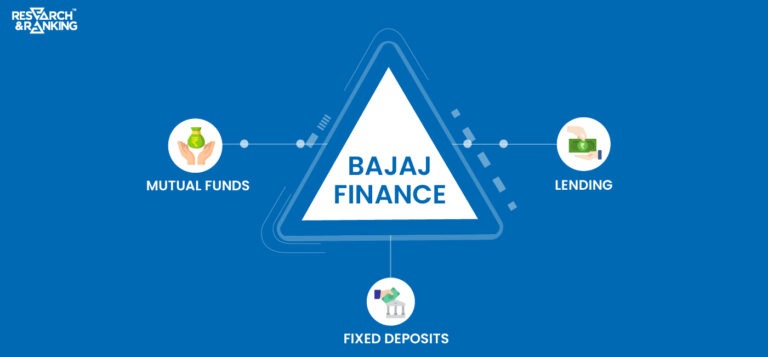
With a pan-India presence, including smaller towns and villages, Bajaj Finance has the most customer touchpoints, serving diverse customer segments. It offers the following loan basket:

  • Consumer Lending: consumer electronics, furniture, digital products, e-commerce purchases, and daily spending financing
  • Personal Loan: Offers loans to existing customer base and salaried individual
  • SME Loan: Secured and unsecured loans to both business enterprises and professionals
  • Rural Lending: It includes consumer B2B lending, personal loans, gold loans, retail deposits, and others
  • Commercial Lending: Loans to established businesses, including auto component manufacturers, light engineering industry, specialty businesses like pharma, financial institutions, and mid-market companies.
  • Loan Against Securities: Offers short and medium-term financing options against securities like shares, bonds, insurance policies, etc.

Deposits

Bajaj Finance also accepts deposits from retail customers and corporate clients and continues to grow the retail deposit segment in a calibrated manner. At the end of Q3FY23, the company’s deposit book swelled to ₹42,984 crores, an increase of 41% year-on-year. In FY22, the company’s deposit program got the highest credit rating, FAAA/stable from CRISIL and MAAA/stable from ICRA.

Housing Finance

The company also has a presence in the housing loan segment through a wholly-owned subsidiary- Bajaj Housing Finance Ltd. registered as a housing finance company. It offers home loans, loan against property, lease rental discounting, and developer financing.

Securities and Broking

Bajaj Financial Securities Ltd., the wholly-owned subsidiary, is registered as a stockbroker and depository participant with SEBI and started its operations in August 2019. It offers investment products and services to both retail and HNI clients, including margin trade financing. It’s the profit-making unit of Bajaj Finance and has generated ₹124 crores in revenue in FY22 and profit after tax of ₹17 crores.

Bajaj Finance Management Profile

Bajaj Finance Ltd. is led by Mr Rajeev Jain, the Managing Director, who has played a key role in transforming the captive auto financing company into a highly diversified NBFC in India. He joined the company in 2007 as a CEO and has since led the company. He has stellar experience managing consumer lending businesses and was associated with American Express and AIG.

Mr Sandeep Jain is the Chief Financial Officer who joined the company in 2008 to set up management accounting practices and has also played a key role in the company’s transformation journey. He is a Chartered Accountant from ICAI.

Mr. Fakhari Sarjan is the Chief Risk Officer responsible for overseeing the corporate governance and strategy for the entire risk management. Earlier, Fakhari managed multi-cultural and cross-functional teams at Barclays, USA. He is a management graduate from IIM Lucknow with a career spanning over 25 years.

Other key members in the management include Deepak Bagati (President of Debt Management Services), Deepak Reddy (President- Rural Business, Fixed Deposits and Investments, Insurance), and MM Murlidharan (Treasurer).

Bajaj Finance Shareholding Pattern

image 62
Source: Bajaj Finance Q3FY23

Bajaj Finance Financials

Revenue

In FY22, Bajaj Finance reported a total income of ₹31,640 crores, which is 19% higher compared to ₹26,683 crores in FY21. And, 9MFY23 total income for the company is ₹30,043 crores, which is 30.5% higher over the previous year’s corresponding period at ₹23,019 crores.

The company’s income from operations has grown at a CAGR of 34% in the last 15 years.

Net Interest Income (NII)

NII is an important metric for companies involved in the lending business, which is arrived at after deducting interest paid to depositors from interest income earned from borrowers.

Bajaj Finance’s NII in FY22 came in at ₹21,892 crores, which is 27% higher compared to ₹17,269 crores reported in FY21. In Q3FY23, the NII rose by 24% to ₹7,435 crores from ₹6,005 crores.

And, in 9MFY23, the NII of the company increased by 33.11% to ₹21,075 crores. In the last 15 years, NII has grown at a CAGR of 35%, indicating the strong operational performance of the business.

image 63
Source: Bajaj Finance 9MFY23

Profit After Tax (PAT)

In FY22, the company reported a PAT of ₹7,028 crores, higher by 59% compared to the previous fiscal at ₹4,420 crores. And, in 9MFY23, PAT increased by a whopping 82.51% to ₹7,452 crores from ₹4083 crores reported in the same period last year.

image 64
Source: Bajaj Finance 9MFY23

Bajaj Finance Key Financial Ratios

Non-Performing Asset

In FY22, the net NPA ratio improved by 7 bps to 0.68%. And in Q3FY23, it further improved to 0.41% from 0.78% reported in Q3FY22.

Capital Adequacy Ratio (CAR)

CAR represents the bank’s available capital against the risk-weighted credit exposure expressed as a percentage.

Bajaj Finance’s CAR is 23% as of 31 Dec 2022, against the minimum regulatory requirement of 15%. Higher CAR indicates that the lending institution could absorb any shock due to loan default without deteriorating the fundamentals.

Provision Coverage Ratio (PCR)

PCR represents the percentage of bad assets the bank or financial institution can provide from their funds. Bajaj Finance has a PCR of 64% as on Q3FY23.

Cost of Funds

For any company involved in the lending business, the cost of funds is the most tracked metric by investors to gauge future growth potential.

In Q3FY23, the cost of funds for Bajaj Finance was 7.14%, and the liquidity buffer stood at ₹12,758 crores. A high liquidity buffer will ensure the reduced impact of recent interest rate hikes on the cost of funds.

Operation Expenditure to NII

Bajaj Finance, through many industry-first steps and innovation in products, the offering has managed to reduce operational expenditure. In Q3FY23, operation expenditure to NII stood at 34.7%.

Bajaj Finance Share Price History

Bajaj Finance is the biggest wealth creator of the decade in the Indian stock market, delivering a return of 80% annually in the last 10 years until 2022. In 2010, its market capitalization was just over ₹1,100 crores, which has now grown to over ₹3.5 lakh crores as of 11th April 2023.

In the last 10 years, Bajaj Finance has issued a 1:1 bonus share once and has done a split in the 10:2 ratio. The company also pays annual dividends to its shareholders. In the last three years, Bajaj Finance paid ₹10 in 2020, ₹10 in 2021, and ₹20 in 2022 as dividends to its shareholders.

image 65
Source: Tradingview

Bajaj Finance share price traded at around ₹60 levels in 2012 and touched an all-time high level of ₹7,862 on 11th Oct 2021.

Bajaj Finance Fundamental Analysis

Robust Balance Sheet

Despite the challenging macroeconomic scenario and rise in interest rates, Bajaj Finance has maintained its profitability metrics. In Q3FY23, NII grew robustly by 24%, driven by healthy growth asset under management (AUM). The company appears to be on track to meet guidance and deliver ₹52-53,000 crore of core AUM growth in FY23.

The profit after tax in the first nine months of FY23 surpassed FY22 levels. And the company has well managed to keep costs under control, and despite the growing business size, it has kept operational expenditure to NII close to 30% for the last few years.

Strong asset quality

Bajaj Finance has a remarkable asset quality with an NPA of 0.41% on that huge loan book. Also, Bajaj Finance is well capitalized (CAR) and above the prescribed limit of RBI, enabling it to absorb any shock in the balance sheet without deterioration.

This has helped Bajaj Finance to get the highest credit ratings for its deposits and debt papers by Indian credit rating agencies.

Strong growth momentum across all product channels

The omnipresence strategy has helped Bajaj Finance to spread faster compared to its peers and has recorded the highest-ever new customer addition and loans booked in Q3FY23. As it plans to go fully digital across products and services, it will help in wider reach and new businesses from the existing user base.

As of 31 December 2022, the AUM mix consists of Consumer (44%), Rural (14%), SME (18%), Commercial (16%), and Mortgage (8%). In Q3FY23, it added 3.14 million new customers, and the customer franchises stood at 66.05 million.

The housing finance segment is witnessing accelerated growth. As of 31st December 2022,  AUM increased by 33% to ₹65,581 crores as against ₹49,203 crores on 31st December 2021.

The deposit book grew by ₹3562 crores in Q3FY23 to ₹42,984 crores, and the company aims to deliver 25% of the borrowings from deposits in the medium term.

Long Range Strategy (LRS)

Bajaj Finance is guided by its LRS framework, in which they have set its priorities and objectives. The framework includes the following:

  • Ambition: To be a leading payments and financial services company in India. Dominate with 100 million customers with a market share of 3% of payments GMV, 3-4% of total credit, and 4-5% of retail credit in India.
  • Strategy: To be an omnipresent financial services company dominant across all consumer platforms.
  • Approach: To acquire customers and cross-sell across all consumer platforms.

Bajaj Finance Strategy To Grow

Bajaj Finance has set its objectives very clearly- to be among the top 20 profit-making companies in India and among the top 5 profit-making financial services companies in India. To achieve them, the company is focusing on the 5 blocks strategy.

  • Products– Launching new product lines (CV, Agri, Auto, MFI, Emerging Corporates), new product innovations, and following megatrends.
  • Geography– Launch all products in all locations and win UP, Bihar, and Northeast markets.
  • Platforms- Dominate all platforms of consumer presence and generate 50% revenue from digital channels.
  • Horizontal functions– Pursue operational excellence and deliver robust controls and compliance
  • Subsidiaries: Leverage existing channels to ramp up businesses for subsidiaries and dominate respective industries.

Bajaj Finance has a lot of grounds to cover and capture the unexplored market. India’s total credit market is forecasted to grow from ₹149 lakh crores in FY23 to ₹237 lakh crores through 2027 at a CAGR of 12.4%.

*Disclaimer Note: The securities quoted, if any, are for illustration only and are not recommendatory. This article is for education purposes only and shall not be considered as recommendation or investment advice by Research & Ranking. We will not be liable for any losses that may occur. Investment in securities market are subject to market risks. Read all the related documents carefully before investing. Registration granted by SEBI, membership of BASL, and certification from NISM in no way guarantee the performance of the intermediary or provide any assurance of returns to investors.

FAQs

When was Bajaj Finance established?

Bajaj Finance was established as Bajaj Auto Finance Ltd. in 1987 as a two-wheeler financing company.

How Bajaj Finance share price has performed in the last 10 years?

As on 11th April 2023, Bajaj Finance share price has grown at a CAGR of 49% in the last 10 years.

Is Bajaj Finance and Bajaj Finserv different?

Bajaj Finserv is the parent company of Bajaj Finance Ltd. and is focused on lending, wealth management, insurance, and asset management.

Read more: About Research and Ranking
How Long-term investing helps create life-changing Wealth – TOI

When most Indians hear the term “IT sector,” they immediately think of two companies: TCS and Infosys. And why do they not? Both companies have worked hard and changed how the world looks at India. But, the journey of Infosys is quite unusual and inspiring in many ways.

Unlike TCS, which had a strong parentage, Infosys had a very humble beginning in 1981 and is now the second-largest IT exporter in India, with revenue of ₹1,46,767 crores in FY23. Infosys also announced a final dividend of Rs. 17.50 per equity share for the previous financial share, with a record date set for 2nd June 2023. The news of its weak Q4 performance led to a fall in the share prices on 17th April 2023 to Rs. 1240.

So let’s analyze Infosys share price and check its growth potential.

Infosys The Company Journey

Ideation and Incorporation

It was the year 1980, the time when most people had no idea what computers were or had never heard of the terms information technology or software. But, something was brewing in the minds of Narayan Murthy and six other young software engineers at Patni Computers. They were discussing how they could start a company and write software for clients, but the journey was not easy.

None of them had any business experience or even the necessary funds to launch the company. They were, however, full of passion, and Murthy always dreamed big and wanted to accomplish something big in life.

After much discussion, Murthy finally decided to start Infosys with his six colleagues in 1981 in Pune, with a meagre initial capital of ₹10,000 provided by Sudha Murthy (Narayan Murthy’s wife), which she saved without his husband’s knowledge. And so the journey to build a world-class software company began.

Nurturing the Plant

As Infosys was signing up new clients, Infosys relocated to a new corporate headquarters in Bangalore in 1983 and opens first international office in Boston, US, in 1987.

1993 turned out to be a very important year for Infosys as it made its initial public offering in Feb, and shares were listed on the Indian stock market on June 14th.

It slowly started expanding its presence in other countries like the UK, several European countries, Canada, Hong Kong, UAE, Japan, Singapore, etc. Simultaneously, it introduced new solutions like e-Business practice, Enterprise Solutions, Business Consulting Services, Universal Banking Solutions (Finacle), BPO services, etc.

In 1999, Infosys listed ADS (American Depositary Shares) on the Nasdaq National Market to mark the 25th anniversary of the company.

Growth Phase

Years of hard work began to pay off handsomely as the company reported record turnover and profits. Total revenue exceeded $100 million for the first time in 1999, and it surpassed $1 billion in the next five years. And, in 2007, quarterly revenue surpassed $1 billion for the first time.

Despite many challenges, like the founder member quitting in the early days and the leadership crisis in 2017- Infosys continued to grow and set benchmarks in the industry in terms of achieving operational excellence and high standards of corporate governance.

Infosys closed the financial year FY23 with a revenue of ₹1,46,767 crores ($17.4 billion), with more than 346,000 employees in the talent pool.

Infosys Company Analysis

Over the years, Infosys added many services and products to its offerings as per the emerging market trends and demand from enterprises. And it has divided the company’s operations into eight different segments:

  • Financial Services
  • Retail
  • Communication
  • Energy, Utilities, Resources, and Services
  • Manufacturing
  • Hi-Tech
  • Life Sciences
  • All other segments

Infosys earns over 60% of its revenue from digital services, and 95% of its revenue comes from international markets. It has a presence in over 54 countries. The company has a very strong balance sheet with a free cash flow of ₹20,443 crores at the end of Q3FY23.

Infosys Finacle -The Banking Suite

Over decades of operation, Infosys had built many world-class products, but its core banking suite- Finacle, became the most popular product from its stable. It was launched in 1999 to automate banking processes.

Finacle has been the product of choice of over 200 banks in over 100 countries and is used by almost all Indian banks serving more than a billion accounts. It offers core banking, e-banking, mobile banking, CRM, payments, treasury, liquidity management, wealth management, analytics, and every other vertical of banking.

It has helped banks to achieve a higher return on assets, return on capital, and less cost to income compared to other banking suites.

Infosys Management Profile

Infosys is led by Mr Salil Parekh as CEO and Managing Director, who was appointed to the position in December 2017. He has over three decades of experience in the global IT services industry and held many leadership positions in companies like Capgemini, Ernst & Young, etc.

He holds a Master of Engineering degree in Computer Science and Mechanical Engineering from Cornell University and a B.Tech degree in Aeronautical Engineering from IIT, Bombay.

Nilanjan Roy is the Chief Financial Officer (CFO) and joined on 1st March 2019. Earlier, he served as a Global CFO at Bharti Airtel and has held many leadership positions there, and has also worked with Unilever for almost 15 years. Nilanjan is a Chartered Accountant and has rich global experience in ESG, corporate governance, M&A, cost management, taxation, and accounting.

Shaji Mathew is the Group Head of Human Resource Development. He is responsible for drawing up a roadmap for HR, driving strategies, and implementing operational priorities aligned with the overall organization mandate. He has been with Infosys for more than 30 years and has held a diverse leadership role. Shaji is a rank holder from NIT Calicut and has done Global Leadership Program at Stanford University.

Infosys Shareholding Pattern

image 57

Infosys Financials

Revenue

In FY23, Infosys’s consolidated revenue from operations came in at ₹1,46,767 crores, a 20.7% increase over the previous fiscal year’s figure of ₹1,21,641 crores.

Quarter-wise, Infosys reported a 2.3% decline in revenue at ₹37,441 crores in Q4FY23, compared to ₹38,318 crores in Q3FY23. North America is the key market for Infosys, contributing 61% of the revenue, Europe contributed 27%, the rest of the world contributed 9.4%, and India contributed 2.6% to total revenue in Q4FY23.

Segment-wise Revenue Breakup

SegmentsFY23 (in ₹ cr)FY22 (in ₹ cr.)% Change
Financial Services43,76338,90212.49
Retail21,20417,73419.56
Communication18,08615,18219.12
Energy, Utilities, Resources, and Services18,53914,48427.99
Manufacturing19,03513,33642.73
Hi-Tech11,86710,03618.24
Life Sciences10,0858,51718.41
All other segments4,1883,45021.39

Last 5-year Revenue Growth

In the last 5-years, Infosys revenue had grown at a CAGR of 12.15%, despite the pandemic shock and worsening inflation conditions in the European and North American markets.

image 58

Operating Margin

Infosys reported an operating margin of 21% in FY23, a 1.9% decrease from the previous year. In Q4FY23, the operating margin came in at 21%, compared to 21.6% in Q4FY22.

Last 5-year Operating Margin

image 59

Net Profit

Infosys reported a net profit of ₹24,095 crores in FY23, up 9% from the previous year’s net profit of ₹22,110 crores.

In Q4FY23, the company reported in net profit of ₹6,128 crores, a 7% decrease from Q4FY22 at  ₹5,686 crores.

Last 5-year Net Profit Margin

image 60
*FY23 approx net profit margin

Infosys Key Financial Ratios

Current Ratio: Infosy’s current ratio in FY22 was 2.1 times, declining from 2.7 times in FY21.

Debt-to-equity Ratio: The debt-to-equity ratio is stable at 0.1 in FY22. Debt represents the lease payments.

Return on capital employed: ROCE for FY22 increased to 38.8% from 32.5% in FY21.

Infosys Share Price History

Infosys IPO debuted in the year 1993, and the IPO price of each share is ₹95, and the trading opened at ₹145 per share. Over the years, Infosy’s had done multiple bonus issues and a stock split once.

 Face ValueRatioNumber of Shares
Pre-bonus and split share₹10100
Bonus Issue- 30 June 1994₹101:1200
Bonus Issue- 18 June 1997₹101:1400
Bonus Issue- 25 January 1999₹101:1800
Stock Split- 24 January 2000₹510:51600
Bonus Issue- 13 April 2004₹53:16400
Bonus Issue- 14 April 2006₹51:112800
Bonus Issue- 10 October 2014₹51:125600
Bonus Issue- 24 April 2015₹51:151200
Bonus Issue- 13 July 2018₹51:1102400

At adjusted value, 100 shares at IPO for ₹9500 are now worth over ₹13.8 crores as of 15th April 2023, and this even doesn’t count the dividends.

Infosy’s has a good track record of paying consistent dividends to its shareholders. In the last three calendar years, Infosys paid ₹21.5 in 2020, ₹30 in 2021, and ₹32.50 in 2022 as dividends to shareholders.

image 61

Infosys Fundamental Analysis

In recent quarters, Infosys has reported a decline in operating margin due to cost pressures and uncertain macroeconomic conditions in key markets (North America and Europe), where it generates nearly 90% of its revenue.

Infosys continues to be one of the strongest players in the IT industry, with huge cash reserves to battle any uncertainty and a steady deal pipeline. In FY23, Infosys’s free cash flow was ₹20,443 crores, which is 84.8% of the net profit

Deal Momentum Going Strong

In FY23, Infosys signed deals worth $9.8 billion, of which it signed deals worth $2.1 billion in Q4.

More deals are happening in the digital transformation and cloud with a focus on achieving cost efficiency and vendor consolidation. A few mega deals are being actively pursued that will help it to achieve the upper end of the revenue guidance.

Challenges Ahead

Infosys posted lower growth in revenue and net profit in Q4FY23, compared to Q3FY23, mainly on account of the cancellation of a few projects from a major account in the US and weak macroeconomic conditions, impacting revenue growth.

The Financial and Communication segments are experiencing the most impact of challenging macroeconomic conditions in the form of budget deferrals and delayed decisions.

Therefore, Infosys has given lower guidance for revenue growth at 4-7%, which is much lower compared to the guidance of 13-15% in FY23. It achieved 15.4% revenue growth in FY23.

Infosys Share Price Growth Potential

The Financial segment is the cash cow of Infosys, contributing close to 30% to the revenue. The collapse of a few regional banks in the US has affected client spending, and many are opting for vendor consolidation. Therefore, revenue growth is likely to be muted in the medium term until the macro condition improves.

However, a slowdown in the Financial segment is being compensated by other segments to an extent. Manufacturing, Energy, Utilities, and Resources; and Lifescience segments are witnessing strong growth.

The sharp drop in revenue growth guidance in FY24 might keep Infosy’s share price under pressure in the short-to-medium term. Demand for digital transformation services and increased spending in the cloud segments are likely to benefit the overall IT services segment and Infosys.

Infosys Share Price Target

In the long run, stocks in the IT sector outperform the broader index. According to market data, the Nifty IT index has gained 346%, while the Nifty 50 has gained 222% in the last ten years as of 15th April 2023. Despite the global economic turbulence, worldwide IT spending is projected at $4.5 trillion, an increase of 5.5% from 2022, as per the report from Gartner.

Disclaimer Note: The stocks and financials mentioned in this article are for information purposes only. They shouldn’t be considered as a recommendation by Research & Ranking. We will not be liable for any losses that may occur.

FAQs

When was Infosys established?

Infosys was established in 1981 by Narayan Murthy with six other colleagues with a meagre initial capital of ₹10,000.

How Infosys share price has performed since its IPO?

Since its IPO in 1993, Infosys had done multiple bonus shares issues and split once. 100 shares bought in IPO is now 1,02,400 shares and is now worth over ₹13.8 crores as of 15th April 2023.

Who is the CEO of Infosys?

Salil Parekh is the CEO and Managing Director of Infosys and was appointed on 2nd January 2018 to the position. He took over from interim CEO U B Pravin Rao.

Read more: About Research and Ranking
How Long-term investing helps create life-changing wealth – TOI

Introduction

From being mired in multiple scams and controversies towards the end of 2018 to being recognized as the “Company of the Year” for 2022 by The Economic Times, ICICI Bank has been a successful corporate turnaround story led by Sandeep Bakshi at the top.

The bank has registered impressive growth in profits and margins over the last three to four years, supported by improved asset quality and greater contribution of deposits. This has led to ICICI Bank being projected as the poster boy for Indian banks and remains a top pick among brokerage houses. The stock has delivered a 5 Year/3 year CAGR of 26%/40% respectively.

Let us try and understand what is leading to the bank’s turnaround and growth prospects going forward.

ICICI Bank Overview

ICICI Bank is India’s second-largest private sector bank by assets, with a wide range of banking and financial products and services. Since 1955 with support from the World Bank and the Government of India, the bank has transformed itself from a development financial institution offering Project finance to a diversified financial services provider.

The bank was incorporated in 1994 as a subsidiary of ICICI (Industrial Credit and Investment Corporation of India) and later merged with its parent entity in 2001, much like what is happening today between HDFC and HDFC Bank.

The bank offers its customers a range of retail banking, corporate banking, and investment banking products and services. Its retail banking offerings include savings accounts, current accounts, fixed deposits, recurring deposits, loans, credit cards, debit cards, and digital banking services.

ICICI Bank’s corporate banking services include working capital finance, term loans, trade finance, cash management solutions, treasury and forex services, and investment banking services such as debt and equity underwriting, mergers and acquisitions advisory, and project finance.

The bank has a strong presence in India, with over 5,718 branches and 13,186 ATMs nationwide. It also has a significant international company with branches in the United States, the United Kingdom, Canada, Singapore, Hong Kong, Bahrain, Sri Lanka, Qatar, Oman, and Dubai.

ICICI Bank Journey

The timeline below depicts the Bank’s journey since inception and the most important events contributing to its growth and success.

  • 1994: ICICI Bank came into being Promoter by ICICI Limited
  • 1998: IPO of ICICI Bank that reduced ICICI’s shareholding in the bank to 46%
  • 2000: Equity offering in the form of ADRs got listed on NYSE
  • 2001: ICICI Bank acquired the Bank of Madhura
  • 2002: RBI approved the merger of ICICI and two wholly-owned retail finance subsidiaries, ICICI Personal Financial Services Limited and ICICI Capital Services Limited, with ICICI Bank.
  • 2003: Incorporation of ICICI Bank Canada
  • 2007: Sangli Bank merged with ICICI Bank.
  • 2010: Amalgamation of Bank of Rajasthan Ltd. with ICICI Bank Ltd. came into effect
  • 2020: Board approved an investment of INR 10 bn in Yes Bank

ICICI Bank Management Profile

Mr Sandeep Bakhshi is the current MD and CEO of ICICI Bank. He was appointed to this position in October 2018, following the resignation of Ms Chanda Kochhar. He has been associated with ICICI Group for over 30 years. He has held various leadership positions, including MD and CEO of ICICI Prudential Life Insurance Company and Deputy MD of ICICI Bank.

Mr Anup Bagchi is an Executive Director (ED) of ICICI Bank. He has been associated with the bank for over 25 years. He has held various leadership positions in ICICI Bank, including CEO of ICICI Securities, Head of Retail Banking and Rural Banking, and COO of the bank. As an ED, Bagchi is responsible for the retail banking, technology, and digital banking businesses of ICICI Bank.

Ms Vishakha Mulye is an ED of ICICI Bank. She has been associated with the bank for over two decades, joining the ICICI Group in 1993. Mulye has held various leadership positions in the ICICI Group, including MD and CEO of ICICI Venture Funds Management Company and ED of ICICI Lombard General Insurance Company. She has also served as the CFO of ICICI Bank and played a vital role in the bank’s capital raising and M&A activities.

Mr Sandeep Batra is an Executive Director responsible for Operations and Customer Service, Human Resource Management, Technology, Legal, Corporate Communications, and Secretarial functions. He is also administratively responsible for the Risk function, Internal Audit, and Financial Crime Prevention and Compliance Groups.

ICICI Bank Shareholding Pattern

image 49
Source: NSE Website

ICICI Bank Business Company Analysis

ICICI Bank is a financial conglomerate. Through its various subsidiaries, it has a presence in insurance (life & general), asset management, broking & investment banking, private equity, and debt underwriting.

Key Subsidiaries of ICICI Banks are:

  • ICICI Prudential Life Insurance
  • ICICI Lombard General Insurance
  • ICICI Securities
  • ICICI Prudential Asset Management Company

Within the bank, the loan mix has changed in favor of retail, and the corporate and SME book has come down. As a result, it has reduced NPAs and higher profitability for the bank.  

image 50
·       Source: Annual Report FY22

ICICI Bank Financials

Core Operating Profit and Net Profit

ICICI Bank’s profitability (both at the Operating and Net Profit levels) has increased consistently over the last few years. Core operating profit (profit before provisions and tax, excluding treasury income) grew by 31.6% year-on-year to INR 13,235 Cr in the quarter ended December 31, 2022 (Q3FY23) as against INR 10,060 Cr on December 21, 2021 (Q3FY22)

Similarly, Profit after tax grew by a handsome 34.2% year-on-year to INR 8,312 Cr in Q3FY23 as against INR 6,194 Cr in Q3FY22.

Q3 FY23Q3 FY229M FY23 9M FY22FY22
Net Interest Income (Rs. Cr.)16,46512,23644,46234,86247,466
Non-Interest income (Rs. Cr.)4,9874,89914,75513,00517,614
Operating Expense (Rs. Cr.)8,2177,07523,94519,68426,733
Core Operating Profit (excluding Treasury Income) (Rs. Cr.)13,23510,06035,27228,18338,347
Profit After Tax (Rs. Cr.)8,3126,19422,77516,32123,339
Source: Q3FY23 Results of ICICI Bank (in crores)

ICICI Bank Net Interest Income

Net Interest Income (NII) is the difference between the interest earned on a bank’s assets (such as loans and investments) and the interest paid on its liabilities (such as deposits and borrowings).

ICICI Bank Net Interest Margin

Net Interest Margin (NIM) is calculated by dividing the NII by the average interest-earning assets. NIM continues to witness up-tick led by re-pricing of advances (while the impact of increased deposit rate is yet to catch up on the expenses side).

image 51
Source: Annual Report FY22 and Q3FY22 Results

Asset Quality

NPA stands for Non-Performing Asset. It refers to a loan or an advance where the borrower has not paid the interest or the principal amount for a specified period, usually for 90 days or more.

Gross NPA refers to the total value of a bank’s non-performing assets. Net NPA, on the other hand, is the value of NPA after reducing the provisions made by the bank to cover the losses that may arise from such non-performing assets.

The gross NPA ratio declined to 3.07% on December 31, 2022, against 4.13% on December 31, 2021. The net NPA ratio fell to 0.55% on December 31, 2022, from 0.85% on December 31, 2021.

Asset quality has improved significantly over the last five years, as seen in the chart below.

image 52
Source: Annual Report FY22 and Q3FY22 Results

ICICI Bank Advances & Deposits

An advance refers to a loan or credit extended by a bank to its customers. Banks offer various advances such as personal, business, home, education, vehicle, and credit card loans.

Deposits are a critical source of funding for banks, and they use these funds to provide loans and advances to customers.

Total advances increased by 19.7% year-on-year and 3.8% sequentially to INR 974,047 Cr on December 31, 2022, and Total period-end deposits increased by 10.3% year-on-year to INR 1,122,049 Cr at December 31, 2022.

One of the reasons for the superior performance of the Bank has been the growth in the retail loan book. The retail loan portfolio grew by 23.4% year-on-year and 4.5% sequentially and comprised 54.3% of the total loan portfolio on December 31, 2022.

The average CASA (Current Account & Savings Account) deposits increased from 41.4% of total average deposits in fiscal 2021 to 44.5% in fiscal 2022. The average current and savings account (CASA) ratio was 44.6% in Q3-2023.

image 53
Source: Annual Report FY22

Improving Return ratios (ROA & ROE)

ICICI bank has been improving its RoA (A higher RoA suggests that a bank is more efficient in generating profits from its assets) & ROE (the higher the ROE, the more efficient a company’s management is at generating income and growth from its equity financing) over the last few years.

ROA was inching towards 2% from a low of 0.55% in 2019, and ROE was approaching 20% from a low of 4.8% in 2019. This shows the extent of turnaround the bank has seen in the last five years.

image 54
Source: Capital IQ, Annual Reports

Technology Initiatives

ICICI Bank is a pioneer in technological innovation in the Indian banking industry. It has been continuously upgrading and introducing innovative technology into the system. Today, it has best-in-class end-to-end seamless digital platforms that offer customers personalized solutions and value-added features, enabling more effective data-driven to cross-sell and up-sell. These platforms also allow the bank to acquire new customers.

The Bank has created over 20 industry-specific STACKs, providing bespoke and purpose-based digital solutions to corporate clients and their ecosystems. The Bank’s Trade Online and Trade Emerge platforms allow customers to digitally perform most of their trade finance and foreign exchange transactions. About 71.2% of trade transactions were done digitally in Q3 of this year. The value of transactions done through these platforms increased by 59.3% year-on-year in Q3 of this year.

ICICI Bank has introduced iMobile Pay, the bank’s universal fintech app, to provide customers with better access and service quality. The app is scalable and already has ~8.6 mn activations from non-ICICI Bank customers.

image 55

ICICI Bank Share Price Analysis

ICICI bank share price has delivered a CAGR of 16% over the last ten years despite being mired in a few scams and scandals in between. The bank’s performance has been nothing short of a turnaround after Mr Sandeep Bakshi took over as the CEO towards the end of 2018.

The bank has already delivered 40% CAGR over the last three years. Given its superior financial performance, top-management stability/credibility, and strong capital/ provision buffers, it remains a top pick in the banking space for most brokerage houses.

image 56
Source: TradingView

ICICI Bank Share Price Target Growth Potential

ICICI bank has done well reporting better-than-expected earnings, with better loan growth and margins. Some of the factors that are expected to aid ICICI Bank’s share price growth in the future are:

  • Faster adoption of digital strategy: ICICI Bank has upped the ante in its digital offering to compete with Fintech firms. Acceleration on that front can lead to a fall in the cost of income and higher net profits in the future.
  • Shift towards lower-risk retail loans: The focus of management has shifted to lower-risk retail loans to increase granularity in the lending book. This could lead to better fee income growth. In addition, the bank implemented several initiatives focused on improving its retail clientele to deepen the penetration of products and services, thus further strengthening its franchise.
  • Continued focus on portfolio quality and strengthening of underwriting credit processes can restore the prudent growth path for the firm and result in better long-term value creation.
  • Reduction in the concentration of large loans: concentration of large loans (Top-20 exposure) has also been declining from about 14.3% in FY16 to 9.6% in FY22.

After 4-5 years of hard work, the bank is regaining its lost stature. However, risks such as increased competition from Fintech firms and returning asset quality pain due to unexpected changes in the economic outlook can also derail the growth journey.

Disclaimer Note: The stocks and financials mentioned in this article are for information purposes only. They shouldn’t be considered as a recommendation by Research & Ranking. We will not be liable for any losses that may occur.

FAQs

What is the 52 Week High and Low of ICICI Bank?

The 52-week high/low is the highest and lowest price at which ICICI Bank stock traded during that period (similar to 1 year) and is considered a technical indicator. The 52-week highs and lows of ICICI Bank are INR 958.20 and INR 669.95 as of 12 Apr ’23.

What is the face value of the share of ICICI Bank Ltd.?

ICICI Bank share’s face value is INR 2.

Is ICICI Bank good for the long term?

ICICI Bank has improved on all business parameters, including profitability, NPAs, retail loan book mix, and return ratios, and is well-positioned to deliver good returns over the long term.

Introduction

When the crisis at IL&FS (Infrastructure Leasing & Financial Services) exploded in September 2018, many saw it as India’s Lehman Brothers moment. As a result, the Centre in October 2018 replaced the entire IL&FS board with a new, six-member board and made Uday Kotak, MD & CEO of Kotak Mahindra Bank, its non-executive chairman.

After three and a half years, when Mr Uday Kotak stepped down, around RS. 55,000 crore of debt had been resolved, representing 90% of the expected resolution, a remarkable achievement. That should tell you something about the man and the owner of the bank he has built and nurtured for the last 35+ years.

Today, Kotak Mahindra Bank is the 3rd largest private-sector bank and has multiplied shareholder’s money by more than 500 times over the last 20 years.

In this Kotak Mahindra Bank share price analysis article, we will review the fundamentals of the company and its growth potential that will help you make an informed investment decision.

Kotak Mahindra Bank Company Overview

Kotak Mahindra Bank was founded in 1985 by Uday Kotak as a financial services company named Kotak Capital Management Finance Ltd. The company initially focused on bill discounting and commercial paper, but it later diversified into other financial services.       

In 2003, Kotak Mahindra Finance Ltd. received a banking license from the Reserve Bank of India (RBI), becoming the first non-banking finance company in India to convert into a bank – Kotak Mahindra Bank Ltd. The bank began its operations focusing on retail banking, corporate banking, and treasury operations. The Kotak Mahindra Share Price has corrected by over 20% and closed at RS. 1868 as on April 13.

Kotak Mahindra Bank Journey

Over the years, the bank has grown significantly and has expanded its product offerings to include investment banking, wealth management, and insurance.  

In 2014, the bank acquired ING Vysya Bank, making it the fourth largest private bank with combined assets of RS. 160,012 Cr (replacing Yes Bank). The bank also acquired a 15% stake in the Multi Commodity Exchange of India (MCX) the same year, further expanding its commodity exchange offerings.

Kotak Mahindra Bank has also made strategic acquisitions in digital banking sp ce. For example, in 2016, the bank acquired BSS Microfinance Pvt. Ltd. to enter the microfinance sector.

Today, Kotak Mahindra Bank is one of India’s largest private sector banks with a market capitalization of over Rs. 3.70 lakh crore (as of April 14 2023). The bank has a network of 1,603 branches and 2,569 ATMs across the country, and it has also expanded its presence globally with branches in Dubai, Abu Dhabi, and London.                                                                                                                  

image 37
Source: Kotak Mahindra Investor Presentation

Kotak Mahindra Bank Management Profile

The top management comprises industry veterans, with the majority having experience of about two decades within the KMB group signalling the establishment of organizational culture and stability.

Mr Uday Kotak is the Managing Director & CEO of the Bank and also its promo er. Under Mr Kotak’s leadership, over the past 35 years, the Kotak Group established a prominent presence in significant areas of financial services, including banking, stock broking, investment banking, car finance, life and general insurance, and asset management.

Mr Deepak Gupta is the Joint Managing Director. He helms numerous functions of the Bank, including Information Technology, Digital Initiatives, Internal Audit, Human Resources, Vigilance, Customer Experience, Marketing & Communications, Environment Social Governance, Corporate Social Responsibility, and Priority Sector Lending.

Ms Shanti Ekambaram is the President of Consumer Banking and Digital Initiatives and has been associated with the bank for over two decades. She has played a pivotal role in developing the bank’s consumer banking business. She has also driven the bank’s digital initiatives, including launching innovative digital banking products and services.

Mr Gaurang Shah is in charge of the Bank’s Credit function and is Chairman of the Bank’s Credit Committee (Level E). In addition, Mr Shah oversees insurance and asset management, including alternate assets and Asset Reconstruction businesses.

Mr KVS Manian has headed Corporate, Institutional & Investment Banking at Kotak Mahindra Bank Ltd since April 2 14. Mr Manian also oversees the firm’s Institutional Equities business.

Kotak Mahindra Bank Shareholder Profile

As of December 2022, the promoter’s stake in the bank is 25. 5%. FIIs & DIIs own 37.78% and 19.68% stakes in the business. Public investors hold 12.42%

image 38
Source: Kotak Mahindra Bank

*Public includes Residential individuals, Non-residential individuals, Clearing members, Foreign companies, Foreign Banks, Qualified institutional buyers,

There has been a longstanding issue between the promoters of KMB and RBI regarding reducing the promoter stake to a maximum of 15% by February 2015. As per the RBI’s revised guidelines for licensing new private banks, issuFebruary 22ary 22, 2013, the promoter group was required to bring down the shareholding to a maximum of 15% within 12 years from the commencement date of the banking business.

However, Mr Uday Kotak resisted the dilution of his holding to 15%. He argued that RBI’s new norms should not be retrospectively applied as he was given the license under RBI’s January 3, 2001 policy which stated that the promoter contribution should be a minimum of 40% of the paid-up capital of the bank at any point in time.

After crossing the 2015 deadline, RBI has repeatedly allowed Mr Uday Kotak an elongated timeline to reduce his stake first to 20% by Dec 2018 and 15% by March 31 2020. That amounted to an extension of 5 years over the original deadline march March 31.

However, in Nov 2021, RBI announced that it raised the stake promoters can hold in their banks to 26% from 15%. So as of today, the promoter’s stake in the bank stands at 25.95%, which is in line with the revised notification issued in November 2021; hence, this issue has been settled now and forever.

Kotak Mahindra Bank Business Analysis

Over the last 35+ years, Mr Uday Kotak has built a great bank and diversified financial services company. Under his leadership, the Kotak Group expanded into stock broking, investment banking, Life and general insurance, Mutual funds, and other segments.

This can also be validated because 30% of KMB’s PAT currently comes from non-banking operations. Mr Uday Kotak has been very vocal that his vision for KMB was not to build it into a bank but a “financial institution.”

image 39
Source: Q3FY23 Quarterly Results Presentation

Kotak Mahindra Bank has a diversified asset book across multiple asset classes within the banking business.  The table below shows the breakup:

image 40
Source: Q3FY23 Results Presentation

Kotak Mahindra Bank Financials

Operating Profit

Operating profit for the quarter ended Dec 2022 was RS. 3,850 Cr, up 43% as against Q3FY22 of last year. Kotak Mahindra Bank’s Operating profit has grown at a CAGR of 14% in the previous 5 years.

image 41
Source: KMB Annual Report FY22

Kotak Bank Net Interest Income

Net Interest Income (NII) represents the difference in the interest earned from a bank’s lending activities to its customers and the interest paid to account holders or depositors.

On the other hand, Net Interest Margins (NIM) are derived by dividing Net Interest Income / by the Average income earned from interest-producing assets such as loans and advances given to borrowers.

NII for Q3FY23 increased to RS. 5,653 Cr, fr m RS. 4,334 Cr in 3FY22, up 30% YoY. NII has grown at a CAGR of more than 15% over the last five years, from FY18 to FY22.

Kotak Bank Net Interest Margin

Net Interest Margin (NIM) was 5.47% for Q3FY23 – one of the highest among large private sector banks. Moreover, NIM has increased consistently from 4.3% odd levels to now at ~5% levels, as seen in the chart below. This tells us a great deal about the bank’s focus on profitability.

image 42

Kotak Bank Asset Quality

NPA stands for Non-Performing Asset. It refers to a loan or an advance where the borrower has not paid the interest or the principal amount for a specified period, usually for 90 days or more.

Gross NPA (GNPA) refers to the total value of a bank’s non-performing assets. Net NPA, on the other hand, is the value of NPA after reducing the provisions made by the bank to cover the losses that may arise from such non-performing assets.

KMB has kept its Non-Performing Assets (N As) under control. As a result, its NPAs are the 3rd lowest after HDFC and ICICI Bank.

image 43
Source: KMB Annual Report FY22

Kotak Mahindra Bank Advances & Deposits

An advance refers to a loan or credit extended by a bank t its customers. Banks offer various advances such as personal, business, home, education, vehicle, and credit card loans.

Deposits are a critical source of funding for banks, and they use these funds to provide loans and advances to customers. Advances increased by over 23% to Rs. 3,10,734 as of December 31, 2022, from Rs. 2,52,935 as of December 31 2021, driven by the home loan segment and increase in the unsecured book.

HDFC Image
Source: KMB Annual Report FY22

Deposits have grown at a CAGR of 13%, and Advances have increased at a CAGR of 10% from FY18 to FY22. The bank does not believe in growing the loan book at any cost and is obsessed with profitability. This can also be understood from Mr Uday Kotak’s tweet below after UBS acquired Credit Suisse at a discounted price.

image 44
Source: Twitter

Highest CASA Ratio Among Peers

CASA ratio stands for current and savings account ratio. The CASA ratio of a bank is the ratio of deposits in current and saving accounts to total deposits. Banks typically pay significantly less interest on CASA deposits; hence, it is a relatively cheap source of capital.

KMB has a high CASA ratio, which has significantly contributed to lowering its cost of funds and enabled the engine to grow the ass t book faster. It is also one of the reasons for the relatively high NIM & ROA as well.

image 45

CASA Ratio KMB, as of December 31, 2022, stood at 53.3%. The exact ratio was 44% for HDFC Bank & Axis Bank and 45% for ICICI Bank for the same period.

Best-in-class Return Ratios (ROA & ROE)

KMB has the highest ROAs (A higher ROA suggests that a bank is more efficient in generating profits from its assets) among all the large private sector banks. At the consolidated level, the Return on Assets (ROA) (annualized) was 2.76% for Q3FY23 (2.60% for Q3FY22), and the Return on Equity (ROE) (annualized) was 15.04% for Q3FY23 (14.81% for Q3FY22).

image 46
Source: Annual reports

Kotak Mahindra Bank Share Price Target Analysis

KMB stock price has grown at a CAGR of 19% over the last ten years. The bank has consistently grown its retail book and improved asset quality, achieving higher ROA/ROE.

KMB has historically traded at a premium compared to other listed large private-sector banks. However, the stock’s Price to Book (P/B) value has corrected significantly over the last year and is now trading at a P/B value of 3.5x. The average 10-year P/B ratio is ~4.5. It thus continues to be an excellent long-term investment for investors.

image 47
Source: Screener.in
image 48
Source: TradingView

Disclaimer Note: The stocks and financials mentioned in this article are for information purposes only. They shouldn’t be considered as a recommendation by Research & Ranking. We will not be liable for any losses that may occur.

FAQs

Who is the owner of Kotak Mahindra Bank?

Mr Uday Kotak is the Promoter of Kotak ahindra Bank. He owns a 25.95% stake in KMB as of Dec 2022.

How has Kotak Mahindra Bank performed in the last five years?

KMB bank has delivered a 5-year CAGR of 10%. Stock valuation has corrected significantly in the recent past. KMB is expected to beat the index in the future over the long term, given its strong business performance.

What has been the 52-week high of Kotak Mahindra Bank Ltd stock?

52 Week high of Kotak Mahind a Bank is RS. 2,251. However, the Kotak Mahindra Share Price has corrected by over 20% and closed at RS. 1868 as on April 13.

Read more: About Research and Ranking
How Long-term investing helps create life-changing wealth – TOI

Private Banks have created much wealth for their shareholders in the last two decades. HDFC Bank, in particular, has been a consistent compounder, multiplying shareholder wealth by 478 times in the previous 25 years. However, over the last 2-3 years, HDFC Bank share price performance has languished. It has underperformed (3-year CAGR of 22%) compared to its peers, with private sector ICICI Bank giving a 3-year CAGR of 37% p.a. and Public sector State Bank of India returning a CAGR of 42% p.a. for the same 3-year period.  

We will analyze HDFC Bank’s share price and the recently announced merger with its parent company HDFC Ltd.

HDFC Bank Overview

The history of HDFC Bank can be traced back to the early 1990s when India was undergoing economic liberalization. HDFC Limited, which was primarily a housing finance company, decided to set up a banking subsidiary to cater to the growing demand for banking services in India.

HDFC Bank was among the early private-sector banks to enter the Indian banking sector. Its entry into the banking sector was a significant development as it was the first bank set up by a housing finance company in India. In addition, it brought a fresh perspective to the banking industry with its customer-centric approach and focus on retail banking.

HDFC Bank Journey

Initially, the bank focused on wholesale banking, catering to corporate clients and high-net-worth individuals. However, in 1996, HDFC Bank launched its first retail banking branch in Worli, Mumbai. Over the years, the bank expanded its operations and gradually became a full-service bank, offering individuals and businesses a wide range of banking and financial services.

In 1999, HDFC Bank became India’s first private sector bank approved by the Reserve Bank of India (RBI) to issue credit cards. In addition, in 2001, it became the first bank in India to launch an international debit card in association with MasterCard.

HDFC Bank’s growth trajectory has been impressive, becoming one of India’s fastest-growing banks. It has received several awards for its performance and service excellence, including being ranked as the best private sector bank in India by Asiamoney for several years.

As of December 31, 2022, the Bank’s distribution network was at 7,183 branches and 19,007 ATMs / Cash Deposit & Withdrawal Machines (CDMs) across 3,552 cities/towns as against 5,779 branches and 17,238 ATMs / CDMs across 2,956 cities/ towns as of December 31, 2021. 51% of the branches are in semi-urban and rural areas.                                                                                                                                                               

HDFC Bank Management profile

Mr Aditya Puri has been associated with HDFC Bank since its inception in 1994 and has served as the Managing Director and CEO for over 25 years until his retirement in October 2020. He was instrumental in building HDFC Bank into one of India’s leading banks, and under his leadership, the bank has won several awards and accolades.

After Aditya Puri’s retirement, Mr Sashidhar Jagdishan is the bank’s current Managing Director and CEO. He has been with HDFC Bank since 1996 and has held several senior positions in the bank, including Group Head of Finance, HR, and Legal.

Mr Keki Mistry is the Non-Executive Chairman of HDFC Bank and the Vice-Chairman and CEO of HDFC Limited, the parent company of HDFC Bank.

Mr Jimmy Tata is the Group’s Chief Risk Officer. He is responsible for overseeing the risk management function of HDFC. He has been associated with the bank since 2000 and has over 30 years of experience in the banking and financial services industry.

Mr Kaizad Bharucha is the Executive Director and is responsible for overseeing the wholesale banking business of HDFC Bank. He has been with HDFC Bank since 1996 and has held several senior positions there.

Mr Rakesh Singh is the Group Executive and Head of Investment Banking. He is responsible for the investment banking business of HDFC Bank. He has been associated with HDFC Bank since 2003 and has over 25 years of experience in investment banking and capital markets.

HDFC Bank Shareholding Pattern

image 16

HDFC Bank Financials

Revenue & Profit    

For the nine months ended December 31, 2022, the Bank earned a total income of INR 138,949.8 crore as against INR 116,177.2 crore in the corresponding period of the previous year, an impressive increase of 19.6%. 

Net profit for the nine months ended December 31, 2022, was INR 32,061.3 crore, up by 19.2% over the corresponding nine months ended December 31, 2021.

image 18
Source: Capital IQ, HDFC Bank Annual Reports

Net Interest Income

Net Interest Income (NII) is the difference between the interest earned on a bank’s assets (such as loans and investments) and the interest paid on its liabilities (such as deposits and borrowings).

In the recently ended December 2022 quarter, HDFC Bank reported an NII of INR 22,987.90 crore, around 24.60% higher than its NII of INR 18,443.50 crore in Q3FY22.

Net Interest Margin

Net Interest Margin (NIM) is a percentage that represents the difference between the interest income earned by a bank and the interest expenses incurred to generate that income. It is calculated by dividing the NII by the average interest-earning assets.

The core net interest margin was 4.1% on total assets and 4.3% based on interest-earning assets for the December 2022 quarter. NIM has stayed above 4% consistently for HDFC Bank over the last ten years.

image 19
Source: HDFC Bank Investor Presentation – April 2022

Asset Quality

NPA stands for Non-Performing Asset. It refers to a loan or an advance where the borrower has not paid the interest or the principal amount for a specified period, usually for 90 days or more. Gross NPA refers to the total value of a bank’s non-performing assets. Net NPA, on the other hand, is the value of NPA after reducing the provisions made by the bank to cover the losses that may arise from such non-performing assets.

HDFC Bank has been an outperformer in terms of asset quality. Gross non-performing assets (GNPA) were at 1.23% of Gross Advances on December 31, 2022, as against 1.26% on December 31, 2021. Net non-performing assets were only at 0.33% of Net advances as on December 31, 2022, the lowest among large private sector banks.

HDFC Bank Advances & Deposits

An advance refers to a loan or credit extended by a bank to its customers. Banks offer various advances such as personal, business, home, education, vehicle, and credit card loans. Deposits are a critical source of funding for banks, and they use these funds to provide loans and advances to customers.

As of December 31, 2022, total advances were INR 1,506,809 crore, an increase of 19.5% over December 31, 2021. Domestic retail loans grew by 21.4%, commercial and rural banking loans by 30.2%, and corporate and other wholesale loans by 20.3%. Overseas advances constituted 2.8% of total loans.

Total Deposits showed healthy growth at INR 1,733,204 crore as of December 31, 2022, an increase of 19.9% over December 31, 2021. CASA (Current Account and Savings Account) deposits grew by 12.0%, with savings account deposits at INR 535,206 crore and current account deposits at INR  227,745 crore. CASA deposits comprise 44.0% of total deposits as of December 31, 2022, as against 47.1% a year ago.

[Jargon Simplified]

What is ROA?

ROA stands for Return on Assets and it is a term used in banking to understand how profitable the bank is in relation to its total assets

HDFC Bank Loan Book Breakup

HDFC Bank has a well-diversified loan mix between wholesale and retail segments. Even within the retail loan book, the bank has fairly diversified exposure across Personal Loans (PL), Auto Loans (AL), Payments – Credit Cards, Mortgages including home loans, Two-wheelers (TW) etc.

image 26
Source: Investor presentation – Q3 FY 2022-23 results

HDFC Bank Company Analysis

  • Largest Private sector lender:

HDFC Bank is the leader among private banks and has historically maintained pristine asset quality through multiple credit cycles. ICICI Bank had the larger balance sheet; however, HDFC Bank has emerged as the clear leader over the past decade.

  • Consistent market share gains on assets & liabilities:

HDFC Bank has consistently gained market share on both sides of the balance sheet. Advances market share has increased from 6.8% as of Mar-17 to 11.2% as of FY 22. Similarly, deposits market share has improved from 5.8% as of Mar-17 to 9.5% as of FY22.

image 27
Source: Investor Presentation – April 2022
  • Best-in-class return ratios:

The bank has consistently posted healthy RoAs. (A higher RoA suggests that a bank is more efficient in generating profits from its assets) in the range of 1.8%-2.0% and ROEs of 16%-18%, respectively, during the past five years despite facing various macro headwinds.  

image 28
Source: Company Data, Annual Reports
  • Best asset quality and low credit cost among top private banks:

HDFC Bank has maintained healthy asset quality and the lowest credit cost (amount set aside for bad loans) among the leading private banks.

image 29
Source: Company data, Annual reports

The Merger of HDFC Ltd and HDFC Bank:

HDFC Limited is a non-bank financial corporation (“NBFC”) specializing in home mortgages and is the parent company of HDFC Bank. Besides using the HDFC name and an exclusive agreement to originate mortgages for its parent, HDFC Bank has always operated independently.

The merger of HDFC with HDFC Bank will create a financial juggernaut. It has already received NCLT approval and will probably be completed by June 2023. The merger will lead to many synergies between both entities but also come with some challenges.

Synergies from the merger include the following:

  • Access to Low-Cost Funds:

Data suggests competitive intensity from banks in the prime mortgage has increased materially – banks’ market share in retail home loans has increased from ~58% in FY18 to ~62% in March 2022. In addition, Prime mortgage is a price-sensitive market, and the lender with the lowest cost of funds will likely underwrite the best-in-class customers at the lowest rates. Hence, given that banks will continue to have a cost-of-funds advantage, HDFC Ltd. shareholders are better off merging with an entity with one of the country’s lowest costs of funds. 

  • Removal of regulatory arbitrage:

In recent years, RBI has plugged various regulatory arbitrages available to NBFCs. However, over time, larger NBFCs are expected to be closely regulated; hence, some of the advantages of the NBFC structure are likely to go away. Hence this merger is a timely exercise in light of the tighter regulatory regime.

  • Ability to cross-sell to a broader set of customers:

As per the HDFC Bank management, ~70% of the customers of HDFC Ltd. and its subsidiaries do not bank with HDFC Bank, and ~8% of the HDFC Bank customers have mortgage products from other mortgage providers. Therefore, post the merger, the bank will access a large pool of untapped customers who can be cross-sold mortgages and other products manufactured within the HDFC empire.

Challenges from the merger include the following

  • The merged entity will have to raise deposits to meet regulatory requirements:

Financial institutions in India must hold a certain percentage of their deposit liabilities with the central bank as cash (the Cash Reserve Ratio requirement) and another percentage in lower-yielding liquid securities instead of higher-yielding loans (the Statutory Liquidity Ratio requirement). For banks, the combined CRR and SLR are currently 22.5%. However, for NBFCs like HDFC Limited, it is 13.0%. So, the merged bank will have to raise even more deposits to make up this eight-and-a-half percentage shortfall.  

  • Future growth on the combined loan book will also be a challenge:

HDFC Bank grew its deposits by 19% year-on-year in 3Q FY23 and 17% y-o-y in FY22. The merged bank must do even better, accelerating deposit growth off a much larger base. Management plans to double the bank’s branch network within three years to almost thirteen thousand outlets. However, it will still be less than half of the State Bank of India’s branches even at that level.  

image 30
Source: Q3 FY23 Results of HDFC Bank & SBI BankHDFC Bank share price target analysis

HDFC Bank Share Price History

HDFC Bank share price has been an under-performer over the last two years. However, the stock has grown 18% CAGR during the previous ten years. HDFC completed 25 years since its IPO in May 1995. Without dividends reinvested, the CAGR has been 25%. With dividends, reinvested CAGR is 30%. A 1 crore investment in its IPO is worth 800 cr today, an incredible 800 times. However, this was possible if you have the patience to hold it for 25 years.

image 31
Source: TradingView

The bank continues to perform better than its peers and is expected to keep growing well into the future. It thus continues to be an excellent long-term investment for investors.

Disclaimer Note: The stocks and financials mentioned in this article are for information purposes only. They shouldn’t be considered as a recommendation by Research & Ranking. We will not be liable for any losses that may occur.

FAQs

Is it a good time to invest in HDFC Bank?

HDFC Bank has been a consistent compounder since its IPO. Moreover, it continues outperforming its peers in business performance and excels in all financial metrics. As a result, the outlook for the bank is excellent, and it makes sense to keep adding HDFC Bank from a long-term investment perspective.

Is HDFC Bank share going to split?

HDFC Bank last split the face value of shares from INR 2 to 1 in September 2019. There is no news of any split in the immediate future.

What is the future of HDFC Ltd shares?

Post the merger with HDFC Bank, shareholders of HDFC Ltd will receive shares of HDFC Bank. As a result, the merger ratio is 42 shares of HDFC Bank for 25 shares of HDFC Ltd.

Read more: About Research and Ranking
How Long-term investing helps create life-changing wealth – TOI

Frequently asked questions

Get answers to the most pertinent questions on your mind now.

[faq_listing]
What is an Investment Advisory Firm?

An investment advisory firm is a company that helps investors make decisions about buying and selling securities (like stocks) in exchange for a fee. They can advise clients directly or provide advisory reports and other publications about specific securities, such as high growth stock recommendations. Some firms use both methods, like Research & Ranking, India’s leading stock advisory company, specializing in smart investments and long-term stocks since 2015.

An investment advisory firm is a company that helps investors make decisions about buying and selling securities (like stocks) in exchange for a fee. They can advise clients directly or provide advisory reports and other publications about specific securities, such as high growth stock recommendations. Some firms use both methods, like Research & Ranking, India’s leading stock advisory company, specializing in smart investments and long-term stocks since 2015.

An investment advisory firm is a company that helps investors make decisions about buying and selling securities (like stocks) in exchange for a fee. They can advise clients directly or provide advisory reports and other publications about specific securities, such as high growth stock recommendations. Some firms use both methods, like Research & Ranking, India’s leading stock advisory company, specializing in smart investments and long-term stocks since 2015.

An investment advisory firm is a company that helps investors make decisions about buying and selling securities (like stocks) in exchange for a fee. They can advise clients directly or provide advisory reports and other publications about specific securities, such as high growth stock recommendations. Some firms use both methods, like Research & Ranking, India’s leading stock advisory company, specializing in smart investments and long-term stocks since 2015.