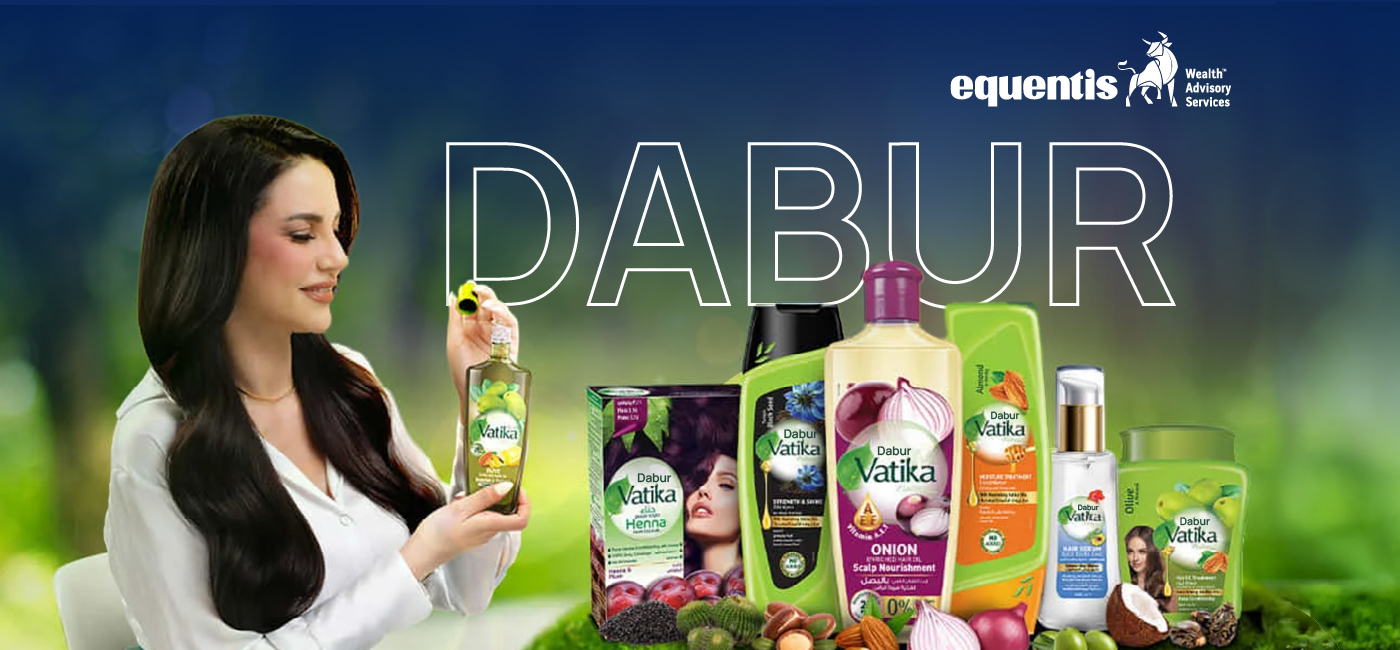

Some brands appear for a moment and vanish. Others evolve, endure, and become part of everyday life. Dabur is one of the latter. What began in 1884 as a physician’s mission to make natural healthcare accessible has grown into one of India’s largest and most trusted FMCG companies with a strong global footprint. This is the compelling story of how Dabur transformed its ayurvedic heritage into a modern consumer powerhouse.
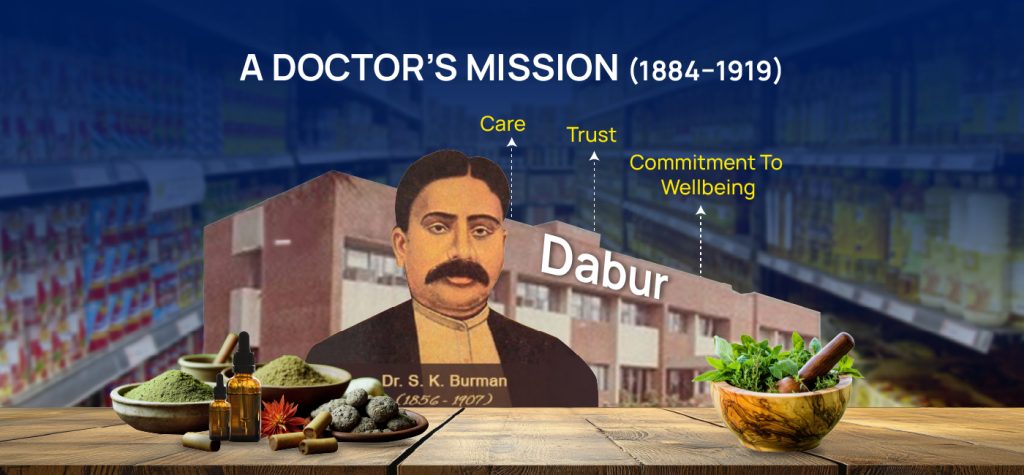
Early Beginnings: A Doctor’s Mission (1884–1919)
The story starts with Dr. S. K. Burman in colonial Calcutta. He treated common diseases like cholera and malaria using ayurvedic formulations. Determined to reach remote patients, he traveled by bicycle with medicines he prepared himself. People began calling him “Dabur” — a fusion of “Daaktar” (doctor) and “Burman.”
By 1896, demand for his remedies led to Dabur’s first manufacturing unit. In 1919, Dabur India Limited was formally established. Even in its earliest stage, the brand carried strong emotional values: care, trust, and commitment to wellbeing.
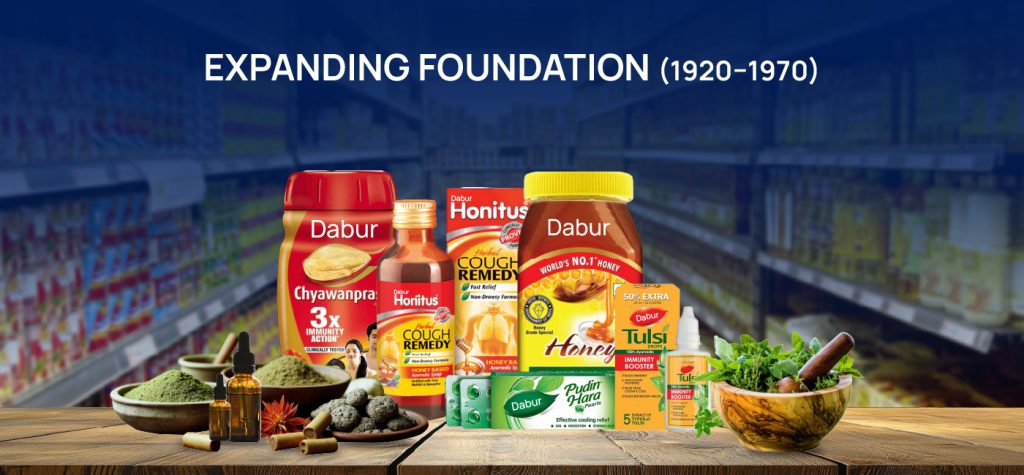
Expanding the Foundation (1920–1970)
As India modernized, so did Dabur. The company expanded its product range to include standardized ayurvedic medicines. Manufacturing scaled up with new facilities and quality processes, ensuring that traditional wellness met scientific rigor.
In 1972, Dabur relocated operations to Delhi and set up a modern manufacturing plant in Faridabad. This marked the beginning of its evolution from a medicine-focused brand to a larger health and wellness enterprise.
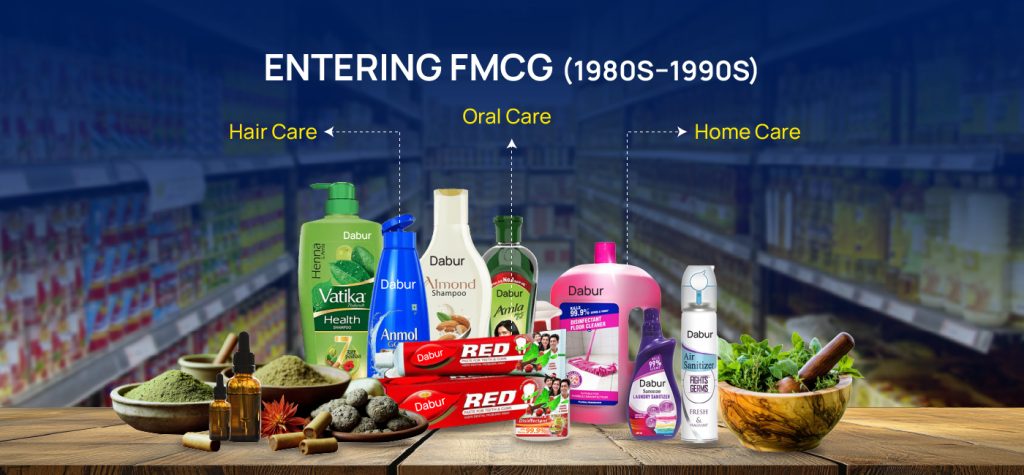
Mainstreaming Ayurveda: Entering FMCG (1980s–1990s)
The 1980s and 90s were transformational. Dabur realized that ayurveda could move beyond pharmacies and into everyday household products. The brand entered categories such as oral care, hair care, and home care — integrating natural solutions into daily consumer routines.
In 1997, the company established a dedicated FMCG subsidiary. A year later, Dabur transitioned to professional management while the Burman family remained promoters. This enabled modern corporate governance while preserving brand heritage.
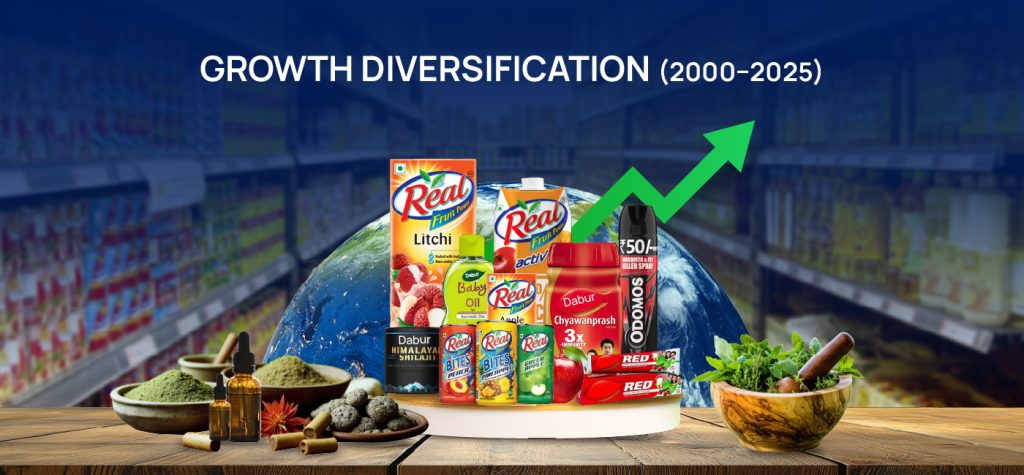
Accelerated Growth Through Diversification (2000–2025)
The new millennium strengthened Dabur’s market leadership. The company expanded aggressively through product innovation and strategic acquisitions. A notable milestone came in 2005 with the acquisition of brands like Babool, Promise, and Odomos — significantly expanding its presence in oral and personal care.
Dabur now operates across three key verticals:
- Healthcare products
- Personal and home care
- Beverages including fruit-based products
The numbers demonstrate impressive scale and consistency:
Revenue Growth Over the Years
- FY 2015: ₹7,827 crore revenue, ₹1,305 crore operating profit
- FY 2020: ₹8,704 crore revenue (approx.), operating margin rising steadily
- FY 2022: ₹10,889 crore revenue
- FY 2024: ₹12,404 crore revenue with around ₹2,400 crore operating profit
- FY 2025 estimated consolidated revenue: Over ₹12,500 crore
This sustained performance reflects strong governance, portfolio strength, and consumer trust.
Today, Dabur offers over 250 natural and herbal products and has expanded to more than 120 countries, becoming the world’s largest Ayurveda-led FMCG brand.

Branding, Trust, and Consumer Connection
Dabur’s marketing success lies in a simple yet powerful message: Ayurveda made modern and accessible.
Key strategies include:
- Consistently reinforcing nature and science as brand pillars
- Crafting emotional storytelling focused on family wellbeing and tradition
- Introducing natural alternatives across multiple categories, not just healthcare
- Maintaining strong recall through iconic brands such as Dabur Amla Hair Oil, Dabur Red and Meswak toothpaste, Dabur Honey, and Real Juices
The brand’s evolution shows how authenticity can become a major competitive advantage, especially as conscious consumption rises globally.

Branding, Trust, and Consumer Connection
Dabur’s marketing success lies in a simple yet powerful message: Ayurveda made modern and accessible.
Key strategies include:
- Consistently reinforcing nature and science as brand pillars
- Crafting emotional storytelling focused on family wellbeing and tradition
- Introducing natural alternatives across multiple categories, not just healthcare
- Maintaining strong recall through iconic brands such as Dabur Amla Hair Oil, Dabur Red and Meswak toothpaste, Dabur Honey, and Real Juices
The brand’s evolution shows how authenticity can become a major competitive advantage, especially as conscious consumption rises globally.
Challenges and Resilience
Dabur’s journey had testing phases:
- Balancing traditional ayurvedic roots with modern consumer expectations
- Competing in a market filled with aggressive FMCG giants
- Navigating regulatory environments in India and abroad
- Sustaining category relevance amid changing lifestyle trends
Yet, the company always responded by innovating and strengthening distribution, while staying rooted in its identity of trust and wellness.

Cultural Impact and Global Reach
For generations of Indian families, Dabur is more than a product — it’s a trusted household companion. From hair oils passed down by grandmothers to natural toothpastes preferred by young parents, Dabur products symbolize care through nature.
Globally, Dabur’s presence reflects India’s growing influence in natural healthcare. Its success highlights how a values-driven business can shape culture while expanding its global footprint.
Cultural Impact and Global Reach
Dabur’s journey is not just about corporate evolution. It is a story of purpose blended with progress — of a physician’s belief turning into a multinational brand respected across continents.
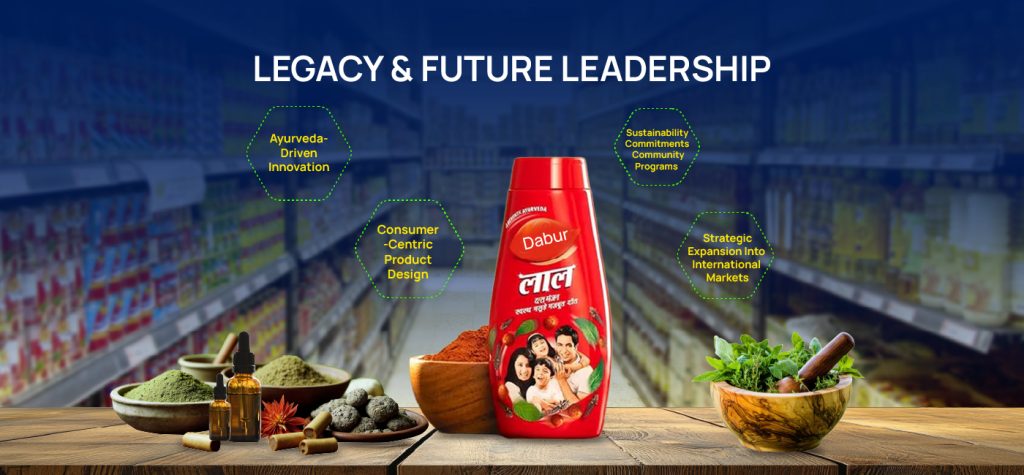
140 years later, Dabur continues building its future on:
- Ayurveda-driven innovation
- Sustainability commitments and community programs
- Consumer-centric product design
- Strategic expansion into international markets
For business leaders, Dabur stands as a model of how heritage can power growth. When a brand stays true to its mission, adapts to change, and listens to the consumer, success becomes not a moment — but a legacy.

Jaspreet Singh Arora is the Chief Investment Officer at Equentis, where he heads a seasoned team of equity analysts and turns two decades of market experience into portfolios that consistently beat the benchmark. A go-to voice on cement, building-materials, real-estate, and construction stocks, Jaspreet previously ran research desks at leading brokerages, honing an eye for the metrics that truly move share prices. His plain-spoken analysis helps investors cut through noise and act with conviction. When he’s not deep-diving into earnings calls, you’ll find him unwinding over sports, weekend cricket or a good history podcast.