
Lalithaa Jewellery Mart made a strong stock market debut on August 24, 2026, with its shares listing at ₹265 on the NSE, a 31.84% premium over its IPO price of ₹201. On the BSE, the stock opened at ₹265.30, representing a 31.99% premium. The debut followed exceptionally strong demand for the ₹1,700 crore IPO, which was subscribed 62.97 times by the end of bidding.
For investors, the listing offers an early indication of market sentiment towards the jewellery retailer. However, a strong debut does not automatically determine the company’s long term performance. Investors now need to focus on earnings, store expansion, margins, working capital and the valuation at which the stock trades after listing.
Lalithaa Jewellery Mart Share Price: What Happened on Listing Day?
The Lalithaa Jewellery Mart share price opened at ₹265 on the NSE against the IPO issue price of ₹201. This translated into a gain of ₹64 per share for investors who received allotment at the upper end of the price band. On the BSE, the opening price was ₹265.30.
The stock’s debut was broadly in line with strong expectations built up before listing, although it was below some grey market indications. The grey market had indicated a possible premium of around 37% before listing, showing that unofficial expectations were higher than the actual opening price.
This is an important distinction for retail investors. Grey market premium, or GMP, is not an official exchange indicator and can change quickly. The actual listing price is determined by market demand and supply once trading begins.
Why Did Lalithaa Jewellery Mart IPO Attract Strong Demand?
The company’s IPO received substantial investor participation between August 17 and August 19. Overall, the issue was subscribed 62.97 times, with the qualified institutional buyer category subscribed 145.38 times, the non institutional investor category 73.90 times and the retail category 11.81 times.
Such subscription numbers indicate that demand significantly exceeded the shares available for the public issue. However, subscription levels should be interpreted carefully. They measure demand during the IPO period but do not guarantee future earnings growth or sustained share price appreciation.
The strong demand also reflected investor interest in India’s organised jewellery retail sector and the company’s established presence in southern India.
What Does Lalithaa Jewellery Mart Do?
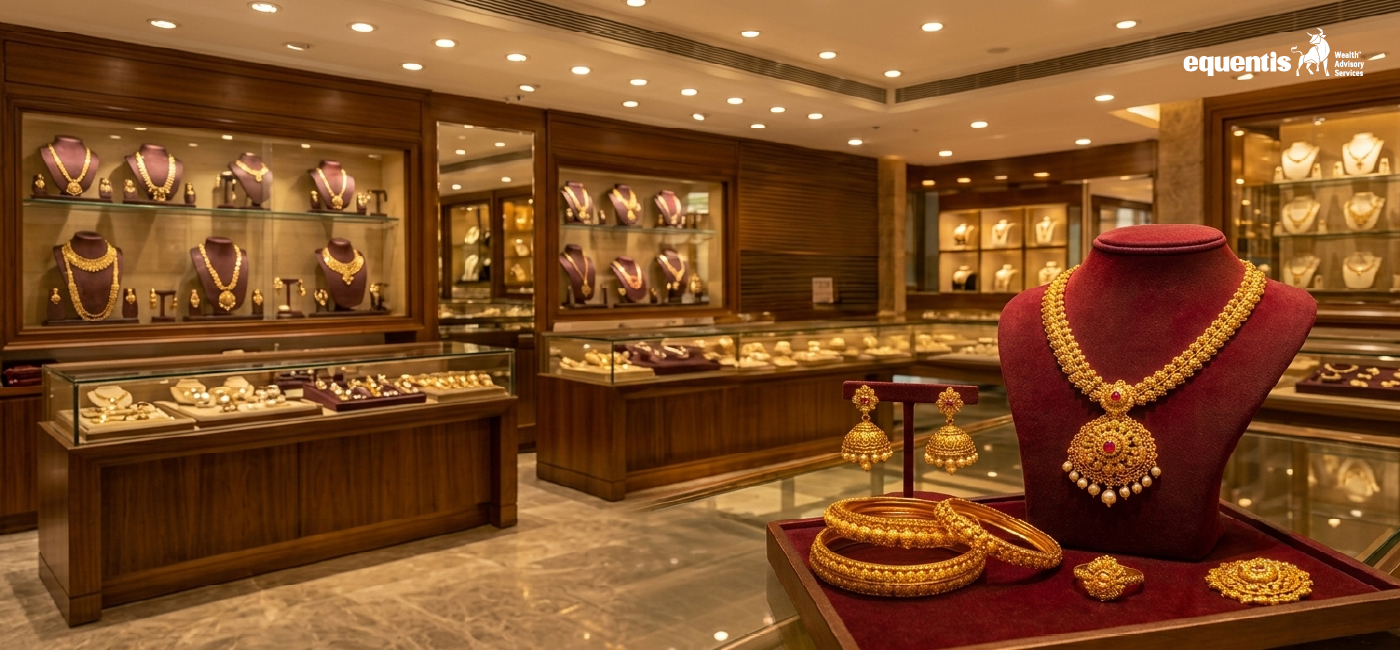
Lalithaa Jewellery Mart is a jewellery retailer operating under the Lalithaa brand. The company sells gold, silver and diamond jewellery, along with silverware, with gold jewellery forming a major part of its product portfolio.
As of March 31, 2026, the company operated 61 stores across 51 cities in Tamil Nadu, Andhra Pradesh, Telangana, Karnataka and Puducherry. Its total operational retail area was approximately 650,881 square feet.
The company’s regional presence is therefore an important part of its business model. Its ability to add stores while maintaining sales productivity and profitability will be relevant as investors assess the company’s post listing growth.
What Was the Lalithaa Jewellery Mart IPO Price?
The IPO price band was fixed at ₹190 to ₹201 per share, with a lot size of 74 shares. At the upper price band, the minimum retail investment was ₹14,874.
The ₹1,700 crore issue comprised a fresh issue of up to ₹1,200 crore and an offer for sale of ₹500 crore. The fresh issue provides capital to the company, while the OFS proceeds go to the existing shareholder selling shares.
The distinction matters because investors should understand how much of the IPO capital is actually available for business expansion and other corporate purposes.
How Could the IPO Proceeds Support Growth?
A key part of the company’s IPO strategy is expanding its retail footprint. The fresh capital can support new stores and general corporate purposes, providing resources for the company to increase its presence in existing and new markets.
For a jewellery retailer, however, store expansion needs to be evaluated alongside inventory requirements. Gold and other precious metals require substantial working capital, meaning that rapid expansion can also increase the amount of capital tied up in inventory.
Therefore, investors should monitor not just the number of stores but also revenue per store, inventory turnover, margins and cash flows.
What Does the 31% Premium Mean for Investors?
An IPO listing at a premium means the market price at the start of trading was higher than the price investors paid in the IPO. In Lalithaa Jewellery Mart’s case, the ₹265 NSE opening price was ₹64 above the ₹201 issue price.
For an investor allotted one lot of 74 shares at ₹201, the difference at the NSE opening price would be ₹4,736 before considering taxes, charges and any subsequent movement in the share price.
However, listing gains are only one part of the investment story. Investors who did not receive an allotment should also avoid assuming that buying after listing will provide the same return profile as the IPO.
What Are the Risks After the Strong Debut?
The jewellery sector is closely linked to gold prices, consumer spending and broader economic conditions. Higher gold prices can increase the value of jewellery inventory and ticket sizes, but they can also affect affordability and purchasing patterns.
Other factors include competition, store expansion costs, inventory management, working capital requirements and changing consumer preferences.
Valuation is another important consideration. A strong listing can push a stock’s valuation higher than its IPO level. If future earnings do not grow in line with market expectations, the stock could face pressure even if the underlying business remains stable.
What Should Investors Watch Next?
Following the Lalithaa Jewellery Mart IPO listing, investors should shift their attention from subscription numbers to operating performance.
Key indicators include:
- Same store sales growth
- New store additions and store productivity
- Revenue and profit growth
- Gross and operating margins
- Inventory turnover
- Working capital requirements
- Cash flow generation
- Gold price movements
These metrics can provide a clearer picture of whether the company’s market valuation is supported by business performance.
Conclusion
The Lalithaa Jewellery Mart debut at a 31% premium reflects strong investor demand for the company’s IPO. The shares opened at ₹265 on the NSE and ₹265.30 on the BSE against an issue price of ₹201, while the IPO itself was subscribed nearly 63 times.
The next phase will be more important for long term investors. Store expansion, sales growth, profitability, inventory management and valuation will determine whether the company’s post listing performance can support the expectations created by its strong debut. The listing gain is therefore a starting point for evaluating the stock, rather than the conclusion of the investment story.
Frequently Asked Questions
1. At what price did Lalithaa Jewellery Mart shares list?
Lalithaa Jewellery Mart shares opened at ₹265 on the NSE on August 24, 2026, compared with the IPO issue price of ₹201. This represented a 31.84% premium. On the BSE, the stock debuted at ₹265.30, translating into a 31.99% premium over the issue price.
2. What was the Lalithaa Jewellery Mart IPO issue price?
The IPO price band was ₹190 to ₹201 per share, with ₹201 being the final issue price. The lot size was 74 shares, making the minimum investment at the upper price band ₹14,874 for retail investors. The IPO opened on August 17 and closed on August 19, 2026.
3. How much premium did Lalithaa Jewellery Mart list at?
The stock listed at a 31.84% premium on the NSE and a 31.99% premium on the BSE. The NSE opening price was ₹265, while the BSE opening price was ₹265.30. The listing was below some grey market expectations, which had indicated a premium of roughly 37% before trading began.
4. How much was the Lalithaa Jewellery Mart IPO subscribed?
The ₹1,700 crore IPO was subscribed 62.97 times overall. Qualified institutional buyers subscribed 145.38 times, non institutional investors 73.90 times and retail investors 11.81 times. The strong demand showed substantial interest across investor categories during the three day bidding period.
5. What does Lalithaa Jewellery Mart sell?
Lalithaa Jewellery Mart sells gold, silver and diamond jewellery as well as silverware. Gold jewellery is a major part of its product portfolio. The company operates primarily across southern Indian markets, with stores in Tamil Nadu, Andhra Pradesh, Telangana, Karnataka and Puducherry.
6. How many Lalithaa Jewellery Mart stores are there?
As of March 31, 2026, Lalithaa Jewellery Mart operated 61 stores across 51 cities. The company had approximately 650,881 square feet of operational retail area. Store expansion is an important part of its growth strategy, but investors should also assess the productivity and profitability of individual stores.
7. What was the size of the Lalithaa Jewellery Mart IPO?
The IPO was worth ₹1,700 crore and consisted of a fresh issue of up to ₹1,200 crore and an offer for sale of ₹500 crore. The fresh issue provides capital to the company, while the OFS component represents shares sold by an existing shareholder.
8. Does a 31% listing gain mean Lalithaa Jewellery Mart is a good investment?
Not necessarily. A listing gain indicates that the stock opened above its IPO issue price, but it does not establish whether the company’s current market valuation is justified. Investors should assess earnings growth, margins, store expansion, inventory management, cash flows and valuation before making a longer term investment decision.
9. What are the key risks for Lalithaa Jewellery Mart investors?
Important risks include fluctuations in gold prices, changes in consumer demand, competition, inventory requirements, working capital needs and the costs associated with expanding stores. Jewellery retailers can also experience changes in customer buying patterns when precious metal prices rise sharply, making operating performance important to monitor.
10. What should investors watch after the Lalithaa Jewellery Mart listing?
Investors should focus on the company’s quarterly financial results and operating metrics rather than only the share price. Same store sales, new store additions, revenue growth, margins, inventory turnover, cash generation and working capital are useful indicators. The stock’s valuation after its strong debut should also be compared with its earnings and relevant jewellery retail peers.
Disclaimer Note: The securities quoted, if any, are for illustration only and are not recommendatory. This article is for education purposes only and shall not be considered as a recommendation or investment advice by Equentis. We will not be liable for any losses that may occur. Investments in the securities market are subject to market risks. Read all the related documents carefully before investing. Registration granted by SEBI, membership of BASL & certification from NISM in no way guarantee the performance of the intermediary or provide any assurance of returns to investors.

Jaspreet Singh Arora is the Chief Investment Officer at Equentis, where he heads a seasoned team of equity analysts and turns two decades of market experience into portfolios that consistently beat the benchmark. A go-to voice on cement, building-materials, real-estate, and construction stocks, Jaspreet previously ran research desks at leading brokerages, honing an eye for the metrics that truly move share prices. His plain-spoken analysis helps investors cut through noise and act with conviction. When he’s not deep-diving into earnings calls, you’ll find him unwinding over sports, weekend cricket or a good history podcast.