
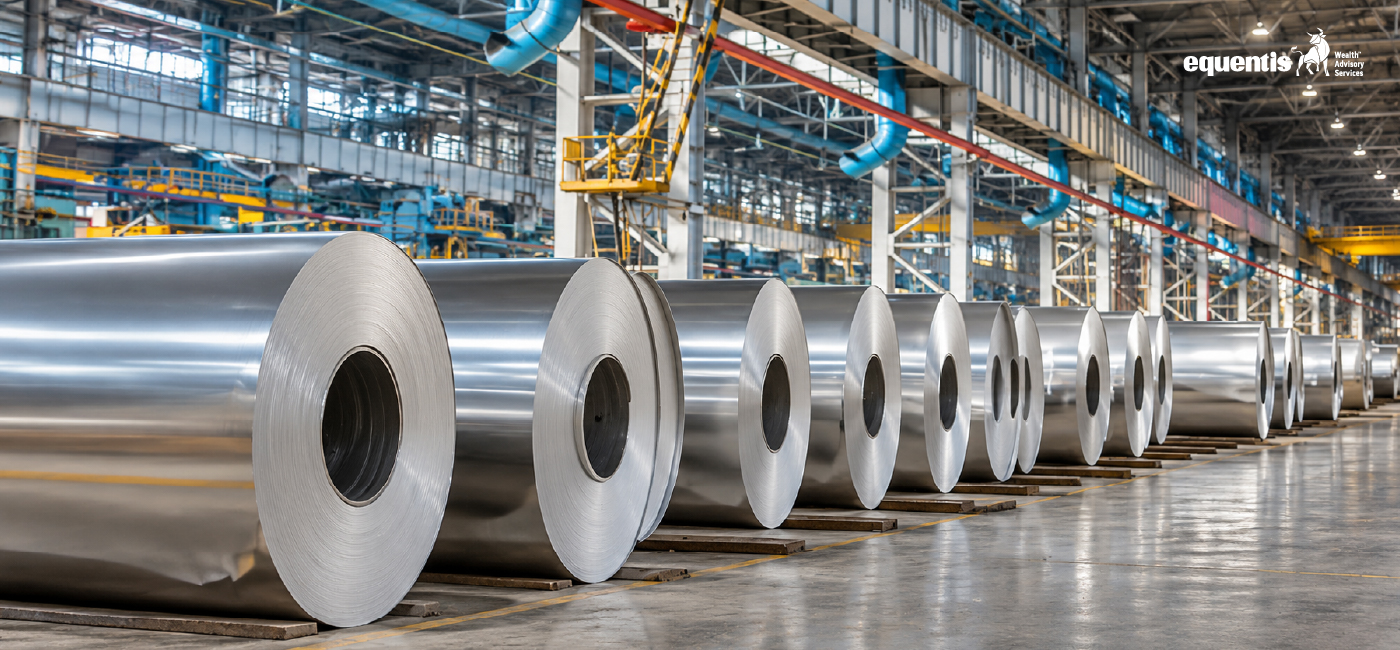

Morgan Stanley’s decision to cut target prices on four Indian steel stocks has put the metal sector under the spotlight, raising questions about valuations, earnings growth and the outlook for steel demand. For investors, the key takeaway is that lower price targets do not automatically mean these stocks should be sold. Instead, the revisions highlight the need to reassess earnings expectations, steel prices, input costs and the financial strength of individual companies before making investment decisions.
Introduction: Why Is Morgan Stanley Cautious About Steel Stocks?
The Indian steel industry is closely linked to economic activity. Infrastructure development, construction, automobiles, railways and manufacturing all contribute to steel demand. However, steel companies also operate in a cyclical business where profitability can change significantly depending on selling prices, raw material costs and competition.
When a global brokerage such as Morgan Stanley reduces its target prices, investors naturally pay attention. Such revisions can influence market sentiment, particularly when they involve large companies that form part of the Nifty Metal index.
However, investors should distinguish between a reduction in a brokerage’s valuation estimate and a deterioration in a company’s actual business performance. Understanding the reasons behind the revised targets is more important than reacting to the headline.
Context and Background: Why Do Morgan Stanley’s Steel Stock Views Matter?
Morgan Stanley is a global investment bank that regularly publishes research on companies, industries and financial markets. Its price targets are estimates of where analysts believe a stock could trade over a specified period, usually 12 months.
However, a target price is not a guaranteed outcome. It depends on assumptions about future earnings, operating margins, commodity prices, interest rates and business performance.
There is an important distinction in the latest available research. Morgan Stanley’s November 23, 2026, sector commentary highlights limited upside to domestic steel prices, even though steel spreads remain supported. The report available publicly does not provide a verified list of four newly reduced individual stock targets. Therefore, investors should not treat the headline as confirmation of four specific target-price cuts. Business Upturn+1
Key Insights: What Is Morgan Stanley Saying About Indian Steel Stocks?
1. Domestic steel prices may have limited upside
Morgan Stanley believes domestic steel prices are trading at approximately a 10% premium to import parity.
Import parity refers to the price at which imported steel becomes competitive with domestically produced steel after accounting for relevant costs.
If Indian steel prices rise too much above international alternatives, buyers may prefer imports. This can limit how much domestic producers can increase selling prices.
2. Steel spreads remain relatively well supported
A steel spread is the difference between the selling price of steel and the cost of major raw materials.
For example, if a company sells steel at ₹60,000 per tonne and its relevant raw material costs are ₹35,000, the spread is ₹25,000 per tonne before other operating expenses.
Morgan Stanley believes government support and seasonally stronger demand could help keep industry spreads healthy. However, limited room for further price increases could restrict additional earnings upgrades. Business Upturn
3. India’s domestic demand remains an important growth driver
India’s steel consumption is supported by infrastructure projects, roads, railways, housing, construction and manufacturing.
Government investment in infrastructure and private-sector capacity expansion can create long-term opportunities for steel producers.
However, demand growth does not automatically translate into higher profits. Companies must also manage production costs, debt and capacity utilisation.
Four Steel Stocks Investors Should Keep on Their Radar
The four major companies commonly discussed in Morgan Stanley’s Indian steel coverage are Tata Steel, JSW Steel, Jindal Steel and Steel Authority of India (SAIL).
Their business profiles and risks differ considerably.
1. Tata Steel
Tata Steel has a significant domestic business alongside its European operations. Its Indian operations benefit from domestic steel demand, while its overseas business introduces additional exposure to energy costs, operating efficiency and restructuring expenses.
Investors should monitor its Indian profitability, European turnaround and debt position.
2. JSW Steel
JSW Steel has been expanding its production capacity and strengthening its position in the domestic market.
Its growth opportunities are linked to capacity additions, sales volumes and operating efficiency. However, higher capital expenditure and raw material costs remain important risks.
3. Jindal Steel
Jindal Steel’s investment outlook depends on production growth, capacity utilisation and the successful execution of expansion projects.
Investors should pay attention to project commissioning timelines, debt levels and profitability per tonne of steel sold.
4. Steel Authority of India (SAIL)
SAIL is a government-owned steel producer with an extensive integrated steel manufacturing network.
Its performance depends on steel realisations, production efficiency, raw material expenses and capital expenditure. Investors should also monitor its ability to improve margins and manage its debt.
Morgan Stanley’s June 2026 coverage maintained an Overweight rating on Tata Steel, JSW Steel and Jindal Steel, while SAIL remained Underweight. Those historical ratings should not be confused with a newly announced November target-price revision. NDTV Profit+1
Impact on Investors: Should You Worry About Lower Steel Stock Targets?
A reduction in a brokerage target price can influence short-term sentiment, particularly when several stocks from the same sector are under review. However, retail investors should avoid making decisions based entirely on brokerage headlines.
There are three important things to understand.
First, target-price cuts do not necessarily mean businesses are deteriorating. Analysts may reduce their valuation estimates because they expect slower earnings growth, higher costs or limited room for further steel price increases.
Second, stock prices often reflect future expectations. Even when a steel company reports healthy quarterly earnings, its shares can decline if investors believe those results are already reflected in the valuation.
Third, companies within the same sector can deliver different returns. A steel producer with efficient operations, manageable debt and better raw material sourcing may perform differently from a company facing higher costs or expansion-related challenges.
For investors holding steel shares, the important question is whether the original investment thesis remains valid.
Opportunities and Risks in Indian Steel Stocks
Opportunities
The Indian steel industry has several long-term growth drivers:
- Infrastructure spending: Roads, railways, housing and industrial development support steel consumption.
- Domestic manufacturing: Growth in automobiles, engineering and capital goods can increase demand.
- Import protection: Government measures supporting domestic steel producers can improve competitive conditions.
- Capacity expansion: Companies investing in efficient production facilities could benefit from higher demand over time.
Risks investors should monitor
Despite these opportunities, steel stocks remain cyclical investments.
- Raw material inflation: Higher coking coal and iron ore prices can reduce profitability.
- Chinese steel exports: Excess global supply can put pressure on domestic steel prices.
- High debt: Large expansion projects can increase interest expenses and financial pressure.
- Import competition: Higher domestic prices can encourage buyers to source cheaper imported steel.
- Valuation risk: Even fundamentally strong companies can experience corrections when their shares become expensive.
What Should Investors Do Now?
Rather than reacting immediately to brokerage target-price changes, investors should follow a disciplined approach.
- Compare the latest share price with the company’s earnings growth and valuation.
- Examine quarterly EBITDA margins and profitability per tonne.
- Check debt levels and upcoming capital expenditure commitments.
- Monitor domestic steel prices and international supply trends.
- Compare multiple brokerage reports instead of relying on one analyst’s opinion.
Investors with an existing position should also review their investment horizon and risk tolerance. Those considering fresh exposure should avoid assuming that a correction automatically makes a stock attractive.
Conclusion: Focus on Earnings, Not Just Target Prices
Morgan Stanley’s latest steel-sector commentary highlights an important development: domestic steel prices and producer margins may remain supported, but the scope for further price increases could be limited.
For Indian investors, the bigger opportunity lies in identifying companies capable of delivering sustainable earnings growth rather than simply following brokerage target prices.
Tata Steel, JSW Steel, Jindal Steel and SAIL have different business strengths, financial positions and operational risks. Investors should monitor their quarterly results, steel spreads, raw material costs and valuations before making decisions.
The long-term outlook for India’s steel industry remains linked to infrastructure and manufacturing growth. However, stock market returns will ultimately depend on how effectively individual companies convert that demand into profits.
Frequently Asked Questions
1. Why is Morgan Stanley cautious about Indian steel stocks?
Morgan Stanley’s November 23, 2026, commentary highlights limited upside to domestic steel prices because they are already trading at around a 10% premium to import parity. Although steel spreads remain supported, limited pricing headroom could restrict further earnings upgrades for domestic producers.
2. Which four steel stocks are commonly tracked in Morgan Stanley’s coverage?
The four major Indian steel companies commonly discussed in its sector coverage are Tata Steel, JSW Steel, Jindal Steel and Steel Authority of India (SAIL). However, investors should verify the latest individual ratings and target prices rather than assume that all four have received fresh target-price cuts.
3. What does a target-price cut mean for investors?
A target-price cut means a brokerage has reduced its estimate of a stock’s potential future market value. It may reflect lower earnings expectations, higher operating costs or valuation concerns. It does not necessarily mean the brokerage has downgraded its recommendation or that the company is performing poorly.
4. Is Tata Steel a good long-term investment?
Tata Steel’s long-term prospects depend on domestic steel demand, operating efficiency, European business performance and debt management. Investors should examine its quarterly earnings, cash flows and valuation before making an investment decision. Brokerage recommendations alone should not determine whether the stock suits an individual’s portfolio.
5. What are the major growth drivers for JSW Steel?
JSW Steel’s growth opportunities include increasing domestic steel consumption, production capacity expansion, infrastructure development and manufacturing demand. However, investors should also monitor capital expenditure, coking coal prices, debt levels and the company’s ability to maintain operating margins.
6. Why is SAIL different from private steel companies?
SAIL is a government-owned integrated steel producer with multiple manufacturing facilities across India. Its performance depends on production efficiency, steel prices, raw material expenses and capital expenditure. Government ownership does not eliminate the operational and financial risks associated with the steel industry.
7. What are steel spreads, and why do they matter?
Steel spreads represent the difference between the selling price of steel and relevant raw material costs. Higher spreads generally support operating profitability, while declining spreads can put pressure on margins. Investors track this measure because it provides an indication of the industry’s earnings environment.
8. How do Chinese steel exports affect Indian steel stocks?
Large volumes of competitively priced Chinese steel exports can increase supply in international markets and put pressure on domestic steel prices. This can reduce profitability for Indian manufacturers. Conversely, restrictions on excess production and stronger global pricing conditions may support domestic steelmakers.
9. Is a fall in steel stock prices an opportunity to invest?
A falling share price does not automatically make a steel stock attractive. Investors should evaluate its valuation, earnings outlook, debt, operating margins and industry conditions. A correction may create an opportunity, but it can also reflect genuine concerns about future profitability.
10. What should investors monitor before investing in steel stocks?
Investors should track domestic steel prices, coking coal and iron ore costs, quarterly EBITDA margins, capacity utilisation, debt and capital expenditure. Global supply conditions, Chinese exports and government trade policies are also important. These factors help investors understand whether a company’s earnings growth is sustainable.
Disclaimer Note: The securities quoted, if any, are for illustration only and are not recommendatory. This article is for education purposes only and shall not be considered as a recommendation or investment advice by Equentis . We will not be liable for any losses that may occur. Investments in the securities market are subject to market risks. Read all the related documents carefully before investing. Registration granted by SEBI, membership of BASL & certification from NISM in no way guarantee the performance of the intermediary or provide any assurance of returns to investors.

Jaspreet Singh Arora is the Chief Investment Officer at Equentis, where he heads a seasoned team of equity analysts and turns two decades of market experience into portfolios that consistently beat the benchmark. A go-to voice on cement, building-materials, real-estate, and construction stocks, Jaspreet previously ran research desks at leading brokerages, honing an eye for the metrics that truly move share prices. His plain-spoken analysis helps investors cut through noise and act with conviction. When he’s not deep-diving into earnings calls, you’ll find him unwinding over sports, weekend cricket or a good history podcast.