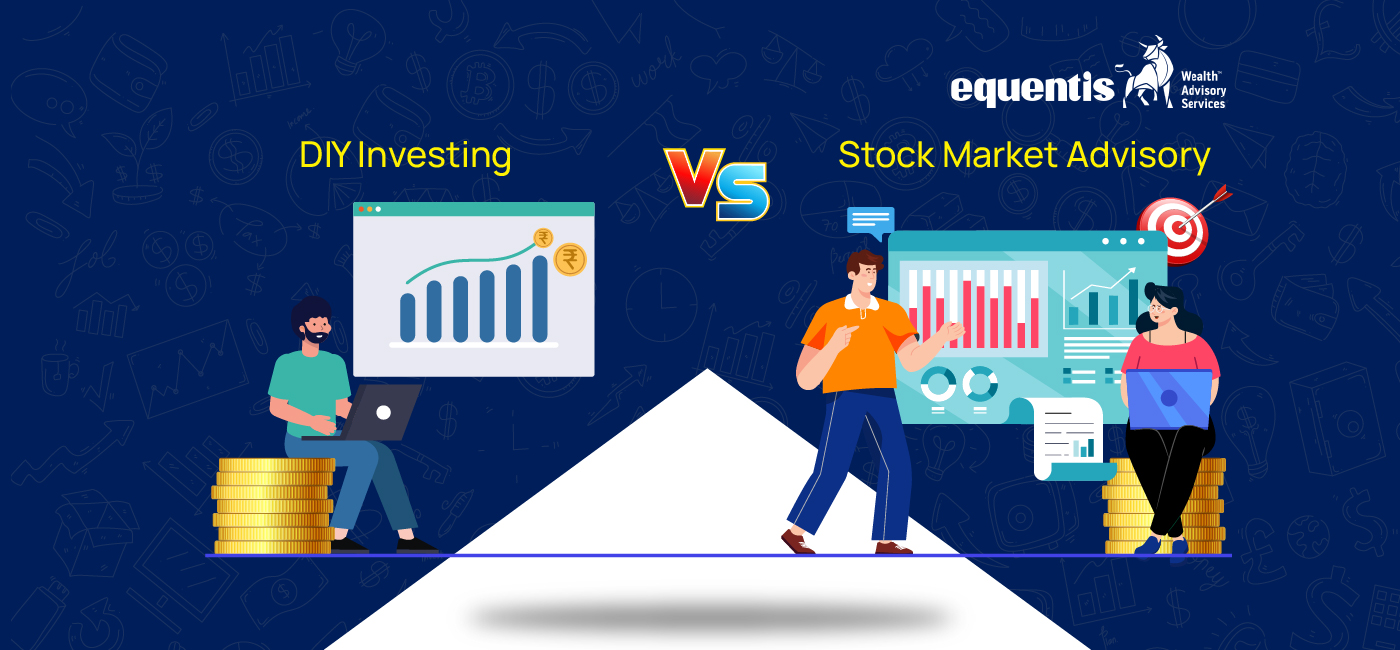

Stock market advisory vs DIY investing is one of the most debated topics among Indian retail investors today. With easy access to trading apps, free market information, and social media tips, many investors are tempted to manage investments on their own. At the same time, professional share market advisory services continue to grow as investors seek expert guidance, risk management, and consistency.
So which approach is actually better for retail investors in India? Should you rely on a professional advisory or take the DIY route? This detailed guide breaks down both approaches, their pros and cons, and the role of stock market advisory services in building long-term wealth.
Understanding DIY Investing
DIY (Do-It-Yourself) investing means managing your own stock market investments without professional help. You research stocks, analyze financial statements, track markets, and make buy or sell decisions independently.
How DIY Investing Works
- You select stocks, mutual funds, or ETFs on your own
- Decisions are based on personal research, news, or market trends
- You manage portfolio allocation and rebalancing
- No advisory or management fees involved
DIY investing has gained popularity due to discount brokerages, free online tools, and easy access to financial content.
Understanding Stock Market Advisory
A stock market advisory provides professional investment guidance based on research, data, and market expertise. These services are typically offered by SEBI-registered advisors who follow a structured investment process.
Role of Stock Market Advisory
- Identifying quality investment opportunities
- Portfolio construction and diversification
- Risk management and asset allocation
- Ongoing monitoring and rebalancing
- Helping investors avoid emotional decision-making
A professional share market advisory focuses on long-term wealth creation rather than short-term speculation.
Stock Market Advisory vs DIY Investing: Key Differences
1. Expertise and Research
DIY investors depend on their own understanding, which may be limited or biased. Stock market advisory services use dedicated research teams, financial models, and macroeconomic analysis.
2. Time Commitment
DIY investing requires significant time for research, tracking earnings, and monitoring markets. Advisory services save time by doing this work for you.
3. Risk Management
Retail investors often underestimate risk. Advisory firms focus heavily on downside protection, diversification, and capital preservation.
4. Emotional Discipline
DIY investors may panic during market corrections or chase momentum stocks. Professional advisors follow data-driven strategies and predefined rules.
5. Cost Structure
DIY investing saves advisory fees but may lead to costly mistakes. Advisory services charge fees but aim to deliver risk-adjusted returns.
Advantages of DIY Investing
- Full control over investment decisions
- No advisory or management fees
- Faster execution and flexibility
- Suitable for investors with strong market knowledge
DIY investing works best for disciplined investors who understand valuation, risk, and market cycles.
Limitations of DIY Investing for Retail Investors
- Lack of professional research
- Overconfidence and emotional bias
- Difficulty in portfolio diversification
- Higher chances of inconsistent returns
- Poor risk management during volatile markets
Many retail investors struggle to consistently beat the market using a DIY approach.
Advantages of Stock Market Advisory
- Access to expert research and insights
- Structured investment frameworks
- Better portfolio diversification
- Strong focus on risk-adjusted returns
- Long-term investment discipline
The role of stock market advisory becomes especially important during market downturns, when emotional decisions can destroy wealth.
Limitations of Stock Market Advisory
- Advisory fees involved
- Performance depends on quality of advisor
- Requires trust and patience
- Not all advisors follow ethical practices (SEBI registration is crucial)
Choosing the right advisory makes all the difference.
Which Is Better for Retail Investors in India?
When comparing stock market advisory vs DIY investing, the answer depends on your experience, time availability, and financial goals.
DIY Investing Is Better If:
- You have strong financial knowledge
- You enjoy market research
- You can control emotions
- You actively track markets
Stock Market Advisory Is Better If:
- You are a beginner or intermediate investor
- You have limited time
- You want structured wealth creation
- You prefer professional risk management
For most retail investors in India, a share market advisory provides better consistency, discipline, and peace of mind.
Hybrid Approach: Best of Both Worlds
Many investors follow a hybrid model:
- Core portfolio managed via stock market advisory
- Small portion allocated to DIY investing
This approach balances professional guidance with personal learning and flexibility.
Importance of Choosing a SEBI-Registered Advisory
Always ensure your advisory is SEBI registered. This ensures:
- Regulatory compliance
- Transparency in fees
- Ethical investment practices
- Investor protection
The role of stock market advisory is most effective when backed by regulatory oversight.
Final Verdict: Stock Market Advisory vs DIY Investing
For the majority of Indian retail investors, stock market advisory vs DIY investing is not about control versus cost, but about consistency versus guesswork. While DIY investing can work for experienced investors, professional advisory services offer structured strategies, risk management, and long-term focus that most retail investors struggle to maintain on their own.
If your goal is sustainable wealth creation with controlled risk, a reliable share market advisory often proves to be the better choice.
FAQs on Stock Market Advisory vs DIY Investing
1. What is stock market advisory vs DIY investing?
It is a comparison between professional investment guidance and self-managed investing.
2. Is DIY investing good for beginners?
DIY investing can be risky for beginners due to lack of experience and emotional bias.
3. What is the role of stock market advisory?
The role of stock market advisory is to provide research-backed guidance, risk management, and portfolio discipline.
4. Are stock market advisory services worth the fees?
For most retail investors, advisory fees are justified by better risk-adjusted returns.
5. Can DIY investors beat professional advisors?
Only a small percentage of DIY investors consistently outperform professionals.
6. Is share market advisory safe in India?
Yes, if you choose a SEBI-registered advisory.
7. Do advisory services guarantee returns?
No advisory can guarantee returns, but they aim to reduce risk and improve consistency.
8. How much capital is required for stock market advisory?
It varies, but many advisories cater specifically to retail investors.
9. Can I switch from DIY to advisory later?
Yes, many investors move to advisory services after facing losses in DIY investing.
10. Is DIY investing cheaper than advisory services?
DIY investing saves fees but may result in higher losses due to mistakes.
11. What skills are needed for DIY investing?
Financial analysis, valuation, risk management, and emotional discipline.
12. How do advisories manage risk?
Through diversification, asset allocation, and exit strategies.
13. Is stock market advisory suitable for long-term investing?
Yes, advisories are ideal for long-term wealth creation.
14. Can I combine advisory and DIY investing?
Yes, a hybrid approach is common among retail investors.
15. How do I choose the right share market advisory?
Check SEBI registration, track record, and investment philosophy.
16. Are advisory recommendations customizable?
Many advisories offer model portfolios suited to different risk profiles.
17. Do advisories help during market crashes?
Yes, professional advisors help investors stay disciplined during volatility.
18. Is DIY investing more stressful?
Yes, especially during market corrections and uncertainty.
19. What mistakes do DIY investors commonly make?
Overtrading, lack of diversification, and emotional decisions.
20. Which is better for Indian retail investors?
For most investors, stock market advisory offers better structure, discipline, and long-term results.
Disclaimer Note: The securities quoted, if any, are for illustration only and are not recommendatory. This article is for education purposes only and shall not be considered as a recommendation or investment advice by Equentis – Research & Ranking. We will not be liable for any losses that may occur. Investments in the securities market are subject to market risks. Read all the related documents carefully before investing. Registration granted by SEBI, membership of BASL & certification from NISM in no way guarantee the performance of the intermediary or provide any assurance of returns to investors.

Jaspreet Singh Arora is the Chief Investment Officer at Equentis, where he heads a seasoned team of equity analysts and turns two decades of market experience into portfolios that consistently beat the benchmark. A go-to voice on cement, building-materials, real-estate, and construction stocks, Jaspreet previously ran research desks at leading brokerages, honing an eye for the metrics that truly move share prices. His plain-spoken analysis helps investors cut through noise and act with conviction. When he’s not deep-diving into earnings calls, you’ll find him unwinding over sports, weekend cricket or a good history podcast.