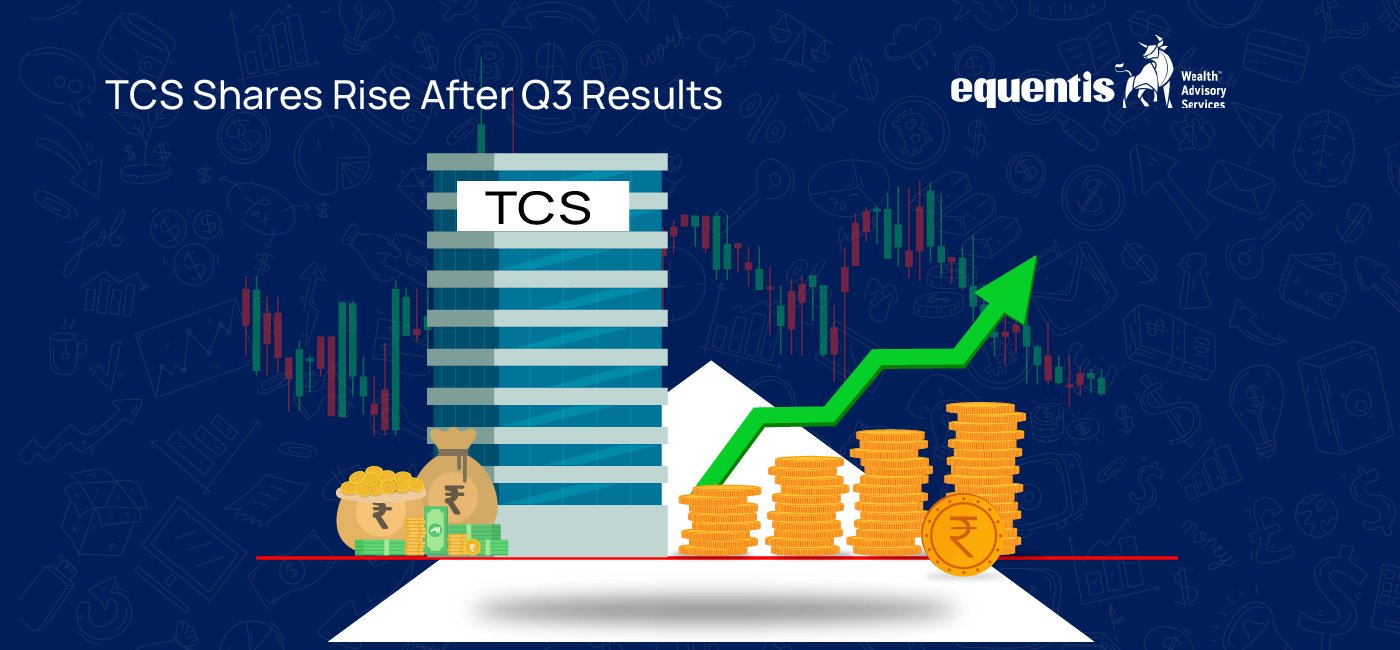

Tata Consultancy Services shares moved higher after the company announced its Q3 results, surprising the market with a higher-than-anticipated dividend. For investors tracking large-cap IT stocks, this development matters because it reflects not just quarterly performance, but also management’s confidence in cash flows and long-term stability. In a market where IT stocks have seen mixed sentiment, TCS’s announcement has given investors a clear signal to reassess both value and expectations from the sector.
Understanding the Context: Why TCS Results Matter
TCS is often seen as a bellwether for India’s IT services sector. Its quarterly results are closely watched because they provide insights into global demand, client spending trends, and margin pressures faced by technology companies. Over the past year, the IT sector has dealt with slower deal conversions, cautious client budgets, and currency-related challenges.
Against this backdrop, TCS’s Q3 results were important not just for headline numbers, but for what they revealed about resilience. When a company of this scale chooses to reward shareholders with a higher-than-expected dividend, it usually signals comfort around earnings visibility and balance sheet strength.
Key Highlights From the Q3 Results
The market reaction to TCS shares rising was driven by a combination of steady operational performance and the dividend announcement. While revenue growth remained measured, it was largely in line with expectations, reflecting stable demand across key geographies. Margins showed relative stability despite cost pressures, which helped maintain investor confidence.
The standout element, however, was the dividend. Higher-than-anticipated payouts often catch market attention because they directly enhance shareholder returns. For many long-term investors, dividends act as a cushion during volatile phases and improve total return even when stock prices move sideways.
Management commentary also played a role in shaping sentiment. Outlook statements around deal pipelines, digital transformation demand, and client engagement provided reassurance that while growth may not be explosive, it remains predictable and steady.
Why the Dividend Announcement Is Significant
Dividends are not just about cash distribution. They reflect how a company views its capital allocation priorities. By announcing a higher dividend, TCS has indicated that it continues to generate strong free cash flows even in a cautious global environment.
For income-focused investors, this strengthens TCS’s appeal as a relatively stable large-cap stock. For growth-oriented investors, it suggests that the company does not see immediate stress that would require conserving cash aggressively. In both cases, the dividend has helped reinforce trust in the company’s financial discipline.
Impact on Investors and the Broader IT Sector
The immediate impact was visible in the share price movement, as investors responded positively to the overall package of results and shareholder reward. For existing shareholders, the rise in TCS shares improves portfolio value while the dividend adds to cash returns.
Beyond TCS, these results also influence sentiment across the IT sector. When a market leader demonstrates stability, it often lifts confidence in peer companies as well. Investors may start differentiating between companies with strong balance sheets and consistent cash generation versus those more vulnerable to demand fluctuations.
For retail investors, this phase highlights the importance of understanding why a stock moves. The rally was not driven by aggressive growth projections, but by predictability, cash strength, and disciplined management.
Opportunities and Risks Going Forward
From an opportunity perspective, TCS continues to offer visibility and relative stability in an uncertain global environment. Long-term investors who value steady returns, dividends, and lower volatility may find comfort in such stocks, especially during market corrections.
There is also potential upside if global IT spending revives faster than expected. Any improvement in client confidence or acceleration in digital transformation projects could support gradual earnings growth over the coming quarters.
However, risks remain. The IT sector is still exposed to global economic slowdowns, delayed decision-making by clients, and pricing pressures. Currency movements can also impact margins, while wage inflation remains a factor to monitor. Investors should be cautious about assuming sharp growth based solely on one quarter’s performance.
Valuation is another aspect to consider. Large-cap IT stocks often trade at a premium due to stability, but limited growth can cap upside in the short term.
Conclusion: A Signal of Stability Rather Than Aggressive Growth
The rise in TCS shares after Q3 results and a higher-than-anticipated dividend reflects investor appreciation for stability, consistency, and shareholder-friendly policies. Rather than signaling rapid expansion, the results highlight disciplined execution and strong cash generation in a challenging environment.
For investors, the key takeaway is clear. TCS continues to position itself as a dependable large-cap stock offering steady returns and income through dividends. While near-term growth may remain moderate, the company’s financial strength and predictable business model make it relevant in a balanced long-term portfolio. As markets navigate uncertainty, such qualities often matter more than short-term excitement.
Disclaimer Note: The securities quoted, if any, are for illustration only and are not recommendatory. This article is for education purposes only and shall not be considered as a recommendation or investment advice by Equentis – Research & Ranking. We will not be liable for any losses that may occur. Investments in the securities market are subject to market risks. Read all the related documents carefully before investing. Registration granted by SEBI, membership of BASL & certification from NISM in no way guarantee the performance of the intermediary or provide any assurance of returns to investors.

Jaspreet Singh Arora is the Chief Investment Officer at Equentis, where he heads a seasoned team of equity analysts and turns two decades of market experience into portfolios that consistently beat the benchmark. A go-to voice on cement, building-materials, real-estate, and construction stocks, Jaspreet previously ran research desks at leading brokerages, honing an eye for the metrics that truly move share prices. His plain-spoken analysis helps investors cut through noise and act with conviction. When he’s not deep-diving into earnings calls, you’ll find him unwinding over sports, weekend cricket or a good history podcast.