
Tesla, the global leader in electric vehicle (EV) innovation, has officially entered the Indian market with the launch of its first showroom in Mumbai’s Bandra Kurla Complex (BKC).
Spread across 4,000 square feet in the upscale Maker Maxity Mall, the showroom showcases two Model Y SUVs, giving visitors a premium experience of Tesla’s cutting-edge technology and sustainable mobility.
Tesla is already preparing for long-term growth by planning an EV charging infrastructure rollout and a second showroom in Delhi. These moves signal Tesla’s commitment to tapping into India’s rapidly growing EV ecosystem.
Here are the key highlights regarding Tesla’s India model launch:
- Model Y Introduced: The initial focus is on the Model Y, with two variants currently displayed at the showroom.
- Pricing: The Model Y starts at Rs 61 lakh (on-road). The rear-wheel drive (RWD) variant is priced at Rs 59.89 lakh, and the long-range rear-wheel drive (LR RWD) variant at Rs 67.89 lakh.
- Import Challenges: High import duties (70-110%) significantly increase the vehicle’s price compared to global markets.
- Regulatory Approval: Tesla received formal approval from Mumbai’s Andheri RTO on July 11, allowing sales, showcases, and test drives.
- Government Collaboration: Entry aligns with India’s new EV policy offering reduced import duties and follows discussions between PM Modi and Elon Musk.
- Future Deliveries: Customer deliveries are anticipated to begin after September 2025.
- Infrastructure Plans: Tesla plans to establish V4 Supercharging infrastructure and open a second showroom in Delhi.
- Manufacturing Status: Currently, cars are imported from Tesla’s Shanghai factory, with no immediate plans for local manufacturing in India confirmed.
Global EV Market Set for Strong Growth
Before exploring Tesla’s models and pricing in India, let’s first take a look at the global electric vehicle (EV) market and understand how India plans to tap into this growing sector.
The global EV market is expected to generate an impressive $784.2 billion in revenue by 2025. Between 2025 and 2029, the EV market is projected to grow at a steady compound annual growth rate (CAGR) of 6.01%, reaching a total market size of around US$990.4 billion by 2029.
By 2029, the number of EVs sold worldwide is expected to hit 17.36 million units, reflecting the strong demand and global shift toward cleaner transportation.
Source: Statista
India’s EV Market on the Rise
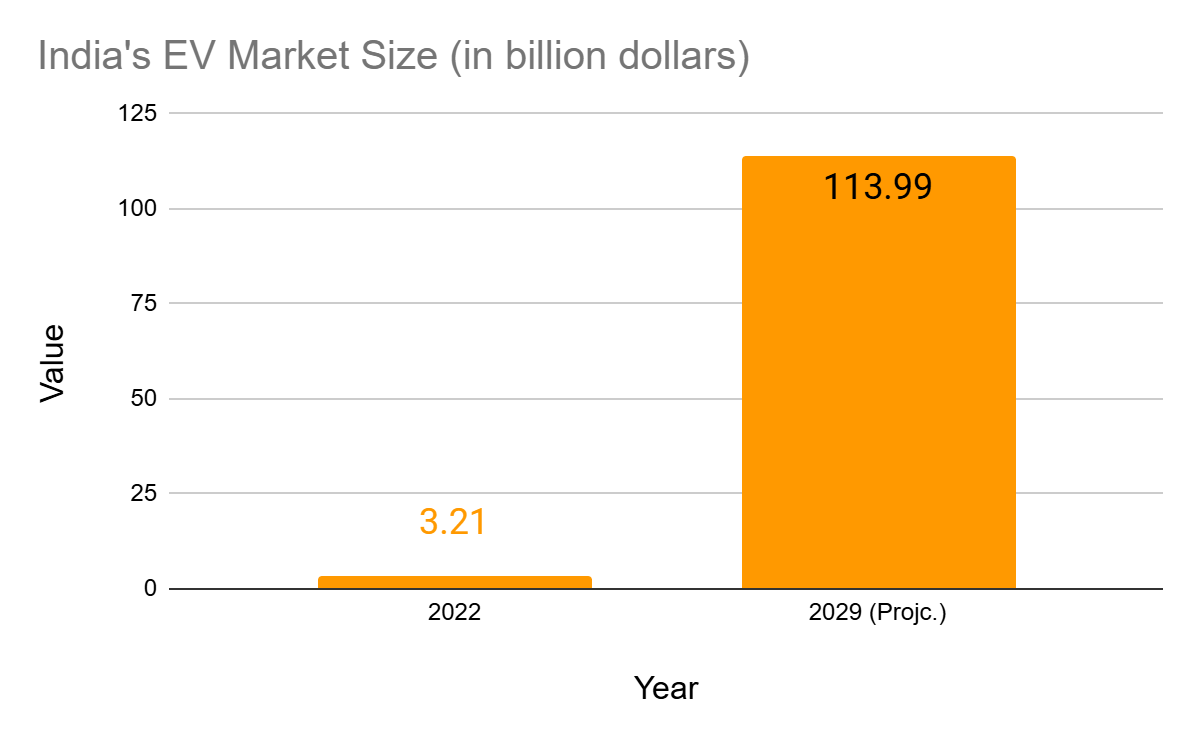
India has set ambitious targets to boost EV adoption across various segments by 2030. The government aims for 30% of private cars, 70% of commercial vehicles, 40% of buses, and 80% of two- and three-wheelers to be electric by the end of the decade.
If these goals are met, an estimated 80 million EVs could be on Indian roads by 2030, opening up a massive opportunity for manufacturers, battery makers, and related suppliers.
Source: IBEF.org
Tesla’s official entry into India is set to influence and shape the country’s growing EV market. Though it may not directly compete with mass-market brands like Tata Motors and Mahindra right away due to its higher prices, Tesla’s presence is still expected to create major changes.
Which Tesla Cars Will Be Available in India?
For now, Tesla plans to sell only one model in the Indian market, the Tesla Model Y. According to a report by Carwale, six units of the Model Y SUV have already been shipped from Tesla’s Shanghai plant to Mumbai. These vehicles will be used for display and demonstration purposes at the company’s new showroom.
A Reuters report revealed that Tesla has imported vehicles, chargers, and accessories worth nearly $1 million, primarily from China and the United States.
Interestingly, Tesla’s most affordable model, the Model 3, will also be showcased but is expected to officially launch in India sometime later in 2025.
Source: LiveMint
Decoding the Model Y for India
Tesla has launched the Model Y in India with a premium but competitive price tag. The on-road price starts at around ₹61 lakh, positioning it as a luxury electric vehicle. The rear-wheel drive (RWD) version is priced at ₹59.89 lakh, making it the more affordable option for those looking to enter the Tesla ecosystem.
For buyers seeking better range, the long-range RWD variant comes at ₹67.89 lakh. These prices reflect Tesla’s premium branding and the advanced technology in its vehicles. The company is targeting early adopters and eco-conscious buyers who are ready to invest in high-end, sustainable mobility.
Source: TimesofIndia
The Challenge of Import Duties
One of the biggest challenges Tesla faces in India is the country’s high import duties on fully built cars. These tariffs range from 70% to 110%, which can double the car’s price compared to what it costs in the US. The policy aims to promote local manufacturing, but it also makes Tesla’s vehicles much more expensive for Indian buyers.
Source: TimesofIndia
Tesla’s Entry Aligned with India’s EV Vision
Tesla’s launch in India isn’t just a business move—it reflects changing government policies and growing collaboration. The company’s entry aligns with India’s new EV policy, which offers reduced import duties and incentives to attract global EV makers. This shift highlights India’s goal to become a major hub for electric vehicle manufacturing.
High-level discussions between Prime Minister Narendra Modi and Tesla CEO Elon Musk in February and April played a key role in making this possible. These meetings helped explore partnerships, resolve concerns, and build a supportive environment for Tesla’s operations in India.
Source: TimesofIndia
Bookings Begin, Deliveries in Late 2025
Tesla has opened bookings for its vehicles in India, but deliveries will begin only after September 2025. This gives the company time to complete regulatory approvals, streamline logistics, and build a solid after-sales support system. Having a reliable service network and spare parts availability will be crucial to win customer trust.
Charging Network Rollout in Progress
Tesla also plans to expand India’s charging infrastructure. It will install its advanced V4 Superchargers, known for ultra-fast charging, to address range anxiety and support long-distance travel. A strong charging network will be key to driving mass EV adoption across the country.
After Mumbai, Tesla’s next showroom is set to open in Delhi, targeting another major metro with high purchasing power and growing interest in sustainable transport. This move signals Tesla’s city-focused strategy, starting with urban centers.
Current Supply from China, No Local Manufacturing Yet
At present, the Model Y units displayed in India are imported from Tesla’s Shanghai factory. While there’s excitement around Tesla’s entry, the government has clarified that there are no immediate plans for local manufacturing. For now, India will remain an import-only market, though future local production could be possible if demand grows.
Tesla’s Impact on India’s EV Market
Tesla’s entry marks a big moment for India’s EV journey. While challenges like high import duties and infrastructure needs remain, Tesla is expected to boost investment in the sector, drive innovation, and push local brands to up their game. Its focus on technology, sustainable energy, and a direct-to-customer model could set new standards in the Indian auto industry.
The timing of Tesla’s entry is crucial, as it comes amid slowing global sales, positioning India as a key growth market. With rising demand for electric vehicles, supportive government policies, and increased awareness around sustainability, India offers Tesla a valuable opportunity to expand its footprint.
By focusing on major metro cities and popular models, the brand is set to play a significant role in accelerating the country’s shift towards clean and luxury mobility.
Disclaimer Note: The securities quoted, if any, are for illustration only and are not recommendatory. This article is for education purposes only and shall not be considered as a recommendation or investment advice by Equentis – Research & Ranking. We will not be liable for any losses that may occur. Investments in the securities market are subject to market risks. Read all the related documents carefully before investing. Registration granted by SEBI, membership of BASL & the certification from NISM in no way guarantee the performance of the intermediary or provide any assurance of returns to investors.

Yash Vora is a financial writer with the Informed InvestoRR team at Equentis. He has followed the stock markets right from his early college days. So, Yash has a keen eye for the big market movers. His clear and crisp writeups offer sharp insights on market moving stocks, fund flows, economic data and IPOs. When not looking at stocks, Yash loves a game of table tennis or chess.