

India’s fashion retail landscape has changed dramatically over the past two decades, and Trent Limited has been at the centre of this transformation. What began in 1998 as a retail venture backed by the Tata Group has grown into a business generating over ₹20,000 crore in annual consolidated revenue. Through brands such as Westside and Zudio, Trent has tapped into two powerful consumer aspirations: the desire for a modern lifestyle and the demand for affordable, trend-led fashion. Its journey is not just about opening stores or increasing sales. It is about understanding how Indian consumers shop, adapting to changing preferences and building retail formats that connect with millions of customers. From establishing a distinctive lifestyle identity to scaling an accessible fashion model across the country, Trent’s growth story offers valuable insights into branding, pricing and long-term business strategy.
1. The Beginning: Recognising a Gap in Indian Retail
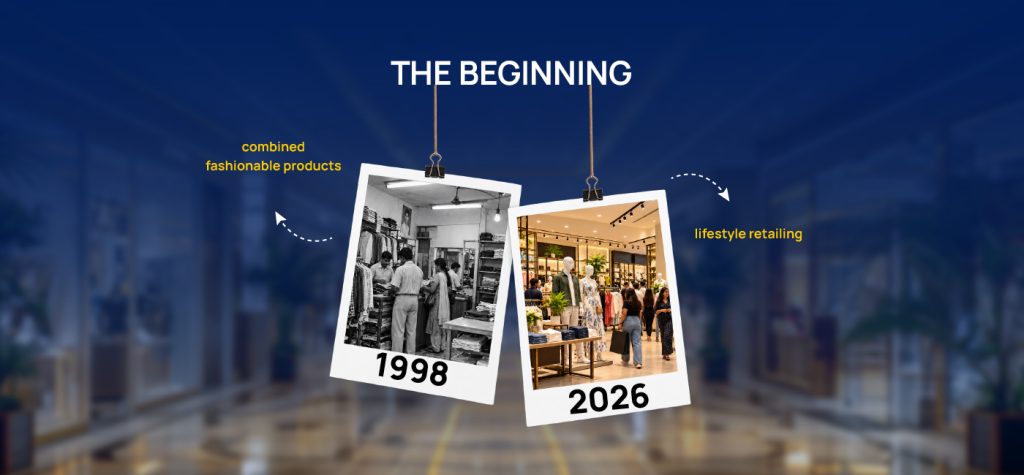
Every successful retail brand begins with an understanding of what consumers want but cannot easily find. For Trent Limited, that opportunity emerged in 1998, when India’s organised apparel retail market was still developing. Backed by the Tata Group, the company set out to create a modern retail experience that combined fashionable products, accessible shopping and consistent quality.
Trent’s journey took shape following the restructuring of Lakme Limited’s business, which shifted its focus towards apparel and lifestyle retailing. Rather than simply selling clothes, the company aimed to build retail brands that understood changing consumer aspirations. This decision laid the foundation for a business that would eventually reshape how millions of Indians approached fashion shopping.
2. Westside: Building a Distinctive Retail Identity
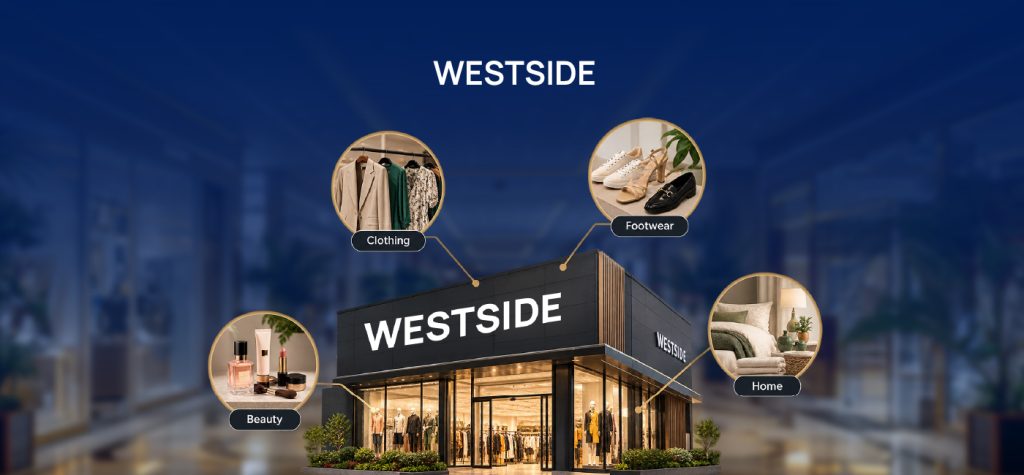
Westside became a cornerstone of Trent’s growth strategy. Its approach centred on contemporary fashion, carefully designed stores and a broad portfolio of in-house labels. By developing its own merchandise, the brand could exercise greater control over product design, pricing and the shopping experience.
This strategy helped Westside distinguish itself in a competitive market. Instead of depending entirely on external fashion labels, it developed an identity that customers could recognise across categories, including clothing, footwear, beauty and home products.
The emotional connection came from making fashion feel personal. Customers could explore styles for work, celebrations and everyday life within one retail environment. Over time, Westside evolved beyond a clothing destination into a lifestyle brand, demonstrating how consistent positioning and product development can strengthen consumer loyalty.
3. Zudio: Making Fashion More Accessible
Trent’s next major growth chapter began with Zudio in 2016. Its proposition was straightforward: offer trend-led fashion at affordable prices. At a time when younger consumers increasingly wanted to experiment with personal style without spending heavily, Zudio addressed a clear need.
The brand’s growth strategy relied on sharp pricing, frequent merchandise refreshes, compact store formats and expansion into new markets. Its stores made contemporary fashion accessible to shoppers across different income groups, helping transform budget shopping into a style-conscious experience.
Zudio’s expansion illustrates an important retail lesson: affordability does not have to mean an unappealing shopping experience. By combining accessible prices with contemporary merchandising, Trent built a format that could reach a broader customer base while maintaining a recognisable identity.
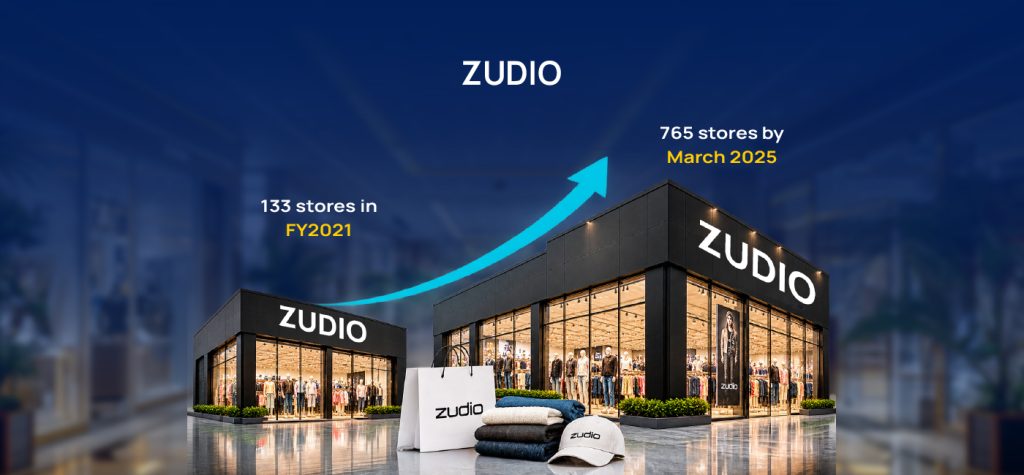
The numbers underline this momentum. Zudio expanded from 133 stores in FY2021 to 765 stores by March 2025, demonstrating how quickly a focused retail concept can scale when its proposition resonates with consumers.

4. Growth Through Strategic Expansion and Consumer Connection
Trent’s success has not depended on one brand alone. Its portfolio includes Westside, Zudio, Star Bazaar and other lifestyle concepts, allowing the company to serve different consumer needs and spending preferences.
Its marketing philosophy also reflects the importance of the retail experience. Contemporary store design, in-house collections, seasonal merchandise and digital engagement help brands remain relevant as tastes evolve. Westside focuses on lifestyle-led fashion, while Zudio connects with price-conscious shoppers seeking current trends.
This differentiated positioning allows Trent to appeal to varied audiences without forcing every customer into the same retail proposition. Its expansion strategy combines new store openings with careful attention to location, merchandise selection and store productivity.
However, rapid growth brings challenges. Competition from established retailers, online marketplaces and emerging fashion brands places constant pressure on prices and product relevance. Maintaining quality, managing inventory and preserving the customer experience across a growing store network remain critical to sustaining momentum.
5. The Revenue Story: From Expansion to Scale
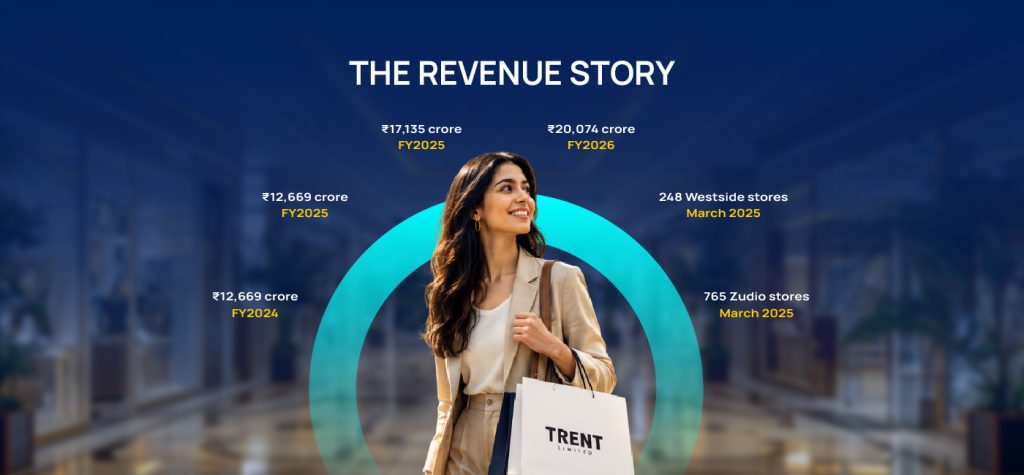
Trent’s financial performance reflects the growing demand for its retail formats. According to its reported standalone revenue figures, the company recorded approximately ₹12,669 crore in revenue in FY2024, followed by ₹17,624 crore in FY2025, representing growth of around 39%.
Its consolidated revenue from operations increased from approximately ₹17,135 crore in FY2025 to ₹20,074 crore in FY2026, a year-on-year increase of about 17.2%. These figures demonstrate continued expansion, although standalone and consolidated revenue measure different scopes of the business.
Store growth has supported this performance. By March 2025, Trent operated 248 Westside stores and 765 Zudio stores. The company continued expanding in FY2026, reflecting its commitment to increasing its reach across Indian markets.
These results illustrate the relationship between a clear consumer proposition, disciplined retail execution and revenue growth. Yet sustained performance will depend on more than opening stores: profitability, repeat purchases, merchandise productivity and operational efficiency will remain equally important.
6. Cultural Relevance and a Broader Retail Impact
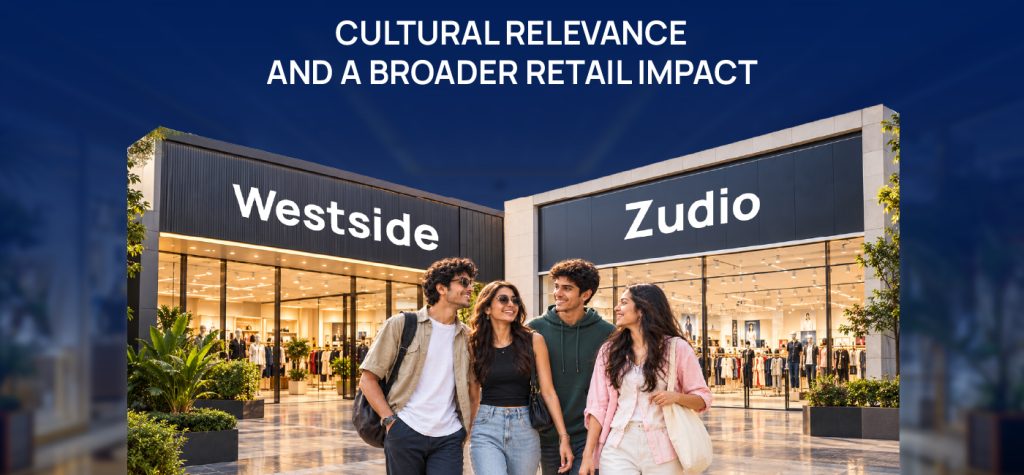
Trent’s influence extends beyond financial performance. Westside has helped popularise organised lifestyle retail, while Zudio has made trend-led fashion accessible to a wider audience. Together, these brands reflect the changing aspirations of Indian consumers, particularly younger shoppers who increasingly view fashion as a form of self-expression.
The company’s approach also demonstrates the importance of adapting to India’s diverse markets. Consumer preferences differ across cities and regions, making localised merchandise planning and store selection important parts of expansion.
At the same time, Trent has highlighted the need for responsible retail operations. Its sustainability initiatives, vendor assessments and resource-efficiency efforts form part of its broader commitment to responsible business practices. As the company grows, maintaining progress in these areas will be important to its long-term reputation.
7. The Road Ahead: Turning Momentum into Lasting Legacy
Trent Limited’s journey from its 1998 beginnings to a retail business generating more than ₹20,000 crore in consolidated annual revenue is a story of strategic choices and evolving consumer connection. Westside established a distinctive lifestyle identity, while Zudio demonstrated the commercial potential of affordable, trend-driven fashion.
Its next chapter will depend on balancing expansion with execution. Increasing competition, changing shopping habits and the economics of entering new markets will test the company’s ability to sustain its growth.
For business leaders, Trent offers a valuable lesson: lasting retail success comes from understanding customers, building differentiated brands and translating that understanding into a repeatable business model. Its legacy will ultimately be shaped not just by how many stores it opens, but by how consistently those stores deliver value to the people who walk through their doors.

Jaspreet Singh Arora is the Chief Investment Officer at Equentis, where he heads a seasoned team of equity analysts and turns two decades of market experience into portfolios that consistently beat the benchmark. A go-to voice on cement, building-materials, real-estate, and construction stocks, Jaspreet previously ran research desks at leading brokerages, honing an eye for the metrics that truly move share prices. His plain-spoken analysis helps investors cut through noise and act with conviction. When he’s not deep-diving into earnings calls, you’ll find him unwinding over sports, weekend cricket or a good history podcast.