In the early 1990s, India’s capital markets looked very different. Trading was closely associated with physical floors, paper-based processes, and established institutions. Then came a new idea: what if technology could make markets faster, more transparent and accessible?
That idea helped give birth to the National Stock Exchange of India, or NSE.
Incorporated in 1992 and recognised by SEBI in 1993, NSE began operations in 1994. It introduced electronic, screen-based trading to Indian equity markets, changing not only how transactions happened but also how investors experienced the stock market. Within a year of starting equity trading, NSE had become the country’s largest exchange by trading volume.
That early achievement established the foundation of the NSE brand: technology could be used to build trust, improve efficiency, and expand participation.
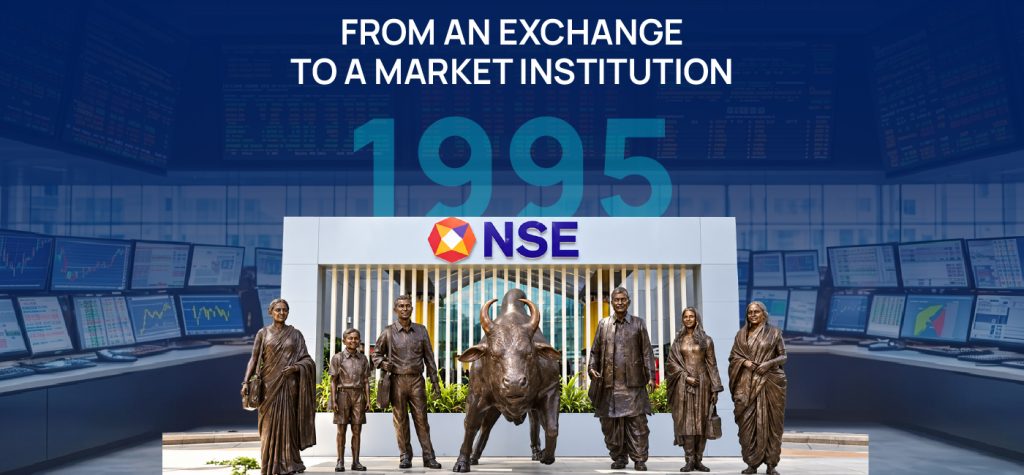
From an Exchange to a Market Institution
NSE’s growth was not built around a single product. It developed an ecosystem.
The launch of its Wholesale Debt Market in 1994 was followed by the cash market. NSE Clearing was established in 1995, while the Nifty index was launched in 1996. Over subsequent years, NSE expanded into indices, technology, data and analytics, education and international markets.
This diversification became an important part of the brand’s growth strategy. Instead of remaining simply a place where shares were bought and sold, NSE developed infrastructure around the wider investment ecosystem.
The Nifty 50 became particularly important to this journey. Over time, the index evolved into a familiar reference point for investors, financial media, and businesses. For millions of Indians, “Nifty” became part of everyday financial vocabulary.
Technology as the Brand’s Identity
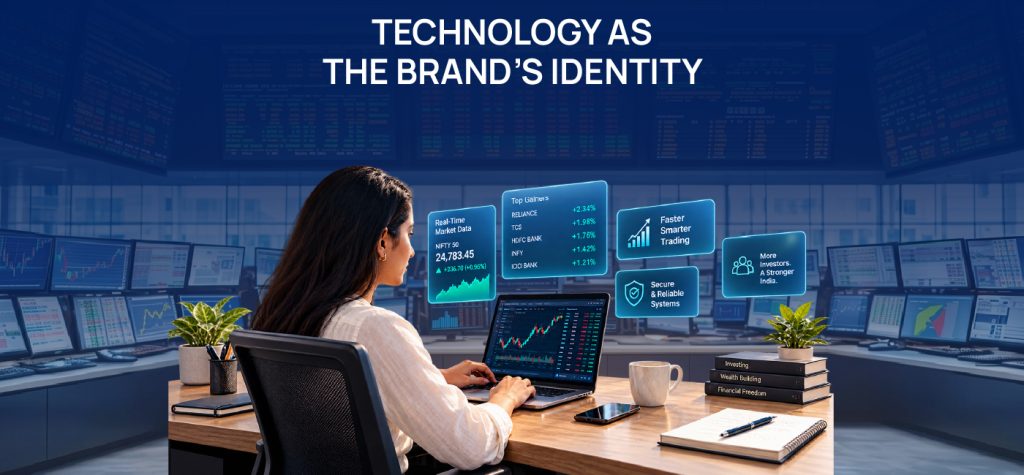
For NSE, technology was more than an operational requirement. It became part of the brand story.
The exchange positioned electronic trading, system resilience and speed at the centre of its market proposition. That focus became increasingly relevant as participation moved beyond traditional brokers and institutional investors towards individual investors using digital platforms.
The strategy was therefore not simply to advertise NSE. It was to make the infrastructure itself part of the customer experience.
That approach helped NSE remain culturally relevant as India’s investing landscape changed. Market data became easier to access, indices became widely discussed, and stock market movements increasingly entered mainstream conversations.
Growth Through Scale and Participation
NSE’s scale today illustrates how dramatically the Indian capital market has expanded alongside the exchange.
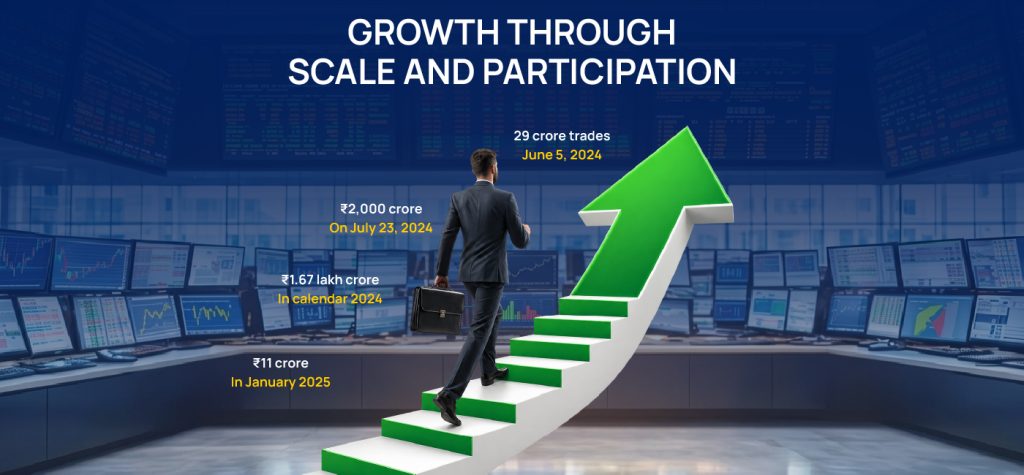
The exchange says its unique investor base crossed 11 crore in January 2025. In calendar 2024, it facilitated 268 IPOs that collectively raised ₹1.67 lakh crore, while NSE-listed companies’ market capitalisation crossed ₹416.57 trillion for the first time.
Its trading infrastructure has also reached enormous scale. NSE processed more than 2,000 crore orders in a single day on July 23, 2024, while around 29 crore trades were recorded on June 5, 2024.
These numbers represent more than operational milestones. They show how the NSE brand has become closely connected with the growth of India’s financial participation.
The Numbers Behind the Journey
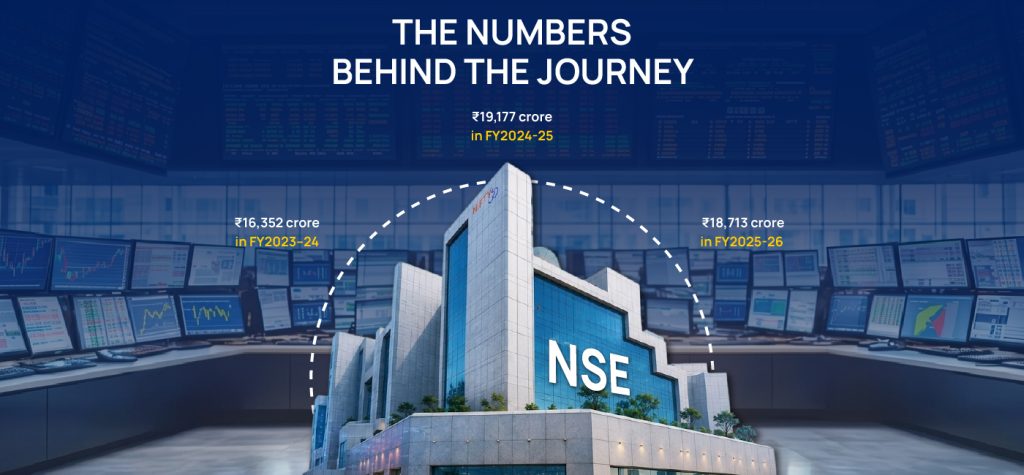
NSE’s financial performance also reflects the scale of its business. Consolidated total revenue stood at ₹16,352 crore in FY2023–24. It increased to ₹19,177 crore in FY2024–25, representing approximately 17% year-on-year growth.
In FY2025–26, consolidated total revenue stood at ₹18,713 crore. While this was around 2.4% lower than the previous year, NSE continued to operate at substantial scale, with revenue from operations at ₹16,601 crore.
The change also highlights an important aspect of NSE’s journey: market infrastructure businesses are influenced by trading activity, market conditions, and the mix of products used by participants. Growth, therefore, is not simply a straight line.

Building a Brand Beyond Advertising
NSE’s marketing strategy has largely been different from that of a conventional consumer brand.
Its strongest brand assets have been visibility, familiarity and participation. Nifty has become a daily market reference. NSE’s digital platforms, investor education initiatives, indices, market data and expanding ecosystem have helped bring the institution closer to different categories of users.
The brand has also continued adapting to changing investor behaviour. Its mobile application, multilingual website and initiatives around areas such as SME listings and municipal bonds demonstrate an effort to make market infrastructure more accessible.
Challenges Along the Way
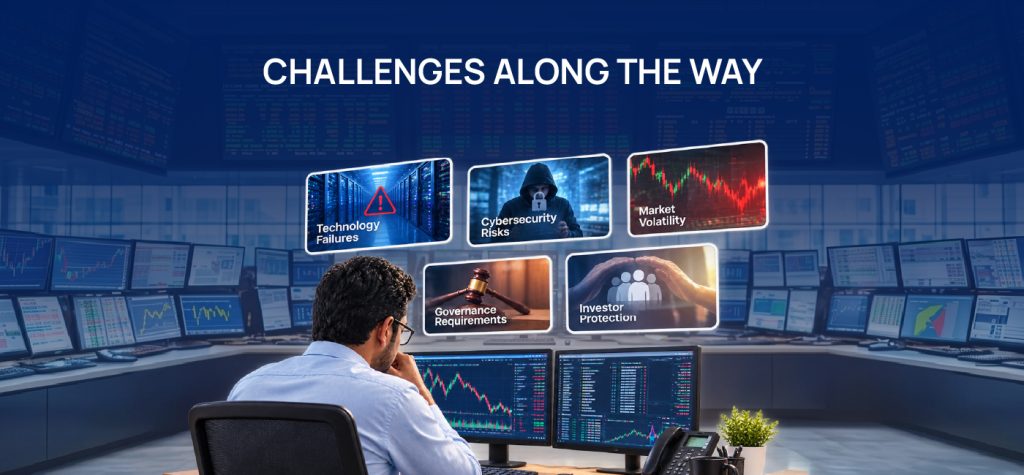
NSE’s journey has not been without challenges. Market institutions operate in a highly regulated environment where technology failures, cybersecurity risks, market volatility, governance requirements, and investor protection can directly affect confidence.
The exchange has therefore had to balance rapid technological development with resilience, regulation and transparency. As trading volumes and digital participation increase, maintaining reliability becomes as important as expanding capacity.
The NSE Legacy
More than three decades after its incorporation, NSE represents a significant chapter in India’s financial market transformation.
Its story began with a simple proposition: use technology to create a more efficient marketplace. That proposition evolved into a broader ecosystem spanning trading, clearing, indices, data, education, and international market infrastructure.
The numbers tell one part of the story. From becoming the country’s largest exchange within its first year of equity trading to supporting a market ecosystem with more than 11 crore investors and trillions of rupees in listed market capitalisation, NSE has grown alongside India itself.
Its enduring brand legacy lies not only in the scale it has achieved, but in how deeply market participation has entered everyday financial life. NSE did not simply build an exchange. It helped build the infrastructure through which modern India increasingly experiences its capital markets.

Jaspreet Singh Arora is the Chief Investment Officer at Equentis, where he heads a seasoned team of equity analysts and turns two decades of market experience into portfolios that consistently beat the benchmark. A go-to voice on cement, building-materials, real-estate, and construction stocks, Jaspreet previously ran research desks at leading brokerages, honing an eye for the metrics that truly move share prices. His plain-spoken analysis helps investors cut through noise and act with conviction. When he’s not deep-diving into earnings calls, you’ll find him unwinding over sports, weekend cricket or a good history podcast.