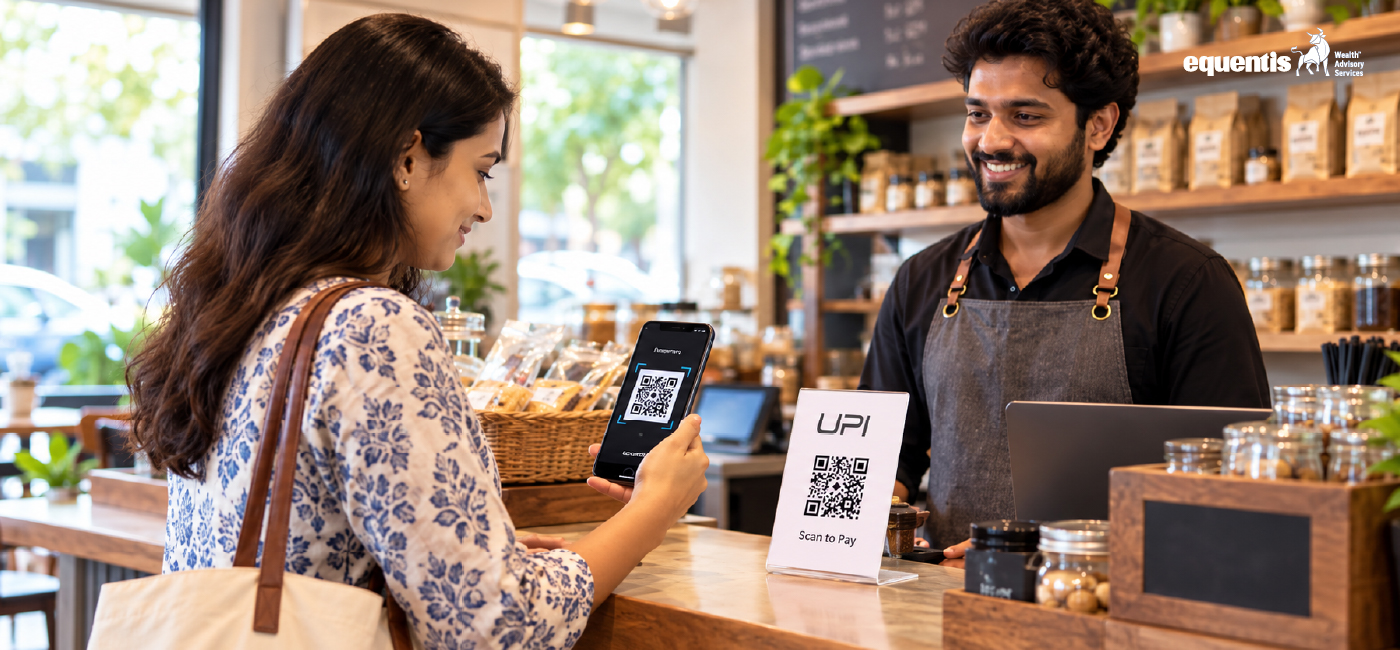

The UPI transaction new rules for 2026 bring important changes around merchant payments, transaction limits and authentication, while regular person to person UPI transfers remain free. The biggest upcoming change is the introduction of a 0.4% Merchant Discount Rate (MDR) on specified person to merchant UPI transactions above ₹2,000 from October 15, 2026. Consumers will not be charged a UPI transaction fee directly, while most small value merchant payments will continue without MDR.
What Are the New UPI Rules in 2026?
UPI continues to be India’s primary real time digital payment system. NPCI data shows that UPI processed 24,508.96 million transactions worth ₹29.82 lakh crore in August 2026, demonstrating the scale at which the system is now used.
The 2026 changes are not a single new rule that applies to every UPI payment. Instead, several developments affect different types of transactions, including merchant payments, high value payments, authentication and newer UPI features.
For everyday users, the most important distinction is between person to person (P2P) payments and person to merchant (P2M) payments.
1. UPI Payments to People Remain Free
If you send money to another individual using UPI, the new MDR framework does not impose a transaction charge on you.
The government has clarified that P2P UPI transactions will remain completely free, irrespective of the amount transferred. This means sending money to family members, friends or another individual’s bank account continues under the existing free P2P framework.
This is important because reports about UPI charges have led to concerns that users may have to pay for every transaction. That is not the case under the announced framework.
2. Merchant Payments Above ₹2,000 Will Face MDR
The major change applies to specified P2M transactions above ₹2,000, beginning October 15, 2026.
Under the new framework, an MDR of 0.4% will apply to eligible merchant transactions above the threshold. MDR is a fee associated with processing a merchant payment and is distributed among participants in the payment ecosystem. It is not a government tax.
For example, if an eligible merchant receives a ₹5,000 UPI payment, 0.4% would amount to ₹20 in MDR. The precise amount and applicability can depend on the transaction category and applicable rules.
3. Consumers Are Not Being Charged Directly for UPI
The government has specifically stated that consumers will not face a UPI transaction charge under the new framework.
This distinction matters because MDR is primarily an ecosystem level merchant payment fee. Whether a merchant chooses to pass any business cost to customers is a separate issue.
The government has also said payments to merchants up to ₹2,000, along with transactions covered by the zero MDR framework for small merchants, will remain free. Approximately 96% of P2M transactions are expected to remain unaffected.
4. UPI Transaction Limits Are Not the Same for Every Payment
Another important UPI rule is that there is no single transaction limit applicable to every type of UPI payment.
NPCI’s current FAQ states that the standard UPI transaction limit is generally up to ₹1 lakh per transaction, while higher limits apply to certain categories. For example, IPO applications and Retail Direct Scheme transactions can have limits up to ₹5 lakh per transaction.
NPCI has also raised limits for selected verified merchant categories. Banks can continue to impose their own internal limits within the permitted framework.
Therefore, a payment failing because of a limit does not necessarily mean UPI itself has imposed a lower universal ceiling.
5. Higher Limits Apply to Selected Categories
NPCI has permitted higher UPI transaction limits for categories such as capital markets, insurance, tax payments, healthcare, education and certain other verified merchant transactions.
For example, the enhanced framework allows tax payments up to ₹5 lakh per transaction, while the applicable ceiling can be higher for some categories under subsequent revisions. These higher limits apply to eligible and verified merchants, and individual banks may set lower internal limits.
This is particularly relevant for users making high value payments such as taxes, insurance premiums or investments.
6. UPI Authentication Is Becoming More Flexible
UPI authentication is also changing with the introduction of alternatives to entering a PIN for every transaction.
NPCI introduced on device biometric authentication, allowing participating users to authenticate eligible payments using smartphone security features such as fingerprint or face unlock. In July 2026, NPCI increased the pre transaction limit for this authentication method from ₹5,000 to ₹10,000, effective August 7, 2026.
The feature is optional and depends on availability through the bank and UPI application.
7. UPI Lite and UPI 123Pay Have Higher Limits
The UPI ecosystem has also expanded limits for specific products designed for different use cases.
The UPI Lite wallet limit has been increased to ₹5,000, while the per transaction limit has been raised to ₹1,000. UPI 123Pay, designed to make UPI accessible through feature phones and other supported channels, has a per transaction limit of ₹10,000.
These changes are intended to make smaller digital payments more convenient without requiring the same transaction flow as conventional UPI payments.
8. What Do the New Rules Mean for Small Merchants?
For small shopkeepers, street vendors and other businesses, the impact is expected to be limited because the zero MDR framework continues to cover a large portion of merchant transactions.
The government has stated that payments up to ₹2,000 and transactions covered by the small merchant framework will remain free. This means a typical ₹200 grocery payment or ₹500 restaurant payment will not suddenly attract a UPI charge simply because the new framework begins.
Larger merchants handling substantial volumes of payments above the threshold will need to understand their applicable MDR structure and settlement costs.
Opportunities and Risks
The new framework is intended to address the long term sustainability of India’s digital payment infrastructure while keeping everyday UPI payments largely unaffected.
For consumers, the key benefit is that P2P transfers remain free and most merchant transactions will continue without MDR. For payment companies and banks, a revenue framework could provide greater scope to support infrastructure and product development.
However, merchants may face higher payment processing costs on eligible transactions above ₹2,000. There is also a practical question around whether some businesses could attempt to pass these costs to customers.
The government has said it will monitor implementation and has emphasised that MDR is not a consumer tax.
What Should UPI Users Do?
For most users, there is no immediate change to everyday payments. It remains sensible to:
- Check the amount and recipient before approving a transaction.
- Never share your UPI PIN or OTP.
- Verify merchant details before making large payments.
- Check your bank’s transaction limits for high value payments.
- Keep your UPI application and smartphone software updated.
- Report unauthorised transactions through your bank or UPI app promptly.
Users making high value payments should remember that NPCI’s maximum limit and the limit imposed by their individual bank may be different.
Conclusion
The UPI transaction new rules for 2026 mainly affect the payment ecosystem rather than everyday users. P2P transfers remain free, while specified merchant transactions above ₹2,000 will attract a 0.4% MDR from October 15, 2026. Most P2M transactions are expected to remain unaffected.
At the same time, UPI is expanding through higher limits for selected categories, biometric authentication, UPI Lite and UPI 123Pay. For consumers, the key is to understand the difference between transaction limits, merchant fees and actual consumer charges rather than assuming that every UPI payment will become chargeable.
Frequently Asked Questions
1. Will UPI transactions become chargeable in 2026?
Not all UPI transactions will become chargeable. Person to person payments will remain free, while specified person to merchant transactions above ₹2,000 will attract a 0.4% MDR from October 15, 2026. Payments up to ₹2,000 and transactions covered by the zero MDR framework for small merchants will remain unaffected.
2. Will I have to pay a UPI fee when sending money to another person?
No. The new MDR framework does not introduce a charge for ordinary person to person UPI transfers. The government has clarified that P2P UPI transactions will remain completely free, regardless of the amount transferred, subject to the applicable transaction limits of the bank and UPI system.
3. What is the new UPI MDR from October 2026?
From October 15, 2026, a 0.4% MDR will apply to specified person to merchant UPI transactions above ₹2,000. MDR is a merchant payment processing fee within the payment ecosystem and is not a tax collected by the government. The applicability also depends on the merchant and transaction category under the framework.
4. Will UPI payments below ₹2,000 remain free?
Yes. The government has stated that merchant payments up to ₹2,000 will remain free, along with transactions covered by the zero MDR framework for small merchants. It estimates that approximately 96% of P2M transactions will remain unaffected by the new MDR framework.
5. What is the maximum UPI transaction limit in India?
There is no single maximum applicable to every UPI transaction. The standard limit is generally up to ₹1 lakh per transaction, while selected categories have higher ceilings. IPO applications and Retail Direct Scheme payments can have limits up to ₹5 lakh per transaction under NPCI’s current framework. Banks may impose lower internal limits.
6. Has the UPI limit increased for tax payments?
Yes. NPCI has increased the permitted UPI transaction limit for tax payments to ₹5 lakh per transaction under the enhanced category specific framework. The higher limit applies to eligible verified merchants, and individual banks can maintain their own internal limits within the NPCI ceiling.
7. What is the new UPI biometric authentication limit?
NPCI increased the pre transaction limit for on device biometric authentication from ₹5,000 to ₹10,000, effective August 7, 2026. The feature allows eligible users to authenticate payments using supported smartphone biometric security instead of manually entering the UPI PIN for every transaction. Availability depends on participating banks and applications.
8. What are the new UPI Lite limits?
The UPI Lite wallet limit has been increased to ₹5,000, while the maximum amount for an individual UPI Lite transaction is ₹1,000. UPI Lite is designed primarily for smaller payments and can simplify the payment experience by reducing the need for repeated authentication for eligible transactions.
9. Can merchants charge customers for UPI payments?
The announced MDR framework does not create a general consumer UPI fee. MDR applies within the merchant payment ecosystem to specified eligible transactions. Whether a merchant attempts to recover its business costs from customers is a separate matter, and the government has stated that consumers themselves will not face a UPI transaction charge under the framework.
10. What should users check before making a high value UPI payment?
Users should verify the recipient or merchant name, transaction amount and bank account before authorising a payment. They should also check their bank’s UPI limit because a bank may impose a lower ceiling than the maximum permitted by NPCI. For large payments, keeping transaction records and monitoring the bank account after payment is also useful.
Disclaimer Note: The securities quoted, if any, are for illustration only and are not recommendatory. This article is for education purposes only and shall not be considered as a recommendation or investment advice by Equentis. We will not be liable for any losses that may occur. Investments in the securities market are subject to market risks. Read all the related documents carefully before investing. Registration granted by SEBI, membership of BASL & certification from NISM in no way guarantee the performance of the intermediary or provide any assurance of returns to investors.