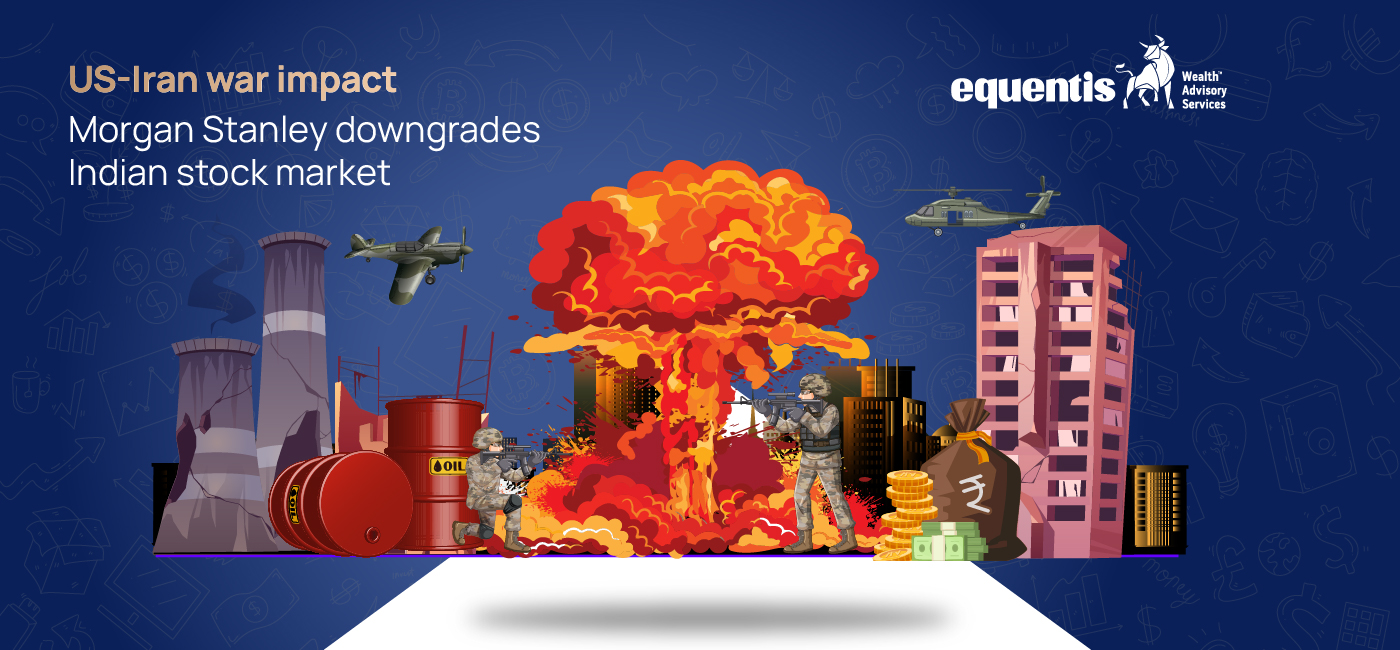

Global geopolitical tensions often ripple through financial markets, and the recent escalation involving the US–Iran conflict has brought renewed attention to oil prices and their potential impact on economies worldwide. In this context, Morgan Stanley has downgraded the Indian stock market to “equal weight”, citing concerns over possible disruptions in global oil supply.
For investors, such developments matter because India is one of the world’s largest oil importers. Any sustained rise in crude oil prices can affect inflation, currency stability, corporate profitability, and overall market sentiment. The downgrade by a major global investment bank has therefore sparked discussions around the impact of geopolitical risks on the Indian stock market.
Understanding why oil supply risks matter and how they influence markets can help investors make more informed decisions during uncertain periods.
Why Global Oil Supply Matters for India
India imports a significant portion of its crude oil requirements, which makes the country particularly sensitive to fluctuations in global energy prices. When geopolitical tensions threaten oil supply routes or production, crude prices often rise sharply.
The Middle East plays a central role in global oil production, and tensions involving Iran can influence shipping routes such as the Strait of Hormuz, one of the world’s most important oil transit chokepoints. Any disruption in this region can quickly push crude prices higher.
For India, higher crude oil prices can create multiple economic challenges:
• Increased import bills
• Pressure on the Indian rupee
• Rising fuel and transportation costs
• Higher inflation across sectors
These factors can influence market sentiment and corporate earnings, which is why global investment firms closely monitor geopolitical developments when evaluating emerging markets like India.
Morgan Stanley’s Downgrade Explained
Morgan Stanley recently downgraded its stance on the Indian equity market to equal weight, signaling a more cautious outlook in the near term. The downgrade does not necessarily imply a negative view on India’s long-term growth prospects. Instead, it reflects concerns about short-term risks linked to rising oil prices and geopolitical uncertainty.
Investment banks often use ratings such as overweight, equal weight, or underweight to indicate how attractive they believe a market is relative to others.
An equal weight rating typically suggests that the market is expected to perform broadly in line with global benchmarks rather than significantly outperforming them.
The main reason cited for this shift in outlook is the potential for oil supply disruptions due to escalating tensions between the US and Iran. If crude prices remain elevated for an extended period, it could weigh on economic indicators and investor sentiment.
How Rising Oil Prices Affect the Stock Market
Higher crude oil prices can influence different parts of the Indian economy and stock market in various ways.
Pressure on Corporate Margins
Industries such as aviation, logistics, chemicals, and paints rely heavily on crude oil or petroleum-based inputs. Rising fuel and raw material costs can compress margins if companies are unable to pass the costs on to consumers.
Inflation Concerns
Fuel prices play a key role in overall inflation. When crude prices increase, transportation costs often rise, which can affect the prices of goods and services across the economy.
Higher inflation may influence monetary policy decisions, including interest rates.
Currency Volatility
A higher oil import bill can put pressure on the Indian rupee, especially if crude prices remain elevated for a prolonged period. Currency fluctuations can affect companies that rely on imports or have foreign currency exposure.
Market Sentiment
Geopolitical tensions often create uncertainty in global markets. During such periods, investors may shift toward safer assets, which can reduce flows into emerging markets like India.
What This Means for Investors
For investors tracking the Indian stock market outlook, the downgrade highlights the importance of monitoring global developments alongside domestic economic indicators.
Short-term market movements may become more volatile if oil prices continue to rise or if geopolitical tensions intensify. However, it is important to distinguish between temporary market reactions and long-term structural trends.
India’s economy continues to be supported by factors such as domestic consumption, infrastructure development, and policy initiatives aimed at strengthening manufacturing.
Long-term investors often evaluate whether global shocks create temporary volatility or signal deeper economic challenges.
Opportunities Amid the Uncertainty
Even during periods of geopolitical tension, certain sectors may remain resilient or even benefit from rising oil prices.
Energy Companies
Oil and gas producers can see improved profitability when crude prices increase, although government policies and price controls may influence the extent of these benefits.
Export-Oriented Businesses
Companies with strong export revenues may benefit from currency movements if the rupee weakens against major global currencies.
Domestic Consumption Sectors
Industries driven by internal demand, such as consumer goods or financial services, may remain relatively insulated from global commodity fluctuations.
Investors often look for businesses with strong balance sheets, pricing power, and diversified revenue streams during uncertain periods.
Risks That Investors Should Watch
While opportunities may exist, the risks associated with rising oil prices cannot be ignored.
Sustained Crude Oil Rally
If geopolitical tensions persist and crude oil prices remain elevated, it could affect India’s trade balance and inflation outlook.
Global Market Volatility
Geopolitical conflicts tend to create sudden movements in global markets, which may influence foreign investment flows into emerging economies.
Policy Responses
Governments and central banks may need to adjust policies to manage inflation or currency pressures, which could influence market dynamics.
Investors therefore need to consider both domestic and global factors when evaluating market conditions.
Conclusion
The downgrade of the Indian stock market to equal weight by Morgan Stanley highlights how global geopolitical tensions, particularly the US–Iran conflict, can influence investor sentiment and market outlook.
Oil supply risks remain a key concern because of India’s dependence on crude imports. Rising oil prices can affect inflation, corporate profitability, and currency stability, all of which play a role in shaping stock market performance.
However, while short-term volatility may increase, India’s long-term economic fundamentals remain supported by structural growth drivers such as domestic demand, infrastructure investment, and policy reforms.
For investors, the current environment serves as a reminder that global events can quickly impact markets. Maintaining a balanced perspective, focusing on fundamentals, and diversifying portfolios can help navigate periods of uncertainty while staying aligned with long-term investment goals.
Disclaimer Note: The securities quoted, if any, are for illustration only and are not recommendatory. This article is for education purposes only and shall not be considered as a recommendation or investment advice by Equentis – Research & Ranking. We will not be liable for any losses that may occur. Investments in the securities market are subject to market risks. Read all the related documents carefully before investing. Registration granted by SEBI, membership of BASL & certification from NISM in no way guarantee the performance of the intermediary or provide any assurance of returns to investors.

Jaspreet Singh Arora is the Chief Investment Officer at Equentis, where he heads a seasoned team of equity analysts and turns two decades of market experience into portfolios that consistently beat the benchmark. A go-to voice on cement, building-materials, real-estate, and construction stocks, Jaspreet previously ran research desks at leading brokerages, honing an eye for the metrics that truly move share prices. His plain-spoken analysis helps investors cut through noise and act with conviction. When he’s not deep-diving into earnings calls, you’ll find him unwinding over sports, weekend cricket or a good history podcast.