
Choosing the right stock market advisory can significantly impact your investment journey. With hundreds of advisory firms, Telegram tips, social media influencers, and “guaranteed return” schemes flooding the market, retail investors often struggle to identify a trustworthy stock market advisory. The difference between a reliable advisor and an unreliable one can mean disciplined wealth creation versus costly financial mistakes.
In this article, we break down the key factors every investor must check before trusting any stock market advisory, explain the role of stock market advisory services, and help you understand how to verify credibility, transparency, and long-term value.
Why Trust Matters in Stock Market Advisory Services
Stock market investing involves risk, emotions, and long-term decision-making. A trustworthy stock market advisory acts as a guide, helping investors navigate market volatility, avoid impulsive decisions, and stay aligned with financial goals. Without trust, advisory services lose their core purpose.
A genuine advisory focuses on investor education, risk management, and sustainable returns rather than short-term hype.
SEBI Registration: The First Sign of a Trustworthy Stock Market Advisory
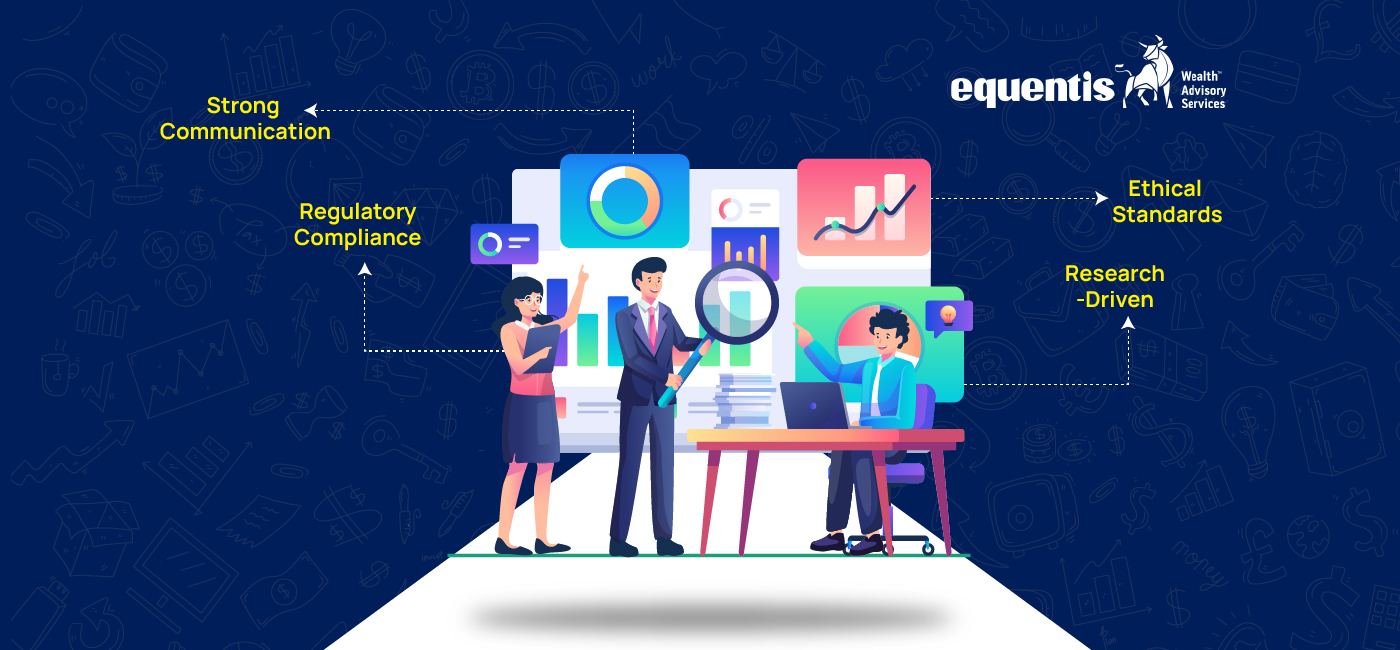
One of the most critical checks is whether the advisory firm or individual is a SEBI registered advisor. Registration with the Securities and Exchange Board of India ensures that the advisor follows regulatory guidelines, ethical practices, and investor protection norms.
A SEBI registered advisor is legally obligated to:
- Act in the best interest of clients
- Follow suitability and risk profiling norms
- Avoid misleading claims or guaranteed returns
- Maintain transparency in fees and disclosures
Any advisory operating without SEBI registration should be treated with caution, regardless of their marketing claims.
Clear Definition of the Role of Stock Market Advisory
A trustworthy stock market advisory clearly defines its role. The role of stock market advisory is not to promise overnight wealth but to provide structured guidance, research-backed recommendations, and disciplined strategies.
A reliable advisory helps investors with:
- Stock selection based on research
- Portfolio construction and diversification
- Risk management strategies
- Entry and exit discipline
- Long-term wealth creation planning
If an advisory claims to “predict markets” or offers fixed returns, it is deviating from the genuine role of stock market advisory services.
Transparent and Research-Driven Investment Process
Transparency is a strong indicator of trust. A trustworthy stock market advisory openly explains how recommendations are generated. This includes clarity on:
- Fundamental or technical analysis framework
- Investment horizon (short-term, medium-term, long-term)
- Risk factors involved in each recommendation
- Rationale behind buying or selling a stock
Advisories that rely purely on tips without explaining the logic often fail to build long-term investor confidence.
No Guaranteed Returns or False Promises
One of the biggest red flags is guaranteed profits. The Indian stock market is subject to market risks, and no genuine SEBI registered advisor can promise assured returns.
A trustworthy stock market advisory communicates realistically by:
- Highlighting potential risks
- Explaining best- and worst-case scenarios
- Setting reasonable return expectations
- Encouraging patience and discipline
Honest communication builds credibility and long-term trust.
Proper Risk Profiling and Investor Suitability
Every investor has a different risk appetite, financial goal, and time horizon. A reliable stock market advisory conducts risk profiling before offering recommendations.
This ensures:
- Conservative investors are not exposed to high volatility
- Aggressive investors understand downside risks
- Recommendations match financial goals
- Portfolio allocation remains balanced
Ignoring suitability is a sign of poor advisory ethics.
Fee Transparency and Ethical Revenue Model
A trustworthy stock market advisory clearly discloses its fee structure. There should be no hidden charges, profit-sharing traps, or forced upgrades.
Ethical advisory firms:
- Charge fixed or disclosed fees
- Do not earn brokerage commissions secretly
- Avoid conflict of interest
- Clearly state what services are included
Transparency in fees reflects professionalism and integrity.
Strong Track Record Without Misleading Marketing
While SEBI regulations restrict performance marketing, a credible advisory focuses on consistency, research quality, and investor education rather than flashy return screenshots.
Trustworthy advisories build reputation through:
- Client testimonials based on experience
- Long-term presence in the market
- Educational content and insights
- Professional communication
Be cautious of advisories that rely heavily on social media hype.
Consistent Communication and Investor Support
Reliable stock market advisory services maintain regular communication with clients. This includes updates during market volatility, portfolio reviews, and educational insights.
Consistent support ensures:
- Investors stay calm during corrections
- Decisions remain goal-oriented
- Emotional investing is minimized
- Long-term discipline is maintained
Lack of communication during tough markets is a common sign of weak advisory services.
Focus on Education, Not Just Recommendations
A trustworthy stock market advisory empowers investors with knowledge. Instead of blindly following tips, investors should understand market basics, risk management, and portfolio strategies.
Education-focused advisories help investors:
- Make informed decisions
- Avoid common market mistakes
- Understand market cycles
- Build confidence over time
This approach aligns with the true role of stock market advisory services.
Compliance, Documentation, and Proper Disclosures
Professional advisories follow compliance norms by providing proper documentation, risk disclosures, and client agreements. This protects both the investor and the advisory firm.
Compliance-driven processes indicate seriousness and long-term commitment.
Long-Term Wealth Creation Mindset
A trustworthy stock market advisory prioritizes long-term wealth creation over short-term speculation. Their strategies focus on compounding, quality businesses, and disciplined investing rather than frequent trading.
This mindset aligns with sustainable financial growth.
How to Verify a Trustworthy Stock Market Advisory
Before choosing an advisory, investors should:
- Verify SEBI registration number
- Check official website and disclosures
- Understand the advisory process
- Review communication style
- Avoid guaranteed return claims
Due diligence is essential for protecting capital and peace of mind.
Final Thoughts: Choosing Trust Over Noise
In a crowded advisory ecosystem, trust is built through regulation, transparency, research quality, and ethical practices. A trustworthy stock market advisory acts as a long-term partner rather than a tip provider.
Investors who take time to evaluate these key factors are better positioned to achieve financial goals with confidence and discipline.
Disclaimer Note: The securities quoted, if any, are for illustration only and are not recommendatory. This article is for education purposes only and shall not be considered as a recommendation or investment advice by Equentis – Research & Ranking. We will not be liable for any losses that may occur. Investments in the securities market are subject to market risks. Read all the related documents carefully before investing. Registration granted by SEBI, membership of BASL & certification from NISM in no way guarantee the performance of the intermediary or provide any assurance of returns to investors.
FAQs: Trustworthy Stock Market Advisory Services
1. What is a trustworthy stock market advisory?
A trustworthy stock market advisory is one that is SEBI registered, transparent, research-driven, and focused on investor suitability rather than guaranteed returns.
2. Why is SEBI registration important for stock market advisory services?
SEBI registration ensures regulatory compliance, ethical practices, and investor protection.
3. Can a SEBI registered advisor guarantee returns?
No, SEBI registered advisors are prohibited from offering guaranteed returns.
4. What is the main role of stock market advisory?
The role of stock market advisory is to guide investors with research-backed strategies, risk management, and disciplined investing.
5. How can I verify if an advisory is SEBI registered?
You can verify the registration number on SEBI’s official website.
6. Are free stock tips trustworthy?
Most free tips lack accountability and research transparency, making them risky.
7. How does a trustworthy advisor manage risk?
Through diversification, position sizing, and aligning recommendations with investor risk profiles.
8. What fee model is considered ethical in stock market advisory?
A transparent, clearly disclosed fee model without hidden charges is considered ethical.
9. Should advisories share past performance?
SEBI restricts performance advertising; focus should be on process, not claims.
10. How important is communication in advisory services?
Consistent communication is critical for investor confidence, especially during volatile markets.
11. Can beginners trust stock market advisory services?
Yes, if the advisory focuses on education and long-term investing.
12. What are common red flags in advisory services?
Guaranteed returns, lack of SEBI registration, and aggressive marketing are major red flags.
13. Do trustworthy advisories provide portfolio reviews?
Yes, regular portfolio reviews are part of professional advisory services.
14. Is long-term investing better than short-term tips?
Long-term investing aligned with fundamentals generally offers better risk-adjusted returns.
15. Can an advisory influence emotional investing?
Yes, a good advisor helps investors stay disciplined during market fluctuations.
16. How often should an advisor communicate with clients?
Communication should be regular and timely, especially during major market events.
17. Do trustworthy advisories educate investors?
Yes, investor education is a core responsibility of ethical advisory firms.
18. Are social media stock advisors reliable?
Most social media advisors are unregulated and should be approached cautiously.
19. What documents should a professional advisory provide?
Client agreements, risk disclosures, and service terms should be clearly documented.
20. How do I choose the right stock market advisory?
Choose one that is SEBI registered, transparent, research-focused, and aligned with your financial goals.

Jaspreet Singh Arora is the Chief Investment Officer at Equentis, where he heads a seasoned team of equity analysts and turns two decades of market experience into portfolios that consistently beat the benchmark. A go-to voice on cement, building-materials, real-estate, and construction stocks, Jaspreet previously ran research desks at leading brokerages, honing an eye for the metrics that truly move share prices. His plain-spoken analysis helps investors cut through noise and act with conviction. When he’s not deep-diving into earnings calls, you’ll find him unwinding over sports, weekend cricket or a good history podcast.