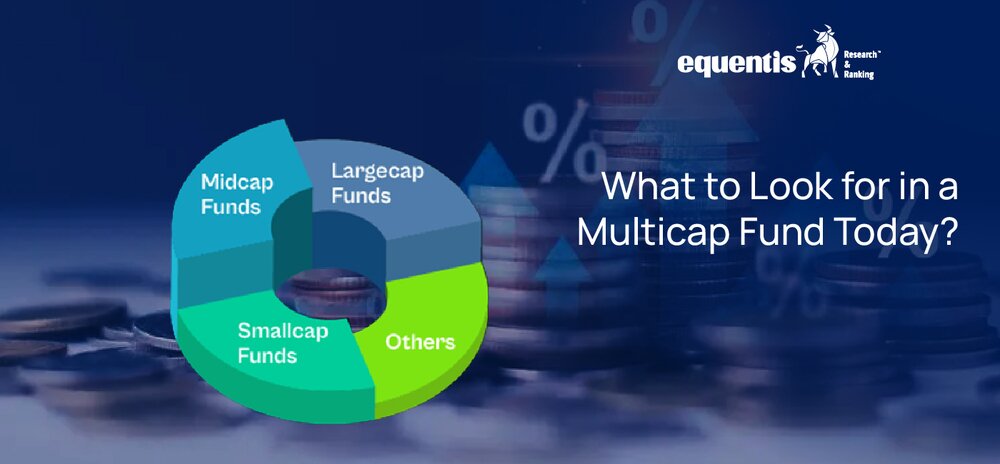

In some ways, choosing a multicap fund is like selecting a cricket team. If you think about it in terms of performance stability versus excitement, you want some older players that provide stability as well as younger energetic players who may develop while you have a group of allrounders who may provide you with the benefits of both categories.
A multicap fund provides you with large companies to provide stability, mid-cap companies for growth, and small companies to provide future potential.
If you have the right balance which helps maintain a proper weight to your portfolio, you improve the chances of having better performers in the changing market circumstances.
The reason that multicap funds are so well subscribed is that investors can leverage the advantages of growing companies of specific size characteristics. These funds do not obligate fund managers to stay within a size from one category.
However, multicap fund strategies are different. Some multicap fund managers take a little more aggressive approach, while others opt for a balanced one. As a result, it is important that investors not just examine a particular multicap fund’s performance metrics, but also evaluate the fund’s investment style, fund managers experience, and quality of the fund portfolio.
What is a Multicap Fund?
A multicap fund is a mutual fund with investments spread over large, medium and small companies.
We enjoy the security of large companies with the growth potential of smaller companies, all in a single investment. Multicap funds provide a balanced, diversified portfolio in a single investment unlike some other funds who can freely change their investments.
Why is a Multicap Fund Necessary?
Multicap funds are necessary because they invest in companies of all sizes and thus provide diversification and avoid the risk of concentrating too large an investment in one area of the capital market.
Large-cap stocks provide stability; mid-cap stocks provide moderate growth; and small-cap stocks provide large growth potential, at greater risk of loss potential.
Anyway, these three size asset pools generally allow the investor to see all the way into the capital market and allow the investor to manage a risked asset mix.
What to Consider When Choosing a Multicap Fund?
When investigating a multicap fund, you should not only consider past returns. Investors should be trying to examine several key areas to determine if the fund is right for them concerning their financial needs and risk tolerance. What are the most important areas to check?
- Portfolio Mix: What constitutes a good multicap fund will be a mix of large-cap, mid-cap and small-cap stocks, balanced out in a way that allows large companies to provide stability while the mid and small size companies produce growth. If clearly the fund is leaning to an individual segment like small-caps, investing will become progressively riskier and the same goes for large-caps where growth isn’t likely to come from investing specifically in that area of the market.
- Fund Manager’s Track Record: The fund manager is the key person investigating for the “right stocks” for the investment portfolio and adjusting it according to market conditions. When it comes to examining funds, it is vital to select funds that are backed by professional fund managers that have previously made selections for mutlicap or diversified equity funds. If an investment manager’s record indicates that they have successfully delivered returns and managed risk over several market cycles this will be a good sign for an individual investor searching for a fund.
- Long-Term Track Record: Although short-term returns may offer an attractive first impression, investors must consider longer-term performance. The fund’s performance over at least five years is more important in determining if the fund has delivered good returns consistently compared to similar funds and an index.
- Risk Profile: All Multicap funds will involve some risk because of their investments in mid, and small-cap stocks which tend to involve higher price volatility. Investors should look at important risk metrics such as standard deviation (showing the range of variance of returns throughout the period), Sharpe ratio (measuring amount of return provided for the risk taken), and maximum drawdown (which shows the largest fall in the fund price).
- Fund Quality: In addition to returns or risk, it is important to be aware of the quality of the companies that you will be investing in. A quality multicap fund will look for companies with strong financial, earnings that are stable, and manageable levels of debt.
- Expense Ratio: The expense ratio is the annual cost you pay the fund to manage your money. A slight variation will have a large impact on your long-term returns.
- Fund Size: The size of the fund has importance given how it will affect the fund manager’s ability to buy and sell stocks, especially smallcaps. When the fund size is too large, the fund could have difficulty buying small-cap stocks without affecting their prices. Small caps, i.e., micro-caps, may not provide the investor the work confidence provided by the fund.
Comparison Table: Multicap Fund vs. Flexicap Fund vs. Large-cap Fund
Here’s a detailed comparison between multicap funds, flexicap funds and large cap funds:
| Feature | Multicap Fund | Flexicap Fund | Large-cap Fund |
| Investment Universe | Large, mid, and small-cap stocks | Large, mid, and small-cap stocks | Primarily large-cap stocks |
| Allocation Flexibility | Balanced exposure to all segments | Fully flexible allocation | Focused mainly on large-cap stocks |
| Risk Level | Moderate to high | Varies based on fund strategy | Lower compared to multicap/flexicap |
| Return Potential | Higher (due to mid/small-cap exposure) | Depends on allocation | Relatively stable returns |
| Recommended Horizon | 5-7 years or more | 5-7 years or more | 5-7 years or more |
| Volatility | Moderate | Depends on strategy | Lower volatility |
| Fund Manager’s Role | Important for balance | Critical for active reallocation | Moderate focus on allocation |
In conclusion, multicap funds offer the opportunity to invest across large, small and mid-caps, combining stability with growth. There are some initial considerations to be made, when selecting a multicap fund.
Frequently Asked Questions (FAQs)
Who Can Invest in Multicap Funds?
Multicap funds are for investors looking for a combination of stability as well as growth in their portfolio allocation.
How Are Multicap Funds Different From Flexicap Funds?
Multicap funds have a constant exposure across large, mid and small-cap stocks, where flexicap funds can adjust allocations in any company size, based on their own views on the stock market.
Disclaimer Note: The securities quoted, if any, are for illustration only and are not recommendatory. This article is for education purposes only and shall not be considered as a recommendation or investment advice by Equentis – Research & Ranking. We will not be liable for any losses that may occur. Investments in the securities market are subject to market risks. Read all the related documents carefully before investing. Registration granted by SEBI, membership of BASL & the certification from NISM in no way guarantee the performance of the intermediary or provide any assurance of returns to investors.

Yash Vora is a financial writer with the Informed InvestoRR team at Equentis. He has followed the stock markets right from his early college days. So, Yash has a keen eye for the big market movers. His clear and crisp writeups offer sharp insights on market moving stocks, fund flows, economic data and IPOs. When not looking at stocks, Yash loves a game of table tennis or chess.