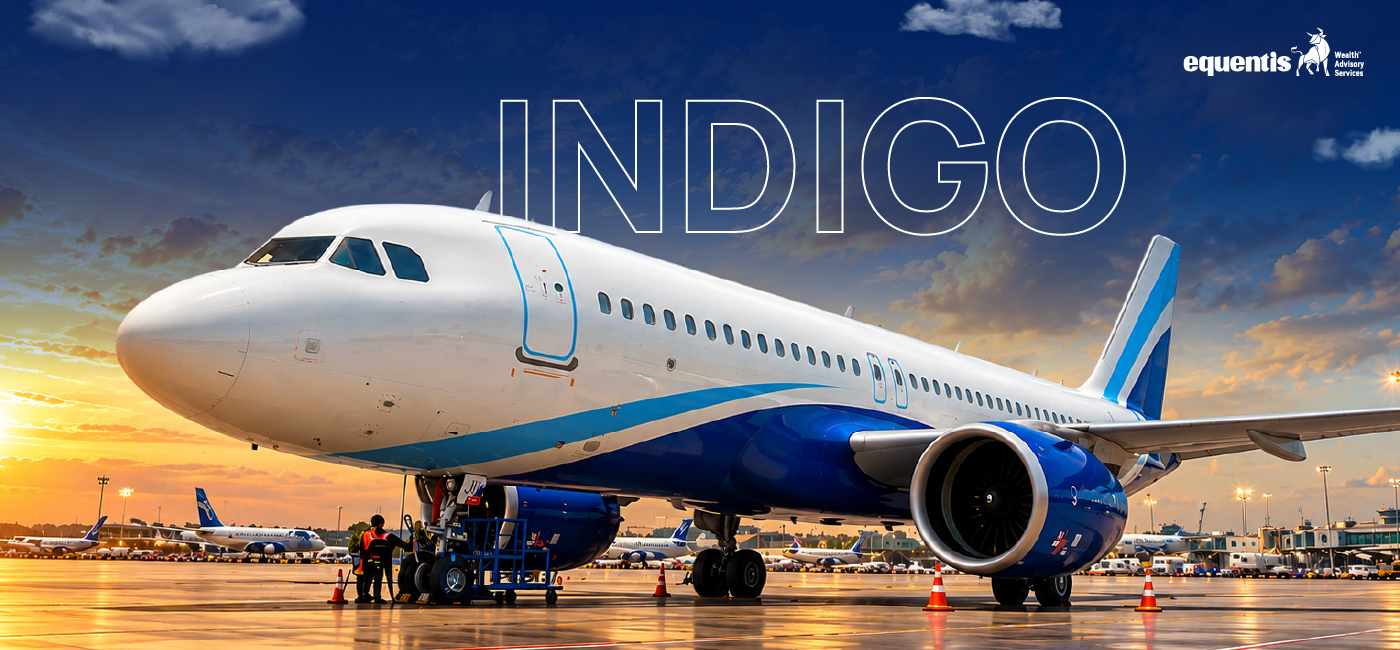

On 4 August 2006, an IndiGo aircraft took off from Delhi for Imphal via Guwahati. There was nothing about that first flight that suggested the airline would eventually become one of the defining brands of Indian aviation.
IndiGo began with a single aircraft and a straightforward idea: make air travel affordable, reliable and hassle-free for more Indians.
Twenty years later, that single aircraft has become a fleet of more than 430 aircraft. The airline now operates nearly 2,200 daily flights, connects 95+ domestic and 40+ international destinations and has carried almost 900 million customers since its launch. In FY2026, IndiGo welcomed 123.4 million customers.
The numbers are remarkable. But IndiGo’s real growth story lies in how it converted operational discipline into a powerful consumer brand.
The First Flight: Building a Different Kind of Airline
India’s aviation market in 2006 was very different from the one we know today. Flying was still viewed by many Indians as expensive and relatively inaccessible. IndiGo entered this market with a proposition that was deliberately uncomplicated.
Affordable fares.
On time flights.
A courteous and hassle free experience.
Instead of trying to compete through luxury, IndiGo focused on consistency. The airline built its business around efficiency, standardisation and quick aircraft utilisation.
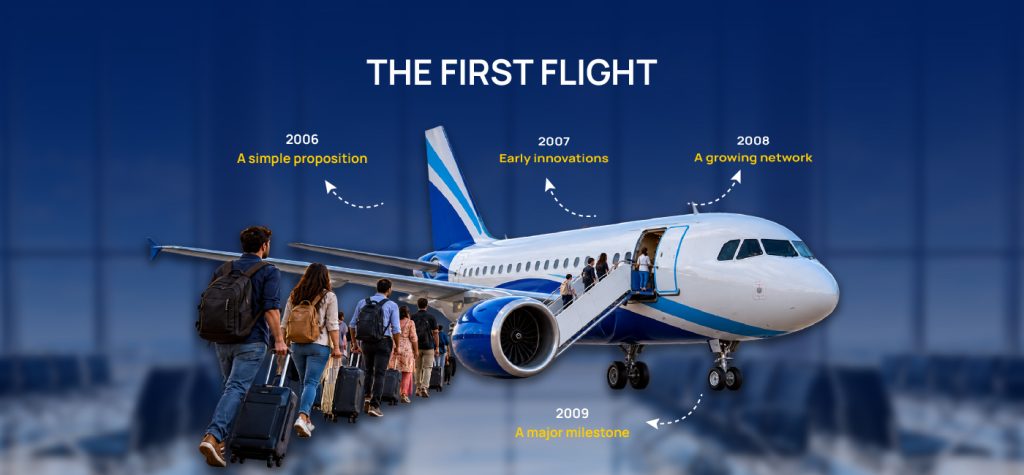
One of its earliest decisions became central to its identity: the 25 minute aircraft turnaround model. The objective was simple. Keep aircraft moving, minimise downtime and improve operational efficiency.
That operational philosophy eventually became part of the brand promise.
In 2007, IndiGo introduced features such as web check in, ramp boarding and its now memorable reusable cookie tin. These were small innovations, but they demonstrated an important lesson in branding: consumer connection can come from seemingly ordinary experiences when they are repeated consistently.
By 2008, IndiGo had built its identity around being on time. Its network had grown to 17 destinations, supported by 17 aircraft and more than 120 daily flights.
Then came a major proof point.
In 2009, only three years after launching operations, IndiGo became profitable and crossed 10 million customers.
For a young airline operating in a challenging industry, this was an important indication that the low cost model could work at scale.
When Operations Became Marketing
One of IndiGo’s most important marketing decisions was to turn something operational into something emotional.
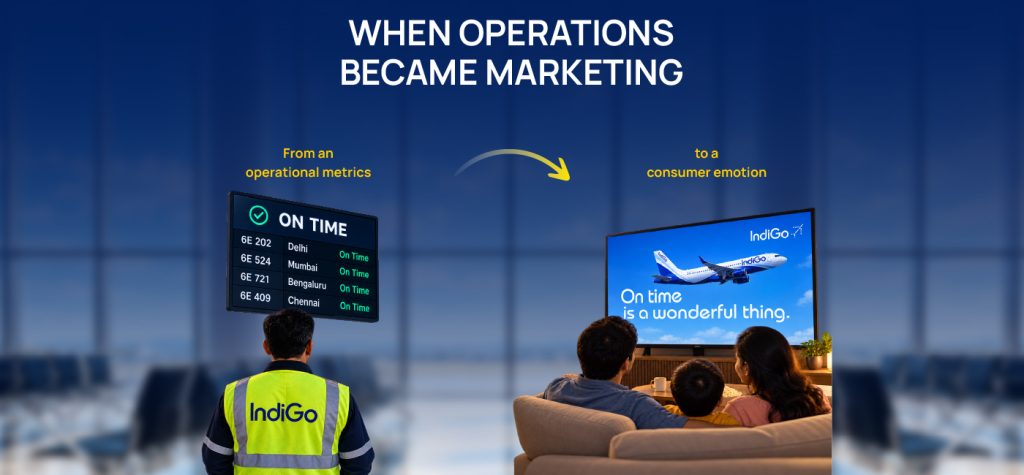
Punctuality is normally a back end metric. IndiGo made it part of its consumer identity.
In 2010, the airline launched its first nationwide television commercial, built around the message “On time is a wonderful thing.” The campaign brought IndiGo’s operational promise into people’s homes and gave the airline a distinctive voice in the market.
This was more than advertising.
The brand was effectively telling customers: when you choose IndiGo, you know what to expect.
That consistency became important as the airline expanded. Instead of constantly reinventing its positioning, IndiGo repeatedly reinforced the same fundamental ideas of affordability, punctuality and simplicity.
This helped transform a low cost airline proposition into a recognisable consumer brand.

Going Beyond India’s Metros
The next stage of IndiGo’s growth was geographical.
In 2011, IndiGo began international operations. But its domestic expansion remained equally important.
The airline increasingly connected India’s major metropolitan centres with Tier 2 and Tier 3 cities. Its use of ATR aircraft and participation in the government’s UDAN scheme helped strengthen regional connectivity.
By 2017, IndiGo had crossed 1,000 daily flights, introduced ATR aircraft and celebrated 200 million passengers. In 2018, it crossed 50 destinations, inducted its 200th aircraft and operated more than 1,300 daily departures.
The strategy was clear.
Rather than simply competing for passengers on the busiest routes, IndiGo sought to increase the number of people and places that could participate in India’s growing aviation economy.
Today, IndiGo says nearly 90% of India’s population lives within 100 kilometres of an airport it serves. Its network includes 95+ domestic destinations, with connectivity extending from major hubs to smaller cities.
That reach has helped make the brand familiar to first time flyers as well as frequent business travellers.
Surviving a Crisis That Stopped Aviation
No airline’s growth story is complete without discussing its biggest challenge.
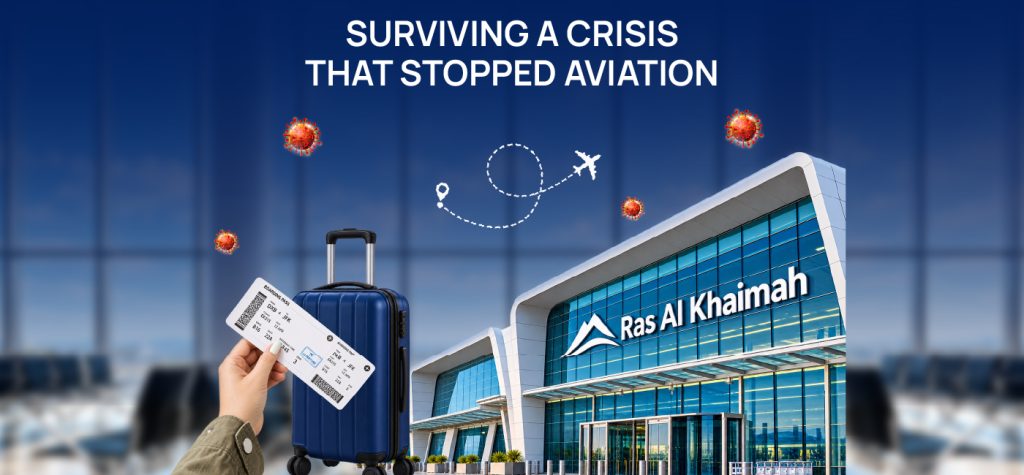
The COVID 19 pandemic brought global aviation to an almost complete standstill. Aircraft were grounded, passenger demand collapsed and airlines around the world faced unprecedented pressure.
For IndiGo, the crisis tested the very operating model that had powered its growth.
The airline had to navigate an environment where efficiency alone could not create demand. Travel restrictions meant that even the most efficient aircraft could not fly normally.
But as India’s aviation market reopened, IndiGo focused on rebuilding capacity and restoring connectivity.
In 2022, the airline returned to expansion mode. It introduced its first A321 freighter, inaugurated a second MRO facility in Bengaluru, reached its 100th destination with Ras Al Khaimah and introduced a three point disembarkation system designed to improve airport efficiency.
The recovery demonstrated another characteristic of the brand: scale combined with operational discipline.
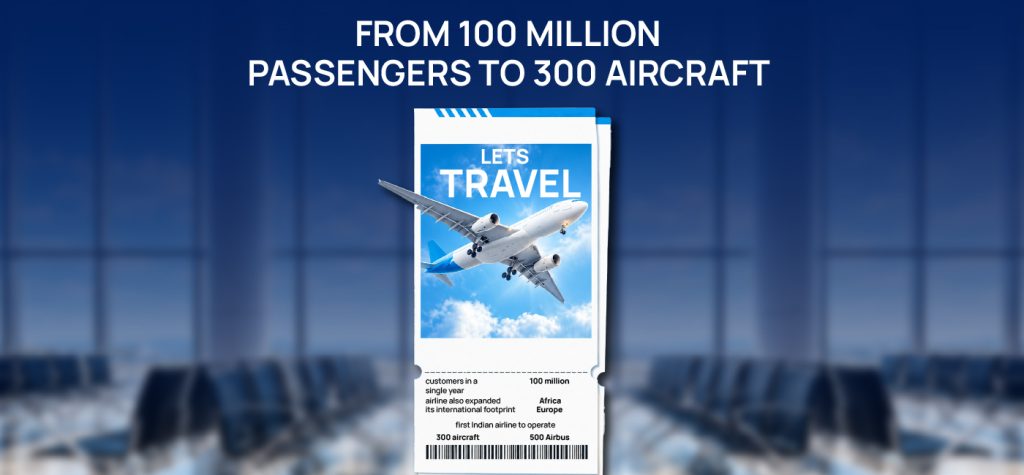
From 100 Million Passengers to 300 Aircraft
The post pandemic recovery quickly turned into another phase of expansion.
2023 became a landmark year.
IndiGo crossed 100 million customers in a single year, became the first Indian airline to operate more than 300 aircraft and placed an order for 500 Airbus aircraft. The airline also expanded its international footprint, including markets in Africa and Europe.
The significance of the aircraft order went beyond fleet size.
For a business built around high aircraft utilisation and network density, fleet expansion provides the foundation for adding routes, increasing frequency and reaching new customers.
It also reflected confidence in India’s long term aviation demand.
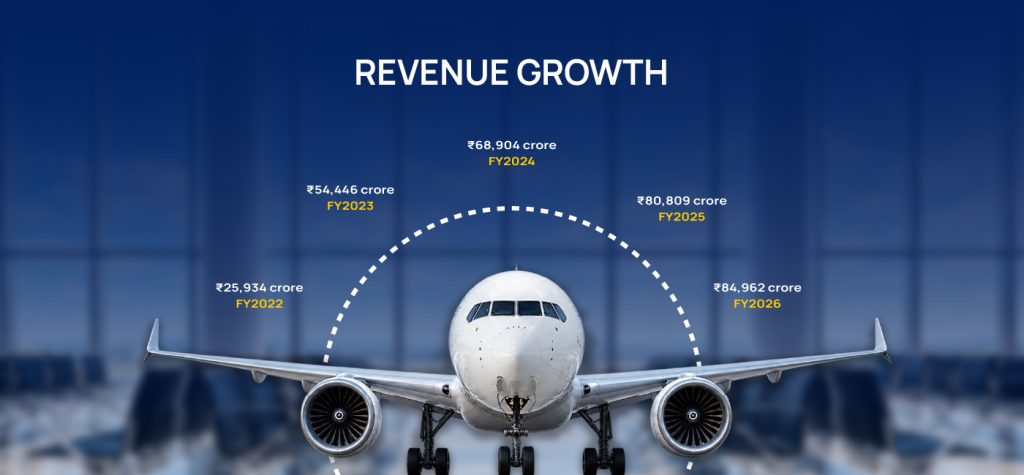
Revenue Growth: The Business Behind the Brand
IndiGo’s financial performance illustrates how its expansion translated into business scale.
Revenue from operations increased sharply as aviation recovered from the pandemic and passenger demand strengthened.
The pattern tells an important story.
The enormous increase in FY2023 reflected the recovery from the pandemic-disrupted base. Growth then continued at a more measured pace as the business scaled.
Rather than depending entirely on higher ticket prices, IndiGo’s growth has been linked to capacity expansion, network growth, increasing passenger volumes, and stronger international operations.
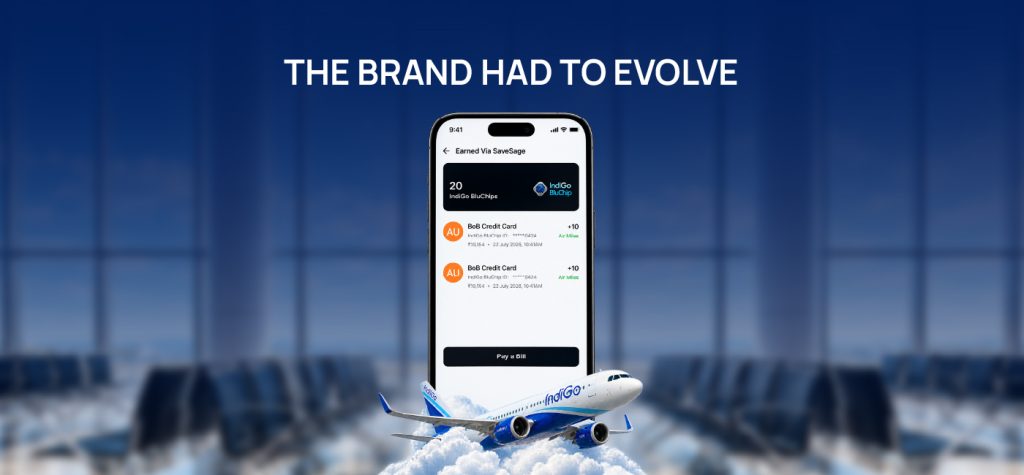
The Brand Had to Evolve
For almost two decades, IndiGo was strongly associated with the low cost airline category.
But a growing international network creates a new challenge.
How does a brand known for affordable domestic travel become relevant to customers travelling internationally and for premium purposes?
IndiGo began addressing that question in 2024.
The airline introduced IndiGoStretch, its business class proposition, and launched IndiGo BluChip, its loyalty programme. It also accelerated international partnerships and digital initiatives.
This represented a significant evolution.
The brand was no longer only about getting passengers from one Indian city to another. It was beginning to build a broader travel ecosystem.
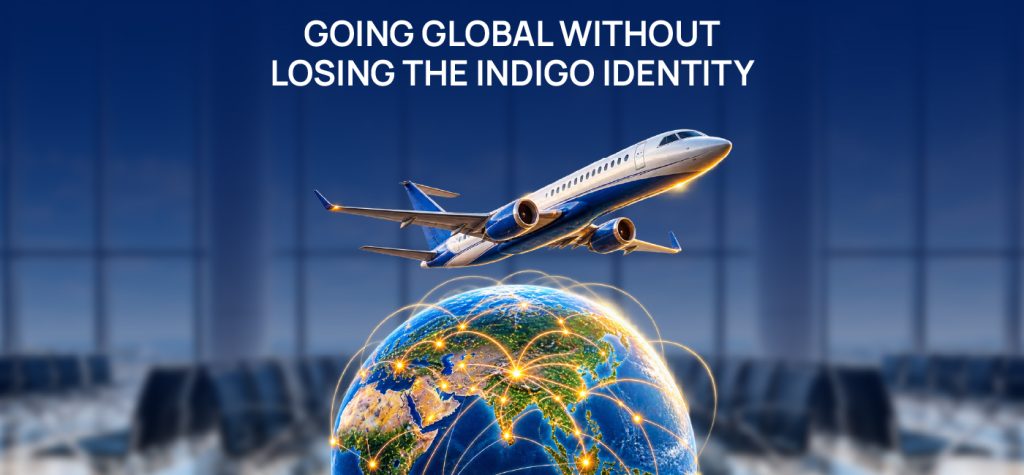
Going Global Without Losing the IndiGo Identity
By 2025, the international strategy had become much more visible.
IndiGo flew 124 million customers during calendar year 2025 across 139 destinations, including 97 domestic and 42 international destinations. It launched 10 new international destinations and 30 new international routes, while beginning long haul operations to cities including Manchester, Amsterdam, London and Copenhagen.
Then came another symbolic milestone.
In January 2026, IndiGo introduced India’s first Airbus A321XLR and began direct services between Mumbai, Delhi and Athens. The aircraft represents the airline’s move towards longer international routes while maintaining the efficiency associated with the narrow body aircraft model.
The ambition is becoming increasingly clear: build an Indian airline capable of connecting India directly with more of the world.
The Marketing Strategy: Consistency Over Complexity
IndiGo’s marketing journey provides an interesting lesson for businesses outside aviation.
The brand has generally avoided making its communication overly complicated.
Instead, it repeatedly reinforces a small number of associations: affordability, punctuality, connectivity and hassle free travel.
Over time, those associations became familiar to consumers.
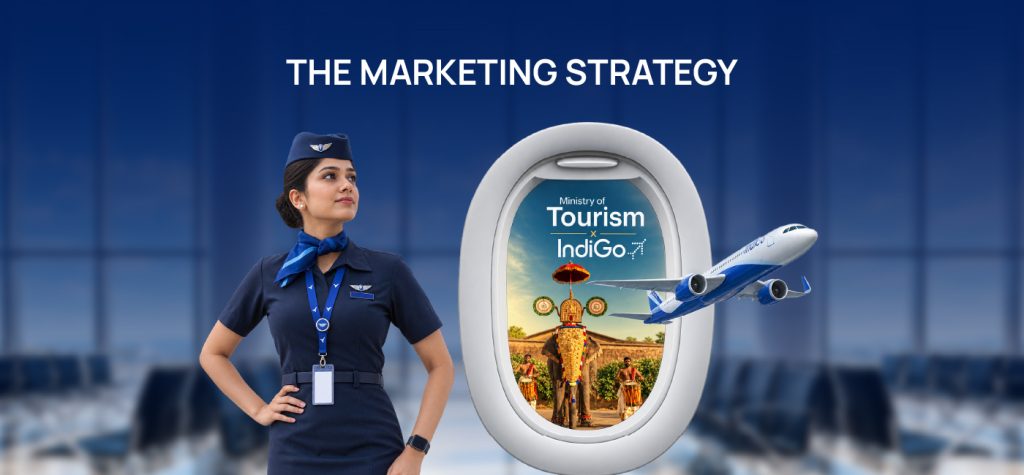
The brand has also used memorable visual and experiential elements. From the reusable cookie tin and distinctive crew styling to campaigns around punctuality and initiatives such as Girl Power, IndiGo has created recognisable touchpoints beyond the aircraft itself.
More recently, its marketing has expanded towards loyalty, international travel and destination storytelling.
In 2026, IndiGo partnered with the Ministry of Tourism on “Incredible India by IndiGo”, linking the airline’s international expansion with India’s tourism story.
That shift is significant.
The brand is increasingly selling not only transportation, but access to experiences, destinations and connections.
What IndiGo Means to Indian Consumers
Perhaps the most important measure of IndiGo’s success is not its fleet.
It is familiarity.
For many Indians, the airline has become part of ordinary life: the flight taken home for a festival, the business trip to another city, the first flight taken by a young traveller, the international holiday or the journey to a smaller Indian city.
That is where brand legacy becomes meaningful.
IndiGo did not build cultural relevance through one advertising campaign. It built it through millions of repeated customer interactions.
A passenger books.
Checks in.
Boards.
Flies.
Lands.
And then does it again.
The repetition created familiarity. Familiarity created trust. And scale turned that trust into one of India’s most recognisable aviation brands.
After 20 years, IndiGo’s story is entering another transition.
The company that began with one aircraft now operates more than 430 aircraft and nearly 2,200 daily flights. It has served almost 900 million customers since inception and connects India with 95+ domestic and 40+ international destinations.
But its next challenge is different from the one it faced in 2006.
The question is no longer whether Indians will fly.
It is how far IndiGo can take them.
Its expansion into long haul routes, A321XLR operations, business class, loyalty programmes, international partnerships and new global markets suggests that the airline is attempting to evolve from a domestic low cost carrier into a global aviation brand.
The foundation, however, remains remarkably similar to the one established two decades ago.
Keep the experience simple.
Keep the operation efficient.
Keep the promise consistent.
And keep giving people more reasons to fly.
From one aircraft in 2006 to more than 430 aircraft in 2026, IndiGo’s journey is not simply a story about an airline becoming larger. It is the story of how operational discipline, strategic expansion and consistent consumer communication can turn a business proposition into a brand legacy.
IndiGo began by making flying accessible to more Indians.
Twenty years later, it is attempting to take that same idea to the world.

Jaspreet Singh Arora is the Chief Investment Officer at Equentis, where he heads a seasoned team of equity analysts and turns two decades of market experience into portfolios that consistently beat the benchmark. A go-to voice on cement, building-materials, real-estate, and construction stocks, Jaspreet previously ran research desks at leading brokerages, honing an eye for the metrics that truly move share prices. His plain-spoken analysis helps investors cut through noise and act with conviction. When he’s not deep-diving into earnings calls, you’ll find him unwinding over sports, weekend cricket or a good history podcast.