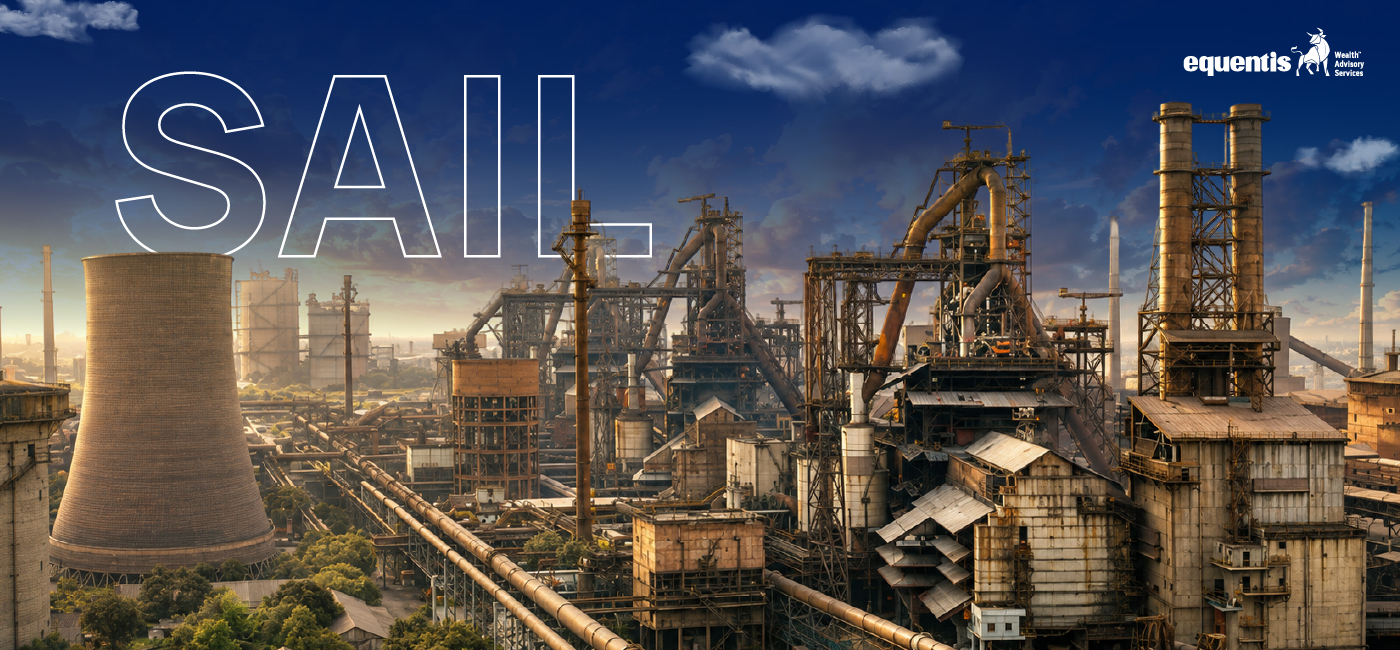

Some brands are built through advertising. Others are built through decades of performance.
Steel Authority of India Limited (SAIL) belongs to the second category.
For more than seven decades, SAIL has been closely connected with India’s industrial and infrastructure story. Its steel may not always be seen as a consumer product, but it is present in the things people depend on every day—railways, bridges, buildings, industrial facilities, defence projects and large-scale infrastructure.
The story of SAIL is therefore much bigger than the story of a steel company. It is the story of how an industrial brand grew alongside a developing nation, survived economic cycles, modernised its operations and continues to reposition itself for India’s next phase of growth.
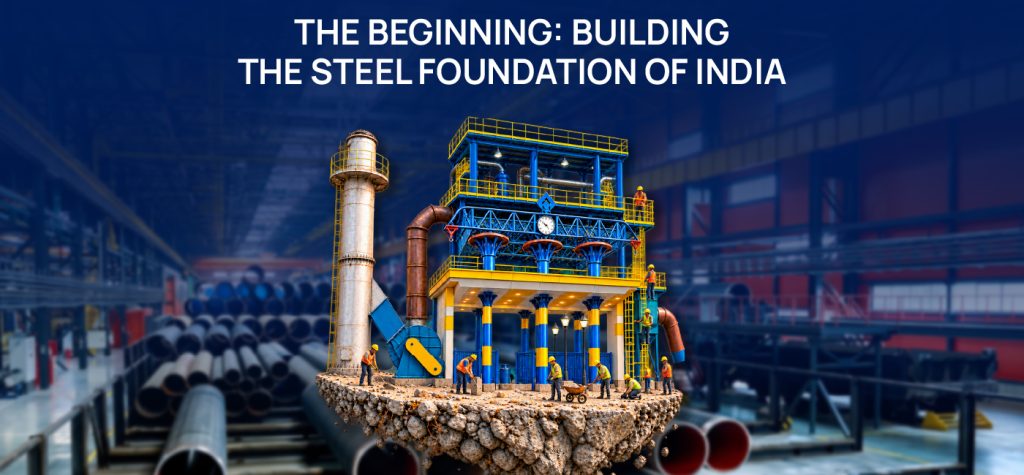
The Beginning: Building the Steel Foundation of India
The roots of SAIL go back to 19 January 1954, when Hindustan Steel Limited (HSL) was incorporated. At a time when India was still building the foundations of its post-independence economy, steel was considered essential for industrialisation.
The objective was ambitious: create a domestic steel industry capable of supporting India’s infrastructure and manufacturing requirements.
The Rourkela steel project became an important part of this early journey, followed by the development of the Bhilai and Durgapur steel plants. The scale of India’s steel ambitions can be understood from the production numbers. Crude steel production increased from just 0.158 million tonnes in 1959-60 to 1.6 million tonnes, demonstrating how quickly India’s domestic steel capabilities were developing.
The next major milestone arrived in 1973, when Steel Authority of India Limited was incorporated. SAIL brought major integrated steel plants—including Bhilai, Bokaro, Durgapur, Rourkela and Burnpur—under a common corporate identity. In 1978, the company was restructured as an operating company, establishing the organisational foundation for the SAIL known today.
From Steel Producer to National Institution
SAIL’s competitive advantage was never simply about producing more steel.
It was about becoming dependable.
Over the decades, the company expanded its production capabilities, modernised its plants and developed products for increasingly specialised applications. Its steel became associated with some of India’s most important infrastructure and industrial requirements.
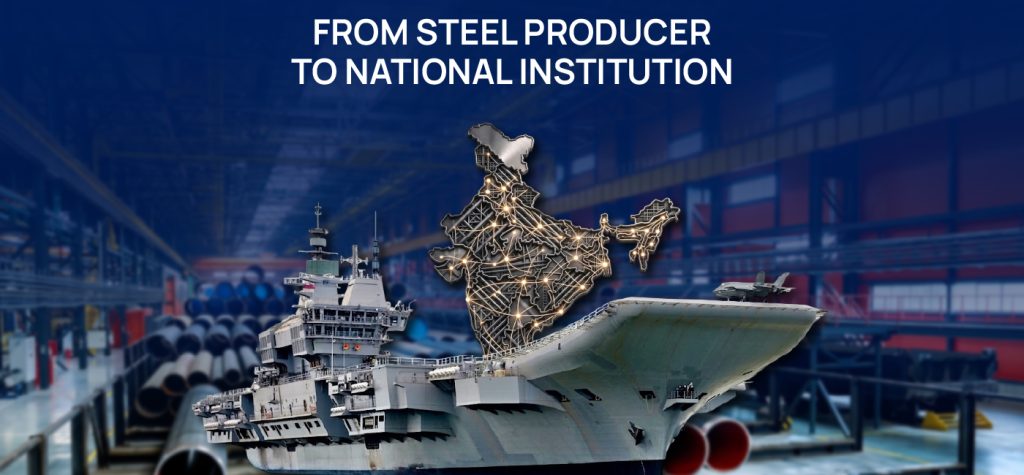
One of the company’s strongest brand-building assets was its participation in projects that had national significance. SAIL’s steel has been used in major infrastructure developments and defence applications, including INS Vikrant, India’s first indigenous aircraft carrier.
This created something extremely valuable for a business-to-business brand: credibility through application.
A customer may not remember a conventional advertisement, but an engineer, contractor or procurement professional remembers a material that performs reliably in a demanding project.
That became an important part of SAIL’s brand legacy.
The Marketing Strategy: Turning Trust into a Brand
Marketing steel is fundamentally different from marketing consumer goods.
A steel customer is not simply looking for a familiar name. They want strength, consistency, technical performance, availability, quality and confidence that the product will perform as expected.
SAIL’s brand strategy consequently evolved around trust, technical credibility, product quality and national presence.
Over time, the company also moved beyond an institutional identity by strengthening the branding of individual products. The introduction of SAIL NEX parallel flange sections and SAIL SeQR branded TMT bars represented efforts to give specific product categories stronger market identities.
This strategy helped SAIL connect with a wider range of customers, from large infrastructure companies and industrial buyers to construction professionals and retail consumers.
Its marketing advantage also came from its physical presence. Steel from SAIL’s plants became part of India’s visible development. Every railway line, industrial structure or infrastructure project using its products reinforced the brand message without requiring a traditional advertising campaign.
In that sense, SAIL’s strongest marketing campaign has often been India’s own development.
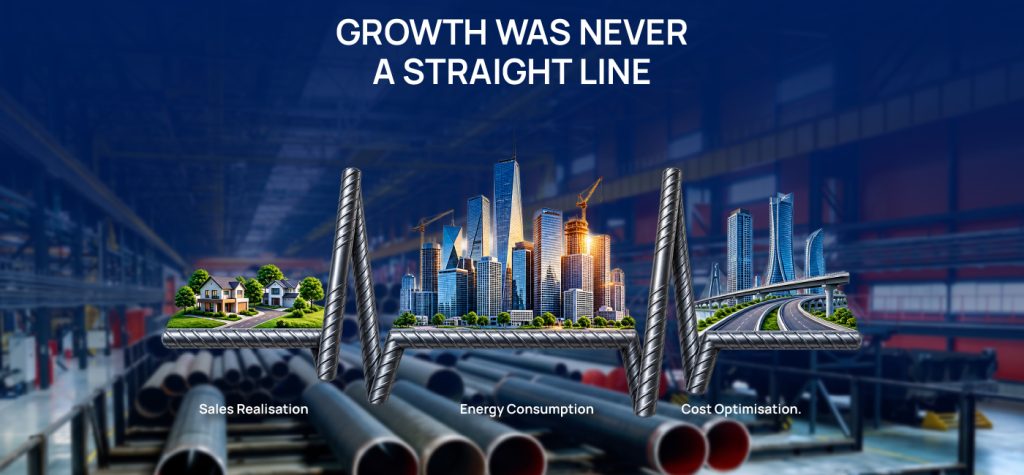
Growth Was Never a Straight Line
The journey, however, has not been without challenges.
The steel industry is highly cyclical. Changes in global steel prices, raw-material costs, coking coal prices, imports, domestic demand, logistics and geopolitical conditions can significantly affect profitability.
SAIL has also had to modernise large and complex production facilities while improving productivity and controlling costs.
These challenges have increasingly pushed the company towards a more efficiency-driven growth strategy.
Instead of measuring success only through production volume, SAIL has focused on improving sales realisation, product mix, market outreach, inventory management, energy consumption, blast-furnace productivity and cost optimisation.
This shift has become particularly important as Indian steel demand continues to be supported by infrastructure development and industrial activity.
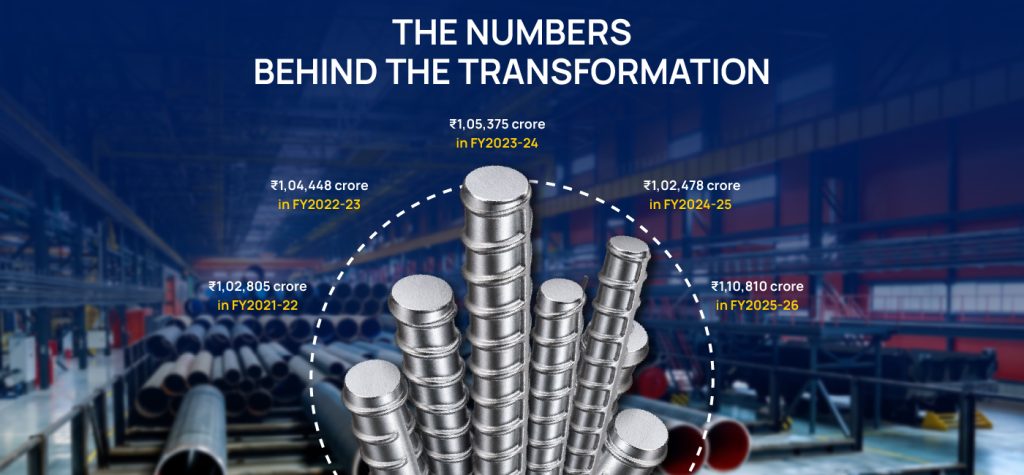
The Numbers Behind the Transformation
SAIL’s financial performance demonstrates how its business has evolved through different market cycles.
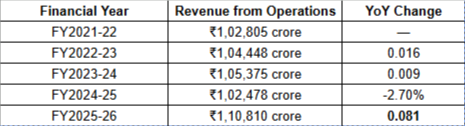
The latest numbers mark an important milestone.
In FY2025-26, SAIL achieved its highest-ever revenue from operations of ₹1,10,810 crore, compared with ₹1,02,478 crore in FY2024-25. This represented growth of approximately 8.1% year on year.
But revenue was not the only record.
Crude steel production increased from 19.17 million tonnes to 19.43 million tonnes, a 1.4% increase. More significantly, sales volume rose from 17.89 million tonnes to 19.93 million tonnes, an impressive 11.4% year-on-year increase.
The improvement was also visible in profitability. EBITDA increased from ₹11,764 crore in FY2024-25 to ₹13,146 crore in FY2025-26. Profit After Tax rose from ₹2,148 crore to ₹3,233 crore, representing growth of approximately 50.5%. SAIL also reduced its debt by ₹8,148 crore during the year.
These figures suggest that the company’s latest growth has been driven not merely by higher production, but by better sales, inventory reduction, operational efficiency, and cost optimisation.
FY2026: A New Growth Chapter
The FY2025-26 results are particularly significant because they demonstrate SAIL’s ability to combine its traditional scale with a more commercially focused operating model.
The company recorded its best-ever production and sales volumes, its highest-ever revenue from operations, and a substantial improvement in profitability.
Sales growth was supported by increased market outreach, improved dispatches and inventory reduction. At the operational level, improvements in areas such as blast-furnace productivity and energy consumption contributed to stronger efficiency.
SAIL also managed to maintain momentum despite supply-chain disruptions linked to changing geopolitical conditions.
The company’s next priority is equally important: increasing the share of value-added and special steel in its portfolio.
That represents a strategic shift from simply being a large steel producer to becoming a more specialised and value-oriented steel company.
The Cultural Relevance of SAIL
SAIL’s greatest achievement may be the fact that its brand has remained relevant through multiple generations of India’s economic transformation.
In the 1950s and 1960s, it represented India’s determination to establish a strong industrial base.
During the infrastructure expansion that followed, its steel became part of India’s physical growth.
Today, it represents a different ambition: building a more competitive, technologically advanced and value-added steel business capable of supporting India’s next wave of infrastructure and industrialisation.
From 0.158 million tonnes of crude steel production in 1959-60 to 19.43 million tonnes in FY2025-26, the scale of the transformation is extraordinary.
And from ₹1,02,478 crore of revenue in FY2024-25 to a record ₹1,10,810 crore in FY2025-26, the latest financial numbers show that the story is still moving forward.
What Makes the SAIL Legacy Endure?
SAIL’s journey offers an important lesson for modern businesses.
A lasting brand is not created only through campaigns, logos or promotional messages. It is created through consistency, trust, performance and relevance.
SAIL has spent 72 years building those qualities.
Its legacy began with the ambition to make India self-reliant in steel. It grew through massive production facilities, landmark infrastructure projects, product innovation and continuous modernisation. It survived industry downturns by adapting its strategy. And today, it is attempting to build its next chapter around efficiency, specialised products, stronger customer relationships and India’s growing steel demand.
The journey from 0.158 MT to 19.43 MT is therefore more than a production statistic.
It is a measure of how far both SAIL and India have travelled.
For a company whose foundations were laid when the country was still discovering its industrial identity, becoming a ₹1.1 lakh crore-revenue enterprise is not simply a business milestone. It is the continuation of a national growth story—one in which steel has been both the product and the symbol of progress.

Jaspreet Singh Arora is the Chief Investment Officer at Equentis, where he heads a seasoned team of equity analysts and turns two decades of market experience into portfolios that consistently beat the benchmark. A go-to voice on cement, building-materials, real-estate, and construction stocks, Jaspreet previously ran research desks at leading brokerages, honing an eye for the metrics that truly move share prices. His plain-spoken analysis helps investors cut through noise and act with conviction. When he’s not deep-diving into earnings calls, you’ll find him unwinding over sports, weekend cricket or a good history podcast.