
Nestle India shares fell nearly 8% on October 15, 2026, despite the packaged food maker reporting a 36% year on year increase in quarterly profit. The sell-off continued as investors focused on rising food inflation, higher commodity costs and the possibility of slower growth in the coming quarters. Macquarie and Goldman Sachs cut their target prices, citing these concerns and the stock’s demanding valuation. The key takeaway is that strong quarterly earnings do not automatically justify a high share price.
Nestle India Q2 FY27 Results: Key Numbers
Nestle India reported strong financial growth for the quarter ended September 30, 2026. Revenue from operations rose 20.3% year on year to ₹6,788.3 crore, while consolidated net profit increased 35.9% to ₹1,009.6 crore.
| Financial metric | Q2 FY27 |
|---|---|
| Revenue from operations | ₹6,788.3 crore |
| Revenue growth year on year | 20.3% |
| Consolidated net profit | ₹1,009.6 crore |
| Net profit growth year on year | 35.9% |
| EBITDA | Approximately ₹1,615.5 crore |
| EBITDA margin | Approximately 23.8% |
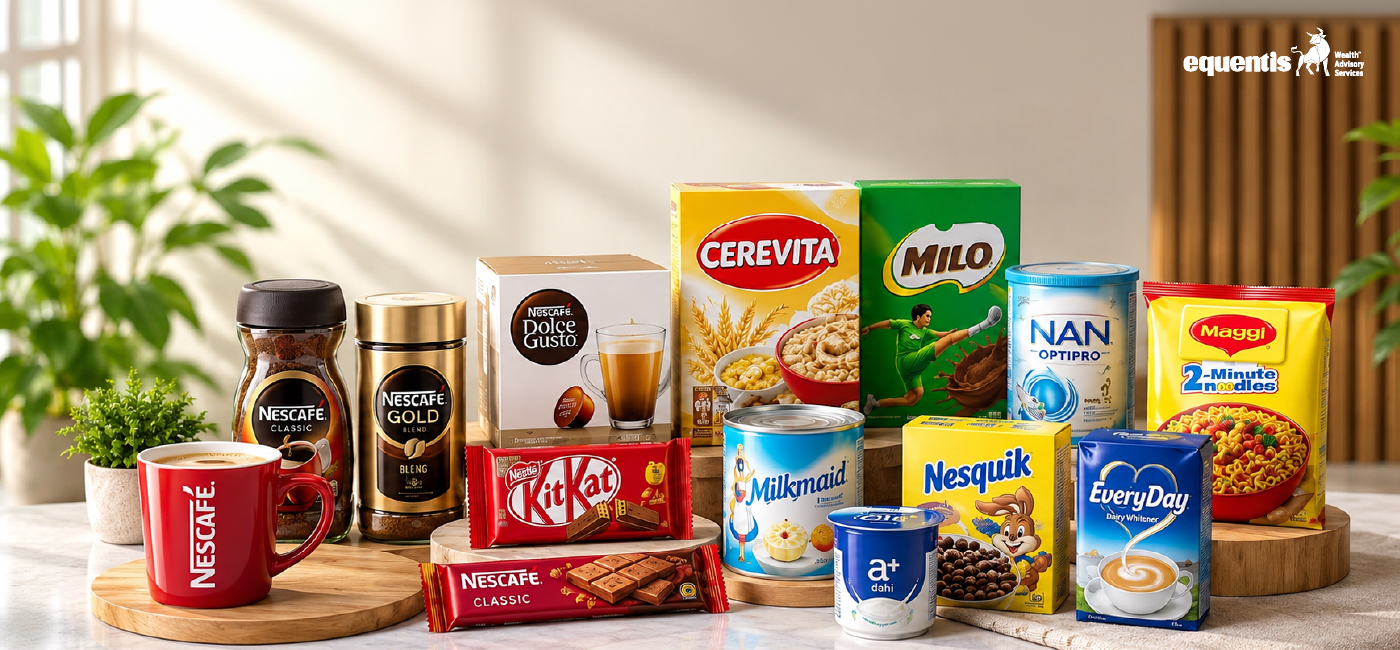
The results reflected healthy demand across product categories, including Maggi noodles, KitKat chocolates, Nescafe beverages and pet food. Strong sales volumes and better operating performance helped lift profitability.
However, the results were broadly in line with market expectations rather than significantly exceeding them. Investors also focused on management’s warning about inflation, which raised concerns about whether the company could sustain its recent growth and margins.
Why Did Nestle India Shares Fall Nearly 8%?
1. Rising food inflation and commodity costs
Nestle India flagged higher input costs, particularly for agricultural commodities, edible oils and packaging materials. These expenses influence the cost of producing and distributing packaged food products.
If raw material prices rise faster than the company can improve efficiency or adjust selling prices, profit margins can come under pressure. Price increases can help protect profitability, but excessive increases may make products less affordable and affect demand.
2. Concerns about slower growth
The September quarter benefited from strong demand and favourable comparisons with the previous year. However, analysts warned that growth could moderate as the company faces a stronger comparison base in subsequent quarters.
This does not necessarily mean that sales will decline. Rather, the market is questioning whether the recent pace of growth can continue.
3. Valuation concerns
Nestle India has traditionally attracted investors seeking exposure to established consumer brands and relatively resilient demand. Such characteristics can support a premium valuation.
However, when a stock trades at an elevated valuation, investors may expect consistent growth and strong margins. Even good results can trigger a correction if they fail to provide enough confidence about future performance.
Why Did Macquarie Cut Its Nestle India Target Price?
Macquarie maintained its Neutral rating but reduced its target price to ₹1,570 from ₹1,575. It also cut its earnings-per-share estimates for FY27, FY28 and FY29 by approximately 4% to 5%.
The brokerage acknowledged the company’s sales momentum but warned that growth could moderate as the comparison base becomes stronger. It also highlighted rising inflation and the risk of pressure on rural demand.
Macquarie’s assessment suggests that the main concern is not the September quarter’s reported performance. Instead, it is the possibility that higher input costs and slower demand could affect earnings over the next few years.
Why Did Goldman Sachs Reduce Its Target Price?
Goldman Sachs retained its Neutral rating on Nestle India but lowered its target price to ₹1,475 from ₹1,575. The brokerage cut its FY27 to FY29 earnings estimates by around 2%, reflecting expectations of slower growth.
Goldman Sachs also noted that Nestle India benefited from goods and services tax (GST) rate reductions, which supported demand and contributed to improved growth momentum. However, the impact of such changes may become less pronounced as the comparison base strengthens.
The lower target price indicates that Goldman Sachs sees less room for upside under its revised earnings assumptions. A target price is an analyst’s estimate based on assumptions about future earnings and valuation, not a guaranteed future market price.
What Does the Share Price Fall Mean for Investors?
The correction highlights the difference between a company’s current performance and the market’s expectations for its future.
For existing shareholders, the key questions are whether earnings growth remains sustainable, whether margins can withstand inflation and whether the current valuation still makes sense.
Potential investors should monitor:
- Sales volume growth: Whether demand continues across Maggi, chocolates, beverages and other categories.
- Operating margins: Whether higher commodity costs begin reducing profitability.
- Pricing strategy: Whether price increases can offset inflation without weakening demand.
- Valuation: Whether the share price reasonably reflects expected earnings growth.
Nestle India’s established brands and distribution network remain important strengths. However, these advantages do not eliminate the risks associated with inflation, changing consumer spending and a premium valuation.
Is Nestle India a Buying Opportunity After the Crash?
A nearly 8% fall does not automatically make Nestle India shares undervalued. Investors should assess the stock against expected earnings, long-term growth prospects and alternative investment opportunities.
The company’s strong quarterly results provide a positive starting point, but the outlook depends on how effectively it manages commodity costs and sustains demand. Investors should also distinguish between a temporary market correction and a longer adjustment to lower earnings expectations.
Conclusion
Nestle India reported strong Q2 FY27 revenue and profit growth, yet its shares fell sharply as investors focused on inflation, possible growth moderation and valuation concerns. Macquarie lowered its target price to

Parvati Rai is the Vice President of the Research team at Equentis. She has over 15 years of equity-research and strategy-consulting experience. A specialist in deep-dive valuations, financial modelling, and forecasting, she has built research desks from the ground up, by steering buy-side, sell-side, and independent coverage across sectors. When she isn’t fine-tuning models, Parvati unwinds on nature treks and mentors aspiring analysts.