Fundamental Analysis of Stocks

Fundamental analysis of stocks based on the quarterly and annual reports of the companies.
Coal India’s unmatched strategic relevance in securing India’s energy requirement and supporting economic growth makes it an attractive investment opportunity. And, after the recent market correction and sharp drop in Coal India share price, does it still offer value at current levels. Let’s check out. 

Overview of Coal India

Coal India is a state-owned world’s largest coal mining company. It produced 774 MT of coal in FY24, accounting for nearly 40% of primary commercial energy requirement. 

The company primarily operates through the long term coal supply contracts with companies and auctions in the free market. Due to its strong financial position and established track record of being profitable, the government has granted it the status of “Maharatna” enterprise. 

Because of the Maharatna status, it enjoys greater financial autonomy, operational freedom, and strategic flexibility. 

Coal India Management Team

Shri PM Prasad is the Chairman & Managing Director of Coal India. He has been with the company since 1984 and joined as an executive trainee with Western Coalfields Limited. He did M. Tech. in ‘Open-Cast Mining’ from Indian School of Mines (IIT- ISM), Dhanbad.

Shri Vinay Ranjan is the Director (Personnel & Industrial Relations) with extensive experience in Human Resource affairs including talent management, performance management, employee engagement, etc. 

Shri Debasish Nanda is the Director (Business Development) and has joined the company in July 2022. Prior to this, he was working as Executive Director (Gas) in Indian Oil Corporation, where he joined the company in 1988 as management trainee. Currently at CIL, Shri Nanda is responsible for leading the diversification portfolio at CIL including forward integration.

Shri Mukesh Choudhary is the Director (Marketing) from December 2022. Prior to joining CIL,  he was Deputy Director General, Department of Defence Production at the Ministry of Defence. Career wise, he is an Officer of Indian Ordnance Factory Services (IOFS) 1996 batch and Mechanical Engineering (Honours) graduate from Engineering College Kota. He also holds a Master of Financial Analysis (MFA) degree and a MBA degree.

Shri Mukesh Agrawal is the Director (Finance) and joined the company in Feb 2024. He is science graduate from University of Allahabad and a Member of the Institute of Cost Accountants of India. Earlier, he has worked with public sectors like ITI Limited, IRCON, NLC India. 

Coal India Shareholding Pattern

AD 4nXfcZY pBlJEvoTEDUsX DV4bsPZcXTryKnsu4 5UMC6 MmR nx5i2pqND3GQsvRrYFc3FnIZUkblH9ggTUuFhL7LTG6jan2q3ShIsOohjR udRWkK

In the domestic institution segment, Mutual Funds hold 10.81% and LIC holds 9.74% stake in the company.

Coal India Financial Performance

Net Sales

In FY24, CIL reported 2.1% sales growth to ₹1.30 lakh crore from ₹1.27 lakh crore in FY23. 

And, in the first nine months of FY25- the company’s sales declined by 3% to ₹92,800 crore from ₹96,962 crore, reported for 9MFY24 period. 

AD 4nXdNBtTT basXB nrevhj64hhFlcArqFqjZKT4TiCx8D0J2G thcPerqwAmMw8q6fgj6S

EBITDA

In FY24, EBITDA growth was 8.5% to ₹51,793 crore from ₹47,722 crores in FY23. EBITDA Margin to net sales in FY24 was 39.74%. 

For the 9MFY25 period, the EBITDA Margin to Net Sales came in at 41.32%, from 40.61% recorded in the same period previous fiscal. 

AD 4nXf 8bOoYw1HXnefRWU3o5A7b1gZZ4gwfCPUWzbJ 6A0jEGlTrtwyjQhJjq5MAUe1A7NHl4FSOJ0 I2qyhlKVooe89duNeedPeSsrCX C7Y14YOZJTQuP60YrqRr nt cW3Z39DI A?key=JzY00jCVqZWimwXuaG2ig6XD

Net Profit

In FY24, CIL recorded a 17.7% rise in net profit to ₹37,369 crores, from ₹31,723 crores in FY23.

And, in the first nine months of FY25, net profit declined by 11% to ₹25,710 crores from ₹28,839 crores reported in the same period last year. 

AD 4nXdg WAhNWkv2YJk1S4ZbH7Pk20yXh5Avsd3dFKtayr7W4LEpILZpTeN JuCQ0DyXAyN3QS0iXPiqp7lBfHJbU218 f9 UIuwh0NLZQZ7OpmUOy9XocBrC y8G8CbHMB1hXgqgoG?key=JzY00jCVqZWimwXuaG2ig6XD

The net profit margin to net sales of the company rose to 28.67% in FY24, from 24.86% in FY23 and has consistently improved over the last five years. 

PeriodFY20FY21FY22FY23FY24
Net Profit Margin (%)18.6915.36 17.2824.8628.67

Key Financial Metrics

Current Ratio: At the end of December 2024, the current ratio of the company was 1.72 times, slightly increasing from 1.70 times recorded the previous year. 

Debt Equity Ratio: The company has negligible debt in its book. At the end of December 2024, the debt to equity ratio of the company was 0.09 times.

Return on Capital Employed (ROCE): The metric shows how much the company is generating returns on equity and debt investment and is directly linked to the Coal India share price growth. In the last five years, CIL has improved its ROCE consistently from 16.14% in FY21 to 27.30% in FY24. 

PeriodFY20FY21FY22FY23FY24
ROCE (%)22.6016.1419.2528.2127.30

Coal India Share Price Analysis

In the recent market correction, Coal India share price has witnessed a sharp drop. As of 7th March 2025, Coal India share price has declined by close to 22% in the last six months, from ₹485 to ₹381. 

It made an all-time high level of  ₹543.55 on 26th August 2024. 

However, despite the correction, Coal India share price has given returns of 19% annually in the last five years.

AD 4nXfy9D0v5RByM9HnPWBr4qso7S5r1prab FppZ8SglI7M5IcSok
Source: TradingView

Coal India has a consistent dividend paying track record. In the last three financial years, it paid ₹17 in FY22, ₹24.25 in FY23, ₹25.50 in FY24. 

The dividend payout ratio for the last three financial years was 60.35%, 47.05% and 42.02% respectively. 

At current Coal India share price of ₹381, the dividend yield ratio is 6.7%.

Coal India Share Price Valuation Score 

Earning Per Share (EPS)

The following is the last five years Earnings Per Share of Coal India:

PeriodFY20FY21FY22FY23FY249MFY25
EPS (₹)27.1220.6128.17 51.5460.6941.79

EPS of Coal India has increased from ₹27 in FY20 to ₹61 in FY24, which helped in the Coal India share price growth during the period. 

For the 9MFY25 period, the EPS came in at ₹41.69, which is lower from ₹46.78, recorded for the same period previous year. 

Price-to-Book VS Median Price-to-Book

At current Coal India share price of ₹381, the stock is trading at 2.4 times its book value and the 5 year median price-to-book value is 2.8, which indicates, the stock is trading at slight discount. 

AD 4nXcstczt5ECLeM 4iUEPdO2yqan0QXUy66UXmctW4qCnJTARlC1axrzKFyg6qIkrYZkx

Source: Screener (As on 7th March 2025)

Price-to-Equity VS Median PE

Coal India share price is trading at a PE of 6.83 and the 5 year median PE is 6.5, indicating it is neither trading at a discount or premium. 

AD 4nXcySQWxrcm8TBG9sA YEtpOGyeaUO091UJEuQnwhyWrCC23BGeYw0NxE1ja 5YHg5yvqOa50gJxOR5677YiaC ZJimE6Cn22zRwa7D1h I ozAFw3jIWWRgp7Qbu6WEToCgUlV27w?key=JzY00jCVqZWimwXuaG2ig6XD

Source: Screener (As on 7th March 2025)

Coal India Share Price Future Growth Potential 

Let’s first look at the operational metrics of Coal India. 

Flat Volume Growth in Coal India in FY25. The company has been consistently improving its coal production rate and has increased from 602 MT in FY20 to nearly 774 MT in FY24. 

However, the volume growth in FY25 looks subdued due to various operational challenges like inclement monsoon, rake unavailability for dispatch, and few technical challenges. For the full financial year, the company is expecting a production of 788 MT, revised from 838 MT set initially. 

Absence of volume growth can hit revenue and profitability growth metrics in the near term. 

PeriodFY20FY21FY22FY23FY249MFY25
Volume (MT)602.13596.22622.63703.20773.64543.36 (+2%)

Coal India relies heavily on e-Auction to drive its revenue growth. Due to absence of strong demand and highest pit head inventory at 70 MT, auction prices have remained stable impacting earnings growth. 

Also, subdued demand from power sector due slow economic growth can also impact Coal India share price. 

Another major shift is happening is the drop in coal’s share in India’s power generation capacity. In the first quarter of 2024, the share of coal in India’s power generation capacity dropped below 50%. This is the first drop since 1960, as the government is moving rapidly to increase India’s renewable energy capacity. 

According to IEA, global coal demand is set to plateau through 2027 due to the massive expansion of renewables. And, India will also follow the trend. The global share of coal-fired power generation is expected to come down to 55% by 2030 and a complete phase-out by 2040. 

Diversification of Operations

The growth of renewable energy sources pose a significant challenge and growth of Coal India share price. To address the issue, the company has undertaken many diversification initiatives including:

  • Coal to Chemicals and Fertilizers
  • Entry to Renewable Energy 
  • Surface Coal Gasification
  • Critical Mineral Value Chain

With favorable returns metrics (ROCE), earnings growth (EPS), and favorable valuations, Coal India share price may offer long term growth potential. However, much of it will depend on its ability to improve its production rate. 

Related Posts

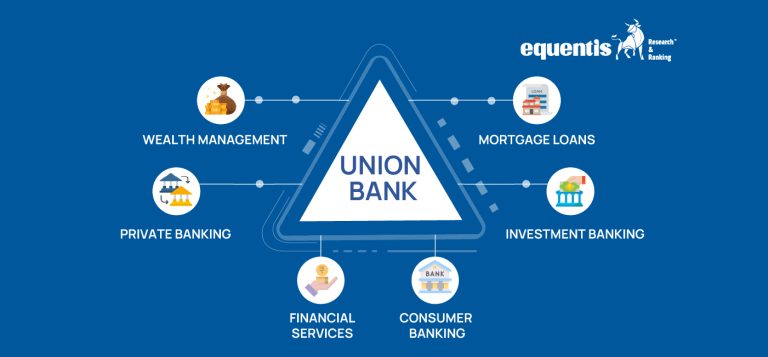
Union Bank is the fifth largest public sector bank of India with a customer base of over 21 crore Indians. In the consolidation drive, Andhra Bank and Corporation Bank were merged into Union Bank in April 2020. 

The bank’s business and income have more than tripled since then, helping Union Bank share price to rise more than 140% in the last five years, from ₹44.20 on 20 Feb 2020 to ₹107.6 on 17th Feb 2025. It made a high of ₹172.

Union Bank has one of the best asset quality among Indian public sector banks and has a strong growth potential in the long run. In this article, we do a fundamental analysis of Union Bank share price to have a better understanding of the bank’s standing. 

Overview of Union Bank of India

Union Bank of India is a leading public sector bank with its headquarter in Mumbai. The bank was established in 1919 and over years have diversified its offering to meet varied needs of its customers, ranging from individuals to large corporations. 

It offers personal banking, corporate banking, international banking, and treasury operations services through its 8,500+ domestic branches, 9,000+ ATMs, and 23,000+ business correspondents. 

As of 31st December 2024, the bank’s total business stood at ₹21.65 lakh crore, comprising ₹12.16 lakh crore in deposits and ₹9.5 lakh crore of advances. 

Union Bank of India Management Profile

Ms. A. Manimekhalai  is the CEO and Managing Director of Union Bank. She is a seasoned banker with over three decades of experience and started her career as an officer in Vijaya Bank in 1988. Prior joining Union Bank, Ms. Manimekhalai was Executive Director at Canara Bank overseeing strategic planning, credit related matters, financial inclusion, functioning regional rural banks, and others. She holds an MBA (Marketing) from Bangalore University, and a Diploma in Human Resource Management from Narsee Monjee Institute of Management Studies (NMIMS), Mumbai.

Shri P. K. Samal is the Chief Compliance Officer and has been appointed for a tenure for 3 years from June 2024. He is a certified chartered accountant and has over 21 years of experience in banking space. 

Shri Avinash Vasant Prabhu is the Chief Financial Officer of Union Bank and was appointed in November 2023 for a period of 3 years. He is a chartered accountant by profession and has more than 25 years of experience. Prior to joining Union Bank, he was CFO India for Deutsche Bank.

Shri Ashwini Kumar Choudhary is the group Chief Risk Officer with over 24 years of professional experience. He is a certified FRM from Global Associations of Risk Professionals. 

Union Bank of India Shareholding Pattern

AD 4nXcl501viPUU81cdyw3NHCoKY2rctJzZt4RB15yP9lDFGZUL5oZxYPC6fZ4MmCX6uIzdrGQldk 1jse65okxgzbcNT0Xt hL3VhnT0KOoTkHiJeVbjms1q1VizVuOP26GGNWMCK0Zw?key=3MCF42C2KIN IPwRKUHXun2S

Financial Performance

Net Interest Income (NII)

The bank’s net interest income reached ₹36,570 crores during FY24, which is around 11.6% higher compared to the previous financial year from ₹32,765 crores. 

In the April to December period (9MFY25), the bank’s NII reached ₹27,700 crores, which is around 2% higher at ₹27,134 crore recorded during the period in 9MFY24. The bank non-interest income rose 25.33% during the same period to ₹14,254 crores.

AD 4nXelt7PgdPRtvGhITiRWynbs u8WES5WXc nbhDw2bPq0hhS pMs4zEPYUy2g2zAMWItxKZRScIjJc3S9hxYdnihoaVQ S35cAYREJinuzZu7csZ4lPt8tZVD3RKq8DNtlP7Rb9w?key=3MCF42C2KIN IPwRKUHXun2S

Net Profit 

From recording a loss of around ₹2,900 crores in FY20, the bank’s profitability metric has improved a lot. In FY24, net profit of the company reached ₹13,648 crores, from ₹8,433 crores in FY23, recording a growth of 62%. 

For the 9MFY25, the bank’s net profit increased by 25.77% to ₹13,002 crores from ₹10,338 crores recorded in 9MFY24. 

AD 4nXcbEHNI8X1BZql3LIZgFzF RkpPKCVfhN2f3n3knqDMdsrH4bzRhnBr29PF6s9yILnhlO0qjHHfufJfPdxl0laCDlSje3zot7fGLanrdXuwlG7qV4JXT0j6hx oDn1KaTjr6mUbUA?key=3MCF42C2KIN IPwRKUHXun2S

Key Financial Metrics

Net Interest Margin (NIM)

Net Interest Margin is like operating margin for banks and is calculated by interest paid from interest earned. In FY24, the NIM of Union Bank of India was 3.1%, improved by 3 basis points year-on-year. 

And for the 9MFY25 period, it was 2.94% and the bank has given guidance of 2.8 to 3% as NIM for FY25, on account of lower lending margin and high deposit cost. 

Gross Non Performing Asset (NPA)

PeriodGNPA (%)
FY2014.15
FY2113.74
FY2211.11
FY237.53
FY244.76
9MFY253.85

The bank has steadily improved its asset quality over the years. In FY24, the Gross Non Performing Asset (GNPA) of the bank improved to 4.76% from 7.53% in FY23. It further improved to 3.85% for the period ending in December 2024, indicating better asset and risk management to prevent slippages and loans from turning bad. 

Management is expecting the bank’s GNPA for FY25 to settle below 4%. 

Capital Adequacy Ratio (CAR)

Capital Adequacy Ratio- which indicates the bank’s financial strength and stability The overall CAR at the end of December is 16.72% against the minimum regulatory requirement of 12% for public sector banks. 

A higher CAR indicates that the bank is well insulated to absorb any shock like a spike in non performing assets.  

CASA Ratio

The Current Account Saving Account (CASA) Ratio, which indicates percentage of customer’s total deposit kept in low yielding current and savings accounts, is 33.43% at the end of December 2024. SBI, which is the leader, has a CASA of 39.20%. 

Cost of Deposits and Cost of Funds

The bank’s Cost of Funds for the 9MFY25 increased by 28 bps to 4.98%. And, the cost of deposit also increased to 5.5% for the same period from 5.15% recorded the previous year. Higher cost of funds and deposit, put a pressure on the profitability metrics of the bank. 

Union Bank Share Price Analysis

After reaching a high of ₹172 on 3rd June 2024, Union Bank Share Price is on a downtrend, and has corrected by more than 30%. This correction may be due to the broader weakness in the market and macro slowdown. 

AD 4nXfTWyf5PFMZLZPt 1CALMsWyIFSBy BVfzG1CEFg5a8afne Yt 0VSPapLlKCqSMnK1tFY8zoWdvBnm9FKwVcCynZaPPbXnAJMh66hDJc3WwbF2dba5Qy4uNtp7SwVZ8iD9YhinQ?key=3MCF42C2KIN IPwRKUHXun2S
Source: Tradingview

Speaking about the dividend payouts, Union Bank has a consistent dividend payout history has one of the highest dividend yields across public sector banks. 

The bank paid ₹1.9 in 2022, ₹3 in 2023, and 3.60 in 2024 as dividend. At the current market price of ₹114, the bank has a dividend yield of 3.13%. 

Key Valuation Metrics

Earning Per Share (EPS)

The following is the EPS of Union Bank Share Price of last 5 year:

FY20– ₹12.49
FY21₹4.54
FY22₹7.73
FY23₹12.34
FY24₹18.95
9MFY25₹17.05

The bank has considerably improved its Earning Per Share over the last five years from negative ₹12.49 per share to ₹18.95 per share, which aided in the share price rise. 

Return on Assets

The bank’s Return on Assets (ROA) in FY24 improved from 0.69% in FY23 to 1.03% and for the 9MFY25, the bank’s ROA further improved to 1.24%. 

Price-to-Book VS Median Price-to-Book

AD 4nXf42pki6gfGR g8Bklyo3X7 b95kOOkB wj dMkE7JUvXrBBu7yngHbrc8tGsDMFjnxYk0Tnmaiwq1RaR4oz cmIZ9A9fI2RBqxTBfGpk 8msl tPS5n dLnFNP5OrnAyw5PYcqkQ?key=3MCF42C2KIN IPwRKUHXun2S
Source: Screener

The price-to-book value of Union Bank share price is 0.9 and the 5 year Median Price-to-Book is 0.5, meaning it is trading slightly higher than its book value, and also below book value. It can be considered fairly valued for this metric. 

Union Bank Share Price Future Growth Potential

Although the financials of the bank look steady with improving profits, NPA ratio, net interest margin, the bank may face operational risks.

Union Bank’s credit growth for the 9MFY25, grew by 5.94%, lower by the management’s expectation of 11%. And, the deposits growth was 3.76%. Lower deposit growth may impact the bank’s ability to aggressively pursue credit growth and may have to raise funds from the market to fund the growth, which can impact the cost of funds for the bank. 

Another key concern for the bank will be a period of flat growth. For 9MFY25, the bank’s Net Interest Income growth was flat, which again can impact the growth of Union Bank share price. 

The bank’s CASA ratio is also on a declining trend, which again can increase the cost of funds and impact profitability. 

Going forward, the bank’s credit and deposit growth should be closely analyzed to understand the future growth potential of Union Bank share price and also compare the metrics with State Bank of India. 

Related Posts

FAQ

  1. Is Union Bank of India a government bank?

    Yes, Union Bank of India is India’s 5th largest public sector bank with pan India presence.

  2. How has Union Bank Share price performed in the last 5 years?

    As of 10th Feb 2025, Union Bank share price has given an annualized return of 21% in the last 5 years.

  3. What is CASA in Union Bank?

    The CASA Ratio of Union Bank at the end of December 2024 is 33.43%, down by 97 bps from 34.40 in December 2023.

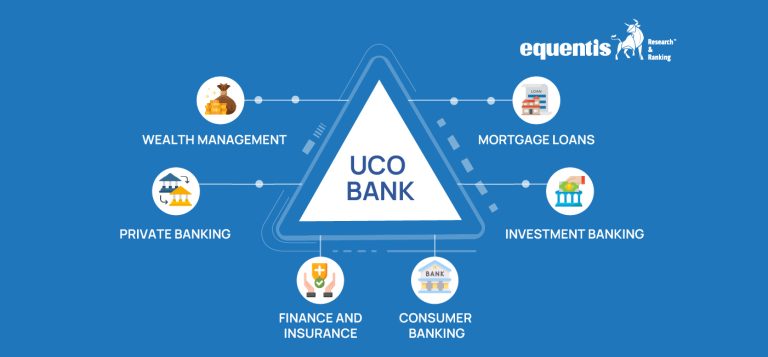
Once a penny stock, UCO Bank share price has seen a major turnaround. In the last three years, the share price rose from ₹11.50 on March 7th 2022 to ₹39 on 21st Feb 2025. It made an all-time high of ₹68.40 on Feb 7th, 2024. 

It was the first bank in India, conceived and backed by Indian capital and management. Over the decades, the organizational structure of the bank underwent multiple changes. UCO Bank is ranked 10th largest among public sector banks in India. 

In this article, we will do a fundamental analysis of UCO Bank share price and evaluate its future growth potential. Let’s start.

Overview of UCO Bank

The idea of the bank was conceived of by Indian industrialist Mr G.D. Birla during the “Quit India” movement in 1942 and came into reality on 6th January 1943 as United Commercial Bank. 

Mr. G.D. Birla was the first Chairman of the bank, which was registered and headquartered in Kolkata. Post-independence, the bank was nationalized in 1969, and 100% ownership of the bank was transferred to Govt. of India. Subsequently, the bank’s name was changed to UCO Bank.

Currently, the bank operates through a network of over 3,200 branches across India, three overseas branches, and over 2,000 ATMs. 

At the end of FY24, the bank’s total business was ₹4.5 lakh crore, comprising ₹2.63 lakh crore in deposits and ₹1.86 lakh crore in advances. 

UCO Bank Management Profile

Shri Ashwani Kumar is the MD and CEO of UCO Bank and is a Chartered Accountant by profession. He has worked in multiple public sector banks including Bank of Baroda, Corporation Bank, Punjab National Bank, Oriental Bank of Commerce, and India Bank in various divisions and roles. 

Shri Rajendra Kumar Saboo is the Executive Director of UCO Bank. He started his career as a probationary officer in the erstwhile Oriental Bank of Commerce in the year 1994. Shri Saboo is a graduate of Commerce and holds an MBA in Banking & Finance.

Shri Vijaykumar Nivrutti Kamble, is the Executive Director. A seasoned banker with a career spanning over 33 years, Shri Kamble started his career as an Agriculture Field Officer at Bank of Maharastra and before joining UCO Bank, he was holding the position of General Bank at Bank of Maharastra. 

Shri Sujoy Dutta is the Chief Financial Officer of the bank and a qualified Chartered Accountant. He joined the bank in 2004 and rose through the ranks undertaking various roles and responsibilities. 

UCO Bank Shareholding Pattern

AD 4nXftw8OrofsN1OoegQ8IOB50Op3bZp7gVVWa12FUtdV2OldnxM2oDYC6XgPmscTJ54JymR3R qvhDZGpiA YN8gxTE4D15bLWNl

The bank has high promoter shareholding, with little stake held by domestic institutions and fairly any foreign institutions have invested in the bank. 

UCO Bank’s Financial Performance

Net Interest Income (NII)

UCO Bank’s net interest income in FY24 was ₹8,101 crores during FY24, registering a growth of 10.32% compared to the previous financial year from ₹7,343 crores. 

In the April to December period (9MFY25), the bank’s NII reached ₹6,932 crores, which is 17.21% higher compared to the previous year during the same period at ₹5,914 crores in 9MFY24. 

AD 4nXf9w4AU5Um0TDRiP5tF0MH9phZqvMSXA bNzH76iA DNVnns9Jt8T6gCMFj CxhjDNfHLyaqJj9wg GxJz

Non-Interest Income

The bank’s non-interest income for FY24 increased by 30.18% to ₹3,266 crore compared to the previous financial year at ₹2,508 crore.

And, in the first nine months of FY25, the bank’s non-interest income rose by 40.78% to ₹3,014 crore from ₹2,141 crore. 

Net Profit

UCO Bank in FY21 marked a significant turnaround in operations by starting to report net profit after a prolonged period of making losses. 

In FY24, the bank’s net profit declined by 11.2% to ₹1,654 crores from ₹1,862 crores in FY23.

And, for 9MFY25, the bank reported a significant growth in net profit to ₹1,793 crores, an increase of nearly 59% from ₹1,128 crores recorded in the same period the previous year. 

Key Financial Metrics

Net Interest Margin (NIM)

PeriodFY20FY21FY22FY23FY249MFY25
NIM (%)2.442.582.812.872.923.12

Net Interest Margin, the operating margin for a bank, has improved consistently over the years. In FY25, the bank’s NIM was 2.92%, and for the period 9MFY25, it was 3.12%. 

Gross Non-Performing Asset (GNPA)

PeriodFY20FY21FY22FY23FY249MFY25
GNPA (%)16.779.597.894.783.462.91

The bank’s increased focus on retail loan portfolio and active credit risk management and monitoring has helped to lower its non-performing assets. From 16.77% of the total loan book turning bad to 2.91% at the end of December 2024, the bank has significantly improved its overall asset quality, aiding in improving its profitability. 

Capital Adequacy Ratio (CAR)

PeriodFY20FY21FY22FY23FY249MFY25
CAR (%)11.7013.7413.7416.5116.9816.25

The bank’s capital-to-risk weighted ratio indicates the bank’s ability to absorb losses if the bad loans rise. UCO Bank has improved its CAR over the years and is on par with leading public sector banks. 

CASA Ratio

This ratio shows how much percentage of the total deposits is there is low yielding savings and current account.  At the end of FY24, the bank’s domestic CASA ratio is 39.25%, and at the end of December 2024, it is 37.97%. 

Cost of Funds

The bank’s cost of funds in FY24 increased to 4.63% from 3.86% in FY23, indicating the bank is expending more to arrange funds and use them for lending purposes. 

At the end of December 2024, the cost of funds further increased to 4.75%. 

UCO Bank Share Price Analysis

UCO Bank share price has been on a down-trend for the last one year and also the broad-based weakness in the market is resulting in stock going further down. As of 21st Feb 2024, the UCO Bank share price fell over 35% last year. 

Source: tradingview

Regarding dividend payments, the bank resumed paying dividends after a gap of 8 years to shareholders in FY24. The bank paid ₹0.28 per share as dividends to shareholders. 

UCO Bank Shar Price Valuation Metrics

Earning Per Share (EPS)

PeriodFY20FY21FY22FY23FY249MFY25
EPS (₹)-3.100.170.81.561.381.50

In the last five financial years, the EPS growth of UCO Bank has been consistent, but in FY24, the bank marked a slight decline. However, at the end 9MFY25, the bank’s EPS growth surpassed the previous year’s level. 

Return on Assets (ROA)

PeriodFY20FY21FY22FY23FY249MFY25
ROA (%)-0.960.060.340.620.560.75

UCO Bank’s Return on Assets (ROA) is lower than 1% for all periods in the last five years. 

Price-to-Book VS Median Price-to-Book

Source: Screener

At the current market price of UCO Bank share price (₹38.6), the price-to-book value (₹22.9) is 1.6, and the 5-year Median Price-to-Book is 0.7, trading higher than its historical averages.

UCO Bank Share Price What’s Next

UCO Bank share price is struggling due to broader weakness in the market and other market challenges.

One of the major concerns in the Indian banking sector is the lower deposit growth rate compared to the credit growth rate. In the December 2024 quarter, UCO Bank’s deposit growth rate was 9.36%, while the credit growth rate was 16.44%. 

Failure to attract a higher deposit growth rate could increase the bank’s cost of funds, which could impact profitability. In the long term, UCO Bank’s share price growth will depend on its ability to improve its Return on Assets, NPA, and profitability metrics. To comply with SEBI’s minimum public shareholder norm of 75%, the government will bring ₹2000 crore QIP in Q4FY25. 

Related Posts

FAQs

  1. How has UCO Bank share price performed in the last three years?

    In the last three years, the UCO Bank share price rose from ₹11.50 on March 7th, 2022, to ₹39 on 21st Feb, 2025, translating to an annualized gain of 51%. The stock made an all-time high of ₹68.40 on Feb 7th, 2024.

  2. Does UCO Bank pay dividends to shareholders?

    UCO Bank in the last 5 years (FY20 to FY24) paid dividends only once in FY24. It announced a dividend of ₹0.28 per share.


  3. Is UCO Bank a profitable public sector bank?

    UCO Bank is a profitable public sector bank and has consistently made net profit from its operation since FY22. In FY24, UCO Bank’s net profit was ₹1,654 crore.

Many know Voltas as a leading room air conditioner manufacturer, but only in India. However, it is a big player in the industrial and commercial cooling segment in domestic and international geographies. One of the prime international projects was installing an air conditioning system in the world’s tallest building, Burj Khalifa. It shows the company’s prowess in executing challenging projects, driving value for all stakeholders.

Now, speaking about Voltas share price, it has given steady returns to its shareholders. But, one of the major concerns of investors in the market is, the stock has failed to outperform the broader market over time.

As of 31st Jan 2025, Nifty 500 has given an annualized total return of 18.18% in the last 5 years, while Voltas share price delivered 13% annualized return during the same period. Will Voltas reverse the trend in the near term and what is the future growth potential of Voltas share price, we will do a deep dive on the fundamentals. Let’s start. 

Voltas Business Overview

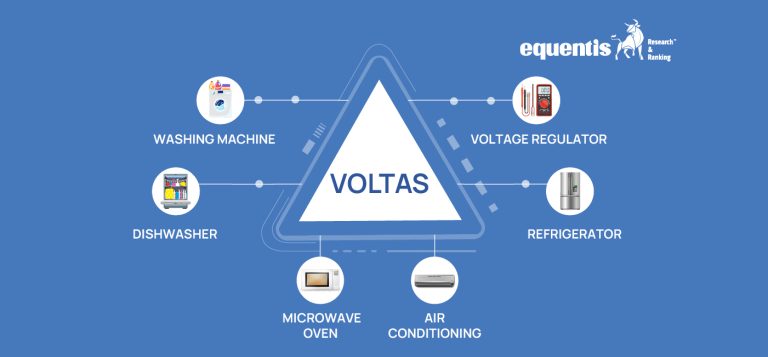
Voltas Limited was established in 1954 and was a collaboration between Tata Group and Volkart Brothers. Currently, Voltas is the largest room air conditioning company in India. The company recently diversified other ranges of cooling and home appliances marketed under the Voltas Beko brand. It sells refrigerators, water dispensers, microwaves, water heaters, washing machines, coolers, and AC stabilizers. 

Voltas has divided its business into three segments:

  • Unitary Cooling Products: Under this segment, the sales and services of cooling appliances and cold storage products are made.  
  • Electro-Mechanical Projects and Services: Under this segment, the company houses its Electro-Mechanical Projects, Water Solutions Projects, and Electrical and Solar.
  • Engineering Products and Services: This segment includes the sale of Textile Machinery and Mining & Construction equipment. 

Voltas Management Team

The following are the key management personnel of Voltas Limited:

Mr Pradeep Bakshi is currently the Managing Director & CEO. His term expires in August 2025, and he has been leading the company for over 20 years. 

Mr. Mukundan C.P. Menon is the Executive Director and Head of the room Air Conditioner Business. He will take over the Managing Director & CEO role from Mr Pradeep Bakshi in September 2025. Earlier, he was with Blue Star, holding the position of President and Chief Operating Officer, and has over 37 years of management experience. Mr. Menon has done B. Tech in Mechanical Engineering, Graduate Diploma in Management, along with Executive Management programs from IIM and Leadership Excellence Program from INSEAD, France. of Management) and a Leadership Excellence program from INSEAD, France.

Mr. Jitender Pal Verma is the Chief Financial Officer of Voltas and is a qualified Chartered Accountant with over 24 years of experience. Prior to joining Voltas in 2021, he was the senior Executive Vice President and Group CFO of Thoresen Thai Agencies Public Ltd Company, Thailand.

Shareholding Pattern

.Tata Sons is the promoter, holding nearly 30% stake in the company. Mutual Fund houses are the company’s second-largest stakeholder, cumulatively holding nearly 21% stake, followed by insurance companies, including LIC, HDFC Life, ICICI Life, and SBI Life, owning 9.59% of the company. 

AD 4nXdXuriAIumjBVZ tcUReXAhpdKFscmkW9p4CmwoZfNBMGV6 QutLWv8UEn6 YXlXh8VSw1Lr45

Financial Performance

Revenue from Operations 

In FY24, Voltas’ revenue from operations increased by 32% to  ₹12,407 crores, compared to ₹ 9,399 crores in the previous financial year.  During the financial year, Voltas became the first-ever brand to sell 2 million AC units, recording a volume growth of around 35%. 

Looking at the segment-wise performance, Unitary Cooling Products contributed more than 60% to the company’s total revenue. For the 9MFY25 (April to December 2025), the company’s revenue increased to ₹10,645 crores from ₹8,278 crores in the same period of the previous financial year, an increase of 28.5%. 

AD 4nXc3pB85yFBDW7lraYlRE4uSQEkxj0BW6CQHUTk8zARNBR4MyoxqhuevxECj02M9qUzKVtHkkFWbRnGzkNC2II0Q1EmY5lXaOtqgRUzIizTV78WrQr Um7C45wsb0aAAQb4glBbodQ?key=RMoRXpvtGOme5NyEInFkGGY0

Operating Profit

Despite the company’s revenue rise, the operating profit has declined year after year. In FY24, the company’s operating profit declined nearly 12% from ₹551 crores in FY23 to ₹486 crore.

AD 4nXeARUxTps5em wyaEq14ZuoFd EtU0 FDI6tkUOlp 4ShdCc

Net Profit

In FY24, the company’s net profit rose from ₹136 crore in FY23 to ₹248 crore.  For the 9MFY25 (April to December 2025), the company’s net profit increased to ₹598 crores from ₹137 crores in the same period of the previous financial year, an increase of more than 330%. 

AD 4nXeom7jsHIQ CGxUdMIdH20CvWOeeY3Kk6ho6PesFsyJZ8xsAru4266SJCZRz3PBLcHXJo0MH

Key Financial Metrics

Current Ratio: The company’s current ratio declined marginally to 1.45 times in FY24 from 1.44 times in FY23. 

Debt-to-equity Ratio: The company’s debt-to-equity is favorable and is steady at 0.05 times, which indicates the company has low debt in its books. 

Inventory Turnover Ratio: This ratio shows how many times a company’s inventory is sold and replaced over a specific period. In FY24, the inventory turnover ratio rose to 3.64 times from 3.33 times in FY23. It was 2.48 times in March 2021. 

Return on Equity (ROE): In FY24, the ROE of the company was at a lower single digit at 8%.

Return on Capital Employed (ROCE): The ROCE of the company improved to 10% in FY24/

Voltas Share Price Analysis

In the last 5 years, Voltas share price has given returns of approximately 80%, rising from ₹688 to ₹1,211, and making an all-time high of ₹1,946. The stock underperformed significantly between 2022 and 2024, compared to the broader market, because of the declining earnings growth.

Source: Tradingview

Voltas has a consistent dividend payment track record and has paid more than 70% of its net profit as dividends to shareholders. In the last three years, it paid ₹5.5 in 2022, ₹4.25 in 2023, and ₹5.5 in 2024 as dividends. 

Free Cash Flow

Free cash flow is an important metric to check because it provides a clear picture of the company’s cash holdings, allowing investors to assess its financial health, ability to weather challenging business environments, and growth potential. 

Free cash flow is the cash left after subtracting Capital Expenditure from Cash from Operating Activity. 

In FY24, the net cash flow generated from operating activity was ₹761 crores. The capital expenditure in the form of the purchase of property, plant, and equipment was ₹293 crores. So, the free cash flow comes to nearly ₹468 crores. 

In FY23, the company’s free cash flow was negative at ₹21 crores. It shows the company’s improved cash-generating ability, which may enhance its growth potential. 

Voltas Share Price Valuation Score

Earning Per Share (EPS)

The following is the last 5 years EPS of Voltas Limited:

FY20₹15.63
FY21₹15.87
FY22₹15.23
FY23₹4.08
FY24₹7.62
9MFY25₹18.4

In FY23, the company’s EPS deteriorated significantly, reducing from ₹15.23 to ₹4.08, which resulted in Volta’s share price underperforming. The company has improved its EPS growth significantly, and for the 9MFY25, it has touched ₹18.4. 

Price-to-Book vs. Median Price-to-Book

The price-to-book value of Voltas share price is 6.4, and the 5-year Median Price-to-Book is 6.1, meaning it is trading slightly higher than its book value and can be considered fairly valued for this metric. 

AD 4nXekiJAlh7KKzL9zvLyU3WJF57bV6RhCAEXuHQYo3NmSmUGWkwqkvO1E9y6OExUylewcHlY5KXJpjF2KizWRo1vGu1TCfyMvBJmHGUA0aOzjA7WxEqr4KEGq
Source: Screener

Price-to-Equity VS Median PE

The current PE ratio of Voltas is 56.7, meaning investors are paying 56.7 times for every ₹1 of earnings. And the 5-year median PE is 71.9, which indicates the stock is trading at a lower valuation than historical PE levels. 

AD 4nXcORpjvrddCRGRPaB6iMfja4jjzg
Source: Screener

Voltas Share Price What’s Next

Analysing the financial performance and other key metrics of Voltas share price, here are the following observations:

  • The company has come out of a period of flat growth, which it witnessed between FY20 and FY23. It may post strong revenue growth in FY25, keeping the strong momentum of the first nine months. The company’s inventory turnover ratio has improved significantly, from 2.48 times in March 2021 to 3.64 times in March 2024, indicating it sells more goods in a given period. The revenue growth is backed by volume growth.
  • The company’s free cash flow levels have increased, which may help it to undertake aggressive marketing and growth plans. Speaking about valuations, the stock is trading at a lower valuation compared to its historical averages, and the company’s EPS has also improved significantly.
  • Voltas has established leadership in Room Air Conditioners in India. The home appliance brand of Voltas Beko has emerged as the fastest-growing, durable Indian consumer brand. It has sold over 5 million household appliances in the last 5 years and has become one of the top three players in the semi-automatic washing machine category.

Some of the key concerns in Voltas share price growth are:

The company’s operating profit is declining year-over-year, meaning it makes less profit on every product it sells. The Return on Equity and Return on Capital Employed by Voltas at the end of March 2024 were 8% and 10%, respectively. However, it has improved over the previous year. Meanwhile, its peers, Blue Star, have better ROE and ROCE metrics. 

FAQs

  1. How has Voltas share price performed in the last 5 years?

    As of 14th Feb 2024, in the last 5 years, Voltas’ share price has given returns of 12% annually.

  2. Is Voltas a consistent dividend-paying company?

    Yes, Voltas has a good record of paying dividends to shareholders. In FY24, its dividend payout ratio was more than 70%, and it paid ₹5.5 as a dividend in 2024.

  3. Is Voltas a profitable company?

    Yes, Voltas is a profitable company. Its net profit in FY24 was ₹248 crores with a Return on Equity of 8%.

Introduction:

A company’s financial performance shows how well it uses its assets, earns money, and runs its business. Simply put, it reveals how healthy and financially stable it is. But how do we analyze that? Some important financial ratios and metrics help assess if a business meets industry standards or falls short in profiting. One metric stock market advisory company and investors often rely on is the ROE. What is it, and why is it essential when analyzing companies? Let’s find out.

What Is The Concept Of ROE?

ROE is a primary part of the answer to the question, “What is fundamental analysis?” The return on equity (ROE) ratio measures how well a company generates profits from its shareholders’ investments. Simply, it shows how much profit is earned for every rupee of equity. For instance, an ROE of 1 means that every rupee of equity generates 1 rupee of net income. This is a crucial metric for potential investors, highlighting how efficiently a company uses its money to earn profits.

ROE also reflects how effectively the management utilizes equity financing to run operations and grow the business. Unlike other return-on-investment ratios, ROE focuses on profitability from the investor’s perspective. It calculates the earnings generated based on the shareholders’ investment, not the company’s investment in assets or other areas.

Investors prefer a higher ROE as it shows the company is making the most of its funds. However, ROE should be evaluated within the same industry since industries have varying investment requirements and income levels. Comparing ROE across different industries may thus lead to inaccurate insights.

How Is ROE Different From ROCE and ROA?

Though all three are profitability ratios, the three differ in the following manner-

AspectROA (Return on Assets)ROE (Return on Equity)ROCE (Return on Capital Employed)
FocusProfitability from total assetsProfitability from shareholders’ equityProfitability from combined capital (debt + equity)
FormulaNet Income / Average Total AssetsNet Income / Average Shareholders’ EquityEBIT / (Total Assets – Current Liabilities)
IndicatesHow effectively do assets generate earningsHow well shareholder investments generate profitsHow efficiently capital is used to generate operating profits
Preferred-ValueHigher indicates better asset utilizationHigher indicates greater equity financing efficiencyHigher indicates optimal use of both debt and equity
UsageEvaluates management’s ability to convert assets into profitEvaluates profitability from shareholder investmentsEvaluates operational efficiency with available capital
ConsiderationsIndependent of capital structure; useful for asset-heavy industriesImpacted by financial leverage, higher equity lowers ROEReflects holistic profitability, blending debt and equity
Ideal ApplicationComparing asset-heavy companies or assessing operational efficiencyAssessing return for equity investorsEvaluating businesses with significant debt and equity mix

How To Calculate ROE?

The ROE formula used to calculate the return on equity is

ROE = (Net Income / Shareholders’ Equity) x 100

Here, 

  • Net income is a company’s profit after subtracting all expenses, taxes, and interest. It shows the company’s overall financial performance.
  • Shareholders’ equity is the company’s net worth, the difference between total assets and total liabilities. It represents what shareholders own in the company after debts are paid.

For instance, assume that company A has a net income of Rs.50,00,000 and the shareholder’s equity comes to Rs.2,00,00,000. In that case, the ROE would be

ROE = (5000000/20000000) x 100 = 25%

25% ROE means the company generated Rs.0.25 or 25 paise profit against every Re.1 of the shareholder’s equity.

The ROE can also be calculated using these three different variations of the basic formula-

  • To find the return on common equity (ROCE), subtract preferred dividends from net income and divide by common equity. The formula is:

ROCE = (Net Income – Preferred Dividends) / Common Equity

For instance, say a company has a net income of Rs.10 lakh, preferred dividends of Rs.2 lakh, and common equity of Rs.50 lakh. The ROCE for this variation will be 

ROCE = (1000000 – 200000) / 5000000 = 0.16 or 16%

  • Another way is to divide net income by the average shareholder equity. To calculate average shareholder equity, add the equity at the start of a period to the equity at the end and divide by two.

So, if a company has a net income of Rs.8 lakh, and the shareholder equity at the start of the year is Rs.40 lakh, and at the end of the year is Rs.60 lakh, the ROCE will be

ROCE = Net Income / Average Shareholders’ Equity = 800000/5000000 = 0.16 or 16%.

  • You can also track changes in ROE over a specific period. Start by using the shareholders’ equity at the beginning of the period as the denominator to calculate the starting ROE. Then, use the shareholders’ equity at the end of the period to find the ending ROE. For instance, A company starts the year with equity of Rs.30 lakh and ends the year with Rs.40 lakh.

Net income for the first half is Rs.6 lakh. So, starting ROE = 6,00,000 / 30,00,000 = 0.20 or 20%.

    Net income for the second half is Rs.4 lakh. Then the ending ROE = 4,00,000 / 40,00,000 = 0.10 or 10%.

      The drop in ROE from 20% to 10% shows declining profitability over the year. Comparing these figures shows how profitability has changed during the period.

      ALSO READ:

      Further Breaking Down The ROE With DuPont Formula:

      In addition, you can use the DuPont formula to break down the ROE components further and analyze them in detail. ROE shows how efficiently a company uses shareholders’ capital, calculated by dividing net income by shareholders’ equity. 

      The DuPont analysis takes this a notch higher, highlighting which financial activities most impact ROE. This information helps compare the efficiency of similar companies and helps managers spot strengths or areas for improvement.

      The DuPont formula is-

      ROE = (net income / sales) x (sales / total assets) x (total assets / shareholder’s equity)

      In this, the ROE is divided into three ratios that denote the different aspects of ROE-

      • Net Profit Margin (net income/sales): Measures operational efficiency as net income generated per rupee of sales.
      • Total Asset Turnover (sales/total assets): This shows how well assets are used to generate sales.
      • Equity Multiplier (total assets/shareholder’s equity): Evaluate the financial leverage used by the company.

      How To Interpret ROE?

        Compare ROE with Industry Averages

        Look at a company’s ROE compared to its industry average. A higher ROE suggests that the company efficiently uses shareholders’ equity to generate profits. Take TCS’s ROE, for instance. The company reported an impressive ROE of 51.04% in FY2024, far exceeding the IT industry’s average of 18%. This highlights TCS’s strong profitability and efficient capital use compared to its peers. On the other hand, a lower ROE could mean the company struggles to stay competitive.

          Analyze ROE Trends Over Time

          Check how a company’s ROE has changed over the years. A steady rise in ROE is usually a positive sign, showing consistent profit growth for shareholders. But, if ROE fluctuates or declines, it might signal issues that need deeper investigation.

            The Ideal ROE

            There is no one-size-fits-all number. The ideal ROE depends on the industry and the company’s specific situation. An ROE of 15% or higher is often considered healthy. Comparing it with peers clarifies the assessment.

            ROE offers a reliable snapshot of a company’s financial performance, but context matters. A stable ROE suggests that the company effectively uses equity to generate profits. Still, external factors like market dynamics and economic conditions can impact ROE. So, always evaluate ROE alongside other financial ratios and indicators for a clearer picture.

            Bottomline:

            Think of ROE as a tool to spot industry leaders. A high ROE often indicates strong profit potential. But don’t rely on it alone—constantly evaluate all aspects of a company before investing. ROE, which can be easily calculated using a financial calculator, is one of many metrics used to assess a company’s performance, growth potential, and financial stability. Growth prospects are crucial in judging profitability, so it is important to scrutinize them. The return on equity ratio and other financial ratios can help gauge a company’s potential. Make sure to use them wisely when making investment


            FAQ

            1. What does a negative ROE indicate?

              A negative ROE signals problems with debt, asset retention, or both within the organization.

            2. What does a company with a high ROE signify?

              Companies with high ROE generate significant profit relative to shareholders’ equity, efficiently using investors’ money. They excel in retaining earnings, reinvesting them as working capital, and reducing reliance on debt. High-ROE companies often outperform competitors due to advanced technology, efficient operations, or strong branding, helping them generate more earnings than peers.

            3. How is ROI different from ROE?

              ROI measures the overall return on your investment, giving a broader financial perspective. ROE, however, zooms in on the returns shareholders earn based on their equity in a company.

            Introduction:

            When you buy a piece of gold jewelry, you know the current price and pay according to the same ongoing rate. Even with other purchases, we check whether it is worth buying at that MRP and at what cost. For all such purchases, we know the actual value of the commodity, which is why we readily pay the asked price. 

            A tool called the PE ratio, one of the important financial ratios, lets us make a similar evaluation when buying shares or stocks. What is it? How does it work? How do you analyze stocks using the P/E ratio? Let’s understand.

            What is the P/E Ratio?

            The Price-to-Earnings (P/E) Ratio compares a company’s stock price to its earnings per share (EPS). It helps investors understand a company’s value and market expectations. Simply, it shows how much you need to pay for each unit of the company’s current or future earnings. 

            The P/E is helpful because it compares stocks with different prices and earnings levels. It is often called an earnings multiple and has three types. Let’s look at all three with an example. 

            Say Company ABC’s current stock price is Rs.120, projected earnings for next year are Rs.12 per share, past one-year earnings are Rs.10 per share, and inflation-adjusted average earnings over the last 10 years are Rs.8 per share. 

            Forward P/E Ratio

            This ratio looks at a company’s expected future performance. It compares the current stock price to projected future earnings, as estimated in earnings guidance. As per the example, the forward P/E ratio for Company ABC will be 

            Forward P/E = Current Stock Price ÷ Projected Earnings = 120/12 = 10

            This says that the investors are paying Rs.10 for every rupee of projected future earnings. While it gives a glimpse into potential growth, these estimates can sometimes be inaccurate.

            Trailing P/E Ratio

            The trailing P/E focuses on the past. It calculates the ratio using earnings data from the last 12 months. So, continuing the example, the trailing P/E for Company ABC will be 

            Trailing P/E = Current Stock Price/ Earnings of the Last 12 Months = 12

            This says that investors are paying Rs.12 for every rupee of past earnings. While it reflects balanced actual performance, it may not always reflect the company’s future earnings potential. 

            The Shiller P/E Ratio

            Also known as the cyclically adjusted price-earnings ratio, this method uses a company’s average earnings over a set period. The Shiller P/E calculates the current stock price divided by the company’s inflation-adjusted average earnings over the last ten years. So, for Company ABC,

            Shiller P/E = Current Stock Price ÷ Inflation-Adjusted Average Earnings = 120/8 = 15

            This means the investors pay Rs.15 for every rupee of long-term, inflation-adjusted earnings. It says the stock price is higher than long-term earnings, possibly due to market optimism or economic cycles.

            Apart from these, another classification of the P/E ratio divides it as

            Absolute P/E Ratio

            The absolute P/E ratio is the traditional method of calculating the Price-to-Earnings ratio. This method divides a company’s current stock price by its past or future earnings. 

            Relative P/E Ratio

            The relative P/E ratio takes things a step further. It compares a company’s absolute P/E ratio with a benchmark or past P/E ratio. Investors use it to gauge a company’s performance over time or against industry standards.

            Let’s take HCL Technologies as an example. As of 2nd January 2024, the sector P/E stands at 37.87, while the company’s P/E is 31.23. The relative P/E ratio of 82.47% indicates that the company’s P/E is lower than the benchmark sectoral ratio. If the company’s P/E had been higher than the sector’s, say 40.13, the relative P/E would have been 105.97%, suggesting the company has outperformed the sector.

            Generally, a relative P/E ratio below 100% implies that the company’s P/E is lower than the benchmark, potentially indicating the stock is undervalued. Conversely, a relative P/E ratio above 100% suggests that the company has outperformed the benchmark, which may indicate the stock is overvalued or performing exceptionally well relative to its peers.

            This comparison helps you understand whether a stock is undervalued or overvalued compared to its peers or historical performance.

            How To Calculate The P/E Ratio?

            The formula used for computing the P/E ratio is-

            P/E = Current Market Price of a Share / Earnings per Share

            Suppose a company’s P/E ratio is 37 times. This means that buyers are ready to pay Rs.37 for every rupee of profit earned by the share. The usual scale for measuring the P/E ratio is centered at 1. 

            Accordingly, a P/E ratio of 1 means the market values the company at its intrinsic value. A ratio above 1 suggests overvaluation, where the stock is priced higher than its earnings potential. In contrast, a ratio below 1 indicates undervaluation, meaning the stock is priced lower than its intrinsic value.

            However, the P/E ratio must be compared against the industry ratio as a benchmark. For example, company A’s P/E ratio is 56, and company B’s is 21. The industry P/E is, say, 33. In this case, the P/E is much higher than the standard measure scale, which is 1. However, as per the industry standard, company B is said to have a lower P/E ratio and is thus undervalued compared to its peers. 

            ALSO READ:

            How To Do Stock Analysis Using P/E Ratio?

            • High PE Ratio  

            A high PE ratio often signals investors expect the company’s earnings to grow. When stocks show strong growth potential, their PE ratios tend to rise. Investors are willing to pay a premium for these stocks, anticipating higher returns.  

            However, a high PE ratio can also mean the stock is overvalued. If it exceeds the PE ratios of similar companies or its historical average, it might reflect excessive optimism. While this could indicate strong growth prospects, it might also suggest inflated valuations. A rising PE ratio is sometimes driven by declining overall earnings and positive market sentiment.  

            Low PE Ratio  

            A low PE ratio might suggest that the stock is undervalued. This happens when the company’s earnings grow, but the stock price doesn’t rise proportionally. Such situations attract value investors, who see an opportunity to buy stocks with strong fundamentals at a discount, betting on future price increases.  

            Conversely, a low PE ratio might signal declining company earnings. Investors could interpret this as a warning sign, leading to skepticism about the stock’s growth prospects. A modest PE doesn’t always mean a bargain—it might reflect real concerns about the company’s performance.  

            So, what is a good P/E ratio? It depends on factors like the industry, market conditions, and a company’s growth prospects. Comparing it with industry averages and competitors helps assess it better. The PE ratio can also be paired with other financial metrics for investment strategies. 

            Bottomline:

            P/E is one of the fundamental parameters of stock analysis. It’s handy for comparing companies in the same industry, like comparing one telecom firm to another, and is easy to compute using financial calculators. The P/E ratio gives insights into market sentiment and potential investment opportunities. However, it’s not a standalone tool. It doesn’t factor in future growth, debt, or industry-specific details, so always pair it with other financial metrics for a clearer picture. 

            Which tools to pair it with? You can approach a registered stock advisory company to help frame an investment strategy using the right mix of parameters. 


            FAQ

            1. What is the accuracy of the P/E ratio?

              The PE ratio doesn’t directly tell you to buy or sell but helps gauge whether a stock or market is pricey or cheap. Take the Indian market, for example. The 12-month trailing PE for the Nifty is around 21.6 times, which is 6% higher than its 15-year average of 20.3. This premium makes some long-term foreign investors hesitant to invest in new funds.

            2. What does a negative P/E signify?

              A negative PE ratio means the company faces losses or has negative earnings. Even well-established companies experience this at times. It can happen for various reasons, like environmental factors beyond the company’s control.

            3. How does the P/E ratio determine market sentiment?

              The PE ratio often reflects market sentiment. During bull markets, investor optimism drives stock prices up, leading to higher PE ratios. In contrast, bear markets bring lower PE ratios as pessimism pulls stock prices down.

            Introduction:

            As we enter 2025, many investors are either beginning their journey into the stock market or revisiting their portfolios for rebalancing. Whether you’re just starting or fine-tuning your investments, having a strong base of common investment jargon and a solid analysis template is key to making informed decisions. 

            To help you evaluate companies or securities and build a strong portfolio, here are 8 fundamental indicators you can incorporate into your investment strategy in 2025.

            Indicator 1: Earnings Per Share (EPS)

            Definition and Significance

            One of the best fundamental indicators for stocks is the Earnings Per Share (EPS). It measures the profit a company generates for each share of its stock, serving as a direct indicator of its profitability.

            Calculation Method

            The formula used for computing EPS is:

            EPS = Net Profit / Number of Outstanding Shares

            For example, if ABC Ltd. has a net profit of Rs. 8,00,000 and 80,000 shares, its EPS would be Rs. 10.

            EPS is compared across different companies of the same industry. Higher EPS values indicate better profitability. However, it becomes more insightful when used alongside the Price-to-Earnings (P/E) ratio.

            Indicator 2: Price-to-Earnings Ratio (P/E Ratio)

            Understanding the P/E Ratio

            The P/E ratio is one of the primary measures of fundamental analysis of stocks. It helps assess whether a stock is undervalued or overvalued by comparing its share price to its EPS.

            How to Calculate the P/E Ratio

            P/E Ratio = Current Market Price per Share / Earnings per Share (EPS)

            For instance, if a company’s EPS is Rs.10 and its market price is Rs.200, its P/E ratio would be 20.

            Evaluating Stock Valuation Using P/E

            Theoretically, the PE ratio is measured on a scale where 1 is the centre; therefore, any value below 1 indicates undervaluation, equal to 1 indicates fairly valued, and above 1 indicates overvaluation. However, the PE ratio must be compared across different companies in the same industry. A low P/E compared to industry peers suggests undervaluation, while a high P/E may indicate overvaluation or strong growth expectations.

            Indicator 3: Price-to-Earnings Growth Ratio (PEG Ratio)

            Explanation of the PEG Ratio

            The PEG ratio refines the P/E ratio by factoring in projected earnings growth, offering a more precise valuation metric.

            Calculation and Interpretation

            The PEG ratio is calculated by dividing a company’s P/E ratio by its projected earnings growth rate (usually expressed as a whole number, not a percentage).

            PEG = (P/E Ratio) / (Earnings Growth Rate)

            For example, if a company has a P/E ratio of 20 and an expected earnings growth rate of 10%, the PEG ratio would be:

            PEG = 20 / 10 = 2

            A PEG ratio below 1 generally indicates that a stock may be undervalued compared to its future growth prospects. Conversely, a PEG ratio above 1 might suggest that the stock is overvalued relative to its growth rate, and investors should be cautious. A PEG close to 1 often indicates a fairly valued stock.

            Advantages Over P/E Ratio Alone

            While the P/E ratio only tells you how expensive a stock is based on current earnings, it ignores how fast those earnings are expected to grow. The PEG ratio brings growth into the equation, providing a more complete picture of a stock’s true value. This makes it easier for investors to spot high-growth companies that might look expensive at first glance but are actually undervalued when future earnings are considered.

            Indicator 4: Price-to-Book Ratio (P/B Ratio)

            What is the P/B Ratio?

            The Price-to-Book ratio measures how the market values a company’s net assets, helping investors judge whether a stock is priced fairly.

            Calculation Methodology

            P/B Ratio = Market Price Per Share / Book Value Per Share

            For example, a stock trading at Rs.120 with a book value of Rs.40 would have a P/B ratio of 3.

            Assessing Company Value with P/B

            A P/B ratio below 1 generally indicates undervaluation, but it must be compared within the same industry for accuracy.

            Indicator 5: Return on Equity (ROE)

            The ROE shows how effectively a company uses shareholders’ equity to generate profits and is considered among the best fundamental indicators for stocks.

            How to Calculate ROE

            ROE = (Net Income / Shareholders’ Equity) × 100

            So, if a company earns Rs.15 lakh on Rs.60 lakh of equity, the ROE is 25%.

            A high ROE indicates strong financial management and operational efficiency, but industry context matters while interpreting it.

            Indicator 6: Debt-to-Equity Ratio (D/E Ratio)

            Understanding the D/E Ratio

            This ratio shows how much debt a company has compared to its equity, revealing financial risk levels.

            Calculation and Significance

            Debt-to-Equity = Total Debt / Shareholder’s Equity

            For instance, if borrowings are Rs.5,000 crore and shareholder equity Rs.20,000 crore, D/E = 0.25.

            Higher ratios indicate heavier debt reliance, posing greater financial risk, while lower ratios suggest financial stability.

            Indicator 7: Current Ratio

            Definition of Current Ratio

            The Current Ratio assesses a company’s ability to cover its short-term liabilities with its short-term assets, essential for evaluating liquidity.

            Calculation Method

            Current Ratio = Current Assets / Current Liabilities

            A ratio above 1 signals that the company can meet short-term obligations, strengthening its financial foundation.

            Indicator 8: Dividend Yield

            What is Dividend Yield?

            The Dividend Yield shows the return an investor earns from dividends relative to the stock price, important for income-focused investing.

            How to Calculate Dividend Yield

            Dividend Yield = Total Dividends Paid Per Year / Price Per Share

            If a company pays Rs.5 per share annually and its stock price is Rs.200, the yield is 2.5%.

            A high dividend yield can be attractive but must be analyzed along with the company’s reinvestment strategy and financial stability.

            Importance of Fundamental Analysis in Stock Investing

            Many investors either started their journey into the stock markets in 2025 or are revisiting their portfolios for rebalancing. Whether you’re just starting or fine-tuning your investments, having a strong grasp of fundamental analysis is equally important in all scenarios. 

            Overview of Key Financial Metrics

            The fundamental indicators for stocks cover crucial aspects such as profitability, valuation, growth potential, financial stability, operational efficiency, liquidity, and income generation. Studying these areas is necessary to build a resilient, well-balanced portfolio and to make informed investment decisions that align with your financial goals. 

            To help you evaluate these aspects, here are eight fundamental indicators for stocks you can incorporate into your investment strategy in 2025.

            Price-to-equity Ratio:

            The price-to-equity ratio, or the P/E ratio, is one of the primary fundamental analysis indicators that many investment advisory firms and retail investors widely use. The P/E ratio evaluates whether a stock is overvalued or undervalued. It shows how much investors are willing to pay for each rupee of earnings. The formula to calculate it is:

            P/E Ratio = Current Market Price per Share / Earnings per Share (EPS)

            For example, if a company’s EPS is Rs.10, and its current market price is Rs.200, the P/E ratio is 20 (200/10). This means investors are ready to pay Rs.20 for every Re.1 the company earns as profit.

            The P/E ratio is ideally measured on a scale starting at zero. That means a P/E of 0 indicates fair value, below 0 suggests undervaluation, and above 0 indicates overvaluation. However, in practice, it’s compared to the industry P/E or peers for better insight.

            Let’s take an example of Company ABC in the FMCG sector. If its P/E is 27.33 while the industry P/E is 36.25, it’s considered undervalued. However, if ABC’s P/E rises to 37 or 40, it will be overvalued compared to the industry standard. Thus, the P/E ratio gives a basic idea of valuation, but it is insufficient to give the buying or selling signals for a particular stock or security. 

            To use the P/E ratio’s capacity to the fullest, compare companies in the same industry and combine it with other parameters to get a complete picture of the investment avenue. 

            ALSO READ:

            Projected Earnings Growth:

            Another fundamental indicator is the PEG ratio, which takes the P/E ratio one step toward precision. The P/E ratio helps determine if a stock is cheap or expensive. It’s the relationship between the current share price and one year’s earnings per share. The PEG ratio takes it further by comparing the P/E ratio with the company’s earnings growth rate.

            Imagine a company with a P/E ratio of 10. Its current earnings per share is Rs.10, expected to rise to Rs.12. This gives an expected earnings growth rate of 20% [(2/10)*100]. Using these numbers, the PEG ratio would be 

            PEG = EPS / EPS Growth rate = 10/20 = 0.5

            A PEG ratio below 1 usually signals that a stock is undervalued, encouraging traders to buy. On the other hand, a PEG ratio above 1 suggests the stock might be overvalued, generally leading traders to sell. Here, a PEG of 0.5 means that the company’s shares are trading at a price lower than what its expected growth justifies. 

            Return on Equity:

            ROE shows how efficiently a company generates profit from shareholders’ equity. A high ROE indicates efficient use of capital, while a falling ROE could mean weaker management or higher financial leverage. The formula used to calculate ROE is-

            ROE = (Net Income / Shareholders’ Equity) × 100

            For example, if a company earns a net income of, say, Rs.15,00,000 and has shareholders’ equity of Rs.60,00,000, its ROE would be 

            ROE = (15,00,000 / 60,00,000) × 100 = 25%. 

            This means the company generates 25 paise in profit for every rupee of equity.

            What qualifies as a good ROE depends on the following factors:

            • Capital intensity: Sectors like utilities and manufacturing need large assets and equity to operate, leading to lower ROEs. In contrast, tech companies often require less capital, resulting in higher ROEs.
            • Profit margins: Tech and pharma firms with higher profit margins tend to have better ROEs. For instance, Infosys, a leading Indian IT company, has an ROE of around 31.8%, while NTPC, operating in the capital-intensive utility sector, has a much lower ROE of 13.5%.
            • Debt: Companies with high leverage may show inflated ROEs, which come with increased risk. 
            • Growth stage: High-growth companies reinvest earnings, often leading to lower ROEs than mature firms. 

            So, when comparing ROE, it is important to ensure the companies are similar and operate in the same industry. 

            Debt-to-Equity Ratio:

            The debt-to-equity ratio, another important fundamental indicator, shows the relationship between a company’s borrowed funds and shareholder capital. It shows how a company finances its assets and assesses its financial leverage. This ratio indicates how much shareholder equity can cover creditor obligations if the company faces financial trouble. It is calculated as

            Debt to Equity = Total Debt / Shareholder’s Equity

            Let’s say Company XYZ has borrowings of Rs.5,000 crore and shareholder equity of Rs.20,000 crore. Using the formula:

            Debt to Equity Ratio = 5,000/20,000 = 0.25.

            This means the company has Rs.0.25 in debt for every Re.1 of shareholder equity.

            The debt-to-equity (D/E) ratio is typically compared to industry averages, competitor ratios, or a company’s historical ratios. A high ratio might indicate the company relies heavily on debt, which could affect its profitability and ability to pay dividends. It also signals higher financial risk if profits decline. Creditors often use this ratio to assess loan approval, as a high ratio may hint at potential bankruptcy.

            In contrast, a low ratio shows the company depends more on equity financing, reducing the debt burden. A ratio of 1.0 to 2.0 is usually seen as healthy, but the ideal range varies across industries. 

            Earnings Per Share:

            One of the primary parameters that comes up when answering ‘What is fundamental analysis indicator?’ is the EPS. It shows how much profit a company makes for each share of its stock. The following formula calculates EPS-

            EPS = Net Profit / Number of Outstanding Shares

            For example, consider ABC Ltd., which reported a net profit of Rs.8,00,000 for FY23 and has 80,000 outstanding shares of common stock. So, 

            EPS = Rs.8,00,000 / 80,000 = Rs.10

            An EPS of 10 means the company earns Rs. 10 in profit for each outstanding share of stock. So, for every share you own, the company made Rs. 10 in profit during that period.

            A single EPS number means little on its own. It becomes meaningful when compared to companies in the same industry or the company’s share price (P/E ratio). A higher EPS indicates better profitability between two companies with the same number of shares. EPS is often used alongside the share price to decide if a stock is “cheap” (low P/E ratio) or “expensive” (high P/E ratio).

            Dividend Yield Ratio:

            The Dividend Yield Ratio (DYR) shows how much dividend you earn per share for the company’s share price. It’s calculated using this formula:  

            DYR = Total dividend paid per year / Price per share  

            For example, if a company’s share costs Rs.200 and the dividend is Rs.5, the Dividend Yield Ratio is 2.5%. This means that for every Rs.100 invested in a company’s shares, you would earn Rs. 2.5 annually as a dividend. Different industries and companies will have varying yields.  

            A comparatively high dividend yield means the company pays investors a larger share of its profits. This might appeal to value investors, but it could also suggest the company isn’t reinvesting enough or its stock price has dropped.  On the other hand, a comparatively low yield could indicate the company is reinvesting profits, facing losses, or has high debt. It may also prioritize growth over immediate returns.  

            Price-to-book Ratio:

            The Price-to-Book (P/B) ratio compares a company’s market valuation to its book value. It helps you judge if a stock is undervalued, overvalued, or fairly valued. The formula to compute the P/B ratio is

            P/B Ratio = Market Price Per Share / Book Value Per Share

            So, say a stock trades at Rs.120 per share, and its book value per share is Rs.40; the P/B Ratio will be 3 (120/40). This means the stock is priced at thrice its book value.

            As per the theory measures, a P/B ratio below 1 indicates the stock is undervalued, while a higher ratio suggests overvaluation or expectations of future growth. However, the ideal ratio varies by industry, so comparing a company’s P/B ratio with its industry standard is crucial for accurate evaluation. Always consider the business sector or industry as the general level of PB ratio in one may differ from another. 

            Revenue Growth Rate:

            Revenue growth is a company’s income increase over time, measured quarterly or annually. It highlights market share and competitiveness. Consistent growth often points to a healthy, expanding business. However, you must analyze revenue and profit margins to understand financial health better.

            Ideal or preferable growth rates differ by industry and company stage. Startups may see high percentage growth due to smaller revenue bases, while mature companies often have stable but moderate growth. These firms focus more on retaining customers and improving operations, as they’ve already captured a significant part of their market.

            Bottomline:

            Fundamental analysis remains a powerful tool for understanding a company’s financial health, especially when combined with a reliable stock screener. These indicators provide valuable insights, but evaluating them within the context of industry trends, economic conditions, and the company’s strategy is crucial. 

            A well-rounded approach, blending fundamental analysis with other methods, will equip you to make informed decisions and confidently navigate the dynamic stock markets of 2025.

            Recap of Fundamental Indicators

            Using fundamental indicators for stocks like EPS, P/E, PEG, P/B, ROE, D/E, Current Ratio, and Dividend Yield allows investors to understand a company’s financial strength deeply. 

            While each indicator offers a unique perspective, combining them provides a holistic view essential for making sound investment decisions in 2025.

            FAQ

            1. What is free cash flow?

              Free cash flow is the cash a company earns from operations after covering capital expenses. This fundamental analysis indicator shows how well the company can invest in growth, pay dividends, or reduce debt.

            2. What does ROCE indicate?

              Return on Capital Employed helps you understand a company’s profitability and how efficiently it uses capital. It shows the profit generated for every rupee of capital employed, giving a clear picture of long-term performance.

            3. What does a P/S ratio indicate?

              The P/S ratio shows how much investors are paying for every rupee of a company’s sales. A low ratio might mean the stock is undervalued, while a high one could point to overvaluation.

            4. What are the best fundamental indicators for stocks?

              The best fundamental indicators for stocks include EPS, P/E ratio, PEG ratio, P/B ratio, ROE, D/E ratio, Current Ratio, and Dividend Yield.

            5. How do I start with fundamental analysis?

              Start by learning how to do fundamental analysis of stocks — focus on understanding a company’s financial reports, profitability ratios, debt levels, and valuation metrics.

            6. Can fundamental indicators predict stock performance?

              While fundamental indicators for stocks provide critical insights, they don’t guarantee performance predictions, as market sentiment and external factors also influence stock prices.

            7. How often should I review these indicators?

              Review fundamental indicators quarterly when financial reports are released or whenever there is a significant market event affecting your portfolio companies.

            8. Are there any risks associated with relying solely on fundamental analysis?

              Yes, relying only on fundamental indicators for stocks may overlook market sentiment, technical trends, or broader economic shifts. A balanced approach combining different analysis methods is best.

            Want to understand the fundamental analysis for Reliance Power? In 2008, Reliance Power made history by launching the largest IPO in the Indian market. The issue size was ₹11,500 crores and was oversubscribed approximately 70 times. 

            Despite high optimism, the stock debuted at 17% discount. 

            At the time, the company had no significant business operations and just recorded a mere ₹2.2 crores revenue in FY07. The plan was to utilize the IPO proceeds for the construction and development of the new power projects and build the business. 

            However, onset of global financial crisis in 2008, regulatory hurdles, and market manipulation concerns resulted in the company’s share price to nosedive. 

            Now, fast forward to 2024, the company is again making headlines. Reliance Power share price has given returns of up to 100% in the last one year. So, what’s happening in Reliance Power share price?

            So, in this article, we will do a deep dive on the company’s fundamentals and check out its future growth potential. Let’s start. 

            What Does Reliance Power Do?

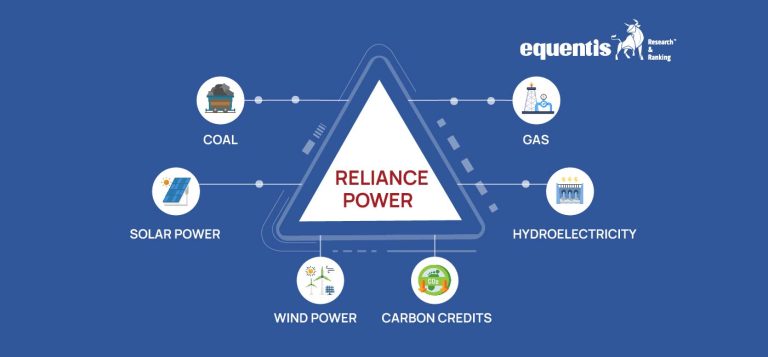
            Reliance Power is an energy generation company involved in the development, construction, and operation of power projects. The company has close to 6000 MW of operational power generation assets with diverse energy projects including coal-fired power plants and hydroelectricity projects located in Arunachal Pradesh and Himachal Pradesh. One of their significant projects is the 3,960 MW Sasan Ultra Mega Power Project in Madhya Pradesh

            Recently, the company diversified into solar and wind energy projects. Reliance Power has a portfolio of 45 MW of wind energy and 140 MW of solar energy projects.

            Reliance Power Management Team

            Shri Anil Dhirubhai Ambani is the Chairman of Reliance Power and the Reliance ADA Group. 

            Shri Ashok Kumar Pal is the Chief Financial Officer and was also appointed as the manager of the company. He is a qualified chartered accountant with more than 23 years of experience in handling accounts, finance, taxation, and other statutory compliance requirements. 

            Smt. Ramandeep Kaur is the Company Secretary and Compliance Officer. She is also appointed as a key management personnel having more than 23 years of experience in secretarial matters with expertise in business strategy, business and corporate structuring, corporate actions. 

            Reliance Power Shareholding Pattern

            AD 4nXexv2xh9RJnWDrvRd16YzshSpddDerRgmbPvULuqPNUcICHj hc2KcJMVCP0HneP6RT9wR8d7OnHrh6mLRG8ivZzCWcEXpovByolQB0PSe 8L7nKnD 9WSm5n9kvZpiVnccvLqTzQ?key=HpoDFISyvUhDySDdciY m3mX

            In the domestic institution segment, LIC holds 2.56% stake in the company, and retail shareholders holding almost half of the company with 49.85% stake. 

            Reliance Power Financial Performance

            Revenue From Operations

            The revenue growth has been flat in the last five years, as you can see in the table below. In FY24, the revenue from operations of the company rose 5% to ₹7,893 crores from ₹7,514 crores in FY23.

            And, in the first half of FY25, revenue from operations declined by 5% to ₹3,752 crores from ₹3,952 crores reported in the same period last year. 

            AD 4nXcrxVlRXhzUB66rM Sk2ItK 2rYae1FwMje5ERCbfTC s7eo0ruPyfA24R7wXfrFH3ABKv8bE9dKSW b9yJ6OOqdhLlYtTHTiJYNQO3wpuqytX5cG5KGCiigTT85VuC6lwzm9ySxQ?key=HpoDFISyvUhDySDdciY m3mX

            Net Loss

            Reliance Power is consistently reporting losses in its operations and in FY24, the losses increased by over 5 times to ₹2,068 crores from ₹403 crores in FY23. 

            However, in the first half of FY25, the company reported a net profit of ₹2,780 crores crores against a loss of ₹534 crores reported in the same period the previous year. The profit during the period is due to an one-time exceptional gains of ₹3,230 crores on account of a deconsolidation of a subsidiary. 

            AD 4nXd4vwsmql KFpX 6AxHxeX LCYPj2DVC7djm2SSgbRCgLeC2n90CuPrhT3be5tvG79jZ5sXBvCiga9QfllDLbBZKt9x56adSIXzqZCs5Zlwhm1JWLdrFfwj75CIWbzz7WRXMHhaA?key=HpoDFISyvUhDySDdciY m3mX

            Key Financial Ratios

            Current Ratio: The current ratio of the company in FY24 was steady at 0.3 times. It indicates that the company’s current assets are insufficient to cover the short term liabilities. 

            Debt-to-equity Ratio: The company’s debt to equity ratio improved marginally to 1.6 times in FY24, compared to 1.8 times in FY23. 

            The net debt of the company reduced from ₹5,391.7 crores in FY23 to ₹4,200 crores in FY24. 

            Debt Service Coverage ratio: The company’s debt service coverage ratio improved to 0.32 times in FY24 from 0.15 times in FY23. 

            Operating Margin: Operationally, Reliance Power is making profits and in FY24, its operating profit margin was 15%. However, it declined from 25% in FY23. 

            Reliance Power Share Price Analysis

            In the last 5 years, Reliance Power share price has shed the tag of being a penny stock and rose by more than 1300%, from ₹3.3 to ₹46.60. Its 52-week high level is ₹54.25. 

            Reliance Power paid zero dividend to its shareholders since it is listed in the stock market

            AD 4nXc JCg3pLmd3IoUCUOm4K9GINmQo7FPMFxmMxqhzhup PQfJQXA3MpY3eGPRmXVzQQddsYYgYUkvMAuSsvO7qzFDAl82taBsqw oqGyGs9kt9c6OHyPrHvpmAexK2wsrWhNJmeg?key=HpoDFISyvUhDySDdciY m3mX
            Source: TradingView

            The rise in Reliance Power share price due to multiple factors that will aid in improving its operational efficiency. Some of the key factors include:

            • Raised ₹1,525 crore in October 2024 through a preferential allotment of equity shares from qualified investors to support business expansion and reduce debt.
            • Settled debt-related disputes worth Rs 3,872.04 crore with CFM Asset Reconstruction related to Vidarbha Industries Power Ltd, thus improving the company’s financial stability.
            • Signed a strategic deal to transfer the development rights of its proposed 1,200 MW Kalai-II hydro-electric project in Arunachal Pradesh to THDC for Rs 128.39 crore, which attracted significant investor attention.
            • General bullish sentiment in the market towards power stocks, driven by tariff hikes in the power sector. 

            The normal valuation metrics will not apply to Reliance Power, since it is a loss-making enterprise. For investors, the key is to look at the growth in earnings in the next few quarters. 

            Reliance Power Share Price Future Growth Outlook

            Debt restructuring, diversifying into renewable energy projects, and general bullish sentiment in power stocks has led to rise in the Reliance Power share price. But, the management is still facing significant challenges in improving the fundamentals of the company. 

            The failure of Reliance Power to emerge as a top power company in India is due to many factors like unrealistic expectations and expensive valuation of the company at the time of IPO, overambitious projects, underplayed fuel supply challenges resulted in power plants going idle, high debt levels, regulatory hurdles, and erosion of credibility in the market. 

            In recent months, the management of the company has shown strong intent to turnaround the company, but it needs to improve its operational efficiency and improve its earnings. The company’s ability to navigate the challenges and capitalize on growth opportunities will be crucial for its long-term success.

            1. How has Reliance Power share price performed in the last 5 years?

              As of 18th December 2024, in the last three, Reliance share price has given returns of 71% annually, rising from ₹3.3 to ₹46.60 per share.

            2. Is Reliance Power a profitable company?

              No, Reliance Power is a loss making company, however, it is operationally profitable, reporting operating profit margin of 15% in FY24.

            3. What type of projects does Reliance Power develop?

              Reliance Power develops and operates a diverse portfolio of power generation projects, including coal-fired, gas-fired, solar, wind, and hydroelectric plants.

            Want to understand the fundamental analysis of ONGC? Read on. ONGC is a leading oil exploration company in India but is struggling in the stock market. In the last 10 years, its share price has returned 1% annually to investors, but it is currently trading below its book value. So, can ONGC’s share price turn around and grow multi-fold? What is its future growth potential?

            This article looks into the fundamentals of ONGC’s share price.

            What Does ONGC Do?

            Oil and Natural Gas Corporation (ONGC) is India’s largest oil & gas exploration and production company with Maharatna status. The company is responsible for over 70% of India’s crude oil and 84% of natural gas production. 

            ONGC also has a strong international presence through its subsidiary, ONGC Videsh, which has projects in multiple countries. Through its subsidiaries, ONGC is present across all the value chains of hydrocarbons, including marketing, refinery, LNG, fuel transportation, etc. ONGC holds a 54.9% stake in Hindustan Petroleum. 

            ONGC Management Team

            Mr. Arun Kumar Singh is the Chairman and CEO of ONGC and the ONGC group of companies. He assumed his role on 7 December 2022 and has a three-year tenure. Mr. Singh has over 37 years of experience in the oil and gas sector and was previously the CMD of Bharat Petroleum. 

            Mr. Om Prakash Singh is the Director (Technology & Field Services) and a mechanical engineer. He has over 36 years of experience in Indian oil and gas exploration and is an expert in deepwater drilling projects in India and abroad. Mr. Singh also chairs various Boards of ONGC subsidiaries. 

            Mr. Pankaj Kumar is the Director (Production) and has over 36 years of experience across ONGC’s business functions. He holds a B.Tech in Chemical Engineering from IIT Roorkee and a Master’s in Process Engineering & Plant Design from IIT Delhi. 

            Ms. Susma Rawat is the Director (Exploration), an industry veteran with over 34 years of experience. She heads the ONGC Carbon Management and Sustainability Group and is also a member of various inter-ministerial committees of NITI Aayog. 

            Mr. Vivek Chandrakant Tongaonkar is the Director of Finance and CFO. He has 37 years of expertise in various roles within the energy industry. He joined ONGC in March 1987 as an Assistant Executive Engineer (Electrical) after graduating from the College of Engineering in Pune. After completing an MBA (Finance) program at Symbiosis Institute of Business Management in Pune, he switched to ONGC’s Finance department. 

            Shareholding Pattern

            AD 4nXfnZnq6iL9AnVpEsj7izvpIhbD TpiwifvBVCHxwEQCo25DVszqdvEW 4dHM9lp6zdFLI94LwaCXvq0uE 6uguvbYpZj6hSLCtHn8hnbKDD7NC0hil5Bu40B69vk6FWosV48f564A?key=bG8h7h4OVNEjJvut0wZUK6iK

            In the Domestic Institution segment, mutual funds hold a 7.94% stake in the company, and LIC holds a 9.29% stake. 

            Financials Performance

            Total Revenue

            In FY24, ONGC group posted a total revenue of ₹6,55,259 crores, lower by 5.4% compared to the previous financial year at ₹6,92,903 crores. 

            And, in the first half of FY25, total income increased by 4.63% to ₹333,359 crores from ₹318,584 crores reported in the same period last year. 

            EBITDA

            In FY24, EBITDA rose by nearly 35% to ₹1,15,057 crore from ₹85,320.8 crore in FY23. 

            AD 4nXdTuDVX5ufFYWCKCfC8akDp1tzgU16u5zPdmdzmvG4Rtpqy68 Dar1Zs oxV w4SmjA8X RT1 iaCXWTeqpnD3dZdWb9xC6 JLXsCkX0

            Profit After Tax

            In FY24, ONGC’s net profit increased by 67.7% to ₹57,101 crores from ₹34,047 crores in FY23.

            In the first half of FY25, net profit declined by 41.5% to ₹19,688.6 crores from ₹33,665.89 crores reported in the same period the previous year.

            The company’s operational and net profit margins were 41.25% and 29.28%, respectively, in FY24.

            AD 4nXdmoZIU wSk7WIB6Jx2gwLzwfFCEjZHH6Xe1468WFhZRaY27GccK2J8sb z BMpJRuXouiOjQ0Ri92uPswLWrsj aVFMZfrM7Rysg1l7v62HUVhMPELG MKNMBz H7sLB0pXSE7eQ?key=bG8h7h4OVNEjJvut0wZUK6iK

            Key Financial Ratios

            • Current Ratio: The company’s current ratio improved to 1.58 times in FY24 from 1.29 times in FY23. 
            • Debt-to-equity Ratio: The company has no debt in its books, so its debt-to-equity ratio is close to zero. 
            • Return on Equity (ROE): The company’s ROE declined by 12.5% to 14% in FY24 from 16% in FY23. 
            • Return on Capital Employed (ROCE): The company’s ROCE declined to 30.60% in FY24 from 39.82% in FY23. 

            ONGC Fundamental Analysis

            In the last five years, ONGC’s share price has traded sideways with occasional price spikes, failing to deliver meaningful returns to its investors.

            ONGC share price reached an all-time high of ₹345 in July 2024, from roughly ₹126 on December 13, 2019. Since then, it has traded with a downward bias.

            AD 4nXcOSKXOZXtht7Qmey BnxQp5OJ9Or17o9UK49 M11eQFWhJVYJhw3FXWc340jXM5ZzsSHfYjeuAEC Lt9HU9jycooi6pPEq9WMpIYkwv87Lce7O rwiUxuFz8pkM8PNl W0mCnpNw?key=bG8h7h4OVNEjJvut0wZUK6iK
            Source: Tradingview

            Being a state-owned and profitable company, ONGC consistently pays dividends to its shareholders, sometimes paying more than 50% of its net profits as dividends. 

            In the last three financial years, the company has paid ₹10.5 in FY22, ₹11.25 in FY23, and ₹12.25 in FY24 as dividends to shareholders. At a current market price of ₹260 per share, the dividend yield is 4.71%. 

            ONGC Share Price Valuation Score

            Earning Per Share (EPS)

            The following is the last five years Earnings Per Share of ONGC:

            FY20₹8.59
            FY21₹12.96
            FY22₹36.19
            FY23₹29.18
            FY24₹39.13

            The company’s EPS growth has been inconsistent, and in recent financial years, it has moderated. It is important to note that a company’s share price rise is driven by its earnings growth.

            Price-to-Book VS Median Price-to-Book

            ONGC’s share price is currently 0.9, trading below its book value. The 5-year median price-to-book value is 0.7, which indicates that the stock has historically traded below its book value.

            AD 4nXd7lKtOo WSFl R6HeW4duk 2Owqz N7aF9pwr 1kuH8HUAJEWD81K3q1hD
            Source: Screener (6th Dec 2024)

            Price-to-Equity VS Median PE

            The current PE ratio is 7.85, meaning investors are paying 7.85 times for every ₹1 of earnings. Looking at the historical averages, ONGC 5 year median PE is 5.7. It indicates that the company shares trade at a lower valuation than its long-term averages. 

            *Note: While stocks with a lower PE may look attractive initially, they indicate that investors are not ready to value the company higher because of its limited growth potential. If you look at all high-growth companies, such as Trent and Zomato, the valuation of them is expensive as they grow at a higher rate than the market, and investors expect to make more money in such stocks.

            AD 4nXdid4PDREn9uhaYHc3Pkq Y3XCvQNlKO7UZ4QiJxrSdLKavZTLORuXXs68bBosLriDvitXcr1GUaShX2b mYofzesf4DjTYDm0FsBuixuF7uVY t7pk6FRhPZC5a1q Ac9ZNg8D?key=bG8h7h4OVNEjJvut0wZUK6iK
            Source: Screener (6th Dec 2024)

            ONGC Share Price What’s Next

            The company’s primary business activity is crude oil exploration and production, and its ability to expand depends on the successful discovery of oil and gas basins. For a very long time, the company has been unable to make major oil and gas discoveries, which has impacted its crude oil production capacity. Supply is depleting from its existing wells.

            AD 4nXfcWmZzsXca5soTl4gGu8sqDyxrnL6RTX CzgLicVskZfrm5J2DBWioT1o0B3N4qcYWpBfVxbPP A7D9H98VPF0I509M3NLMHzugErwx3 88a2d AY7plBKnxTUL8d2GgK6qjN tw?key=bG8h7h4OVNEjJvut0wZUK6iK
            Source: FY24 Annual Report

            The table above shows that the company’s crude oil and natural gas production has consistently declined in the last five years.

            AD 4nXevaaVp2HjS7JiEoxQxf95dOyX lu0r9 hpnRuLxfSZ0fiRni0pZNeeH93QzA3IDjE5HUEyQ4q8sOffNLihrgh mT0l4XkG2twYwswtIWEZjDLkj a87fADkbVrQm1fLUkeLLoe?key=bG8h7h4OVNEjJvut0wZUK6iK
            Source: FY24 Annual Report

            In addition, the company’s proven oil reserves have also declined. In its FY24 annual report, the company stated that there is a natural decline in western offshore oil fields. It will focus on production enhancement by aiming to develop the Eastern Offshore Asset (EOA) early and gradually open wells by FY25.

            Until new game-changing discoveries are made, the company plans to sustain current supply levels by effectively and efficiently managing existing oil fields. 

            As part of its diversification strategy and to improve its financials, ONGC is focusing on developing its petrochemical business, converting crude oil directly to high-value chemical products.

            This Maharatna is also diversifying into renewable energy. By 2030, it will invest close to ₹10,000 crores in establishing 5GW of renewable energy capacity, including solar, wind, biogas, and pump storage projects. On the capex front, ONGC expects to invest between ₹ 33,000 crores and 35,000 crores in FY25, focusing on developing and redeveloping oil and gas fields.

            FAQ

            1. How has the ONGC share price performed in the last 3 years?

              As of 9th December 2024, the ONGC share price has given returns of 21% annually in the last three.

            2. Does ONGC pay dividends to its shareholders?

              ONGC has a consistent track record of paying dividends to its shareholders and has one of the highest dividend yields in the Nifty 50 companies. The company has paid ₹10.5 in FY22, ₹11.25 in FY23, and ₹12.25 in FY24 as dividends to shareholders.

            3. Is ONGC a government company?

              Yes, ONGC is a government company and a Manharatna company. It accounts for nearly 70% of India’s domestic crude oil production and 84% of natural gas production.

            Want to know about the fundamental analysis of JP Power? Read on. Jaiprakash Power Ventures Ltd, additionally referred to as JP Power Ventures, is part of the Jaypee Group. Following several years of repeated losses, the company has returned to profitability, with strong earnings growth. JP Power share price has also shed the image of being a penny stock, and investors are showing more interest in the company. In this article, we will do a fundamental analysis of JP Power’s share price and evaluate its long-term growth prospects. 

            Let’s start. 

            What Does JP Power Ventures Do?

            JP Power Ventures was incorporated on December 21, 1994 and is a part of the Jaypee Group, a diversified infrastructure conglomerate with interests in civil engineering, construction, cement, power, and real estate.

            JP Power Ventures operates both thermal and hydropower plants and has aggregate power generation capacity of 2,200 MW. 

            Some of the notable projects of the company include 400 MW Vishnuprayag hydroelectric project, 500MW Bina thermal power plant, 2×660 MW Nigrie super thermal power project in Madhya Pradesh.

            It has also implemented 1091 MW Karcham Wangtoo hydroelectric project, which is now owned and operated by JSW Energy, 1980 MW Bara Thermal Power Plant, which is now owned and operated by Tata Power, and many others.

            The company is also involved in the business of setting up of transmission lines, coal mining and cement grinding plants to set up power projects and to carry on the business of generating electricity.

            JP Power Management Team

            Shri Manoj Gaur serves as the Chairman (Non-Executive) of the company’s Board. He is an established name in the Indian real estate business, serving as Chairman and Managing Director of Gaurs Group as well as Chairman of CREDAI’s Affordable Housing Committee (National).

            Shri Suren Jain is the Managing Director and CEO of JP Power. He has been with the JP Group since 1993 and has held several high management positions in the group’s company. He has served as the Managing Director of JP Power Ventures since 2007. Shri Suren Jain received his BE degree in Production Engineering from Jawaharlal Nehru Engineering College.

            Shri Madan Gopal Gupta is the Chief Operating Officer of JP Power Ventures and has joined the company in April 2019. He has over three decades of experience in India’s power sector and prior to joining JP Power, he was the CEO of Essar Power. Shri Madan Gupta has received his BE in Mechanical Engineering from NIT, Srinagar. 

            Shri M.K.V. Rama Rao is the Chief Technical Officer of JP Power Ventures and has vast experience in India’s power sector. He has held various positions in NTPC from 1978 to 2013 and has completed his M.Tech in Production Technology from IIT-Kharagpur. 

            Shareholding Pattern

            AD 4nXd0spRhjuicBCbnlc0f8GU0PDv9u4FatKJhS4nuLGFg vUZD32amzUNVw9uRaaQ1xesUDYG3YFKZS7w6VMhQnX2gKxViJBT60ahBOBGIWrMOAPqdz9rED3 Scm25BLA2VT3se91lw?key=txK gnQZaPZ0MoO7nvwmT R

            Jaiprakash Associates is the company’s sole promoter entity, holding a full 24% ownership, with 79.20% of the shares pledged.

            In the domestic institution segment, banks own 16.54% stake of the company, while LIC owns 1.38%. 

            JP Power Financial Review

            Revenue From Operations

            In FY24, revenue from operation increased by 18.66.8% to ₹6,763 crores from ₹5,787 crores in FY23. 

            And, in the first half of FY25, revenue from operations declined marginally by 2.5 % to ₹2,981 crores from ₹3,057.63 crores reported in the same period last year. 

            AD 4nXeJNO G5XiLtInbvPjNtb0XyHJzc85BFYkBm 8qxQfjz7Tccb rJplQpX 02QFXHHssvh8prUyNJWjK5TtWoYIIkgYWvRbIXTg231kL qTmEeJRykJLNhS1TFE5xZ4BLiX0pFqBcw?key=txK gnQZaPZ0MoO7nvwmT R

            Net Profit

            In FY24, JP Power recorded a massive 1758% rise in net profit to ₹1,022 crores, up from ₹55 crores in FY23.

            The rise in net profit in FY24 is due reducing financing cost and one time exception gain of ₹461 crore

            And, in the first half of FY25, net profit increased by 104% to ₹531.20 crores from ₹260.31 crores reported in the same period last year. 

            AD 4nXcUvanpIymvePQDbmzpLhjMtJgBgbq8MZwZHAmTjhaYrXKZUx5LIT1fDrNXVgaAy0 vRwauP9JAAUBX9RmnuRvdI3ZiO a2lt JwEjaWnYF661PpAWZJVhxKlrV49LhHJNIx9EBqg?key=txK gnQZaPZ0MoO7nvwmT R

            Key Financial Ratios

            Current Ratio: The current ratio of the company improved by 53% in FY24 to 1.82 times from 1.19 times in FY23. 

            Debt-to-equity Ratio: During FY24, the company’s debt position improved slightly. The Debt-to-equity ratio of the company in FY24 improved to 0.37 times from 0.44 times in FY23. It was 3 times in FY19.

            Other important metrics in FY24, such as Debt-service Coverage Ratio, Return on Equity, Return on Capital Employed, Return on Asset, and Net Profit Margin, are inflated and non-comparable due to an increase in post-tax earnings from one-time extraordinary gains. 

            JP Power Ventures Debt Status

            At the end of FY24, the outstanding debt (including short and long term) of the company declined by 10.7% to ₹4,242 crores.

            AD 4nXeD 0X7EEorLGy5 e4wspM b50zOEex8LihibSrX6C8nN110 eiLi5eyPZY4r0rx0TsEwUN9lHhl mi2mDTwbmwmNtvaEGeKNM CO8qFhBTZ7X2CKDWkNv808NhVpulS2tufdmwEg?key=txK gnQZaPZ0MoO7nvwmT R

            JP Power Share Price Analysis

            The last five year performance of JP Power share price has been impressive, rising from ₹1.35 to ₹19 in the last five years, registering 1200% gains during the period. 

            JP Power share price all time high level is ₹137, which it made on 4th January 2008. In recent years, the company has stopped paying dividends and the last dividend it paid was in 2009. 

            AD 4nXe VnwGRtZ23maqCZk4STWWFBlhZSKKaBIds3kxOCKEOEXizuoZBAtT7R0r3hCInDBpTyJxeUfrjoyYMPB0jVRXPaQHKGehVDxg7cgr7VooXtS5MNBRIFeoApAnE0HO2j6UIfqc?key=txK gnQZaPZ0MoO7nvwmT R

            Source: Tradingview

            JP Power Share Price Valuation Score

            Earning Per Share (EPS)

            The following is the last five years Earnings Per Share of JP Power:

            FY20– ₹3.16
            FY21₹0.39
            FY22₹0.16
            FY23₹0.08
            FY24₹1.49

            The company’s EPS growth has been inconsistent during the last five years. However, EPS growth has improved over the last two fiscal years. In the first half of FY25, EPS growth reached ₹0.60, up from ₹0.24 the previous year. 

            Price-to-book VS Median Price-to-book

            The current price-to-book value of JP Power is 1.1 times, while the 5 year Media Price-to-book value is 0.6 times, which means, it is trading at slightly valuation compared to historical averages. 

            AD 4nXcj8Wird EJMQb0uwyqLLY20NeRUbxieEc9nNCnOrVy7EmjXosfEeZ5IkZ 4JcaCgq44jtNdwA 1pLBuF0vG25W19vliu6j FP5uO6J0c8dOlr5yun8OVFW9jYsPNKqWYmIlp5I?key=txK gnQZaPZ0MoO7nvwmT R
            Source: Screener (4th Dec 2024)

            EV/EBITDA vs Median EV Multiple

            EV/EBITDA compares a company’s enterprise value (EV) to its earnings before interest, taxes, depreciation, and amortization (EBITDA) to assess its worth and performance. It is an important valuation metric for asset heavy companies. 

            EV includes a company’s stock, debt, cash, and cash equivalents and has been viewed as the better alternative to market capitalization. A lower EV/EBITDA multiple indicates that the company is undervalued relative to its earnings. 

            JP Power EV/EBITDA multiple is 5.6 times, which is lower than the 5 years median EV multiple of 6.9 times. 

            AD 4nXdvtbzrbn96OaeSOvhTpwFdEHZ7GUMZHMGYP5X7lLV3 E8P5bD7a1qArdvA99oHg7srg5TKpBcY3Pamz bfsRkGp29V1PrKziG5hJwxNaI2sBJGH MkmZSSWli3cOuh 2zCUW 9hg?key=txK gnQZaPZ0MoO7nvwmT R
            Source: Screener (4th Dec 2024)

            Free Cash Flow (FCF)

            In the last two financial years- the company has been able to generate free cash flow. It measures the cash generated after accounting for capital expenditure. 

            To calculate free cash flow, we need to deduct capital expenditure incurred during the year from net operating cash flow. 

            In FY24, the net cash flow from operations is ₹1,933 crores and capital expenditure is ₹184 crores, translating to free cash flow of ₹1,749 crores. It was ₹647.52 crores in FY23. 

            Rising free cash flow indicates improved financial health, operational efficiency, and investment potential. 

            JP Power Share Price Future Outlook

            Once a debt-ridden company staring at a bleak future, JP Power has slowly charted a turnaround with improved operational efficiency and better financials. The company in the last few years has steadily worked on to reduce its debt through strategic debt restructuring, selling some of its core and non-core assets, which has helped to improve its finances significantly. 

            Looking at the company’s operational performance, JP Power is able to improve its operational efficiency. 

            However, the hydrology risks in hydro electric plants can reduce their efficiency, which can impact revenue. 

            AD 4nXeUpPAfvsXnMfx0u2B t1qxwXGnTuLZKKJmRYPSN7n6IbS99KkY9q4RxnQHTL lfe9K68SgzlPvnwtEq8ZPYBajUbXMj60RCYYWX6Olh 1 JTcGY7SRG6AzpcgDULo0uvnIdAsMw?key=txK gnQZaPZ0MoO7nvwmT R
            Source: FY24 Annual Report

            Other big risks include ever changing carbon emission norms for fossil fuel based power plants, high volatility in fuel prices for thermal power plants, and lack of long-term PPA with utilities. 

            JP Power has recently received “Right of Exploration” for the Banda (North) Coal Block, where exploration activity is currently underway. This can add to revenue growth of the company. 

            FAQ

            1. How has JP Power share price performed in the last 3 and 5 years?

              As of 4th December, JP Power share price in the last five years rose from ₹1.35 level to reach above ₹20 level, generating 68% compounded annual returns during the period.

            2. Is JP Power a debt free company?

              No, JP Power is not a debt free company. However, debt levels have decreased over the last five years, resulting in reduced interest costs and increased profitability.

            3. Does JP Power pay dividends to shareholders?

              In recent years, due to the financial crisis, JP Power stopped paying dividends to shareholders. The last recorded dividend payment was done in 2009.

            Frequently asked questions

            Get answers to the most pertinent questions on your mind now.

            [faq_listing]
            What is an Investment Advisory Firm?

            An investment advisory firm is a company that helps investors make decisions about buying and selling securities (like stocks) in exchange for a fee. They can advise clients directly or provide advisory reports and other publications about specific securities, such as high growth stock recommendations. Some firms use both methods, like Research & Ranking, India’s leading stock advisory company, specializing in smart investments and long-term stocks since 2015.

            An investment advisory firm is a company that helps investors make decisions about buying and selling securities (like stocks) in exchange for a fee. They can advise clients directly or provide advisory reports and other publications about specific securities, such as high growth stock recommendations. Some firms use both methods, like Research & Ranking, India’s leading stock advisory company, specializing in smart investments and long-term stocks since 2015.

            An investment advisory firm is a company that helps investors make decisions about buying and selling securities (like stocks) in exchange for a fee. They can advise clients directly or provide advisory reports and other publications about specific securities, such as high growth stock recommendations. Some firms use both methods, like Research & Ranking, India’s leading stock advisory company, specializing in smart investments and long-term stocks since 2015.

            An investment advisory firm is a company that helps investors make decisions about buying and selling securities (like stocks) in exchange for a fee. They can advise clients directly or provide advisory reports and other publications about specific securities, such as high growth stock recommendations. Some firms use both methods, like Research & Ranking, India’s leading stock advisory company, specializing in smart investments and long-term stocks since 2015.