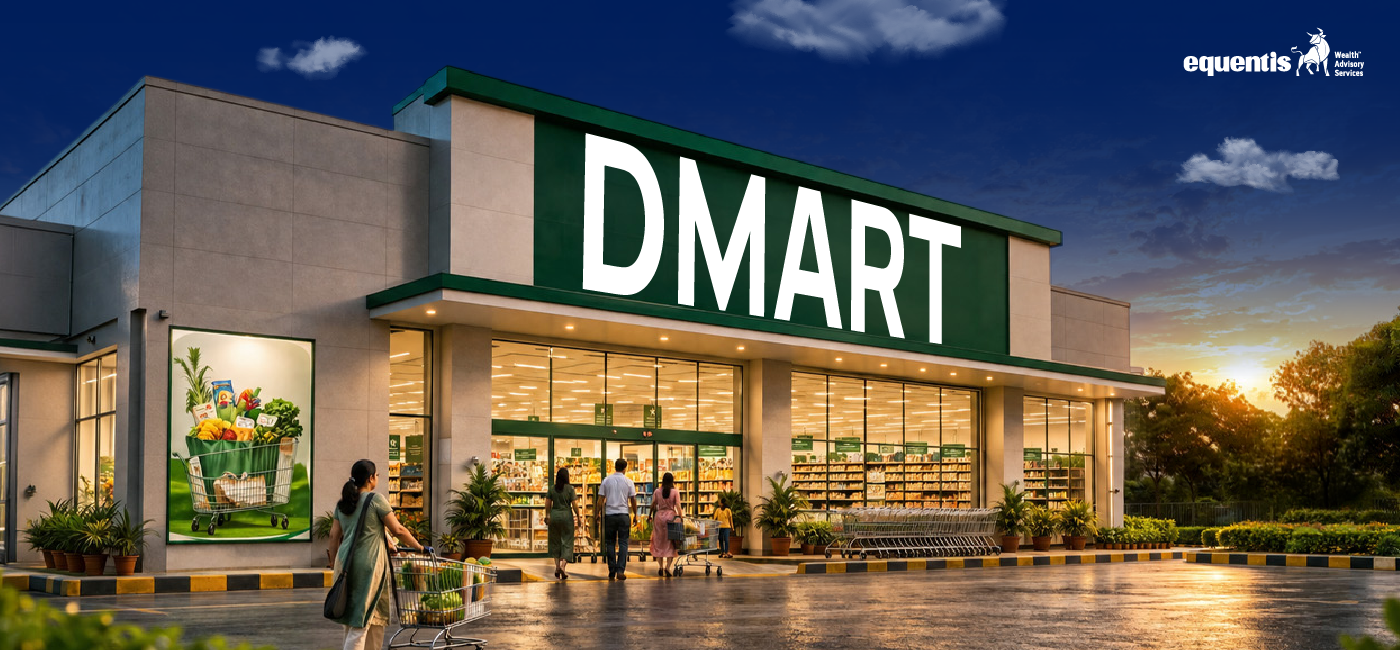

When Indian consumers think about saving money on groceries and household essentials, one name often comes to mind: DMart. Unlike many retail chains that relied on flashy advertising campaigns and celebrity endorsements, DMart quietly built one of India’s most successful retail businesses through consistency, affordability, and customer trust.
Founded in 2002, DMart has grown from a single supermarket in Mumbai to 503 stores across India (as of June 2026), becoming one of the country’s largest and most profitable retail chains. Its journey is not just about expansion but about creating a business model that resonates with millions of middle-class Indian families while delivering consistent financial growth.
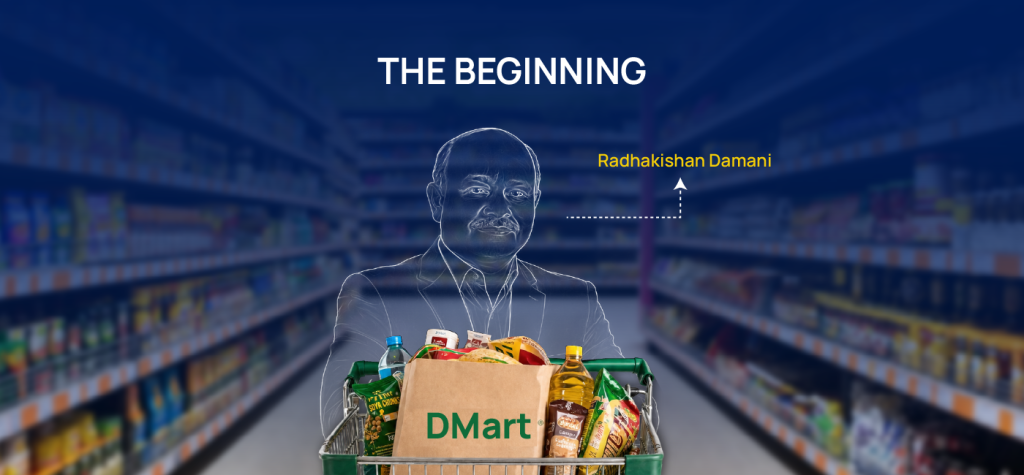
The Beginning: Solving a Simple Consumer Problem
The story of DMart begins with Radhakishan Damani, an investor who understood consumer behavior better than most retailers.
Before launching DMart, Damani observed that Indian families wanted quality products at lower prices but often had to choose between neighborhood stores with limited variety and larger retailers with higher costs.
His vision was straightforward: create a supermarket where customers could buy daily essentials at consistently affordable prices without waiting for seasonal discounts. This philosophy eventually became the foundation of DMart’s famous Everyday Low Cost, Everyday Low Price (EDLC EDLP) strategy.
The first DMart store opened in Powai, Mumbai, in 2002. At a time when organized retail in India was still developing, the concept of offering quality products at permanently low prices helped the brand quickly gain loyal shoppers.
Building Trust Instead of Hype
While competitors invested heavily in advertising and premium store experiences, DMart followed a different path.
The company focused on:
- Offering competitive prices every day
- Buying inventory directly from manufacturers
- Owning many of its retail properties instead of paying high rentals
- Maintaining operational efficiency
- Keeping marketing expenses relatively low
Rather than convincing consumers through advertisements, DMart allowed customers to experience savings themselves.
Families soon began recommending the stores through word of mouth, creating one of India’s strongest examples of organic brand building.
Growth Milestones That Changed Indian Retail
DMart’s expansion has been measured rather than aggressive, ensuring every new store remains profitable.
Some major milestones include:
- 2002: First store launched in Powai, Mumbai.
- 2017: Parent company Avenue Supermarts made a successful stock market debut, attracting significant investor interest.
- FY2026: Added 85 new stores, marking one of the company’s fastest expansion phases.
- June 2026: Expanded its network to 503 stores across India while continuing its disciplined growth strategy.
Today, DMart serves customers across numerous Indian states, offering groceries, apparel, home essentials, kitchenware, personal care products, and more.
Revenue Growth That Reflects Consumer Confidence
One of the biggest reasons behind DMart’s long-term success has been its consistent financial performance. Over the past five years, the retailer has steadily expanded its revenue while maintaining profitable growth, even during periods of inflation, changing consumer spending patterns, and intense competition in the retail sector.
The company’s revenue has grown from around ₹31,000 crore in FY2022 to nearly ₹69,000 crore in FY2026, reflecting a strong and sustainable growth trajectory. Although the pace of growth has gradually normalized after the post-pandemic surge, DMart has continued to deliver healthy double-digit revenue growth, highlighting the strength of its value-focused business model and disciplined expansion strategy.
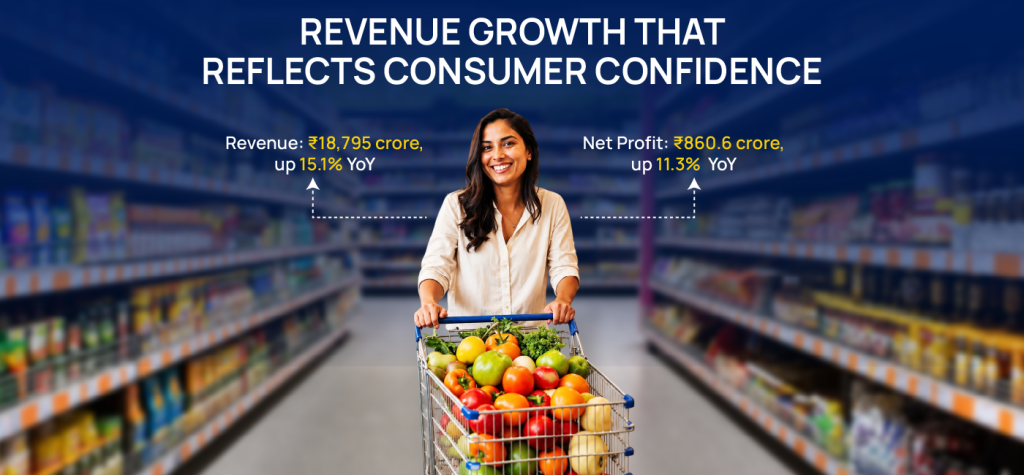
The momentum has carried into FY2027 as well. In the first quarter of FY2027, Avenue Supermarts reported revenue of ₹18,795 crore, marking a 15.1% year-on-year increase, while net profit rose 11.3% to ₹860.6 crore. The performance was supported by steady customer footfall, higher sales from existing stores, and continued expansion of its retail network.
Despite operating in an increasingly competitive retail landscape, DMart has consistently demonstrated its ability to grow sales while maintaining healthy profitability. Its focus on operational efficiency, cost control, and everyday low pricing continues to strengthen customer loyalty and reinforce its position as one of India’s most successful retail chains.
The Marketing Strategy That Rarely Looked Like Marketing
DMart’s marketing strategy differs from that of many modern retail brands.
Instead of relying on expensive television campaigns or influencer promotions, the company focuses on delivering consistent value that encourages repeat visits.
Its strategy revolves around:
- Everyday affordable pricing
- High product availability
- Efficient store layouts
- Fast inventory turnover
- Strong supplier relationships
- Positive customer experiences
The result is high customer loyalty built through trust rather than promotional offers.
This approach has also helped the company maintain relatively healthy operating costs compared to several competitors.
Challenges Along the Journey
DMart’s journey has not been without obstacles.
The COVID-19 pandemic temporarily disrupted retail operations and consumer movement.
More recently, the company has faced intense competition from quick commerce platforms, online grocery services, and expanding retail chains. Rising employee costs, increasing operating expenses, and pricing pressure have also affected margins.
Rather than changing its core philosophy, DMart has continued investing in its physical stores while recalibrating its online strategy through DMart Ready to better compete with rapid delivery platforms. Even amid these challenges, the company continues to expand steadily, supported by its value-driven retail model and loyal customer base.
Creating Cultural Relevance Beyond Retail
DMart has become more than a supermarket chain.
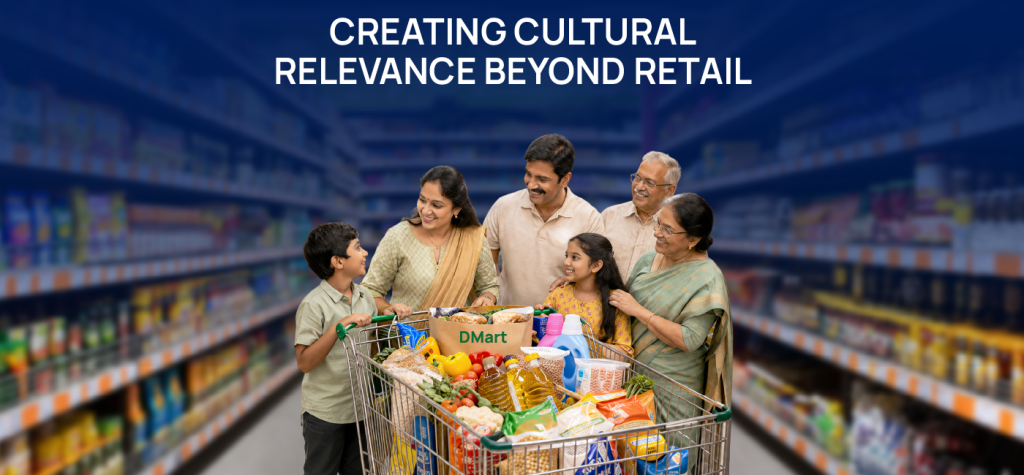
For many Indian households, a monthly trip to DMart has become a familiar routine associated with bulk shopping, family budgeting, and value purchasing.
The brand has earned a reputation for helping consumers stretch household budgets without compromising on product quality. This emotional connection has transformed DMart from a retail destination into a trusted household name.
Unlike brands built around aspiration, DMart built its identity around practicality, reliability, and everyday savings.
The Legacy Continues
DMart’s growth story demonstrates that sustainable business success does not always require aggressive advertising or constant reinvention.
By staying committed to affordability, operational discipline, and customer satisfaction, the company has created one of India’s most admired retail brands.
From a single store in Powai to 503 stores across India, DMart’s journey highlights the power of understanding customer needs and executing a simple idea with remarkable consistency. As India’s organized retail sector continues to evolve, DMart remains a compelling example of how consumer trust, disciplined expansion, and long-term thinking can build a lasting brand legacy.

Parvati Rai is the Vice President of the Research team at Equentis. She has over 15 years of equity-research and strategy-consulting experience. A specialist in deep-dive valuations, financial modelling, and forecasting, she has built research desks from the ground up, by steering buy-side, sell-side, and independent coverage across sectors. When she isn’t fine-tuning models, Parvati unwinds on nature treks and mentors aspiring analysts.