
Summary
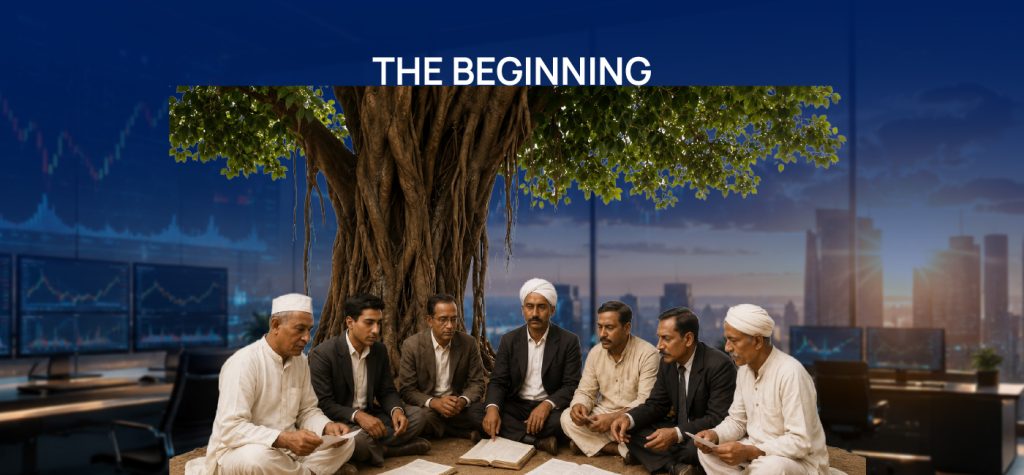
For more than 151 years, BSE has stood at the heart of India’s financial evolution. What started as a small gathering of stockbrokers under a banyan tree in Mumbai has transformed into one of the world’s leading stock exchanges, serving millions of investors and thousands of listed companies. BSE’s journey has been defined by resilience, innovation, and an ability to reinvent itself despite fierce competition. Today, the exchange is not only a symbol of India’s capital markets but also a technology-driven financial institution with a market capitalization exceeding ₹1.57 trillion and record-breaking financial performance. Its story is one of legacy, adaptation, and sustained growth.
The Beginning: A Market Built on Trust
In 1875, a group of stockbrokers in Mumbai formalized what would become the Bombay Stock Exchange. At a time when India’s financial markets were still in their infancy, the exchange provided a structured platform for buying and selling securities.
The exchange quickly became the backbone of India’s corporate fundraising ecosystem. For generations of investors, ringing the BSE opening bell represented hope, opportunity, and economic progress.
Unlike many institutions that fade with age, BSE has continuously evolved alongside India’s changing economy.

Building India’s Financial Foundation
Over the decades, BSE witnessed nearly every major chapter in India’s economic history.
From the industrial expansion after Independence to the economic liberalization of 1991, BSE became the marketplace where India’s largest companies raised capital and investors participated in the country’s growth story.
Several milestones shaped its journey:
- 1875: Established as Asia’s first stock exchange.
- 1957: Recognized by the Government of India under the Securities Contracts Regulation Act.
- 1986: Introduced the BSE Sensex, India’s most widely tracked equity benchmark.
- 1995: Shifted from floor-based trading to electronic trading.
- 2017: Listed its own shares through an IPO.
- Recent years: Expanded rapidly into derivatives, mutual fund platforms, SME listings, commodities, and technology services.
Each milestone reflected one common theme: staying relevant while preserving investor trust.

The Biggest Challenge: Losing Leadership
No great brand succeeds without setbacks.
During the 1990s and early 2000s, BSE faced its toughest challenge with the rise of newer exchanges offering faster technology and greater liquidity.
Trading volumes gradually shifted away from BSE, particularly in derivatives.
Many believed the exchange’s best days were behind it.
Instead of resisting change, BSE chose reinvention.
It invested heavily in technology infrastructure, improved execution speeds, diversified its business model, strengthened corporate governance, and expanded into entirely new revenue streams.
This willingness to evolve became one of the defining moments in the brand’s history.
Reinventing the BSE Brand
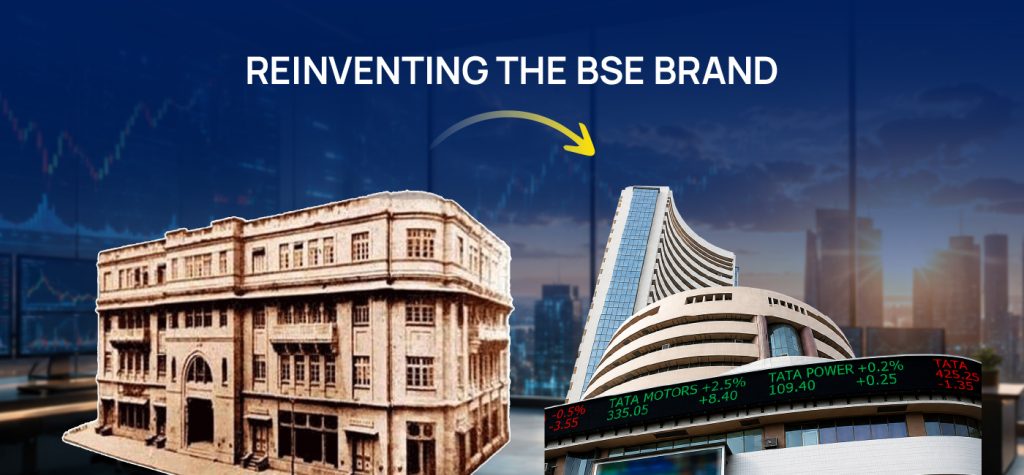
Rather than competing solely on legacy, BSE repositioned itself as a modern financial marketplace.
Its growth strategy is focused on multiple pillars.
Technology First
BSE significantly upgraded its trading systems, enabling high-speed electronic trading capable of handling increasing market volumes.
SME Platform
Recognizing the financing needs of smaller businesses, BSE became one of India’s leading platforms for small and medium enterprise listings, giving emerging companies access to public capital.
Mutual Fund Distribution
The BSE Star MF platform emerged as India’s largest online mutual fund distribution platform, creating a powerful new business vertical beyond equity trading.
Product Diversification
The exchange expanded into derivatives, commodities, indices, data services, and technology solutions, reducing dependence on a single revenue source.
This diversification strengthened the business while making the brand more relevant across India’s financial ecosystem.

Marketing Strategy: Trust Over Advertising
Unlike consumer brands, BSE built its reputation through credibility rather than aggressive marketing.
Its brand strategy is centered on:
- Investor education initiatives
- Financial literacy campaigns
- Strong regulatory compliance
- Transparent governance
- Digital engagement with market participants
- Building confidence among retail investors
The Sensex itself became one of India’s most recognizable financial brands.
Every headline announcing “Sensex crosses a new high” reinforced BSE’s position in the public consciousness.
The exchange transformed from being merely a trading platform into a trusted symbol of India’s economic growth.
Financial Growth That Reflects the Turnaround
The numbers tell an equally compelling story.
BSE has recorded remarkable financial growth in recent years.
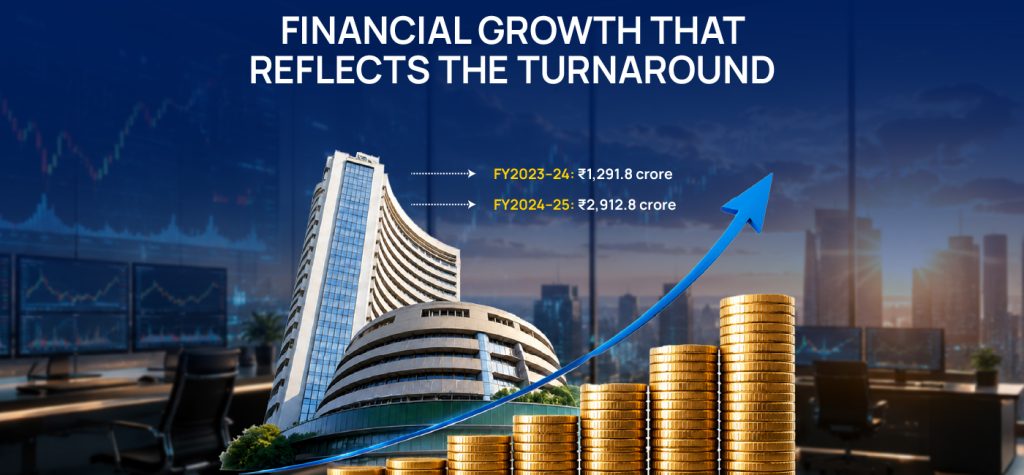
Standalone Revenue
- FY2023–24: ₹1,291.8 crore
- FY2024–25: ₹2,912.8 crore
This represents revenue growth of well over 100 percent in just one year, driven by higher trading activity, new products, listing fees, and technology driven businesses.
The exchange’s market capitalization has also surged dramatically.
From approximately ₹718 billion in 2024, BSE’s market value crossed ₹1.07 trillion in 2025 before reaching around ₹1.55 trillion in 2026, reflecting strong investor confidence in its long-term growth strategy.
This transformation highlights how legacy institutions can generate modern growth through innovation.
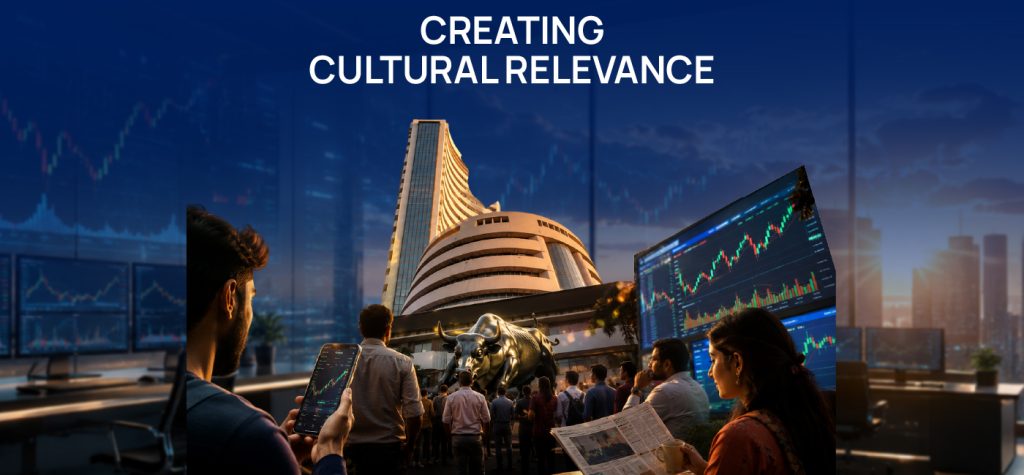
Creating Cultural Relevance
BSE occupies a unique place in India’s financial culture.
For millions of Indians, investing begins with checking the Sensex.
Television news, business newspapers, financial apps, and digital media reference BSE every day.
Its iconic building in Mumbai has become synonymous with India’s stock market.
Beyond numbers, BSE represents aspiration.
Every IPO listed, every milestone crossed, and every market rally contribute to its emotional connection with investors who view participation in the capital markets as a path toward long-term wealth creation.
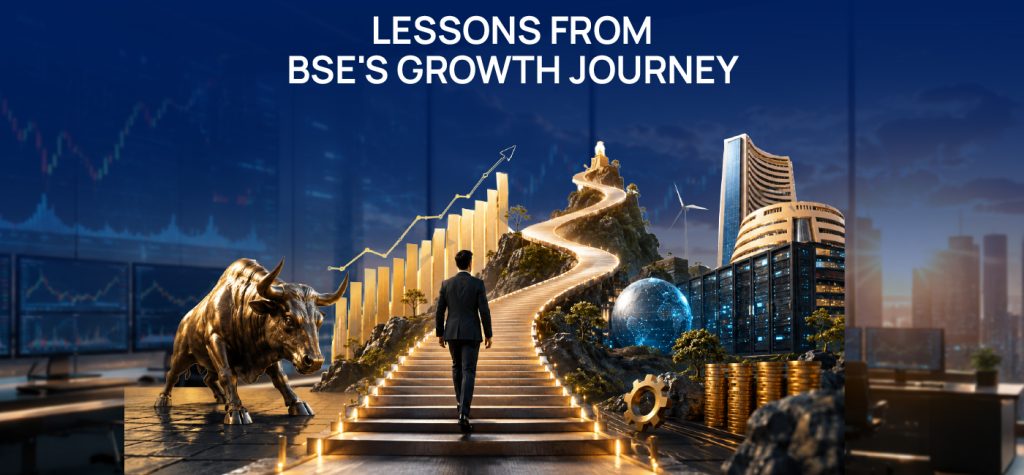
Lessons from BSE’s Growth Journey
BSE’s story offers valuable lessons for businesses across industries.
Legacy alone cannot sustain leadership.
Organizations must continuously innovate, embrace technology, diversify revenue streams, and remain customer focused.
BSE demonstrated that even after losing market share, a brand can regain momentum through strategic reinvention rather than relying on past achievements.
Its recent financial performance reflects years of disciplined execution and investment in future-ready businesses.

Conclusion
BSE’s journey from a gathering of brokers beneath a banyan tree to one of the world’s leading stock exchanges is a story of resilience, transformation, and enduring trust.
For 151 years, it has adapted to economic shifts, technological disruption, and changing investor expectations without losing sight of its core mission of enabling capital formation and wealth creation.
Today, with record revenues, expanding business verticals, strong market capitalization, and a growing digital presence, BSE stands as a powerful example of how heritage and innovation can work together to build a future-ready brand. Its evolution continues to mirror India’s own economic progress, making it not just a financial institution but a lasting symbol of the nation’s growth.

Parvati Rai is the Vice President of the Research team at Equentis. She has over 15 years of equity-research and strategy-consulting experience. A specialist in deep-dive valuations, financial modelling, and forecasting, she has built research desks from the ground up, by steering buy-side, sell-side, and independent coverage across sectors. When she isn’t fine-tuning models, Parvati unwinds on nature treks and mentors aspiring analysts.