
There was a time when video games were largely treated as entertainment for a niche audience. Rockstar Games helped change that perception.
In 1998, a new label emerged with an unconventional philosophy: games did not have to behave like traditional games. They could be provocative, cinematic, emotionally complex and culturally relevant. Nearly three decades later, Rockstar has become one of the most recognizable names in global entertainment, with Grand Theft Auto and Red Dead Redemption evolving from successful franchises into cultural phenomena.
The story of Rockstar is therefore not simply about selling video games. It is about building a brand that understands attention, anticipation, storytelling, and consumer loyalty better than almost anyone in the industry.
Today, Rockstar operates as a publishing label of Take-Two Interactive Software, alongside 2K and Zynga. Take-Two reported $6.66 billion in net revenue for fiscal 2026, up from $5.63 billion in fiscal 2025, while its fiscal 2027 outlook calls for $8.0–$8.2 billion in Net Bookings.
But the numbers only tell part of the story.
The Beginning: A Brand Built to Break the Rules
Rockstar Games was established in 1998 after Take-Two acquired assets from BMG Interactive, including DMA Design and the Grand Theft Auto franchise.
Instead of trying to make games that appealed to everyone, Rockstar embraced a different positioning. Its products were edgy, mature, humorous and frequently controversial.
That positioning was risky—but it gave the brand something extremely valuable: personality.
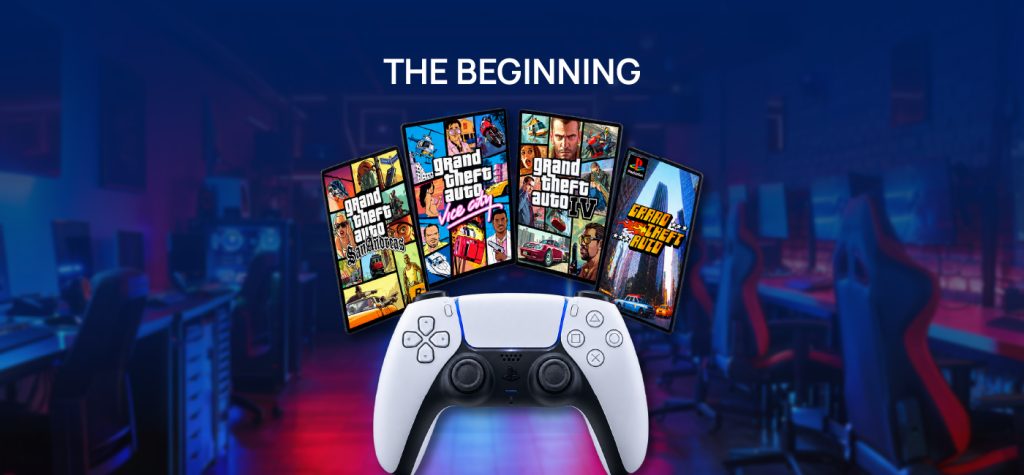
The early Grand Theft Auto games established the foundations, but Grand Theft Auto III in 2001 changed everything.
It introduced players to Liberty City as an expansive, interactive world where they could choose how to experience the game. Rockstar was no longer simply creating software. It was creating worlds people wanted to enter.
Vice City, San Andreas, and later Grand Theft Auto IV continued that formula, turning GTA into one of the most influential entertainment properties of its generation. Take-Two describes the franchise as one of the biggest-selling and most influential properties in modern entertainment.
The Growth Strategy: Quality Over Quantity
One of Rockstar’s most important strategic decisions was refusing to behave like a conventional publisher.
Instead of releasing dozens of games every year, Rockstar focused on a smaller number of highly ambitious projects.
That approach created a powerful cycle:
Long development → high expectations → massive anticipation → blockbuster launch → years of engagement.
This strategy was reinforced through other franchises.
Red Dead Redemption proved Rockstar could create commercially successful experiences outside GTA. Red Dead Redemption 2 took that philosophy even further, delivering a deeply detailed world and an emotionally driven narrative.
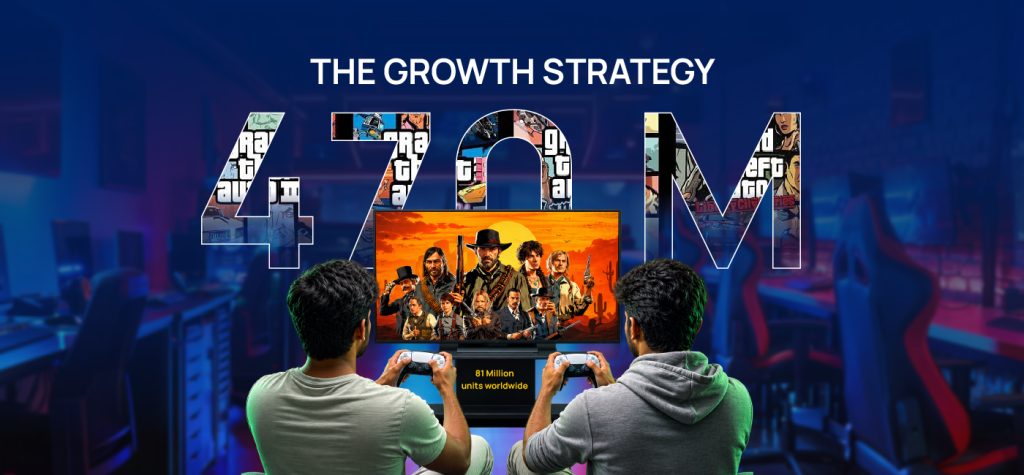
By 2026, the Red Dead Redemption franchise had sold more than 81 million units worldwide, while the Grand Theft Auto series had surpassed 470 million units globally.
The lesson for business leaders is important: Rockstar built brand equity by making every major release feel significant.
Grand Theft Auto V: The Moment the Business Model Changed
Then came 2013.
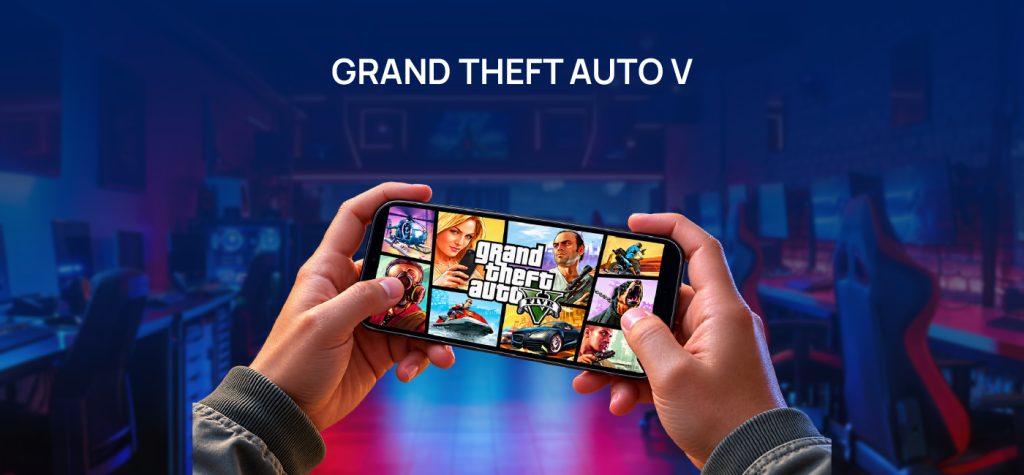
Grand Theft Auto V was not simply another sequel. It became the foundation for one of the longest-running commercial success stories in entertainment.
The game combined a cinematic single-player campaign with Grand Theft Auto Online, allowing Rockstar to transform a traditional game purchase into a continuously evolving consumer relationship.
The strategy was remarkably simple in principle: keep giving players reasons to return.
New content, online events, updates, virtual goods, and memberships helped extend the commercial life of the franchise far beyond the traditional launch window.
The results were extraordinary.
As of August 2026, Grand Theft Auto V has sold in more than 230 million units worldwide. The GTA series also continues to generate recurring consumer spending, with the franchise’s recurrent consumer spending growing 3% in the latest reported quarter.
What Rockstar created was more than a successful product.
It created an ecosystem.
Turning Anticipation Into a Marketing Weapon
Perhaps Rockstar’s most fascinating marketing strategy is what it does before a game launches.
The company understands that scarcity can create desire.
Rockstar does not need to release endless advertisements to maintain consumer attention. A logo, trailer, screenshot, or announcement can generate enormous global discussion.
The announcement of Grand Theft Auto VI demonstrated this perfectly.
Rockstar’s first trailer became a major cultural event, while the long gap between major GTA releases intensified speculation and anticipation.
The company has effectively turned waiting into marketing.
And the strategy is still working.
In June 2026, Rockstar opened pre-orders for Grand Theft Auto VI, announcing a November 19, 2026 launch. The company positioned the title as the biggest and most immersive evolution of the GTA series yet.
By August, Take-Two said GTA VI had already made an exceptional start to pre-orders and that consumer anticipation continued to build.
For marketers, this represents a powerful example of earned attention. Rockstar creates a product so culturally important that consumers, media outlets, creators, and online communities effectively become part of the marketing machine.
The Numbers Behind Rockstar’s Business Impact
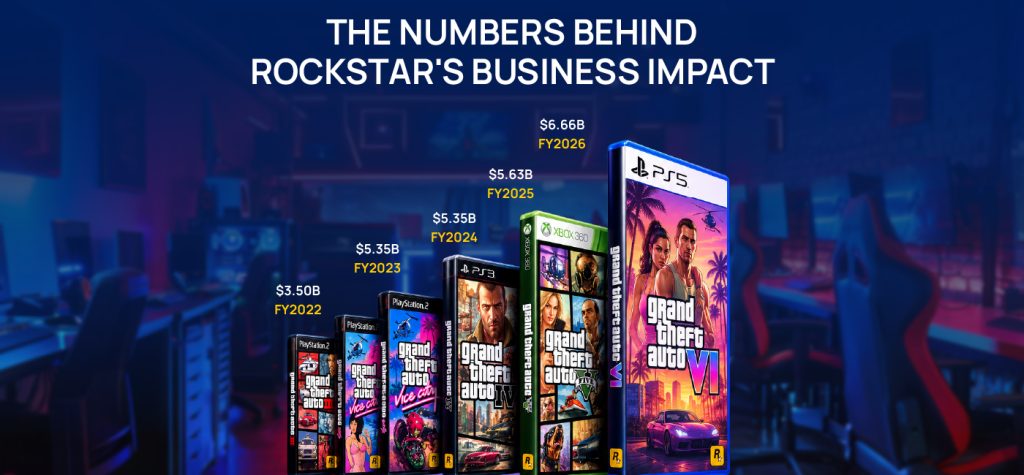
Because Take-Two does not report Rockstar as an independent financial segment, Rockstar’s exact annual revenue is not publicly disclosed. However, Take-Two’s financial results provide an important picture of the broader business in which Rockstar is a major contributor.
Take-Two’s fiscal 2023 revenue jumped 52.6%, although the comparison was significantly influenced by the company’s combination with Zynga.
Fiscal 2024 then remained essentially flat at $5.35 billion, while fiscal 2025 rose to $5.63 billion.
In fiscal 2026, revenue climbed another 18.2% to $6.66 billion. Importantly, Take-Two reported that revenue from the Grand Theft Auto franchise increased by $115.1 million year over year.
The broader business is also increasingly digital. In fiscal 2026, 97% of Take-Two’s net revenue came through digital online channels, demonstrating how the industry has moved from physical products toward digitally delivered and continuously monetized entertainment.

Building Consumer Connection Through Live Experiences
Rockstar’s relationship with consumers has also evolved.
The company once sold boxed games. Today, its ecosystem can include the initial game, online multiplayer, downloadable content, memberships and years of post-launch engagement.
Take-Two reported that recurrent consumer spending represented 78.1% of total net revenue in fiscal 2026, highlighting how important ongoing consumer relationships have become across the portfolio.
For Rockstar, GTA Online has been central to this evolution.
The brand does not simply ask consumers to buy another game. It gives existing players reasons to remain inside its world.
That distinction is crucial.
The product creates the relationship; the ecosystem extends it.
Challenges: When Success Creates Pressure
Rockstar’s success has also created its biggest challenge: expectations.
When a studio produces some of the industry’s most successful games, every subsequent release must compete with its own legacy.
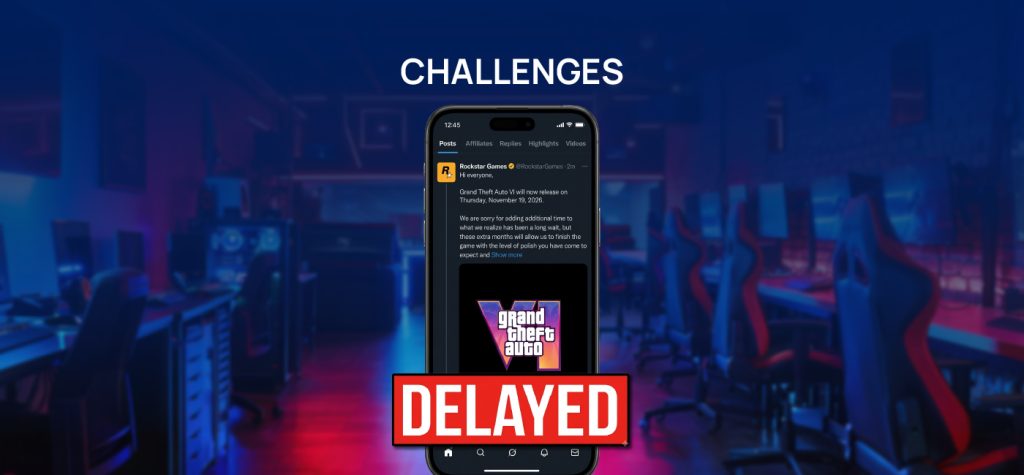
Development delays, controversies surrounding mature content and the enormous expectations surrounding GTA VI have all created pressure.
Yet Rockstar has consistently defended its long-development philosophy.
The decision to delay GTA VI from its earlier planned release window to November 2026 demonstrates that the company is willing to prioritize its creative ambitions rather than rush a flagship product to market. Take-Two has publicly supported Rockstar taking additional time to realize its creative vision.
That may be one of the brand’s most important competitive advantages.
Rockstar would rather make consumers wait than make them disappointed.
Rockstar’s Current Impact: A Brand Bigger Than Gaming
Today, Rockstar represents something much larger than a video-game publisher.
Grand Theft Auto has become part of popular culture. Its characters, cities, music, humor and social commentary have crossed into mainstream conversations.
Red Dead Redemption demonstrated that games could tell emotionally sophisticated stories capable of creating lasting connections with players.
And GTA V demonstrated that a game could remain commercially relevant for more than a decade.
This is why Rockstar’s brand legacy matters to business readers.
Its success demonstrates the power of several principles:
- Distinctive positioning can be more powerful than trying to appeal to everyone.
- Quality can create scarcity, and scarcity can create demand.
- Strong intellectual property can compound in value over decades.
- Communities can become a powerful marketing engine.
- Live services can turn transactions into long-term relationships.
- Cultural relevance can strengthen commercial performance.
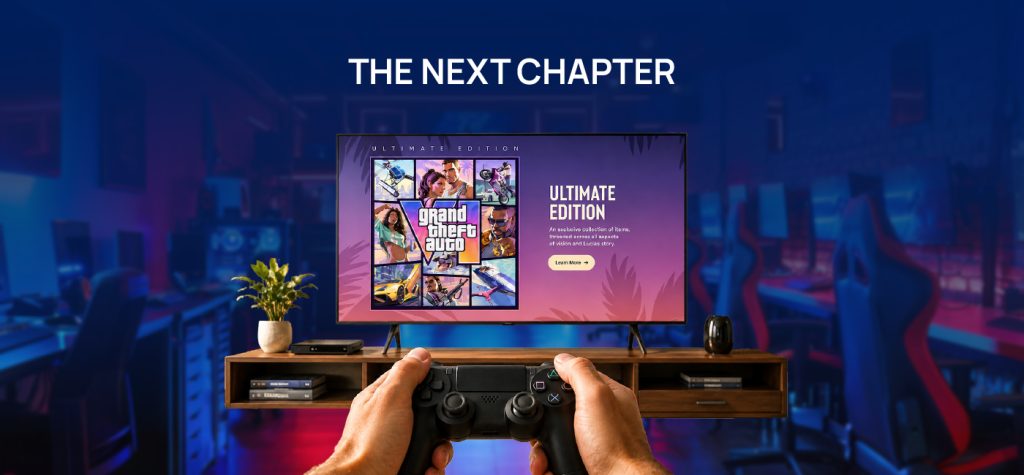
The Next Chapter: GTA VI and the Future of the Rockstar Brand
Now Rockstar stands at another defining moment.
Grand Theft Auto VI is scheduled for November 19, 2026, and Take-Two’s fiscal 2027 outlook of $8.0–$8.2 billion in Net Bookings reflects the enormous expectations surrounding its pipeline and the GTA VI launch.
The next chapter will test whether Rockstar can repeat the extraordinary success of GTA V while redefining what a modern open-world entertainment experience can become.
But regardless of what happens next, the larger journey is already remarkable.
Rockstar began in 1998 with a rebellious identity and a willingness to challenge conventional thinking. It grew by creating worlds rather than simply products, built loyalty through storytelling, turned controversy into conversation, and transformed anticipation into one of the industry’s most powerful marketing assets.
Its greatest achievement may therefore not be any single game.
It is the brand legacy itself.
Rockstar has taught the entertainment industry that when consumers feel emotionally connected to a world, they do not simply purchase it—they talk about it, return to it, share it and wait for what comes next.
And after 28 years, millions of players and hundreds of millions of games sold, Rockstar’s story is still being written.

Jaspreet Singh Arora is the Chief Investment Officer at Equentis, where he heads a seasoned team of equity analysts and turns two decades of market experience into portfolios that consistently beat the benchmark. A go-to voice on cement, building-materials, real-estate, and construction stocks, Jaspreet previously ran research desks at leading brokerages, honing an eye for the metrics that truly move share prices. His plain-spoken analysis helps investors cut through noise and act with conviction. When he’s not deep-diving into earnings calls, you’ll find him unwinding over sports, weekend cricket or a good history podcast.