Fundamental Analysis of Stocks

Fundamental analysis of stocks based on the quarterly and annual reports of the companies.

Introduction

MRF recently reached a significant milestone in the Indian stock market. The share price surpassed the distinctive ₹1 lakh mark, making it the first Indian company to achieve this considerable feat.

MRF share price has increased by a CAGR of 22% in the last ten years, from ₹12,933 on 21st June 2013 to ₹1,00,081 on 15th June 2023.

Let’s check out what contributed to the phenomenal rise of the company and its future growth potential.

MRF Company Journey

  • 1946: The journey to becoming India’s most preferred tyre company is unusual. Madras Rubber Factory, or MRF, started as a toy balloon manufacturing unit in 1946 by K.M. Mammen Mappillai in Madras and was primarily involved in manufacturing latex cast toys, gloves, and contraceptives.
  • 1952: However, in 1952, they ventured into manufacturing tread rubber and soon became the leader in the space with a market share of 50%.
  • 1961: With successful technical collaboration with the Mansfield Tire & Rubber Company in the US, it launched its first tyre in 1961. 
  • 2000: It became a big player in India’s four- and two-wheeler tyre manufacturing and started exporting tyres.
  • 2011: The company also participated in rallies and motorsports to showcase its tyres’ sturdiness and stability. By 2011, it had a sales turnover of $2 billion.
  • 2013: The company’s Aero Muscle tyres became the only tyre manufactured by an Indian company to be selected by the Indian Air Force for their Sukhoi 30 MKI jets.

MRF Company Analysis

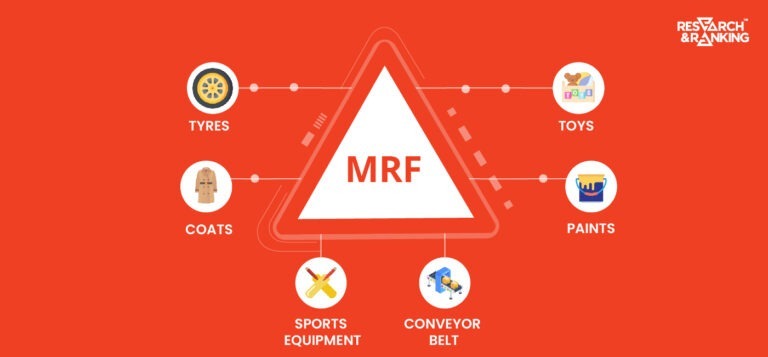
The company has ventured into various business activities, including manufacturing toys, tyres, sports goods, wall paints and coats, and other tyre-related services. Because it primarily manufactures tyres, tubes, flaps, and tread rubber, it does not divide its income into various segments and has only one operating segment.

However, it has classified its business into three categories based on products:

  • Automobile Tyres
  • Automobile Tubes
  • Others

MRF Management Profile

  • The Mammen family members run the company, and Mr. K.M Mammen serves as Chairman and Managing Director. He is the third generation of the Mammen family to take over the reins of the business.
  • Mr. Arun Mammen is the Vice Chairman and Managing Director.
  • Mr. Rahul Mammen Mappillai is the Managing Director, and Mr. Varun Mammen is Whole Time Director.
  • Mr. Madhu P Nainan is the Vice President of Finance

MRF Shareholding Pattern

image

MRF Financials

Revenue

In FY23, MRF reported a 19.1% growth in revenue from operations at ₹23,008.5 crores from ₹19,316.72 crores in FY22.

image 1

Net Profits

In FY23, MRF posted a 26% growth in net profits from continuing operations at ₹816.23 crores compared to ₹647.34 crores in FY22.

image 2

Key Financial Ratios

  • Operating Margin: MRF’s operating margin for FY23 stands at 4.82%, compared to 4.27% in FY22.
  • Net Profit Margin: In FY23, MRF’s net profit margin was at 3.58%, compared to 3.35% in FY22.
  • Current Ratio: MRF’s current ratio for FY23 stands at 1.22 times, down from 1.45 times in FY22.
  • Debt-to-equity Ratio: MRF has negligible debt on its book at 0.07 times in FY23, compared to 0.08 times in FY22.

MRF Share Price History

The company became public limited in April 1993, and each share traded for around ₹11 then. today, in less than 25 years, MRF share price hit the ₹50,000 mark on 26th April 2016. And it took another seven years to double its share price.

image 3
Source: Trading View

Over 10 years, MRF share price has given a CAGR return of 23%, rising from ₹12,700 on 1st January 2013 to ₹1,00,020 on 12th June 2023. The company has a consistent track record of paying dividends, and in the last three years, it has paid ₹1,000 in 2020, ₹1,470 in 2021, and ₹1,500 in 2022. As of 12th June 2020, it had a market cap of around ₹42,437 crores.

Factors Contributing to Becoming India’s First ₹1 lakh Stock

It was not by chance or coincidence that the company became India’s first ₹1 lakh stock. There are numerous factors at work.

A Big No to Stock Split

The management took a strategic decision not to split the share. Unlike many businesses that opt for stock splits as their share prices skyrocket, MRF took a different path to maintain accessibility for retail investors and uphold liquidity in the stock. This move allowed the company to keep speculators and traders away from the stock and attract only long-term investors.

Low Outstanding Shares

There are only 42.4 lakh shares in circulation, which is too less compared to other companies with similar market caps. Indian Railway Finance Corporation (IRFC) has a comparable market cap of ₹43,322 crores as of June 19, 2023, but its shares are trading at ₹33.10 per share as it has issued a total of 1306.8 crore shares.

HDFC Bank, the most valuable bank in the Indian stock market, has a market cap of ₹8.99 lakh crores and has 558.9 crore shares in circulation. If we adjust the share price of HDFC Bank with 42.4 lakh shares, the price of each share would be around ₹21 lahks.

So, MRF may be the priciest share in the Indian stock market but not the most valuable share.

MRF Share Price Target Growth Potential

So, will MRF maintain its momentum and add the next lakh to its share price?

It’s difficult to predict. The positive thing about MRF is that it has maintained its leadership position in the domestic tyre industry despite new players in the market. Its revenue market share stood at 25% in FY22, indicating the same. A strong brand image combined with a diversified product portfolio and wide distribution network favors MRF.

Company Key Risks

Factors like raw material price volatility, the cyclicality of the automotive industry, strong ESG concerns, and competition from global and domestic players are the company’s key risks. One of the biggest concerns is low operating and net profit margins in the lower single digit.

However, the next price increase in share price could depend on how margins expand due to the recent CAPEX for capacity addition.

*Disclaimer Note: The securities quoted, if any, are for illustration only and are not recommendatory. This article is for education purposes only and shall not be considerea d as recommendation or investment advice by Research & Ranking. We will not be liable for any losses that may occur. Investment in securities market are subject to market risks. Read all the related documents carefully before investing. Registration granted by SEBI, membership of BASL, and certification from NISM in no way guarantee the performance of the intermediary or provide any assurance of returns to investors.

FAQs

Will MRF split its share?

The management is strongly against the split of shares. It has strategically decided to keep the share price high to keep speculators and traders away and reduce price volatility.

How has MRF share price performed in the last 10 years?

As of 19th June 2023, MRF share price in the last 10 years has given a CAGR return of 23%.

When was MRF established?

Madras Rubber Factory was established in 1946 in Madras as a toy balloon manufacturing unit by K.M. Mammen Mappillai. It was primarily involved in manufacturing latex-cast toys, gloves, and contraceptives.

Read more:  How Long-term investing helps create life-changing wealth – TOI

Dabur has been a household name in India’s FMCG sector for over 100 years. It has successfully transitioned from a family-run business to a professionally managed company with the world’s largest herbal and natural product portfolio.

In this article, we will analyze the company and understand its long-term. potential and impact on Dabur share price.

Dabur Company Journey

Dr. S.K Burman founded Dabur intending to provide an effective and affordable cure for common diseases in rural parts of the country. A timeline of how it has become a leading FMCG company in India.

History of Dabur

Business Overview of Dabur

Dabur has expanded into multiple FMCG segments and presence in 120 countries. The group began simplifying its business activities and management based on its product mix in 1996, with the creation of three separate divisions- Healthcare, Products Division, and Family Product Division & Dabur Ayurvedic Specialties Limited.

Dabur currently operates in the three business segments listed below:

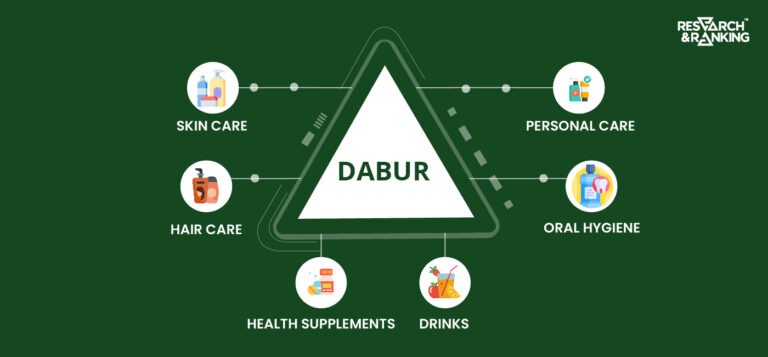
  • Consumer care business: Includes home care, personal care, and health care
  • Food business: Juices, beverages, and culinary
  • Other segments: Guar gum, pharma, and others

Dabur Management Profile

Dabur is a professionally managed company led by CEO Mr. Mohil Malhotra. He joined the company in 1994 as a management trainee. Mr. Malhotra is a passionate advocate and is responsible for the company’s strategic direction and continued growth.

Mr. P.D Narang is the Group Director and has played an instrumental role in the growth of the company. He is the first Dabur employee to be elevated to the rank of Director. Mr. Narang is a Chartered Accountant and was behind the company’s successful IPO and has led several new ventures like Aviva Life Insurance and other overseas acquisitions.

Mr. Ankush Jain is the Chief Financial Officer and has varied experience in some of the large global MNCs. He is a Chartered Accountant and Company Secretary by profession and oversees all things related to financial matters across Dabur’s operations spanning five continents.

Mr. Biplab Bakshi is the Chief Human Resource Officer, and Mr. Rahul Awasthi is the Head of Operations, looking after the supply chain, manufacturing, procurement, packaging, and quality assurance functions across the globe.

Dabur Shareholding Pattern

image 36
*Source: Dabur investor information, shareholding pattern as of 31st March 2023

Dabur Company Analysis

Revenue

In FY23, Dabur’s revenue from operations came in at ₹11,530 crores, up by 5.9% compared to the previous fiscal at ₹10,889 crores. During the year, 25.1% of sales revenue came from international markets, while 71.3% came from domestic markets. The consolidated revenue in the last three years has grown at a CAGR of 10%.

image 34

Segment Revenue Breakup

 FY21 (in ₹ cr.)FY22 (in ₹ cr.)FY23 (in ₹ cr.)
Consumer care business8402.979193.769,261.51
Food business984.731461.281,918.56
Retail business57.3077.19110.96
Other segments94.43123.36137.53

EBITDA

 FY19FY20FY21FY22FY23
EBITDA  (in ₹ cr.)2035.72097.72327.926472609.5
EBITDA Margin23.9%24.1%24.3%24.3%22.6%  

Segmental Profit Before Interest Cost, Amortisation, and Tax

 FY21 (in ₹ cr.)FY22 (in ₹ cr.)FY23 (in ₹ cr.)
Consumer care business2066.52218.192041.76  
Food business130.66228.15313.56
Retail business-9.94-3.73-1.25
Other segments7.349.5416

Net Profit

 FY19FY20FY21FY22FY23
Net Profit  (in ₹ cr.)1442.314451693.31739.21707.2
Net Profit Margin16.9%16.6%17.7%16%14.8%

Dabur Key Financial Ratios

Current Ratio: At the end of FY23, Dabur’s current ratio decreased marginally to 1.18 times from 1.30 times in FY22.

Debt-to-equity ratio: On 31st March 2023, Dabur’s debt-equity ratio stood at 0.13 times.

Interest service coverage ratio: The company’s interest service coverage ratio is 33.35 times at the end of 31st March 2023.

Dabur Share Price History

The company launched its IPO in the year 1994, and the issue was oversubscribed by 21 times despite its high premium. Since its listing, Dabur has announced four bonus issues, and its equity shares were split once in the ratio of 1:10.

Also, it has a consistent track record of paying dividends to its shareholders. In the last three years, it has paid dividends of ₹3.3 in 2020, ₹5.5 in 2021, and ₹5.2 in 2022. 

image 35

Dabur’s share price has increased at a CAGR of 14.98% over the last decade, rising from around ₹136.10 in May 2013 to ₹550 on June 9, 2023. It reached an all-time high level of ₹658.95 on 1st September 2021. As of 9th June 2023, its market cap was ₹97,453 crores.

Dabur Fundamental Analysis

Over the years, the company has expanded both its product portfolio and geographical coverage diversifying it to target the high-growth areas of the FMCG industry. While the company’s domestic business witnessed a growth of 6.2% in FY23, the international business grew by 11% in constant currency terms.

Consumer Care Segment

The segment includes home care, personal care, and health care businesses and is the cash cow of the company. It has brought in a little over 80% of the group’s revenue in FY23. Revenue from Digestives, Home Care, Oral Care, and Shampoo witnessed strong growth in FY23. The Home Care division that houses products like Odomos, Odonil, and Sanifresh has recorded double-digit revenue growth at 23% in FY23.

Digestives, Oral Care, and Shampoo have recorded revenue growth of 10.4%, 5%, and 8%, respectively, in FY23. The Health Supplements and OTC & Ethicals division has witnessed revenue degrowth of 12.4% and 4.2%, respectively, in FY23.

Food & Beverages Segment

The food and beverages segment is a high-growth segment and continues to be on a strong trajectory. In FY23, revenue increased by 30% in the Beverages segment and 28% in the Foods segment.

Its Real juice and fruit drinks product portfolio saw a market share gain in FY23, and 3-Y CAGR revenue growth is 22%. In the last three years, the foods business, which includes Hommade cooking paste and purees, has grown at a 20% CAGR. The addition of Badshah Masala to the Foods portfolio is also adding momentum to growth.

Dabur’s Acquisition of Badshah Masala

It was a strategic acquisition made to foray into the ₹25,000 crores branded spices and seasoning market and expand its Foods business to ₹500 crores in three years. Dabur acquired a 51% stake in Badshah Masala for ₹587.52 crores. The remaining 49% stake will be acquired in the next five years.

Dabur Share Price Growth Potential

Indian FMCG Market

The country’s organized FMCG market was valued at $110 billion in 2020 and is expected to grow at a CAGR of 27.9% from 2021 to 2027, reaching nearly $615 billion.

If we look at the demographic divide, in 2022, the urban segment contributed 55% of the total FMCG sales, and the remaining came from rural India. And the Indian processed food market is projected to expand to $470 billion by 2025, up from $263 billion in FY20.

Favorable government policies like the Production Linked Incentive Scheme for the Food Processing Industry, FDI liberalization, and growth of online grocery commerce are contributing to the growth of the Indian FMCG market.

Dabur Growth Trajectory

Dabur’s FY23 has been a mixed bag due to an uncertain business environment in the first half of the fiscal year. The volume growth was almost flat in Q4FY23 at 1% compared to a degrowth of 3% in the previous quarter. Operating margin during the quarter also contracted by 270 bps to 15.3%, the lowest in the last 35 quarters.

Factors like high raw material inflation, unfavorable product mix, higher sales of low-value packs in the domestic market, higher expenses, and lackluster rural demand have hurt volume growth in the current fiscal. Despite the challenging business environment, the company may benefit from the growth of the Indian FMCG market. As per the recent management commentary post the release of Q4FY23 results, here are the key takeaways:

  • The company expects the country’s central, eastern, and western regions to perform well, while the southern region is unlikely to perform as well.
  • It expects high double-digit growth in the Foods segment, while the Healthcare and Home and Personal Care (HPC) segment is likely to experience high single to lower doubt-digit growth in the next 4 to 5 years.
  • It expects to improve the operating margin to 19-19.5% in FY24 and further to 20% in the medium term. Further, the company wants to balance its portfolio mix with the Foods business contributing 20%, Healthcare 30%, and HPC 50% to the revenue.
  • The company aims to grow in the coming years by increasing volume, improving penetration, and concentrating on eight core brands to grow.

Aiming Big on Food & Beverages (F&B) Segment

Dabur expects the food portfolio to reach revenue of ₹500 crores in FY24 and ₹1000 crores in the next five years. While revenue from the beverages portfolio currently stands at ₹200 crores, the company intends to increase it to ₹1000 crores over the next five years.

For the Badshah portfolio, Dabur aims to initially focus on developing the Andhra Pradesh, Gujarat, and Maharashtra markets before expanding to pan-India. Overall, in the next five years, Dabur intends to take the total size of F&B vertical to around ₹4000-5000 crores.

In contrast to other FMCG players, such as HUL and ITC, which operate in mass market areas with similar product portfolios, Dabur’s product portfolio is entirely different and operates in niche segments such as Ayurveda. Therefore, Dabur may scale at a different pace compared to its peers.

The key triggers for the Dabur share price increase will be the revival of rural demand, strong volume growth, and expansion of profitability margins.

Key Risks for Dabur

  • El Nino: The chances of El Nino are higher in the current fiscal. A rainfall deficit could impact the recovery of rural demand or push back the recovery in demand by a few quarters.
  • Entry of New Players: Reliance’s entry into the grocery retail market will likely disrupt the country’s current dynamics of the FMCG ecosystem. It is getting deeper into distribution by selling both owned and national brands, working with Kirana stores as its JioMart delivery partner, and developing its own private labels by acquiring regional and national brands. It may impact Dabur’s urban demand and mostly F&B and HPC segments.

*Disclaimer Note: The securities quoted, if any, are for illustration only and are not recommendatory. This article is for education purposes only and shall not be considerea d as recommendation or investment advice by Research & Ranking. We will not be liable for any losses that may occur. Investment in securities market are subject to market risks. Read all the related documents carefully before investing. Registration granted by SEBI, membership of BASL, and certification from NISM in no way guarantee the performance of the intermediary or provide any assurance of returns to investors.

FAQs

How has Dabur share price performed in the last 5 and 10 years?

As of 9th June 2023, Dabur share price in the last 5 and 10 years has grown at a CAGR of 7% and 14%, respectively.

Is Dabur a bluechip company?

Dabur is a large-cap company with a market cap of ₹97,453 crores as of 9th June 2023. Large-cap companies with increased profitability and a strong market reputation are considered blue-chip companies.

When was Dabur established?

Dabur was established in 1884 by Dr. S.K Burman in Calcutta as an Ayurvedic medicine company.

Introduction

For a very long period, the fast-moving consumer goods business for the Tatas largely comprised just iodized salt and branded tea. Over the past decade, however, it has taken significant steps in numerous new categories, from pulses to breakfast cereals and branded coffee to fortified water—a number of them through acquisitions.

The company is ready to expand further, with plans to acquire several more companies when FMCG companies face challenges from rising input costs and slowing consumption.

Let us try to understand what changes are happening in Tata Consumer Products and how they will affect its future performance.

Tata Consumer Products Overview

Tata Consumer Products (TCPL) is the flagship FMCG Company of the Tata Group and was born out of the merger between Tata Global Beverages and the consumer products business of Tata Chemicals in the year 2020.

TCPL offers a portfolio of foods, beverages, and retail, comprising marquee brands like Tata Tea, Tetley, Tata Salt, Sampann, Eight O’Clock Coffee, Himalayan Natural Mineral Water, Starbucks, etc. Over the years, the company has not just managed to grow organically but has also not shied away from inorganic growth.

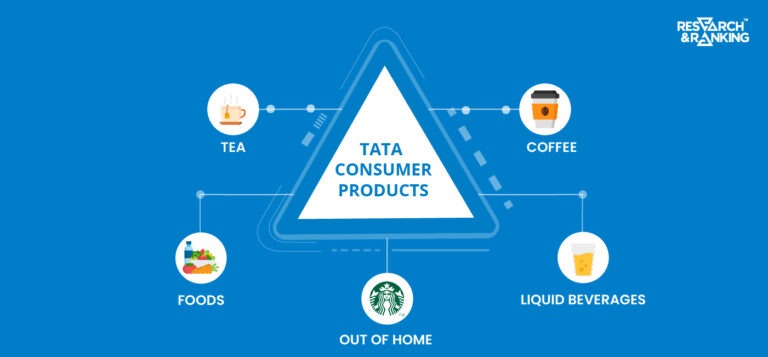
TCPL’s beverages portfolio comprises tea, coffee, water, and ready-to-drink (RTD) beverages, whereas its food portfolio encompasses salt, pulses, spices, ready-to-cook mixes, breakfast, snacks, and mini meals. Out-of-home retail comprises premium cafes in partnership with Starbucks in India.

The Tata Group has made several acquisitions in the consumer goods space over the past couple of decades, most notable among them being the British tea company Tetley. Its other significant acquisitions included US-based Good Earth Teas and Eight O’Clock Coffee.

More recently, it acquired Kottaram Agro, the maker of the “Soulfull” brand of breakfast cereals, in 2021. In November 2021, it bought 100 percent equity shares of Tata SmartFoodz from Tata Industries, helping Tata Consumer expand into the growing ready-to-eat foods category under the Tata Q brand.

It has also strengthened its bottled beverages business by acquiring PepsiCo’s stake in NourishCo Beverages, a 50-50 joint venture between the two companies. In March this year, Tata Consumer also announced plans to merge the businesses of Tata Coffee, such as extraction and branded coffee, into itself.

The company has a presence across ~40 countries, with US, UK, and Canada being critical international geographies. It has a reach of 200+ million households in India and a distribution network covering 3.8 million retail outlets.

image 25
Source: Tata Consumer Products Q4FY23 Presentation

Tata Consumer Products Company Journey

Tata Consumer Product Ltd has a long and illustrious history. Here are some of the critical milestones in the company.

  • 1964:  Tata creates an alliance with Indian tea giant James Finlay to form Tata Finlay
  • 1983: Tata salt, India’s first iodized vacuum-evaporated branded salt, is launched
  • 1985: Tata Tea introduces the revolutionary poly pack, which helps seal its presence in India
  • 1991: Tata Tea enters the business of brands
  • 2000: Tata Tea acquires Tetley
  • 2005: Tata Tea acquires Good Earth in the USA
  • 2006: Tata Tea acquires Eight O’Clock Coffee in the USA
  • 2006: Tata Tea acquires stake in Joekels tea in South Africa
  • 2007: Tata Tea acquires Mount Everest Mineral Water, which owned Himalayan Water
  • 2007: Tata Tea acquires Vitax, a well-known Polish tea brand
  • 2010: The Company was renamed Tata Global Beverages
  • 2011: Nourishco is formed through a joint venture with PepsiCo India
  • 2012: Tata Global Beverage enters into a joint venture with Starbucks
  • 2015: Tata Sampann is launched
  • 2020: Tata Consumer Products is formed by merging the consumer products business of Tata Chemical with Tata Global Beverages
  • 2020: Tata Consumer buys the entire stakes of PepsiCo in Nourishco
  • 2021: Tata Consumer acquires Kottaram Agro Foods in India, owner of the brand “Soulfull.”
  • 2021: Acquired Tata SmartFoodz Ltd., owner of the brand Tata Q. Marks, entry into the ready-to-eat segment in India.

Throughout its journey, Tata’s consumer product has faced numerous challenges and demonstrated resilience and commitment to innovation and sustainability. The company continues to evolve and adapt to changing market conditions while focusing on delivering high-quality products and services to its customers.

Tata Consumer Products Management Profile

  • Mr. N. Chandrasekaran is the Chairman of Tata Sons, the holding company and promoter of all Tata Group companies. His appointment as Chairman of Tata Sons followed a 30-year business career at TCS, which he joined from university. Mr. Chandrasekaran rose at TCS to become the CEO and Managing Director of the leading global IT solution and consulting firm.
  • Mr. Sunil D’Souza has been the Managing Director (MD) & Chief Executive Officer (CEO) of Tata Consumer Product Ltd. since Apr 2020. He started his career with Hindustan Unilever in 1993 and has 29 years of extensive experience in the consumer products sector with a strong emphasis on strategy, growth, and execution. Sunil worked earlier as Whirlpool India’s CEO and worked with PepsiCo for almost 15 years.
  • Mr. L. Krishnakumar is the Executive Director & Group CFO of Tata Consumer Products. In 2000, he joined The Indian Hotels Company Limited, a Tata Group company in the hotels business, as Vice President – Finance. Four years later, he was appointed Senior Vice President – Finance of Tata Tea Limited in India in 2004. While at Tata Consumer Products, Mr. L. Krishnakumar held several leadership and strategic roles in the Company’s operations in India and its international business. He is also a director on the board of several of Tata Consumer product overseas subsidiaries.
  • Mr. Ajit Krishnakumar is the Chief Operating Officer at Tata Consumer Products and is responsible for business integration and transformation as well as the integrated India operations and B2B businesses. Before this, Ajit was a Senior Vice President in the Chairman’s Office at Tata Sons, responsible for strategy, corporate finance, and M&A for the consumer and other business verticals.
  • Mr. Tarun N P Varma is the Global Chief Human Resource Officer in Tata Consumer Products. Tarun has over two decades of experience, having joined Tata Consumer Products from Shell Plc, where he last served as VP – HR for the Global Technology division. He earlier led the HR function for Shell Group of Companies in India. Before this, he held multiple HR leadership roles across leading multinational corporations such as Vodafone, Coca-Cola, and Nestle.

Tata Consumer Products Shareholding Pattern

image 26
Source: Tata Consumer Investor Presentation Q4FY23

Tata Consumer Products Company Analysis

Tata Consumer Products Ltd segregates its businesses into India-branded, International-branded, and Non-branded segments. The branded division is engaged in the sale of coffee, tea, water, and other packaged food products. The other Non-branded business segment includes the plantation and extraction of tea, coffee, and other products. 

The revenue contribution of various business segments is as follows:

image 27
Source: Tata Consumer Products FY23 Annual Report
image 28
Source: Tata Consumer Products FY23 Annual Report

Tata Consumer Products Fundamental Analysis

Tata Consumer Products has gone beyond its core and is now focusing on building new F&B platforms. It has taken a strategic approach to identify critical media it wants to operate in and has accordingly narrowed the universe down to five key platforms:

  • Current core (tea, coffee, salt), 
  • Pantry (pulses, spices, staples, RTCs, dry fruits), 
  • Liquids (water, RTD),
  • Mini meals (breakfast cereals, RTEs, snacks), and 
  • Protein platform (plant-based meat, plant protein powder)

Growth Businesses driving future growth:

TCPL has yielded remarkable success from its growth businesses (which include NourishCo, Tata Sampann, Tata Soulfull, and Tata Smartfoodz), registering 53% y-o-y growth in FY23 and now contributing ~15% to the total India business of the company. It is further expanding its portfolio by adding new vectors of growth to sustain the robust growth trajectory.

image 29
Source: Tata Consumer Products Q4FY23 Presentation

Tata Consumer Products Financial Analysis

TCPL reported a total income of INR 13,783 Cr during the Financial Year ended March 31, 2023, compared to INR 12,425 Cr during the Financial Year ended March 31, 2022, an increase of 11%. 

The company has posted an EBITDA of INR 1,874 crores for the Financial Year ended March 31, 2023, as against an EBITDA of INR 1,749 Cr for the Financial Year ended March 31, 2022.

EBITDA margin has remained in the 13.5% to 14% range for the last three years, even with high inflation rates.

Suppose we have to look at the financial performance over the last five years. In that case, the company has posted a Revenue CAGR of 15% and PAT CAGR of 17%, which is relatively good compared to the performance of other large FMCG companies like HUL, P&G, Marico, Dabur, etc.

image 30
Source: Tata Consumer Products Annual Reports (FY20-FY23)

Tata Consumer Products Key Financial ratios

Return on Equity and Return on Capital Employed (ROCE):

Tata Consumer Products has delivered a high ROCE of 30%+ over the last three years, while the ROE has been around ~8%. The discrepancy in the numbers is due to a significant amount of goodwill found on the balance sheet of TCPL due to acquisitions done in the recent past.

image 31
Source: Tata Consumer Products FY23 Annual Report and Capital IQ

Tata Consumer Products Share Price History

Helped by the streamlining of the group companies and acquisitions, the company has become a strong player in the food and beverage business, and the market has given a big thumbs up.

Since the beginning of 2020, Tata Consumer shares have more than doubled to close at INR 865 on June 15, 2023, compared with INR 324 on Jan 1, 2020. In the same period, the Nifty FMCG index has gained 70%+.

The share price of Tata Consumer Products has delivered a three-year CAGR of 34% from 15th June 2020 to 15th June 2023 and a five-year CAGR of 27% from 15th June 2018 to 15th June 2023.

image 32
Source: TradingView

Tata Consumer Products Share Price Target Growth Potential

TCPL intends to strengthen core businesses, accelerate innovation, and unlock efficiencies to spur growth. The company plans to continue exploring new organic and inorganic growth opportunities, thus creating shareholder value. Some of the positive strategic steps being taken by the company include:

Focus on Innovation remains a key catalyst for growth: TCPL accelerated the pace of innovation during the year, focusing on health & wellness, convenience, and premiumization. The company launched 34 products in FY23 compared to 19 in FY22 and 14 in FY21, raising the innovation-to-sales ratio to 3.4% in FY23 from 0.8% in FY20. It entered new categories: plant-based meat, protein supplements, ready-to-eat (RTE), and ready-to-cook (RTC).   

Sustained focus on wider reach: In FY23, the company increased its direct distribution network by 15% to 1.5mn outlets (more than double FY21 levels) and now has a total reach of 3.8mn outlets. TCPL remains focused on enhancing semi-urban and rural distribution.

Coffee is a fast-growing space: Tata Coffee focuses on branding in this segment with Tata Grand Classic and Tata Grand Premium. It plans to increase its market share from 3-4% to double-digit over the coming years.

Tata Starbucks JV continues to broaden its footprint: The Tata Starbucks JV opened 71 new stores in FY23 (against 50 in FY22) and clocked a revenue of INR 1,087 cr, growing 71% Y-O-Y and turning positive at the EBITDA level. The JV is now present in 41 cities in India and had a total store count of 333 at the end of FY23. 

Potential Risks

  • Continued inflation in international markets, 
  • Adverse currency movements, and
  • Delayed rural recovery. 

*Disclaimer Note: The securities quoted, if any, are for illustration only and are not recommendatory. This article is for education purposes only and shall not be considerea d as recommendation or investment advice by Research & Ranking. We will not be liable for any losses that may occur. Investment in securities market are subject to market risks. Read all the related documents carefully before investing. Registration granted by SEBI, membership of BASL, and certification from NISM in no way guarantee the performance of the intermediary or provide any assurance of returns to investors.

FAQs

Is Tata Consumer Products good to buy for the long term?

Tata Consumer Products is transforming into a diversified FMCG play focusing on growing through organic/inorganic means. The company is also spending on innovating and launching new products that are expected to drive future growth.

What is the face value of Tata Consumer Products?

The face value of Tata Consumer Products is INR 1 per share.

Is Tata Consumer Products debt free?

Yes, Tata Consumer Products is net debt free, meaning the company’s cash reserves exceed long-term borrowings.

Introduction

India is the top offshoring destination for IT companies, and Tata Consultancy Services is among the biggest beneficiaries of this outsourcing trend. Having proven its capabilities in delivering on-shore and offshore services to global clients, emerging technologies offer various opportunities for top IT firms in India. An Amazon Web Services (2021) survey believes India may have nine times more digitally skilled workers by 2025.

, which has created massive wealth for shareholders while providing job opportunities to more than 6 lac individuals worldwide. Let us try to understand how the company is doing right now and also try to assess the long-term growth prospects of TCS’s share price.

Tata Consultancy Services Overview

Tata Consultancy Services (TCS) is an Indian multinational information technology (IT) services and consulting company. It is a subsidiary of the Tata Group, one of India’s largest and most respected business conglomerates. TCS was founded in 1968 and is headquartered in Mumbai, India.

TCS is considered one of the “Big Four” IT services companies globally, along with Accenture, IBM, and Cognizant. It provides various services, including IT consulting, software development, system integration, infrastructure management, and business process outsourcing. The company operates across multiple industry sectors, such as banking and financial services, manufacturing, retail, telecommunications, and healthcare.

With a global footprint, TCS has offices and delivery centers in over 46 countries. It has a diverse workforce of over 6,14,795 employees representing over 150 nationalities. TCS has consistently been recognized for its excellence in IT services and has received numerous awards and accolades.

TCS leverages technologies such as artificial intelligence, machine learning, cloud computing, blockchain, and the Internet of Things (IoT) to help its clients transform their businesses and stay ahead in the digital era. The company delivers innovative solutions and drives digital transformation for its clients across industries.

In recent years, TCS has invested heavily in research and development (R&D) to develop cutting-edge technologies and stay at the forefront of the industry. It also strongly emphasizes employee training and development, ensuring its workforce has the necessary skills and expertise to deliver high-quality services.

Overall, Tata Consultancy Services is a global leader in IT services and consulting, known for its expertise, innovation, and commitment to delivering value to its clients.

Tata Consultancy Services Company Journey

Here is a timeline of Tata Consultancy Services’ history:

  • 1968: Tata Consultancy Services (TCS) is established as a division of Tata Sons, the flagship company of the Tata Group. Initial assignments include bank reconciliation services, payroll, and accounting for several Indian companies, including the Tata group
  • 1971: Wins a project from an electric company in Iran, the first overseas assignment
  • 1973: Partners with Burroughs Computer to sell and service its systems in India and to develop software for its machines worldwide
  • 1976: Crosses $1 million in revenues
  • 1979: Sets up the New York office, the first sales office overseas
  • 1981: Sets up Tata Research Development and Design Centre in Pune, India’s first software research center
  • 1989: Signs the Swiss Securities Corporation deal for the world’s first real-time securities clearing and settlement system
  • 1992: Sets up the core banking platform for India’s newly created National Stock Exchange
  • 2001: Sets up the first nearshore development center in Budapest, Hungary
  • 2003: Crosses $1 billion in revenues, the first Indian IT services company to achieve the milestone; articulates vision statement of Global Top 10 by 2010
  • 2004: Issues an IPO; lists on Indian bourses and becomes the third-most valuable company immediately
  • 2005: Wins $847 million deal to provide insurance back-office transaction processing services to the UK-based Pearl Group (later renamed as the Phoenix Group)
  • 2008: Partners with the Government of India to reimagine passport services; also acquires Citigroup’s back office operations in India for $505 million
  • 2009: N Chandrasekaran takes over as CEO and Managing Director; achieves Global Top 10 goal, a year ahead of target
  • 2012: Crosses $10 billion in annual revenue
  • 2018: Completes 50 years; ranks among the top 3 most valuable brands in the global IT services sector and named the fastest growing IT services brand by Brand Finance
  • 2022: TCS is named the second most valuable global IT services brand by Brand Finance

Tata Consultancy Services Management Profile

Mr. Natarajan Chandrasekaran (Chairman), also known as Chandra, served as the Chairman of TCS until he was appointed the Chairman of Tata Sons, the holding company of the Tata Group, in 2017. Under his leadership, TCS experienced significant growth and global expansion.

Mr. K. Krithivasan is the Chief Executive Officer and Managing Director of Tata Consultancy Services (TCS). In his prior role, Krithi was the Global Head of the Banking, Financial Services, and Insurance (BFSI) Business Group. He was vital in building deep customer relationships, mindshare, and market positioning across geographies. He has been with TCS for over three decades, helping customers with their growth and transformation journeys and technology strategies.

Mr. N. Ganapathy Subramaniam is the Chief Operating Officer of TCS. He has been associated with TCS for over three decades. As the COO, he oversees the company’s global delivery, operations, and business units, ensuring operational excellence and client satisfaction.

Mr. Milind Lakkad is TCS’s Executive Vice President and Global Head of Human Resources.  He is responsible for TCS’s global human resources strategy and initiatives. He focuses on talent acquisition, employee engagement, and fostering a culture of innovation and learning within the organization.

Mr. Samir Seksaria took over as the CFO of Tata Consultancy Services on 1st May 2021. Samir started his career at TCS in 1999 and spent his early years in consulting assignments involving regulatory compliance, and M&A spin-offs, amongst others. In his earlier responsibilities, he played a crucial role in the Initial Public Offering of TCS in 2004 and subsequently in various financial transformation journeys involving simplification, straight-through processes, early closures, and better cash management.

Tata Consultancy Services Shareholding Pattern

image 18
Source: BSE India

Tata Consultancy Company Analysis

TCS has a global presence, deep domain expertise in multiple industry verticals, and a complete portfolio of offerings – grouped under consulting and service integration, digital transformation services, cloud services, cognitive business operations, and products and platforms.

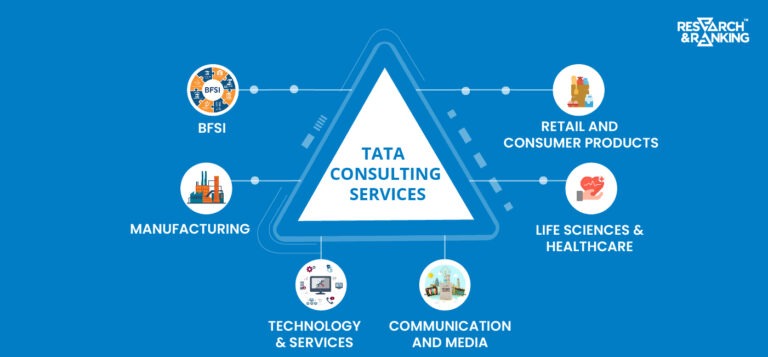
The company derives its revenue from the following major verticals:

  1. BFSI
  2. Retail and Consumer Products
  3. Life Sciences & Healthcare
  4. Manufacturing
  5. Technology & Services
  6. Communication and Media

The breakup of revenue between various segments is shown below. BFSI alone contributes more than 30% of the total revenue.

image 19
Source: Tata Consultancy Services FY23 Annual Report

Tata Consultancy Fundamental Analysis

TCS boasts of clients from nearly half the Fortune 500 companies – in industries ranging from banking and financial services to retail, life sciences, healthcare, manufacturing, and travel.

As shown in the table below, the company has 60 clients contributing more than INR 830 Cr+ (USD 100 m+) each in annual revenue. Similarly, there is 133 clients in the INR 415 Cr+ (USD 50 m+) bucket, and the number of clients in each bucket keeps growing each year as more and more companies look to outsource their technology upgradation/digital transformation work to Indian IT companies like TCS.

Clients ContributionQ4FY22Q4FY23
US$ 1 m+ Clients11821241
US$ 5 m+ Clients638665
US$ 10 m+ Clients439461
US$ 20 m+ Clients268291
US$ 50 m+ Clients120133
US$ 100 m+ Clients5860
Source: Tata Consultancy Services Q4FY23 Investor Presentation

Regarding the geographical breakup, North America & Europe (including the UK) contributes most of the revenue for TCS, as shown in the chart below.

In FY23, North America grew 24.2%, the UK grew 11.4%, and Continental Europe grew 9.2%. Among emerging markets, Latin America grew 24.8%, India grew 14.9%, Middle East & Africa grew 12.5%, and Asia Pacific grew 7.1%.

image 20
Source: Tata Consultancy Services FY23 Annual Report

Revenue and Profitability

TCS posted a revenue of INR 225,458 crore for FY23, which is a growth of 17.6% over the prior year. Constant currency revenue growth for the entire year was 13.7%. The company has posted a revenue CAGR of 13% for FY18 – FY23.

image 21
Source: Tata Consultancy Services FY23 Annual Report

The Company delivered an operating margin of 24.1% in FY23, a contraction of 1.2% over the prior year. Net Profit Margin was 18.7% for FY23 against 20% in FY22.

One of the biggest problems for TCS is the high level of attrition in the last two years during covid. TCS has limited attrition and its impact on expenses and margins. It has fared better than other large IT companies in India, and attrition is expected to normalize by FY24.

image 22
Source: Tata Consultancy Services FY23 Annual Report

Return on Equity & Return on Capital Employed:

Being an asset-light company, TCS reports very high return numbers.

Return on Equity has improved to 46.7%, while the Return on Capital Employed has increased to 34.5% in FY23. ROE and ROCE have steadily increased year-on-year, from 36.0% and 26.6% in FY19, respectively.

image 23
Source: Capital IQ

Tata Consultancy Share Price History

TCS has been an enormous wealth creator for its shareholders since its IPO in 2004. The company has delivered a phenomenal return on investment of 3500%+ from 23rd August 2004 (INR 85 per share) to 10th June 2023 (INR 3,209 per share).

The company has delivered a 10-year price CAGR of 17.80% from INR 623.58 per share on 10th June 2013 to now trading at INR 3,209 on 10th June 2023.

Additionally, the company also pays handsome dividends to its shareholders every year. For example, the company distributed dividends amounting to INR 115 per share in FY23.

image 24
Source: TradingView

Tata Consultancy Share Price Target Future Growth Potential

TCS is a leading IT services company with a wide range of capabilities, robust digital competencies, strong platforms, and stable management. The company is the preferred partner of large corporates and is increasing its participation in sizeable digital implementation.

Hence, one can expect TCS to continue to gain market share in digital versus its large peers, given its superior execution capabilities on the digital front. Positives in favor of the company include sustainability of its revenue growth momentum in the medium term, given strong deal wins, broad-based service offerings, higher spending on digital technologies, and best-in-class execution.

Potential Risks TCS faces:

  • The demand environment is uncertain because of the potential threat of recession from the world’s largest economies.
  • The rising subcontracting cost and cross-currency headwinds may impact operating margins negatively.

*Disclaimer Note: The securities quoted, if any, are for illustration only and are not recommendatory. This article is for education purposes only and shall not be considerea d as recommendation or investment advice by Research & Ranking. We will not be liable for any losses that may occur. Investment in securities market are subject to market risks. Read all the related documents carefully before investing. Registration granted by SEBI, membership of BASL, and certification from NISM in no way guarantee the performance of the intermediary or provide any assurance of returns to investors.

FAQs

Is TCS a good investment?

TCS has created huge wealth for long-term shareholders in the past. The company continues to benefit from outsourcing technology spending to India. This trend may continue to help TCS. The company may grow, given its market leadership and relationship with Fortune 500 companies. TCS may be a good investment for long-term investors if purchased after thorough evaluation and held for the long term.

Is TCS expected to do a share buyback soon?

There is no news of TCS doing a share buyback in 2023. The company’s last buyback was in March 2022, when it bought back shares for INR 4500 per share for a total buyback size of INR 18,000 Cr.

What is the face value of TCS shares?

The face value of TCS is INR 1 per share.

Read more:  How Long-term investing helps create life-changing wealth – TOI.

Introduction

Talk about Kitchen supplies; this company is sure to find a space on your kitchen shelves. It sells most of the essential kitchen commodities, including edible oil, wheat flour, rice, pulses, and sugar for Indian consumers. Yes, we are talking about Adani Wilmar.

Adani Wilmar owns some of the biggest brands like Fortune, Kohinoor, Saffola, Nutrela, and many more. It recently had its IPO in Jan 2022. Let’s check what is working for the company and its impact on Adani Wilmar’s share price.

Adani Wilmar Overview

Adani Wilmar is one of India’s largest FMCG food companies, offering essential kitchen commodities to Indian consumers, including edible oil, wheat flour, rice, pulses, and sugar. The company was incorporated in January 1999 as a joint venture between the Adani Group and the Wilmar Group, one of Asia’s leading agri-business groups.

The company manufactures packaged food, edible oils, bakery & lauric products, personal care products, and industry essentials (including oleo chemicals, castor oil and its derivatives, and de-oiled cakes). Its operations are diversified into value-added edible oil products such as rice bran health oil, fortified foods, ready-to-cook soya chunks, khichdi, and other fast-moving consumer goods.

Adani Wilmar boasts the widest pan-India distribution network among branded edible oil companies. As of 31st March 2022, its Fortune brand has a presence in one out of three households in India, reaching 113 million households. The company holds a leadership position across key products, as shown below –

image 10
Source: Adani Wilmar Q4FY23 Investor Presentation

Adani Wilmar Company Journey

Here is a historical timeline of Adani Wilmar Limited:

  • 1999: Adani Wilmar Limited is established as a joint venture between the Adani Group, a leading Indian multinational conglomerate, and Wilmar International Limited, a Singapore-based agribusiness group.
  • 2001: The Company launches its flagship brand, Fortune, which becomes one of India’s leading edible oil brands; the Company commissioned an edible oil refinery of 600 TPD at Mundra.
  • 2005: Acquisition of Mantralayam Unit
  • 2006: Acquisition of Bundi and Haldia Units
  • 2009: Acquisition of Shujalpur, Nagpur, Chhindwara, and Neemuch units
  • 2010: Acquisition of Rajshri Packagers Limited, Mangalore; Acquisition of Satya Sai Agroils Private Limited; Launched ‘King’s,’ ‘Bullet’ and ‘Ivory’ brands and ‘Raag Gold’ refined palmolein oil
  • 2011: Acquisition of Acalmar Oils and Fats Limited; Launch of ‘Pilaf Gold Pure Basmati Rice.’
  • 2012: Addition of the Alwar and Mundra Castor units
  • 2013: ‘Fortune Rice Bran Health Oil’ was launched
  • 2014: Commenced production of state-of-the-art oleochemical manufacturing complex at Mundra; Launch of ‘Fortune Besan’; Launch of ‘Fortune Pulses.’
  • 2015: Launch of ‘Fortune Soya Nuggets’ and ‘Fortune Basmati Rice.’
  • 2016: Launch of ‘Fortune Vivo Pro Sugar Conscious Oil.’
  • 2018: Launch of ‘Fortune Chakki Fresh Atta’ in Delhi NCR and Uttar Pradesh; Acquisition of an edible oil refinery from Gokul Refoils and Solvent Limited at Haldia; Acquisition of an edible oil refinery at Paradip from Cargill India Private Limited; Acquisition of a rice plant at Ferozepur from Ferozepur Foods Energy Private Limited
  • 2019: Acquisition of an edible oil refinery from Louis Dreyfus Company India Private Limited at Nellore
  • 2020: Launch of the new ‘Fortune’ logo; Launch of ‘Fortune Super Food Khichdi’; Launch of ‘Alife Soap’ in the personal and skin care category
  • 2021: Launch of ‘Fortune Sugar’ and ‘Fortune Soya Chunkies’; Launch of personal care products like hand wash and hand sanitizer under the ‘Alife’ range;
  • 2022: Adani Wilmar becomes a publicly listed company with an initial public offering (IPO) on the Indian stock exchanges

Adani Wilmar Management Profile

Mr. Dorab Mistry is Adani Group’s Chairman and Independent Director of Adani Wilmar. He has been working with the Godrej Group since 1976 and is currently a director of Godrej International Trading & Investments Pte Ltd., Singapore. He was appointed to the  Board of Directors effective June 10, 2021.

Mr. Kuok Khoon Hong is the Non-Executive Chairman of the Company. He holds a bachelor’s degree in business administration from the University of Singapore. He has over 40 years of experience in the agribusiness industry. He is the co-founder of Wilmar International Limited and is currently the Chairman and Chief Executive Officer of Wilmar International Limited. He was appointed to the Board of Directors on February 27, 1999.

Mr. Angshu Mallick is the CEO and MD of Adani Wilmar Limited. He has been with the company for many years and has played a crucial role in its success. He oversees the day-to-day operations and drives the company’s growth strategy.

Mr. Srikant Kanhere is the Chief Financial Officer of the Company. He is a fellow member of the Institute of Chartered Accountants of India. He joined the Company with effect from May 1, 2013. He has over 18 years of experience in finance and accounts. Before joining Adani Wilmar, he worked at Vodafone DigiLink Limited as General Manager – Finance & Accounts, Reliance Industries Limited, and Adani Exports Limited.

Adani Wilmar Shareholding Pattern

image 11
Source: BSE India

Adani Wilmar Company Analysis

The company mainly operates in the following three business segments:

  1. Edible Oil
  2. Food & FMCG
  3. Industry Essentials
image 12
Source: Adani Wilmar Q4FY23 Investor Presentation
image 13
Source: Adani Wilmar Q4FY23 Investor Presentation and Adani Wilmar FY22 Annual Report
Net Revenues (INR mn)Q4FY23Q4FY22% Growth Y-o-YQ3FY23% Growth q-o-q
Edible Oil10,789.7512,372.20-13%12581.20-14%
Foods1,159.01756.6553%1019.5614%
Industry essentials1,923.881788.418%1837.285%
EBIT (INR mn)
Edible Oil75.53393.96-81258.43-70
Foods16.70-2.03NM50.67-67
Industry Essentials43.552.1881941.116
EBIT Margin (%)Q4FY23Q4FY22 Q3FY23 
Edible Oil0.73.2 2.0 
Foods1.4-0.2 5.0 
Industry Essentials2.30.12 2.2 
Source: Adani Wilmar Q4FY23 Results

The majority of the revenue and profitability comes from the Edible oil segment. However, margins are highest for the Industry Essentials segment. The share of the high-margin Foods and Industry Essentials feature is increasing gradually, as seen above.

Regarding market share, the company is No.1 in branded edible oil with a 19.5% share, No.2 in wheat flour with a 4.9% share, and No.3 in basmati rice in India with a 10% share. Business scalability has been helped by acquisitions of 17+ units in the staples foods space. With near-term concerns and volatility in edible oil prices subsiding and prices cooling off, volume growth trends have started recovering while margins are on track to normalize.

Key strategic pillars for the company which it is leveraging are –

  1. Best-in-class distribution network (7,300 distributors and 90 depots with 20% growth CAGR), manufacturing strengths with 23 own and 30 third party units (17 for edible oil, 4 for Besan, 3 for rice, 1 for atta, 2 for nuggets)
  • Driving strong cost synergies due to the integrated infrastructure and
  • Strong brand equity for the Fortune Master brand has enabled entry into multiple food categories after edible oil.

Adani Wilmar Fundamental Analysis

AWL operates an integrated manufacturing infrastructure to derive cost efficiency across different business lines. Backend scale and efficiency allow for reducing supply chain costs, which is a competitive advantage against smaller players and helps it further consolidate the market leadership.

  • Backward and forward integration: Most crushing units are fully integrated with refineries to refine in-house crude oil. Further, they derive de-oiled cakes from crushing and use palm stearin derived from palm oil refining to manufacture oleochemical products, such as soap noodles, stearic acid, glycerin, and FMCG, such as soaps and handwash. For example, the plant in Mundra is an end-to-end integrated plant that produces vanaspati, margarine, oleochemical products, and soap bars with raw materials from the refining process;
  • Strong raw material sourcing capabilities: AWL imports a significant portion of raw materials, and market leadership has facilitated it to source raw materials from top global suppliers from international markets. Wilmar International, the holding company of Lence Pte. Ltd., one of the shareholders, is the largest palm oil supplier in the world (Source: Technopak Report) and provides AWL with an extra competitive edge as it need not depend on third-party suppliers for sourcing of palm oil.
  • Focus on growing packaged foods business by utilizing flagship brand “Fortune”: Fortune, the flagship brand, is the largest-selling edible oil brand in India. The company is trying to use this brand to enter into other segments. The brand’s structure of using a single brand identity for multi-categories optimizes marketing costs and enhances brand equity. The company has also been able to scale up other brands, as shown below.
image 14
Source: Adani Wilmar Q4FY23 Investor presentation

Adani Wilmar Revenue and Profitability

The Company reported consolidated revenue from operations at INR 13,872.6 crore in Q4 FY23, down 7% Y-o-Y compared to INR 14,917.2 crores in Q4 FY22.

It reported consolidated profit after tax (PAT) of INR 93.6 crore for the fourth quarter ended March 2023, a 60% decline Y-o-Y. In the same quarter last year, it posted a net profit of INR 234.29 crore. The drop in margin was due to the high inventory cost due to increased raw material prices.

Meanwhile, the company crossed 5 million metric tonnes of sales during FY23. The food segment doubled its revenue in 2 years to close the year around INR 4,000 crore. Both wheat flour and rice businesses crossed INR 1,000 crore in revenue in FY23.

image 15
Source: Adani Wilmar Q4FY23 Investor Presentation

Return on Equity & Return on Capital Employed:

ROE and ROCE have reduced over the last three years due to a margin reduction due to an increase in raw material prices. ROCE has reduced to 7.4% in FY23 from 11.7% in FY21. ROE has declined to 7.8% from 24.8% in FY21.

image 16
Source: Capital IQ

Adani Wilmar Share Price Analysis

The stock price has seen sharp movement since its IPO, both on the upside and downside. Adani Wilmar stock rallied post IPO in Jan 2022 from INR 230 odd levels to an all-time high of INR 870 on 28th April 2023. Post that, the store started consolidating and saw massive correction due to Adani Hindenburg’s report that led to a sharp fall in prices of all the listed Adani group companies.

Adani Wilmar traded at INR 435 as of 6th June 2023, almost 90% above the IPO price. The Company is expected to do well, given its market leadership in its business segments. It is a good proxy play to India’s high-growth packaged food segment.

image 17
Source: TradingView

Adani Wilmar Share Price Target Growth Potential

Given the growth potential in the Indian packaged food market space and the management’s ambition to diversify and grow faster than the industry, Adani Wilmar may remain a front-runner in the Indian packaged food market.

The packaged food market in India could grow at a healthy rate of 11% CAGR until FY25. Branded products are growing faster than unorganized players and loose products in all major segments of essentials, thereby increasing a share of the overall grocery segment.

In the edible oils segment, the low per capita consumption and the emergence of exotic oils indicate massive headroom for growth. Several packaged food categories have significantly increased overall branded product usage. For instance, branded wheat flour has grown from 3% in FY08 to 15% in FY20, and branded salt has grown by value from 5% in FY07 to 88% in FY20. This shift, accelerated by the covid-19 pandemic, is expected to continue.

Additionally, distribution expansion, gaining share in under-indexed markets, and margin improvement in the consumer pack segment in both Edible Oil and Food segments can lead to the stock doing well in the future. The Company also sees significant opportunities in the HoReCa, institutional part, and exports and is working on plans to exploit those opportunities.

Adani Wilmar Possible Key Risks:

  • Fluctuating prices of commodities may impact the company’s profitability significantly
  • Currently, edible oil contributes the majority of the revenue. Not diversifying the business in other segments may hamper the company’s progress.

*Disclaimer Note: The securities quoted, if any, are for illustration only and are not recommendatory. This article is for education purposes only and shall not be considerea d as recommendation or investment advice by Research & Ranking. We will not be liable for any losses that may occur. Investment in securities market are subject to market risks. Read all the related documents carefully before investing. Registration granted by SEBI, membership of BASL, and certification from NISM in no way guarantee the performance of the intermediary or provide any assurance of returns to investors.

FAQs

Who is the owner of Adani Wilmar?

The Adani group and Wilmar group jointly own Adani Wilmar—both groups on 43.97% each as of March 2023.

Is Adani Wilmar an excellent stock to buy for the long term?

Adani Wilmar is one of the most prominent players in the oil segment, and in the future, it is expanding into Food and FMCG business. The company owns the “Fortune” brand and is run by two strong promoter groups. That being said, raw material prices can impact the business, so investors should enter the stock at a valuation that provides a reasonable margin of safety.

What is the face value of Adani Wilmar’s share?

Adani Wilmar has a face value of INR 1 per share.

In India, there are three banks- SBI, HDFC Bank, and ICICI Bank classified as D-SIBs, meaning their failure can impact the financial stability and create instability in the country.

These banks have become “too big to fail” and are widely recognized as the core of the Indian economy. For example, the State Bank of India (SBI) has an extensive customer base of over 48 crores. Given its massive influence, any disruptions or adverse events concerning the bank can significantly impact the nation’s financial stability.

In this article, we will do a fundamental analysis of SBI and check the long-term growth potential of SBI share price.

SBI Company Journey

State Bank of India is a Fortune 500 company with a legacy of over 200 years and is currently the most prominent Indian bank by assets, with over one-fourth market share.

1 1

Over the years, the State Bank of India has established its presence with the greatest number of branches and ATM networks across India. At the end of Q4 FY23, SBI had 22,405 branches and 65,627 ATMs nationwide. It has established an international presence in 29 countries.

Merger of SBI Subsidiaries

On 13th August 2008, the State Bank of India embarked on another journey toward unifying the Indian banking system by merging all its subsidiary banks.

In 1959, the government passed the State Bank of India (Subsidiary Banks) Act in parliament, bringing the eight banks belonging to princely states as State Bank of India subsidiaries. The banks include:

  • State Bank of Jaipur
  • State Bank of Bikaner
  • State Bank of Saurashtra
  • State Bank of Indore
  • State Bank of Travancore
  • State Bank of Mysore
  • State Bank of Patiala
  • State Bank of Hyderabad

State Bank merged all its associate banks with itself on 1st April 2017. This helped SBI to break into the club of the top 50 largest banks in the world.

Subsidiaries of SBI

State Bank of India has firmly established itself as a key player in India’s financial landscape, providing its customers a wide range of financial products and services through its subsidiaries. The key subsidiaries of SBI include:

  • SBI Card
  • SBI Life
  • SBI General Insurance
  • SBI Mutual Fund
  • SBI Caps

SBI Company Analysis

State Bank caters to the diverse needs of individuals and businesses, offering an extensive range of products and services covering a broad spectrum of financial requirements. It provides services in;

  • Personal Banking
  • Rural Banking
  • Corporate Banking
  • SME Banking
  • International Banking
  • Digital Banking- YONO

It has categorized its business operations into four primary segments:

  • Treasury
  • Corporate/ Wholesale Banking
  • Retail Banking
  • Other Banking Businesses

In the fiscal year 2022-23, State Bank demonstrated robust financial performance. Net Interest Income (NII) jumped to ₹1,44,841 crores, marking a significant growth of 19.99% compared to the previous fiscal year. Additionally, the bank recorded a net profit of ₹50,232 crores, showcasing a substantial year-on-year surge of 58.58%.

SBI Management Profile

  • State Bank is led by Chairman Shri Dinesh Kumar Khara, appointed on 7th October 2020, for three years. He joined SBI as a probationary officer in 1984.
  • Shri C.S. Shetty, Managing Director, leads the International Banking, Global Markets & Technology division.
  • Shri Swaminathan Janakiraman, Managing Director, leads the Corporate Banking & Subsidiaries.
  • Shri Ashwini Kumar Tewari, Managing Director, oversees the Risk, Compliance, & SARG division.
  • Shri Alok Kumar Choudhary, Managing Director, leads the Retail Business & Operations.

SBI Shareholder Pattern

image 6
*As of 31st March 2022

SBI Financials

Revenue

In FY23, SBI reported a total income of ₹3,68,719 crores, up 16.68% over FY22 at ₹3,16,021 crores.

The bank’s non-interest income of ₹36,616 crores during FY23 is 9.73% lower compared to the previous fiscal mainly because of a fall in forex income and loss in the sale of investments.

Net Interest Income (NII)

SBI reported robust growth in NII during FY23 on account of increased lending rates and healthy credit growth. The bank’s NII grew by 19.99% to ₹1,44,841 crore from ₹1,20,708 crore in FY22. The bank’s NII has grown at a CAGR of 10.39% in the last five years.

image 7

Net Profit

In FY23, SBI reported a 58.58% growth in net profit to ₹50,232 crores compared to the previous fiscal at  ₹31,676 crores. In the last five years, banks’ Net profit has grown at a CAGR of 125.47%.

image 8

SBI Key Financial Metrics

Non-Performing Asset (NPA)

In FY23, the bank’s net NPA improved by 35 bps to 0.67%, indicating better asset and risk management to prevent slippages and loans from turning bad.

The bank’s net NPA ratio has decreased by 234 bps over the last five years from 3.01% in FY19.

Capital Adequacy Ratio (CAR)

The overall Capital Adequacy Ratio at the end of March 2023 is 14.68% against the minimum regulatory requirement of 12% for public sector banks.

A higher CAR indicates that the bank is well insulated to absorb any shock like a spike in bad debt accounts.

Provision Coverage Ratio (PCR)

PCR signifies the funds a bank allocates to mitigate potential losses arising from non-performing or bad debts. SBI’s PCR, excluding AUCA, at the end of March 2023 is 76.39% compared to 75.04% in March 2022.

CASA Ratio

CASA represents the Current and Saving Account Ratio represents the percentage of deposits in current and saving accounts to total deposits.

At the end of March 2023, SBI’s CASA was 43.80% compared to 45.28% in March 2022. Despite the decline in the CASA ratio, the bank’s total CASA deposit rose 4.95% to ₹18,62,904 crores at the end of FY23.

A higher CASA ratio indicates a lower cost of funds for banks since they do not pay interest rates on current accounts and typically offer relatively lower interest rates on savings accounts.

Cost of Funds

The bank’s credit cost in FY23 decreased by 23 bps to 0.32% from 0.55% in FY22. It played a crucial role in enhancing the profitability of the bank.

Net Interest Margin (NIM)

The NIM improved to 3.37% at the end of FY23 from 3.12% at the end of FY22.

SBI Share Price Analysis

After experiencing a period of consolidation and relatively weaker performance compared to private lenders, the share price of SBI has undergone a remarkable turnaround in recent years.

As of 5th June 2023, the bank’s market capitalization stands at ₹5,24,053 crores. SBI share price has delivered an impressive compound annual growth rate (CAGR) return of 46% between 8th June 2020 and 5th June 2023. SBI share price has increased from ₹169.80 to ₹583 during the period.   

In December 1993, SBI launched its IPO at a premium of ₹90 per share, with a face value of ₹10. Notably, in October 1996, SBI became the first Indian bank to issue Global Depository Receipts (GDR).

SBI shares underwent a split in the ratio of 1:10 on 20th November 2014, and the current face value is ₹1.

Over the past three years, the bank has consistently increased its dividend payout, reflecting its commitment to rewarding shareholders. The dividend per share has risen from ₹4 in 2021 to ₹7.10 in 2022 and further to ₹11.30 in 2023.

image 9
Source: TradingView

The SBI share price was trading around the ₹149.5 level in May 2020 and made an all-time high of  ₹629.55 on 12th December 2022.

SBI Share Price Fundamental Analysis

FY23 has marked a significant turnaround in performance for the State Bank of India, making it one of the most successful years in the bank’s history.

Credit Growth: In FY23, the bank maintained strong growth in advances at 15.99% to ₹32,69,242 crores and has held leadership across all segments in the retail and personal segment. The bank’s market share in home loans is 33.1%, and auto loans are 19.1%.

Overall, SBI has a high-quality asset book with 82% exposure to A, AA, AAA rated debt, thereby reducing the chances of slippages.

Strong Growth in NII: Supported by the combination of lower credit costs, enhanced lending rates, and strong credit growth, the bank achieved robust growth in Net Interest Income (NII), registering an impressive increase of 19.99%.

Improving Asset Quality: In FY23, fresh slippages are lower than recovery from stressed assets which has helped SBI to improve GNPA and NNPA ratios.

In FY23, the slippages are down by 26.38% y-o-y, and there is a decline in the restructuring of loan accounts.

Deposit Mobilisation on Par with System Growth: The bank’s CASA grew by 4.95% in FY23.

The overall domestic deposit, including term deposits, grew by 8.5% to ₹42.53 lakh crores, and foreign office deposits grew by 29.60% to ₹1.70 lakh crores.

Current Account deposits grew by 7.47%, and Savings Account deposits grew by 4.51%.

SBI has experienced a slight uptick in the cost of domestic deposits, reaching 3.99% by the end of March 2023 compared to 3.88% in March 2022. However, the bank anticipates a stable outlook for the cost of deposits and does not foresee any significant increases shortly.

Healthy Credit Growth Outlook: After the release of Q4FY23 earnings, the bank has given a 12% to 14% loan growth in FY24. The bank doesn’t foresee any sharp uptick in loan growth in coming quarters due to the high base effect.

Retail loans constitute 36% of the bank’s total gross advances and are growing without much challenge, and strong growth is witnessed in the Xpress Credit segment with 22.72% y-o-y growth in loan outstanding. In the corporate segment, loan disbursement to the SME segment is also accelerating.

Digital: The bank’s digital strategy is witnessing strong growth, with 64% of savings accounts and 35% of retail asset accounts acquired through YONO in FY23.

YONO has over 6 crores of users, which gives the bank a superior capability to cross-sell its products, and the online marketplace, which has 100+ partners, helps to generate commission income. The platform is witnessing a daily average of 550K transactions and 10 million daily logins.

SBI Share Price Growth Potential

The State Bank of India’s share price is poised to benefit from evolving scenarios, supported by robust Goods and Services Tax (GST) collections reported in the first two months of FY24 and the anticipated GDP growth of 6.5% in the current fiscal year against uncertain global economic conditions.

Factors that are likely to support growth in SBI share price:

  • Lower cost of funds compared to peers
  • Healthy credit growth outlook in FY24
  • Improved asset quality
  • Digital strategy paying a strong dividend

The combination of these factors is highly conducive to sustaining the growth momentum of the State Bank of India. As a result, the SBI share price is anticipated to experience a significant upward trajectory over the long term, reflecting the positive market sentiment and the bank’s strong performance indicators.

*Disclaimer Note: The securities quoted, if any, are for illustration only and are not recommendatory. This article is for education purposes only and shall not be considerea d as recommendation or investment advice by Research & Ranking. We will not be liable for any losses that may occur. Investment in securities market are subject to market risks. Read all the related documents carefully before investing. Registration granted by SEBI, membership of BASL, and certification from NISM in no way guarantee the performance of the intermediary or provide any assurance of returns to investors.

FAQs

When was SBI founded?

SBI is the country’s oldest bank and was first established as the Bank of Calcutta in 1806 and three years later renamed as Bank of Bengal.
 
In 1921, the amalgamation of the Bank of Madras, Bank of Bombay, and Bank of Bengal led to the creation of the Imperial Bank of India. And in 1955, After RBI took control of the Imperial Bank of India, renamed as State Bank of India.

How SBI share price has performed in the last five years?

As of 5th June 2023, SBI share price has given a CAGR return of 17% in the last five years.

Who owns SBI?

SBI is a public sector bank, and the Government of India holds a 56.92% stake in the bank.

Introduction

PhonePe has a significant percentage of UPI transactions in India. Ever since demonetization, usage of UPI has increased significantly in India. Transactions on the UPI platform hit a new high of 890 Crore in April 2023. These transactions’ value was at a record high of Rs. 14.07 lac crores.

PhonePe is not listed but is valued at almost double its listed peer Paytm. It has created the largest distribution network through which it intends to sell multiple financial products and eventually become profitable.

Let us try to understand PhonePe in more detail in this article.

Phonepe Overview

It is a digital payments platform in India that lets users make seamless and secure transactions through their mobile phones. Sameer Nigam, Rahul Chari, and Burzin Engineer founded the company in December 2015.

With over 300 million registered users and 50 million monthly active users, PhonePe is one of India’s largest digital payment platforms. It is at the forefront in processing most UPI transactions and has processed 46.71% or 351.9 Cr UPI transactions in February 2023, amounting to INR 6.2 Lakh Cr during the period under review. In terms of percentage, it accounted for 50.18% of the value of UPI transactions.

The platform showcases financial services and has licenses for Account Aggregator, broking, and distribution of insurance products. It has partnered with merchants to help its users make utility payments, recharges, etc. In addition, it allows investments in mutual funds (equity, debt, liquid, etc.) and gold with tie-ups for life/ general insurers such as ICICI Pru Life, ICICI Lombard, Bajaj Allianz, Reliance General, etc., to offer insurance coverage.

The company launched the PhonePe ATM in 2020, allowing neighborhood Kirana stores to dispense cash in real time to customers. It also launched a cross-border payments service to tap international customers, allowing users to pay foreign merchants using UPI. The feature is available in UAE, Singapore, Mauritius, Nepal, and Bhutan.

In December 2020, Flipkart and PhonePe declared a partial split, with Walmart maintaining its majority ownership in the company and the two entities now functioning independently. It also became an India-domiciled company after its hive-off from Flipkart. The company paid INR 8,000 Cr in taxes as it shifted from Singapore to India.

It recently announced fundraising of ~INR 2,900 Cr (USD 350 million) from General Atlantic, an US growth equity firm, at a pre-money valuation of $12 billion. Subsequently, another ~INR 830 Cr (USD 100 million) was attained in primary capital in February 2023 from Ribbit Capital, Tiger Global, and TVS Capital Funds at the same valuation. The company plans to launch its IPO and go public during 2024-2025.

Phonepe Journey

2015:

December: Founded by Sameer Nigam, Rahul Chari, and Burzin Engineer as a mobile payments app in Bengaluru, India.

2016:

April: Launches its UPI (Unified Payments Interface) platform, allowing users to make seamless mobile phone payments.

August: Partners with Yes Bank as its UPI partner, enabling users to link their bank accounts for transactions.

2017:

January: Flipkart, one of India’s leading e-commerce companies, acquires PhonePe.

August: It becomes the first payment app to launch a cashback feature on UPI transactions.

2018:

January: Introduces its Switch platform, offering customers access to various third-party apps and services within the app.

May: The company becomes the first UPI-based app to cross 100 million downloads on the Google Play Store.

2019:

January: Raises $125 million in funding led by Walmart, valuing the company at $1 billion.

September: Launches its IPO (Initial Public Offering) platform, allowing users to invest in mutual funds directly through the app.

2020:

May: Partners with ICICI Bank to launch a digital ATM feature, allowing users to withdraw cash from their bank accounts using UPI.

December: Crosses 250 million registered users and processes over 835 million transactions monthly.

2021:

March: Becomes the first payment app in India to enable UPI-based car and bike insurance premium payments.

June: It expands its international footprint by launching in Nepal, offering digital payment services to Nepalese users.

2022:

February: Introduces “PhonePe Stock Trading” with IndusStox, allowing users to invest directly in stocks and mutual funds from the app.

October: Launches PhonePe Tax Assistant, an AI-based tax-filing feature, to help users file their income tax returns.

December: Shifts its domicile from Singapore to India

2023:

January: Announces raising USD 1 billion in tranches at a pre-money valuation of USD 12 billion from General Atlantic, Walmart, and other investors.

Phonepe Management Profile

Mr. Sameer Nigam is the CEO of PhonePe. He co-founded the company in December 2015 and has played a pivotal role in shaping the company’s vision and strategy. Nigam has extensive experience in the technology and finance sectors, having previously worked at companies like Flipkart, Google, and Amazon.

Mr. Rahul Chari is another co-founder and the Chief Technology Officer. He is responsible for overseeing the technical aspects of the platform and driving innovation. Chari has a background in software engineering and has previously worked at companies like Flipkart, Yahoo, and Symantec.

Mr. Adarsh Nahata is the CFO of Phonepe. He started his career at ITC Ltd. as a Finance Controller and then worked his way up the corporate ladder at Flipkart, becoming a Director in 5 short years. He was Head of Finance at Phonpe before becoming the CFO in June 2021.

Ms. Manmeet Sandhu heads the HR at PhonePe Pvt Ltd. She joined in December 2018 after nine years at Amazon. She has worked in HR for the last 20 years across multiple countries and in compensation, diversity & inclusion, and business partners. Manmeet holds a Bachelor’s degree in Commerce and an MBA in HR from Xavier Institute of Management, Bhubaneswar.

Phonepe Shareholding Pattern

Following is the shareholding of PhonePe as of April 2023.

image 5
Source: Business Line Article

Phonepe Business Segments

PhonePe makes 99% of its total operating income through processing payment transactions. The remaining 1% comes from commission, processing fees, and other operating income. Going forward, however, PhonePe is looking to grow on the back of significant growth from selling financial products

Revenue breakup is as follows for years FY21 and FY22.

Business segmentFY21 Revenue (Rs. Cr)FY22 Revenue (Rs. Cr)
Payments and allied services6861,630
Commission & Processing fees3.7813.61
Other Operating revenue2.50
Total6901,646
Source: PhonePe regulatory filings (FY21 & FY22)

Phonepe Fundamental Analysis

PhonePe dominates India’s UPI market with a 50.1% market share (as of March 2023). The other two players are Google Pay and Paytm, with a 34.2% and 10.8% market share, respectively.

PhonePe has recorded INR 1,913 crore in revenue in nine months (January to September) of 2022, according to its valuation report through a regulatory filing. It also seems to be on the way to narrowing its losses in FY23 as the firm’s earnings before interest and tax (EBIT) skid to INR -410.4 crore in the same nine-month period, whereas the figure for the same stood at INR -2,061.4 crore during FY22.

Values in Rs. Cr.

ParticularsFY20FY21FY2230-Sep-2022 (Jan – Sep 2022)
Revenue371.8689.61,646.31,912.9
Direct Cost(150.2)(108.0)(199.2)(336.3)
Gross Profit221.6581.61447.11576.6
Gross Profit as % of Revenue59.6%84.3%87.9%82.4%
Marketing, Referral & Cashback(1,016.6)(535.0)(866.2)(513.0)
Payroll(480.3)(1,235.4)(1,741.0)(809.4)
Other Opex(468.0)(442.5)(697.0)(458.1)
EBITDA(1743.2)(1631.2)(1857.2)(203.9)
EBITDA %-468.9%-236.5%-112.8%-10.7%
Depreciation(87.0)(134.2)(204.2)(206.5)
EBIT(1,830.2)(1,765.4)(2,061.4)(410.4)
EBIT %-492.3%-256.0%-125.2%-21.5%
Source: PhonePe regulatory filings (FY2020-FY23)

Return ratios like ROE (Return on Equity) and ROCE (Return on Capital Employed) are negative for the company because of negative profitability. However, However, PhonePe has managed to reduce losses significantly over time. As a result, Ebitda has improved from – Rs. 1743.2 cr in FY20 to Rs. 203.9 cr as on 30 Sep 2022.

Phonepe Share Price Analysis

PhonePe is not a listed company, so it is not possible to get the daily share price performance of the company. However, in the most recent funding round, it was valued at USD 12 billion and around USD 5.5 billion in late 2020. Therefore, the company has doubled its valuation in the last two years.

Phonepe Growth Potential

PhonePe seems to be at the forefront of the mobile payments market on UPI, a network built by a coalition of retail banks in India. As a result, UPI has become the most popular way Indians transact online, processing over 8.9 billion monthly transactions. The eight-year-old PhonePe commands about 50% of all these transactions.

Its IPO plans and recent funding round indicate the company’s growth prospects. The Indian digital payments market is expected to grow rapidly in the coming years, driven by the government’s push for a cashless economy, increasing smartphone penetration, and the rise of e-commerce.

PhonePe may be positioned to capitalize on these trends due to its strong brand, extensive user base, and innovative product offerings. In addition, the platform has been expanding its services beyond just payments with the launch of features like PhonePe Switch and PhonePe ATM. These initiatives have helped the platform diversify revenue streams and provide users with a more comprehensive financial services experience.

The company may venture into lending, broking, and asset management as part of its expansion plan. Further, it is looking to invest more in the Insurance business after the recent USD 350 million funding. The company’s goal is to become operationally profitable within the next two years (by 2025) by leveraging the success of its financial businesses.

PhonePe is also looking to launch an Android app store in India. It comes after the company acquired IndusOS, an app store provider. With its massive customer base of over 450 million registered users in India, it sees an opportunity to create an alternate app store more localized in language, discovery, and consumer interests.

Hoping these plans will come through, Management at PhonePe is looking to make an EBITDA profit of INR 1,797 crore in the calendar year 2025, with an EBITDA margin of 19.7 percent.

Key Risks PhonePe May Face:

While PhonePe’s IPO plans may be exciting, the company may face several challenges in the coming years. One of the primary challenges for the platform may be maintaining its market share in the face of increasing competition. The Indian digital payments market is becoming more crowded, with new players like Google Pay and Amazon Pay entering the market.

PhonePe may need to continue innovating and expanding its services to stay ahead of the competition addition. The platform will need to focus on user acquisition and retention, given the high churn rate in the Indian digital payments market. The Indian government has tightened data storage, privacy, and security laws for digital payment platforms, and PhonePe may have to comply with these rules too.

*Disclaimer Note: The securities quoted, if any, are for illustration only and are not recommendatory. This article is for education purposes only and shall not be considered as recommendation or investment advice by Research & Ranking. We will not be liable for any losses that may occur. Investment in securities market are subject to market risks. Read all the related documents carefully before investing. Registration granted by SEBI, membership of BASL and certification from NISM in no way guarantee performance of the intermediary or provide any assurance of returns to investors.

FAQs

Is PhonePe listed in the stock market?

PhonePe is not listed on any Indian stock market exchanges. According to the management, the company is looking to launch its IPO in 2024-2025.

Is PhonePe a profit or loss company?

PhonePe is currently loss-making, but the management believes the company could become profitable by 2025. They expect an EBITDA of INR 1,797 Cr and an EBITDA margin of 19.7% by then.

Who is the largest shareholder of PhonePe?

Walmart has owned owns PhonePe since it acquired Flipkart in 2018.

Introduction

If you have ever invested in an NBFC (Non-Bank Finance Company), you would know it is risky. Only a few NBFCs have survived challenging business environments and consistently generated wealth for their shareholders.

The Poonawalla Group is well-known for its COVID vaccine during the pandemic. The group acquired Magma Fincorp in 2021, renaming it Poonawala Fincorp Limited. Poonawalla’s MD recently mentioned that they wanted to become the lender of choice, offering the users the experience and agility of a Fintech, the customer understanding and practical approach like an NBFC, and a Bank’s fair pricing and transparency.

So, let us understand more about this company and see how it has fared over the years.

Poonawalla Fincorp Overview

Poonawalla Fincorp Limited (earlier known as Magma Fincorp) is a tech-driven NBFC focused on consumer and MSME lending. It is a Rising Sun Holding Pvt. Ltd (RSHPL) subsidiary owned and controlled by Mr Adar Poonawalla.

RSHPL invested INR 3,210 Cr for a 61.5% stake in the erstwhile Magma Fincorp Ltd in Feb’21. Magma Fincorp went into business in 1988. The company has a diversified product offering in consumer and MSME finance, including personal loans, loans to professionals, businesses, and consumers, loans against property, used cars, supply chain finance, machinery, and medical equipment loans.

Since the capital infusion, the company has witnessed the following:

  • A change in senior management,
  • Re-positioning of their product portfolio,
  • Improvement in credit rating, and
  • Scale up in digital initiatives.

Poonawalla Fincorp has a strong presence in Tier-II and Tier-III cities in India and is focused on “digital” and “technology” to provide a seamless and hassle-free customer experience. The company is moving from an intermediary-driven sourcing model to a direct sourcing model, thus leading to lower customer acquisition costs, reduced TAT, and greater customer delight.

Poonawalla Fincorp Journey

Here is a timeline of some significant events in the history of Poonawalla Fincorp and Magma Fincorp:

  • 1988: Magma Leasing Limited is incorporated in Kolkata by Mayank Poddar and Sanjay Chamria
  • 2008: The company re-branded and renamed itself as Magma Fincorp Limited
  • 2009: The company inked a joint venture with German insurer HDI Global to enter the general insurance business
  • 2011: Global PE firm Kohlberg Kravis Roberts and International Finance Corporation, an arm of the World Bank Group, invested about $100 million in the company
  • 2012: Magma Fincorp acquires GE Capital India’s Housing Finance and Home loans business
  • 2018: Magma Fincorp raised INR 500 Cr investment through QIP
  • 2021: Magma Fincorp changes its name to Poonawalla Fincorp Limited after the acquisition by the Poonawalla Group, one of the world’s largest vaccine makers

Poonawalla Fincorp Management Profile

The company is governed by a board of directors, with Mr Adar Poonawalla being the board’s chairman. The board is supported by a revamped senior management with relevant and significant experience in retail financing, having previously worked at reputed banks and NBFCs (non-bank financial companies). The senior management team is as follows:

Mr Abhay Bhutada is the Managing Director & CEO of Poonawalla Fincorp. He has over 15 years of diversified experience in the commercial and retail lending domains in the NBFCs space.

Mr Sanjay Miranka is the Chief Financial Officer at Poonawalla Fincorp. He has 25+ years of experience in Business Finance and Operations Management, with 18+ years at ABFL.

Mr Rajendra Tathare is the Chief Risk Officer. He has spent 25+ years in BFSI with Fullerton and HDFC Bank in their credit risk and policy functions.

Mr Manish Chaudhari is the President and Chief of Staff at Poonawalla Fincorp. He has 20+ years of experience in lending functions of Credit, Risk, Sales, and Strategy at ICICI Bank, Standard Chartered Bank, GE, Cholamandalam, Reliance, and Magma.

Mr Kandarp Kant is the Chief Technology Officer. He has spent 23+ years with companies such as Sundaram Finance, Polaris Software Labs, Citi, and Oracle.

Mr Vineet Tripathi is the Chief Business Officer at Poonawalla Fincorp. He has 20+ years of experience in the lending industry across a diversified spectrum of Banks and NBFCs with TATA Capital AIG, ING, Citigroup, and Bandhan.

Poonawalla Fincorp Shareholding Pattern

image 49
Source: Screener. in

Poonawalla Fincorp Business Segments

PFL has a pure retail portfolio focusing on the MSME and Consumer segments. The AUM is well-diversified across products, geographies, and sourcing channels.

Poonawalla Fincorp maintains a secured-unsecured ratio of 40% and 60%, respectively. It focuses mainly on the prime customer segment with a Credit Bureau score of 700 plus a credit-tested history.

The erstwhile Magma Group was primarily in vehicle and housing finance with a diversified portfolio across various product segments, such as commercial vehicle finance (CV), construction equipment (CE), car loans, tractor financing, secured MSME loans, and home loans.

Post-acquisition, the new management revised its product strategy, targeting good quality, credit-tested, mass-affluent retail consumers and small businesses in semi-urban/urban locations. Consequently, the company announced its plans to discontinue some loan products in their previous form, like CV, CE, tractors, and new cars segment. The discontinued portfolio constituted around 5.9% of the total AUM as of March 31, 2023, which is expected to run down soon.

image 50
Source: Q4FY23 Investor Presentation of Poonawalla Fincorp

Poonawalla Fincorp Financials

Core Operating Profit & Net Profit

PFL’s profitability (both at the Operating and Net Profit levels) has increased consistently over the last few years.

Operating Income refers to the total amount of income banks generate from their operations, which measures the operational success of financial institutions. It is the sum of net interest income and non-interest income.

Operating Income has increased to INR 1,415 Cr in FY23 from INR 1058 Cr in FY22 and INR 1002 Cr in FY21 due to a reduction in Interest expense.

Similarly, the standalone Profit after Tax has increased to INR 585 Cr in FY23 from a loss of INR 578 Cr in FY21. PAT has grown on the back of reversal in provisioning and write-backs and reducing credit costs.

In INR Cr.FY19FY20FY21FY22FY23
Interest Income2,036.52,022.81,757.01,458.601,816.9
Interest Expense-1,017.6-1,124.0-874.6-509.3-595.3
Net Interest Income1,018.9898.8882.4949.31,221.7
Non-Interest & Other Income230.8196.2119.9108.5193.1
Operating Income1,249.71,095.11,002.31,057.81,414.8
Profit After Tax275.1-10.0-578.4293.2584.9
Source: Poonawalla Fincorp Annual Report (FY20-22) and Q4FY23 Investor Presentation

Net Interest Income & Net Interest Margin

Net Interest Income (NII) is the difference between the interest earned on a bank’s assets (such as loans and investments) and the interest paid on its liabilities (such as deposits and borrowings).

Net Interest Margin (NIM) is calculated by dividing the NII by the average interest-earning assets.

PFL’s net interest margin has improved to 11.3% during the Q4FY23 quarter, up 87 bps y-o-y and 59 bps q-o-q. NIM is 10.7% for the entire year compared to 8.9% in FY22.

Post the change in ownership to the Cyrus Poonawalla group, the company has enjoyed the benefits of access to a diversified funding mix at lower funding costs, wherein the company has reduced the cost of borrowing substantially. This, coupled with the revised product focus toward consumer and MSME finance, which carries a higher yield, resulted in improved net interest margins (NIMs).

image 51
Source: Poonawalla Fincorp Annual Report FY22 & Q4FY23 Investor Presentation

Asset Quality

NPA stands for Non-Performing Asset. It refers to a loan or an advance where the borrower has not paid the interest or the principal amount for a specified period, usually for 90 days or more.

Gross NPA refers to the total value of a bank’s non-performing assets. Net NPA, on the other hand, is the value of NPA after reducing the provisions made by the bank to cover the losses that may arise from such non-performing assets.

PFL reported gross non-performing assets (GNPA) of 1.44% as of March 31, 2023, compared to 3.3% as of March 31, 2022 (4.3% as of March 31, 2021), showing an improving trend. Similarly, Net non-performing assets (NNPA) came in at 0.78% in March 2023 compared to 1.30% in March 2022.

The reduction in GNPA and NNPA was primarily on account of adopting a more conservative write-off policy as part of the company’s new strategy and partially on account of improvement in the economic activity post the second wave of the pandemic resulting in consistent improvement in collection efficiency, wherein, the company has been reporting consistent collections across months in the range of 96%-100%.

image 52
Source: Poonawalla Fincorp Investor Presentation – Q4FY23

Assets Under Management and Disbursements

The company had an AUM of INR 16,143 crore on March 31, 2023, as against INR 11,765 crore on March 31, 2022, and INR 10,563 crore on March 31, 2021.

image 53
Source: Poonawalla Fincorp Annual Report FY22 & Q4FY23 Investor Presentation
image 54
Source: Poonawalla Fincorp Annual Report FY22 & Q4FY23 Investor Presentation

Improving Return Ratios (ROA)

Poonawala Fincorp has been improving its RoA (A higher RoA suggests that a bank is more efficient in generating profits from its assets) over the last few years.

Return on asset was at 5% for Q4FY23, up 178 bps y-o-y. For FY23, ROA was 4.4% as compared to 2.5% for FY22.

image 55
Source: Poonawalla Fincorp Annual Report FY22 & Q4FY23 Investor Presentation

Poonawalla Fincorp Share Price Analysis

PFL share price has delivered a CAGR of 180% (from May 10 2020 to May 11 2023) over the last three years, led by a change in ownership and turnaround in the business performance. The NBFC has had good financial performance, with a stable management team and substantial capital provision buffers.

image 56
Source: TradingView

Poonawalla Fincorp Share Price Growth Potential

As per the new business strategy, the company plans to achieve substantial growth by focusing on secured (used car loans and loans against property) and unsecured products (personal loans, business loans, loans to professionals, and consumer loans).

The company has also focused on a direct digital origination strategy, contributing to ~81% of disbursements in Q4FY23 (as compared to ~24% in Q4FY22). In addition, as part of its new strategy for its unsecured segment, the company has moved towards a branch light model.

It is also investing in technology in a big way to make the entire process, from origination to collection, digitally enabled. In addition, the company is looking to rationalize its branches for the secured segment as per the new product strategy. These measures will likely result in a reduction in operational expenses and better yield in the future.

With the change in ownership to the Cyrus Poonawalla group, the company has benefited through access to a diversified funding mix covering capital markets and bank loans at lower funding costs. PFL has been raising money through CPs (commercial paper) regularly.

PFL also raised NCD (non-convertible debentures) from a diversified set of investors, opening access to the bond market. The company has also been able to reprice its existing loans to lower rates, thereby improving gross spreads. Better yield coupled with low cost of funds and lower operational expenses (led by Digital sourcing) could help PFL.

Key Risks:

  • The company has made significant efforts to improve its operations, including bringing in new management and investing in technology and processes. However, they could still face challenges in effective strategy execution.
  • A highly competitive market could mean maintaining healthy profit margins and sustaining the quality of assets could be difficult.

*Disclaimer Note: The securities quoted, if any, are for illustration only and are not recommendatory. This Article is for education purpose only and shall not be considered as recommendation or investment advice by Research & Ranking. We will not be liable for any losses that may occur. Investment in securities market are subject to market risks. Read all the related documents carefully before investing. Registration granted by SEBI, membership of BASL and certification from NISM in no way guarantee performance of the intermediary or provide any assurance of returns to investors.

FAQs

Who is the promoter of Poonawalla Fincorp Ltd?

Poonawalla Fincorp is owned by Rising Sun Holdings Pvt Ltd, a company of Adar Poonawalla (CEO of Serum Institute of India).

What is the market cap of Poonawalla Fincorp Ltd?

The market Cap of Poonawalla Fincorp Ltd. is INR 24,962 Cr as of May 11 2023.

What is the face value of Poonawalla Fincorp Ltd?

The face value of Poonawalla Fincorp is INR 2 per share.

Introduction

If we ask you to name India’s biggest wealth destroyers, Yes Bank would probably be the first to come to your mind. Over the last five years, the Bank has seen it all – from being a darling of investors to being bailed out by SBI and other banks to raising multiple rounds of capital and finally turning profitable.

Let us understand more about Yes Bank

Yes Bank Overview

Yes Bank Limited is a private sector bank in India, headquartered in Mumbai. It was founded in 2004 by Rana Kapoor and Ashok Kapoor and started its operations in 2005. Yes Bank offers a wide range of banking and financial services to retail, corporate, and institutional customers.

The bank has a network of over 1,192 branches and 1,300+ ATMs across 300 districts of India, and it also has a presence in Singapore, Dubai, the United Kingdom, and the United States. Yes Bank offers various products and services, including savings accounts, current accounts, fixed deposits, loans, credit cards, insurance, and investment options.

However, Yes Bank faced financial difficulties in recent years, and the Reserve Bank of India (RBI) had to intervene in March 2020 to restructure the bank’s operations and management. As a result, the RBI imposed a moratorium on Yes Bank and capped withdrawals at INR 50,000 for a month. The government of India also approved a reconstruction scheme for Yes Bank, which involved the infusion of capital by the State Bank of India and other investors.

Since then, Yes Bank has been working to improve its financial position and operations. The bank has also been focusing on digital transformation and has launched various initiatives to enhance its digital capabilities and offer innovative products and services to its customers.

Yes Bank Company Journey

Here is a brief timeline of significant events in the journey of Yes Bank:

  • 2004: Yes Bank was founded by Rana Kapoor and Ashok Kapoor.
  • 2005: Yes Bank started its operations as a private sector bank in India, with its headquarters in Mumbai.
  • 2007: Yes Bank listed its shares on the Bombay and National Stock Exchanges.
  • 2010: Yes Bank acquired the retail banking business of the Bank of Punjab.
  • 2015: Rana Kapoor was named the Entrepreneur of the Year at the Economic Times Awards for Corporate Excellence.
  • 2016: Yes Bank became the first Indian bank to partner with the London Stock Exchange to launch a green bond to raise funds for renewable energy projects in India.
  • 2018: Yes Bank reported a gross NPA (non-performing asset) ratio of 1.31%, higher than the RBI’s threshold of 1%.
  • 2019: The RBI raised concerns about the bank’s governance and risk management practices, and the bank’s shares started to decline in value.
  • March 2020: The RBI imposed a moratorium on Yes Bank and capped withdrawals at Rs. 50,000 monthly.
  • April 2020: The RBI announced a draft reconstruction scheme for Yes Bank, which involved the infusion of capital by the State Bank of India and other investors.
  • July 2020: The government of India approved the reconstruction scheme for Yes Bank, and the bank’s operations resumed.
  • November 2020: Yes Bank launched its ‘Loan in Seconds’ digital lending platform, allowing customers to instantly get personal loans and credit cards.
  • January 2021: The bank raised Rs. 3,000 crores through a qualified institutional placement (QIP) of shares, which helped to improve its capital adequacy ratio.
  • April 2021: It reported a net profit of Rs. 207 crore in the first quarter of 2021, a significant improvement from the net loss of Rs. 1,506 crore in the same quarter of the previous year

Yes Bank Management Profile

Mr Prashant Kumar was appointed as the Managing Director and CEO of Yes Bank in March 2020. He has over 35 years of experience in the banking industry and has worked with various banks, including SBI, where he served as the CFO.

Mr Sachin Raut has been recently appointed as the COO of Yes Bank. He was the Country Head of Retail and Corporate Operations earlier. He has been part of the management team overseeing business operations spanning all dimensions of retail and corporate functions. Before this, he was associated with large and mid-size private banks and held several leadership positions.

Mr Niranjan Banodkar is Yes Bank’s Chief Risk Officer (CRO). He joined the bank in August 2020 and has worked with various banks, including HSBC and Deutsche Bank. Before joining, he was the Head of Risk for Standard Chartered Bank’s retail banking business in India. Banodkar has also worked with ICICI Bank, where he was responsible for credit risk management and portfolio quality monitoring.

Mr Anurag Adlakha is the CHRO at Yes Bank. Adlakha has over 25 years of experience in senior technology leadership roles across Citibank, HDFC Bank, and Standard Chartered Bank.

Yes Bank Shareholding Pattern

image 37
Source:Q4FY23 Investor Presentation

Yes Bank Business Segments

Since the bailout by SBI and other lenders in March 2020, Yes Bank has been focusing on reducing its corporate exposure and strengthening its retail offerings as part of its turnaround plan.

As seen in the chart below, Retail advances share as a percentage of Net Advances has grown from 24% to 45% from Mar 2020 to Mar 2023.

image 30
Source: Yes Bank – Q4FY23 and FY23 Investor Presentation

Yes Bank Financials

Core Operating Profit & Net Profit

The Bank is going through a turnaround phase and has posted profits after booking losses for two consecutive years in FY20 and FY21. The company has reported a total income of Rs. 11,844 crores during the Financial Year ended March 31, 2023, compared to Rs. 9,760.30 crores during the Financial Year ended March 31,2022.

The company has posted a net profit of INR 717 crores for the Financial Year ended March 31, 2023, as against a net profit of INR 1066 crores for the Financial Year ended March 31, 2022.

In INR Cr.FY19FY20FY21FY22FY23
Interest Income29,624.826,066.620,041.819,023.522,697.4
Interest Expense-19,815.7-19,261.4-12,613.2-12,525.7-14,779.9
Net Interest Income9,8096,8057,4296,4987,918
Non-Interest Income4,5903,4413,3413,2623,297
Operating Income14,39910,24610,7709,76011,215
Profit After Tax1,720-16,418-3,4621,066717
Source: Yes Bank Annual Reports (FY20-FY22) & Q4FY23 Investor Presentation

Net Interest Income & Net Interest Margin

Net Interest Income (NII) is the difference between the interest earned on a bank’s assets (such as loans and investments) and the interest paid on its liabilities (such as deposits and borrowings). The Bank reported Net Interest Income at INR 7,918 Cr for FY23, up 21.8% from INR 6,498 Cr posted in FY22.

Net Interest Margin (NIM) is calculated by dividing the NII by the average interest-earning assets. The Net Interest Margin stood at 2.6% for FY23, up 30 bps from 2.3% posted in FY22.

image 31
Source: Yes Bank Annual Reports (FY20-FY22) & Q4FY23 Investor Presentation

Asset Quality

NPA stands for Non-Performing Asset. It refers to a loan or an advance where the borrower has not paid the interest or the principal amount for a specified period, usually for 90 days or more.

Gross NPA refers to the total value of a bank’s non-performing assets. Net NPA, on the other hand, is the value of NPA after reducing the provisions made by the bank to cover the losses that may arise from such non-performing assets.

The Bank has significantly improved its asset quality over the last three years. As a result, the Bank reported a Gross NPA of 2.2% for FY23 against 13.9% last year in FY22. Similarly, Net NPA also reduced to 0.8% in FY23 from 4.5% last year in FY22.

image 32
Source: Yes Bank Annual Report (FY20-FY22) and Q4FY23 Investor Presentation

Advances & Deposits

An advance refers to a loan or credit extended by a bank to its customers. Banks offer various advances such as personal, business, home, education, vehicle, and credit card loans. Deposits are a critical source of funding for banks, and they use these funds to provide loans and advances to customers.

Advances grew at a healthy 12.3% y-o-y, led by Retail and Mid-Corp, while the corporate book de-grew during the same time. Deposits grew at 10.3% y-o-y and 2.1x since the reconstruction of the bank amidst a challenging backdrop.

image 33
Source: Yes Bank Annual Report (FY20-FY22) and Q4FY23 Investor Presentation

The bank’s average CASA (Current Account & Savings Account) deposit growth is 26.3% y-o-y, and the average CA (Current Account) growth is 30%. The bank continues to focus on growing better CASA deposits, which will help it reduce the overall cost of deposits and manage liquidity.

image 34
Source: Yes Bank Annual Report (FY20-FY22) and Q4FY23 Investor Presentation

Improving Return ratios (ROA & ROE)

Yes bank has been improving its RoA (A higher RoA suggests that a bank is more efficient in generating profits from its assets) & ROE (the higher the ROE, the more efficient a company’s management is at generating income and growth from its equity financing) over the last few years since the bailout of the bank. It reported an ROA of 0.2% and an ROE of 1.9% in FY23. This, however, is much lower than peers and indicates that it may take more time for the bank to increase ROA to 0.5%+ and ROE to 10%+.

image 35
Source: Yes Bank Annual Report (FY20-FY22) and Q4FY23 Investor Presentation

Yes Bank Share Price Analysis

From trading at a high of INR 393 (in August 2018) to trading at a mere INR 16 (in May 2023), the stock has destroyed 96% of the wealth over the last five years. That said, the stock has given 24% returns over the last year, rising from INR 13 in April 2022 to INR 16 in April 2023.

image 36
Source: TradingView

Yes Bank Strengths and Risks

The bank’s profitability has improved for the last five consecutive quarters against fiscal 2021 and 2020 losses. On the asset side, the bank has realigned its business model, focusing on more granular lending, with the share of retail and small and medium enterprises (SMEs) increasing. Even within the corporate book, the bank focuses on lower exposures than in the past and with a higher proportion of working capital loans, with term lending mainly to better-rated corporates.

While the CASA level may not see a sharp increase in the near term, given the interest rate cycle and a consequent potential shift to term deposits, which carry higher rates, and the greater comfort of institutional depositors with the bank, the overall stability of deposits is expected to be sustained.

Key Strengths:

  • Growth in advances and deposit base of the bank with increased CASA on a sustained basis.
  • Comfortable capitalization levels on the back of multiple fundraising over the last 4-5 years and improving profitability.
  • Improvement in profitability and increase in the bank scale with ROA above 0.5% on a sustained basis.
  • Improvement in asset quality parameters and resolution of the stressed accounts and recoveries.

Key Risks:

  • Deterioration in asset quality parameters from existing levels due to higher-than-expected slippage.

*Disclaimer Note: The securities quoted, if any, are for illustration only and are not recommendatory. This article is for education purposes only and shall not be considered as recommendation or investment advice by Research & Ranking. We will not be liable for any losses that may occur. Investment in securities market are subject to market risks. Read all the related documents carefully before investing. Registration granted by SEBI, membership of BASL, and certification from NISM in no way guarantee the performance of the intermediary or provide any assurance of returns to investors.

FAQs

Can I buy shares of Yes Bank?

Yes, you can buy shares of Yes Bank. However, you should evaluate the risk vs. rewards before investing in the shares. Additionally, the time horizon of the investment also matters a lot in this decision.

What are the 52-week highs and Lows of Yes Bank?

52 Week high is INR 24.75, whereas the 52 Week low is 12.15 for Yes Bank.

Does Yes Bank pay dividends?

The Yes Bank has not paid dividends over the last four years since March 2020.

Read more: About Research and Ranking
How Long-term investing helps create life-changing wealth – TOI

Frequently asked questions

Get answers to the most pertinent questions on your mind now.

[faq_listing]
What is an Investment Advisory Firm?

An investment advisory firm is a company that helps investors make decisions about buying and selling securities (like stocks) in exchange for a fee. They can advise clients directly or provide advisory reports and other publications about specific securities, such as high growth stock recommendations. Some firms use both methods, like Research & Ranking, India’s leading stock advisory company, specializing in smart investments and long-term stocks since 2015.

An investment advisory firm is a company that helps investors make decisions about buying and selling securities (like stocks) in exchange for a fee. They can advise clients directly or provide advisory reports and other publications about specific securities, such as high growth stock recommendations. Some firms use both methods, like Research & Ranking, India’s leading stock advisory company, specializing in smart investments and long-term stocks since 2015.

An investment advisory firm is a company that helps investors make decisions about buying and selling securities (like stocks) in exchange for a fee. They can advise clients directly or provide advisory reports and other publications about specific securities, such as high growth stock recommendations. Some firms use both methods, like Research & Ranking, India’s leading stock advisory company, specializing in smart investments and long-term stocks since 2015.

An investment advisory firm is a company that helps investors make decisions about buying and selling securities (like stocks) in exchange for a fee. They can advise clients directly or provide advisory reports and other publications about specific securities, such as high growth stock recommendations. Some firms use both methods, like Research & Ranking, India’s leading stock advisory company, specializing in smart investments and long-term stocks since 2015.