Fundamental Analysis of Stocks

Fundamental analysis of stocks based on the quarterly and annual reports of the companies.

Introduction

India has set a very ambitious target of meeting 50% of its energy requirements through renewables and reducing cumulative emissions by one billion tonnes by 2030. However, as of February 2023, renewable energy only constituted 12.3% of India’s overall energy mix, opening up massive opportunities for companies operating in the renewable sector.

This article delves into Adani Green Energy Limited, one of India’s prominent players in the renewable energy sector, examining its potential for future growth. Let’s explore this further.

Overview of Adani Green

Adani Green Energy Limited (AGEL) was incorporated in the year 2016 and currently has over 8024 MW operational renewable portfolio. In its initial days, the company began with a 20MW capacity wind power in partnership with Inox Wind. In 2017, AGEL brought all the solar energy portfolio under Adani Enterprise and listed itself on the stock exchanges.

In the following years, Adani Green made a series of acquisitions to expand its renewable portfolio and become a substantial player in India’s renewable energy story.

Some notable acquisitions AGEL made are Essel Group’s solar power portfolio in mid-2019, Inox Wind’s 50 MW wind power project at Dayapur, Kutch, and Softbank Group-backed SB Energy Holdings Limited in May 2021. In January 2021, French energy giant Total Energies acquired 20% minority interest in Adani Green for about $2 billion.

Adani Green Company Analysis

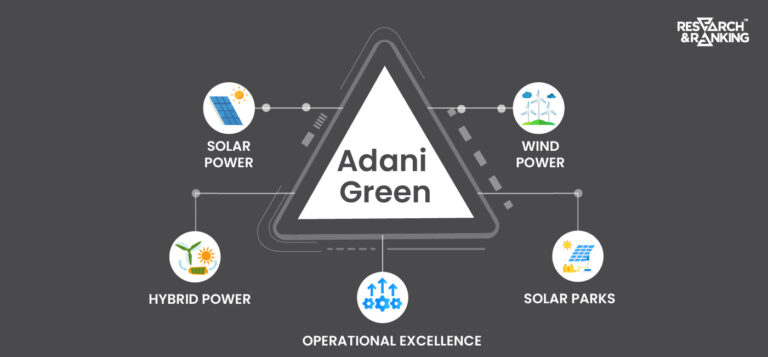
Adani Green is India’s leading renewable energy company engaged in developing, owning, and maintaining solar and wind power plants. Currently, the company has 8,024 MW of operational renewable portfolio in India, of which 4,913 MW is solar, 971 MW is wind, and 2140 MW is hybrid operational capacity spread across 12 states.

The solar portfolio has 24.7% CUF (Capacity Utilization Factor), while the wind energy portfolio has 25.2% CUF. And the hybrid portfolio achieved 35.5% CUF in FY23. Its 2,140 MW wind-solar hybrid power plant in Rajasthan is the world’s largest renewable energy park, entirely executed by Adani Green.

The company has secured its entire renewable portfolio with long-term power purchase agreements (PPAs) with an average portfolio tariff of ₹2.98 per unit. 89% of AGEL’s current portfolio has PPAs with sovereign counterparties such as NTPC, SECI, NHPC, and State DISCOMs, helping it to have a predictable cash flow.

In the solar segment, the plant availability averaged above 99% in FY23. While in the wind segment, it was 94.3%.

Projects Under Execution

Adani Green has a locked-in portfolio of 12,348 MW, with 1,889 MW nearing completion and 10,449 MW in various stages of development and approvals. In the medium term, the company’s total locked-in growth is 20.4 GW.

The company plans to have a total installed capacity of 45 GW, around 10% of India’s renewable energy target by 2030. To fuel the growth, the company has identified about 2 lakh acres of land in strategic locations in Rajasthan and Gujarat, predominantly owned by the government.

Shareholding Pattern

image 106
Source: AGEL annual report FY23

Key Management Personnel

Mr. Amit Singh is the Chief Executive Officer and was appointed on 11th May 2023. He is an IIT Delhi graduate with over 22 years of experience in the oilfield, energy transition, and digital transition in the energy sector, working in multiple geographies, including middle-east and Europe. Mr. Singh joined AGEL from Schlumberger, based in London.

Mr. Vineet S. Jaain is the Managing Director at AGEL and was previously the CEO. He has been associated with the Adani Group for more than 15 years. Under his able leadership and deep technical understanding of the sector, the group executed the world’s largest solar plant of that time at Kamuthi and India’s largest solar module manufacturing facility. Mr. Jaain joined the Adani Group as Joint President of Adani Power in 2006 from Jindal Steel & Power Ltd.

Mr. Sagar R. Adani is the Executive Director, leading the group’s foray into renewable energy and has been associated with the company since its inception. He holds a degree in Economics from Brown University, USA.

Mr. Phuntsok Wangyal is the Chief Financial Officer and joined AGEL in September 2022 from Engie India. He has substantial experience in the renewable sector and is skilled in mergers and acquisitions, financial structuring, corporate finance, and valuations. Mr. Wangyal specialized in the finance stream from IIM Bangalore and is an alumnus of St. Joseph’s Academy, Dehradun.

Adani Green Financials

Revenue

In FY23, Adani Green recorded a 54% growth in revenue from power supply to ₹5,825 crores compared to ₹3,783 crores. The company reports all its revenue under a single business segment, and the group’s revenue is from domestic sales.

image 107


image 108

EBITDA

The company recorded 56.88% growth in EBITDA during FY23 at ₹5,538 crores, compared to ₹3,530 crores in FY22.

image 109

The company consistently records an EBITDA margin of more than 90% in the last three financial years.

image 110


Net Profit

In FY23, Adani Green recorded a 99% growth in net profit at ₹973 crores, up from ₹489 crores in FY22. The company incurs significant expenses toward interest payments, which results in reduced net earnings. During FY23, AGEL expended ₹2,911 crores on interest payments on loans.

image 111

Adani Green Ratio Analysis

Current Ratio: At the end of 31 March 2023, Adani Green reported an 18% decline in the current ratio to 0.68 times from 0.83 times in FY22.

Debt-to-equity Ratio: Adani Green’s debt-to-equity ratio improved to 1.96 times in FY23 from 5.13 times in FY22. The decline is due to an increase in shareholder’s equity because of equity share issuance.

Debt service coverage ratio: During the year, the debt service coverage ratio declined to 1.52 times from 1.67 times in FY22.

Return on Capital Employed (ROCE): Adani Green’s ROCE declined to 3.74% in FY23 from 4.34% in FY22.

Adani Green Share Price History

Adani Green shares were listed on BSE and NSE on 18th June 2018 after its successful IPO, which was oversubscribed by 5.98 times. However, the stock debuted at ₹30, against its IPO price band of ₹100-125.

Despite losing at debut, Adani Green share price made a remarkable turnaround and has given a CAGR return of 99% in the last five years. The company has not paid dividends to shareholders or had any bonus issues after listing.

AGEL
Source: TradingView

Despite the recent crash in Adani Green share price after the Hindenburg saga, it is one of the best-performing stocks in the market. The stock was trading around the ₹30 level in July 2018 and made an all-time high level of ₹3,050 on 19th April 2022, 100X in less than five years.

As of 14th July 2023, Adani Green has a market capitalization of ₹1,52,891 crores.

Adani Green Future Growth Potential

A SWOT analysis to better understand the Adani Green share price future growth potential.

Strengths

  • The group’s expertise in executing complex mega projects has helped it become one of India’s best-performing renewable energy companies. The company is reporting year-on-year healthy growth in net profits for the last five years.
  • Strong cash generation ability as entire power production is contracted through long-term power purchase agreements. AGEL has tied up with “Diversified Growth Capital” with a revolving facility of $1.64 billion that will fully fund its entire project pipeline
  • The company has managed to bring down the average debt cost of 11.1% in FY19 to 9.5% at the end of FY23.
  • Earning per share (EPS) more than doubled in FY23 at ₹5.41, from ₹2.41 in FY22
  • Favorable government policies and schemes on the promotion of renewable energy, like the PLI scheme on domestic solar PV manufacturing

Weakness

  • AGEL’s current average portfolio tariff is ₹2.98 per unit, which is lower than the national
  • the average power purchase cost of ₹3.85 per unit.
  • The company has huge debt on its book. At the end of FY23, gross debt stood at ₹47,274 crores. A sizeable portion of the company’s earnings goes toward interest payments.

Opportunities

AGEL is going to expand its total installed capacity by 5.5 times to 45,000 MW by 2030. PPAs with tariffs closer to the national average power purchase cost will improve profitability.

AGEL earned 3.9 million carbon credits in FY23, generating revenue of ₹157 crores. An increase in operational capacity will benefit the company in the long term.

Threats

The company has a low debt service coverage ratio, which makes it vulnerable to debt repayment risk. As per the company, the debt repayment risk is low, and the average tenure of the long-term debt is 7.3 years at the end of FY23.

AGEL faces strong competition from domestic and foreign companies that could moderate margins in case the tariff declines. The company is dependent on third-party vendors and manufacturers of silicon wafers and PV modules for solar projects. Any increase in the price of solar modules is difficult to pass on to customers and can impact project viability.

Faces increased scrutiny from regulators worldwide after the Hindenburg saga, impacting the company’s ability to raise capital from the market and hitting investors’ confidence.

Adani Green Share Price Analysis

Despite possessing a robust growth pipeline and a stable and predictable cash flow, the share price of Adani Green Energy Limited appears to be relatively expensive. As of July 14, 2023, the stock is trading at a high price-to-earnings (PE) multiple of 135 times and exhibits a low return on capital employed (ROCE) of 3.74%. These factors can make it challenging for the stock to reach high levels till the profitability margin and book value improve.

Adani Group stocks, including Adani Green, are susceptible to significant volatility and are currently trading at elevated valuations. In the medium to long term, a significant portion of the company’s profits may be allocated to servicing and repaying debt, which may mean a lower return on equity.

*Disclaimer Note: The securities quoted, if any, are for illustration only and are not recommendatory. This article is for education purposes only and shall not be considered as recommendation or investment advice by Research & Ranking. We will not be liable for any losses that may occur. Investment in securities market are subject to market risks. Read all the related documents carefully before investing. Registration granted by SEBI, membership of BASL, and certification from NISM in no way guarantee the performance of the intermediary or provide any assurance of returns to investors.

FAQs

How has Adani Green share price performed in the last 3 and 5 years?

As of 14th July 2023, Adani Green share price has given a CAGR return of 40% and 99% in the last three and five years, respectively. The all-time high Adani Green share price is ₹3,050.

What does Adani Green do?

Adani Green is India’s leading renewable energy company specializing in developing, constructing, owning, and maintaining large-scale grid-connected solar and wind power projects.

When was Adani Green started?

Adani Green was incorporated on 23rd January 2016, and in its initial days, it developed a 20 MW wind project in partnership with Inox Winds. Adani Green share was listed on 18th June 2018 on BSE and NSE.

Read more:  How Long-term investing helps create life-changing wealth – TOI

Introduction

If you search for the highest dividend-paying companies or dividend aristocrats, Vedanta Ltd. is sure to be at the top of your list. This metals and mining conglomerate, led by Billionaire Anil Agarwal, has managed to remain in the limelight for all types of reasons ranging from paying large dividends to making large acquisitions.

Recently, the company was in the news for trying to set up a semiconductor manufacturing business in India in partnership with Foxconn. In this article, we try to assess the current situation of Vedanta Ltd. and the impact on Vedanta Ltd share price.

Vedanta Ltd Overview

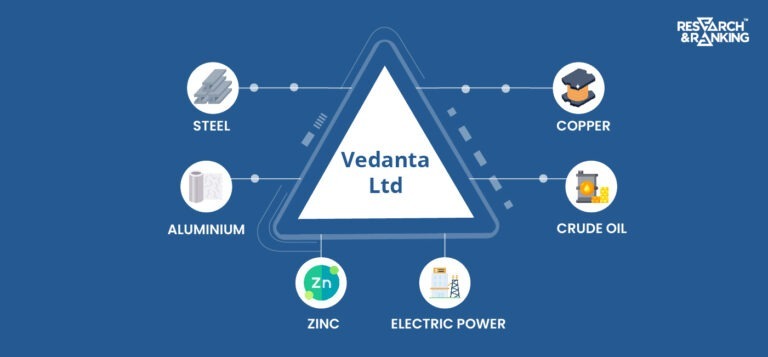
Vedanta Limited (VEDL), a subsidiary of Vedanta Resources Limited, is one of the world’s foremost natural resources conglomerates, with primary operations in zinc-lead-silver, iron ore, steel, copper, aluminum, power, nickel, and oil and gas.

As the market leader in most of these segments, Vedanta serves domestic and international demand for primary materials, thereby enabling resource sufficiency at scale. VEDL has a presence across India, UAE, East Asia, South Africa, Namibia, Liberia, Australia, and Ireland.

Following is a snapshot of the diversified structure of Vedanta and its shareholding in different subsidiary entities:

image 93
Source: Vedanta Annual Report FY23

Vedanta Ltd Journey

Vedanta Limited has had a long and illustrious history. Here are some of the critical milestones in the company’s journey:

  • 2001: Vedanta Limited acquired a 51% stake in BALCO (Bharat Aluminum Company Limited)
  • 2002: Vedanta Limited acquired a 26% interest in Hindustan Zinc Limited
  • 2003: Vedanta Limited became the first Indian company to be listed on LSE (London Stock Exchange)
  • 2004: The Company acquired a 51% stake in Konkola Copper Mines
  • 2006: Commissioned 50,000 TPA (tonnes per annum) lead smelter in India
  • 2007: Listed on the NYSE (New York Stock Exchange) as the largest IPO by a non-US Company
  • 2007: Acquired 51% stake in Sesa Goa Ltd
  • 2010: Acquired Zinc assets in Namibia, Ireland, and South Africa, including Gamsberg, the largest undeveloped Zinc deposit in the world
  • 2011: Completed acquisition of controlling stake in Cairn India, marking entry into Oil & Gas
  • 2013:  Sesa Goa is merged with Sterlite as a part of group consolidation
  • 2013: Sesa Sterlite Ltd changed its name to Vedanta Ltd
  • 2013: The merger of Vedanta Ltd and Cairn India has been approved by the shareholders of both companies
  • 2017: Vedanta Ltd wholly owned subsidiary, Cairn India Holding Ltd, acquired a 51.63% stake in AvanStrate Inc. (ASI), a Japanese manufacturer of LCD glass substrate
  • 2018: Acquired Electrosteel Steels Ltd under Insolvency and Bankruptcy Code (IBC)
  • 2019: Acquired the Sindhudurg unit of Global Coke Ltd, which was under liquidation in the Bankruptcy Code (IBC)
  • 2020: Acquired Ferro Alloys Corporation Ltd (FACOR) under the Corporate Insolvency Resolution Process (CIRP) of the Bankruptcy Code
  • 2021: Acquired Bhachau and Khambhalia coke manufacturing units of Gujrat NRE Coke Ltd, which was under liquidation under the Bankruptcy code
  • 2021: Acquired Nicomet, becoming the only Nickel producer in India

Vedanta Management Profile

Mr. Anil Agarwal is the Promoter of Vedanta Limited. He was appointed to the Board in May 2003 and has been the Executive Chairman of Vedanta Resource since March 2005. He became Non-Executive Chairman of Vedanta Limited in April 2020. He has over four decades of entrepreneurial and mining experience. Under his leadership, Vedanta has grown from an Indian domestic miner into a global natural resources group with entities listed in several markets. He is also a director of Sterlite Technologies Ltd, Conclave PTC Ltd, and Anil Agarwal Foundation.

Mr. Sunil Duggal is Vedanta Limited’s Chief Executive Officer (CEO). He was appointed to this position in August 2020. He has been the Whole-time Director of HZL (Hindustan Zinc Ltd.) since October 2015. He also led the Base Metal Group comprising Zinc, copper, and Iron ore businesses.

Mrs. Sonal Shrivastava is the Chief Financial Officer (CFO) of Vedanta Limited. She was appointed to this position in May 2023. As CFO, Sonal spearheads the group’s financial strategy and is responsible for accounting, tax, treasury, investor relations, financial planning, and analytics while driving digitalization and profitability. She holds a Bachelor’s degree in Chemical Engineering from BIT, Sindri, and a Master’s in Business administration from the Jamnalal Bajaj Institute of Management Studies.

Mrs. Madhu Srivastava is Vedanta Limited’s Chief Human Resources Officer (CHRO). She was appointed to this position in December 2018. She has an overall experience of 20 years across HR and Sales, Marketing, and Operations, spanning the FMCG, telecom, ITES, BFSI, and natural resources industries. She has completed her PGDM in marketing and sales from IIM, Ahmedabad.

Vedanta Shareholding Pattern

image 94
Source: BSE India

Vedanta Ltd Company Analysis

Vedanta is a diversified natural resources powerhouse. It is into the following business segments:

Aluminum: VEDL has the largest aluminum smelter in India with a capacity of ~2.3mt and holds a market share of 41% among primary aluminum producers in India. It is gradually strengthening its market position in the aluminum sector by increasing its share of value-added products (VAP). The current share of VAP is around 38%, which is expected to increase to 100% by FY25-26.

Zinc India: HZL, a 64.92% subsidiary of VEDL, is India’s largest integrated zinc producer and one of the lowest-cost producers of zinc globally. HZL commands a 77% market share in the primary zinc market in India and operates the world’s largest UG mine at Rampura Agucha. HZL has a strong focus on VAP, and the share of VAP is expected to increase to 23% in FY24 from 16% in FY23.

Zinc International: Zinc International has a strong presence in Africa with a total R&R (Reserves & Resources) of 659mt, and at the current rate, the mines’ lives are expected to be over 20 years. It is setting up a Zn concentrator plant and a smelter, which would take the MIC capacity to 600kt from 300kt.

Oil and Gas (Cairn India): Cairn India is India’s largest private-sector oil and gas producer, catering to 25% of India’s crude oil production. Cairn India drilled India’s first shale well in Rajasthan and is evaluating further opportunities to drill ‘low to medium’ or ‘medium to high’ reward exploration wells, further augmenting the company’s resources.

Power: VEDL is one of India’s largest private sector power producers and has a mega 1980mw power plant at Talwandi Sabo. It has a long-term PPA with state distribution companies in Punjab, Tamil Nadu, Kerala, Odisha, and Chhattisgarh. It has a total power portfolio of 9gw, with 63% of it for captive consumption.

Others: VEDL has a strong presence across steel (3mt capacity), FACOR (140kt Ferro chrome capacity), iron ore (one of the largest private sector merchant iron ore miners), and copper.

image 95
Source: Vedanta Annual Report FY23
image 96
Source: Vedanta Annual Report FY23

Vedanta Fundamental Analysis

VEDL is a metal and mining powerhouse with a presence across zinc, lead, silver, aluminum, oil and gas, copper, Ferro chrome, iron ore, power, and steel.

Aluminium, Zinc, and Oil & Gas are the three largest revenue-contributing segments for the company. The company recorded best-ever production numbers in some businesses segments in FY23 like:

  • Aluminum: Highest ever Aluminium production of 2,291 kt, up 1% with Jharsuguda ramp-up
  • Zinc India: Historic high refined metal production at 1,032 kt, up 7% YoY
  • Zinc International: Gamsberg achieved record production of 208 kt, up 22% YoY
  • Steel: Highest ever hot metal production of 1,376 kt
  • FACOR: Achieved all-time high ore production of 290 kt, up 16% YoY

(*Source: Vedanta Ltd. Annual Report FY23)

The company is in a capital-intensive sector, and to that extent, it has used significant debt capital to fund its expansion plans. Vedanta Resources (the parent company of Vedanta Ltd) has significant debt on its books. To adhere to its debt repayment commitments, Vedanta Resources relies heavily on dividend payouts by Vedanta Ltd., which depends on HZL.

Vedanta Ltd. declared record dividends in FY23, which helped Vedanta Resources meet its debt commitments; however, this led to HZL (Hindustan Zinc) taking debt on its book from being a cash-rich company earlier.

Vedanta Resources has adhered to all the debt repayment timelines and has already deleveraged USD 3.3b as of May’23 against its three-year USD 4b target. Vedanta Resources has a total debt of ~USD 6.4b, and it is expected to continue its deleveraging journey and adhere to its commitments.

Revenue and Profitability

Vedanta Ltd. posted all-time high revenue of INR 145,404 Cr and the second-highest annual EBITDA of INR 35,241 Cr. FY23 started on a high note, with prices of most of the metals touching all-time highs. However, the prices gradually corrected and were down, especially in 2HFY23, which reduced EBITDA margins in FY23.

Metal prices have been under pressure since the start of FY24 due to macroeconomic volatility, high-interest rates, oversupply of metals, lower-than-expected pickup in China, struggling Chinese property sector, geo-political unrest in Europe, etc.

image 97
Source: Vedanta Ltd. Annual Report FY21 to FY23

*Note: Adjusted EBITDA calculated as EBITDA margin excluding EBITDA and turnover from custom smelting at copper business

Return on Capital Employed:

Vedanta has improved its ROCE from 11% in FY20 to 21% in FY23, driven by healthy commodity prices, improved operating efficiency, and lower cost of raw materials due to captive mines. The company is using this as an opportunity to de-leverage the balance sheet, leading to further improvement in ROCE.

image 98
Source: Vedanta Ltd. Annual Report FY21 to FY23

Vedanta Share price analysis

Vedanta Ltd, the stock price has given a modest CAGR of 6% over the last ten years (14th July 2012 to 14th July 2023). However, Vedanta has delivered a CAGR of 37% over the last three years (14th July 2020 to 14th July 2023) driven by the commodity boom during Covid-19. Additionally, the stock has given huge dividends to shareholders, increasing the total returns.

image 99
Source: TradingView

Vedanta Share Price Target Future Growth Potential

The metals and mining sector is expected to contribute substantially to India’s GDP, and VEDL expects domestic demand to outpace the global market till FY30.

  • Metal consumption in India is expected to remain robust, driven by the ‘trinity of manufacturing, infrastructure, and energy.’ VEDL, India’s largest natural resources company and diversified portfolio, will benefit from buoyant domestic demand.
  • Copper is expected to outpace other ferrous and non-ferrous metals and clock a CAGR of 9% till FY30.
  • Natural resources such as lead/aluminum/zinc/iron ore/nickel/oil are expected to report a CAGR of 4.4%/4.1%/5.9%/4.5%/4.7%/4.2% (as shown in the chart below) until FY30.
  • Improved living standards, higher income, urbanization, and industrialization, coupled with the government’s thrust on infrastructure, construction, housing, and power, greatly augment the sector’s growth.
image 100
Source: Vedanta Ltd. Annual Report FY23

Vedanta Ltd Key risks:

Any delay in repayment or failure to raise capital at Vedanta Resources will adversely impact Vedanta Ltd. Almost 100% of the promoter holding is pledged, and any negative scenario could probably hurt the company.

*Disclaimer Note: The securities quoted, if any, are for illustration only and are not recommendatory. This article is for education purposes only and shall not be considered as recommendation or investment advice by Research & Ranking. We will not be liable for any losses that may occur. Investment in securities market are subject to market risks. Read all the related documents carefully before investing. Registration granted by SEBI, membership of BASL, and certification from NISM in no way guarantee the performance of the intermediary or provide any assurance of returns to investors.

FAQs

Who is the owner of Vedanta Ltd?

Vedanta Ltd. is owned by Vedanta Resources Ltd. (holding company), founded and promoted by Mr. Anil Agarwal.

Is Vedanta Ltd. an excellent stock to buy for the long term?

Vedanta Ltd. is a commodity business and hence gets significantly affected by movement in commodity prices like Aluminium, Zinc, Steel, etc. One must understand commodity cycles before investing in Vedanta Ltd. Additionally, optimizing for entry and exit in this company based on these cycles is important for investment in Vedanta to be successful.

What is the face value of Vedanta Ltd’s share?

Vedanta Ltd. has a face value of INR 1 per share.

Read more:  How Long-term investing helps create life-changing wealth – TOI

Introduction

Do you remember these lines from an ad film featuring Boman Irani?

Bhaiya Yeh Deewar Tootti Kyu Nahi?!!
Tutegi Kaise? Ambuja Cement se jo bani hai.

Similarly, Ambuja Cement has strengthened itself as one of the well-known cement brands thanks to its effective marketing strategy, strategic logo placement in highly visible locations, and its commitment to delivering superior quality cement.

Ambuja Cement is one of India’s top cement companies with a diverse product portfolio that caters to home construction and infrastructure project requirements. This article will analyze Ambuja Cement share price and perform a company analysis.

Ambuja Cements History

1981: Ambuja Cement was incorporated in 1981 as Ambuja Cements Private Limited by two traders, Narotam Sekhsaria and Suresh Neotia.

1983:Its name was changed to Gujarat Ambuja Cements Limited in 1983

2007:The company was named Ambuja Cements Limited in 2007.

2005: It was remarkable when Holcim Group, a Swiss multinational company that manufactures building materials, bought a stake in Ambuja Cements and ACC, paving the way for enhanced growth and synergies in the construction and cement sector.

2013:In a restructuring process, Ambuja Cements acquired a 50.01% stake in ACC in 2013, and Holcim India was also merged into Ambuja Cements.

2016: ACC also became a subsidiary of Ambuja Cements in 2016.

2022: Adani Group acquired Ambuja Cement and ACC’s controlling stake from Holcim Group last year for $10.5 billion. From a single plant with a capacity of 70,000 tonnes per annum in 1986, today Ambuja Cement has become a cement giant with a capacity of 31.45 million tonnes per annum (MTPA).

Ambuja Cements Business Overview

Ambuja Cement’s core business revolves around cement production, clinker (a vital raw material for cement production), and other building materials. The company operates six integrated plants and eight grinding units spread across India, with a manufacturing capacity of 31.45 MTPA.

Regarding business segment reporting, Ambuja Cement has only one business segment, i.e., Cement and Cement Related Products, and all its revenue is earned within India. In FY23, 77% of cement sales came from retail and 23% from institutional customers.

Product Portfolio

Ambuja Cement specializes in producing high-performance ordinary portland cement (OPC), pozzolana portland cement (PPC) suitable for home building, and other cement types for infrastructure projects.

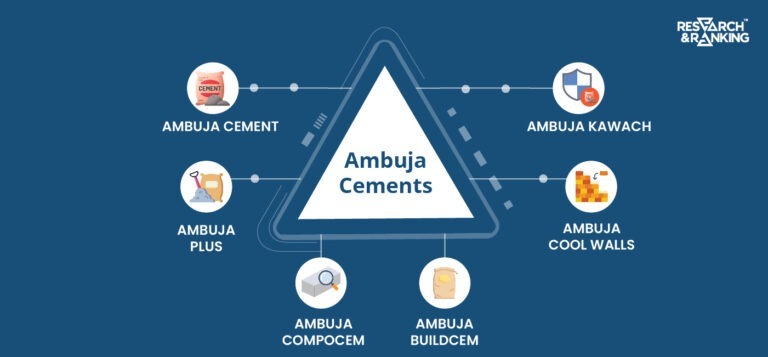
Its products are sold under the brand name Ambuja Cement, Ambuja Cement Kawach, Ambuja Cement Plus, Ambuja Cement Powercem, Ambuja Cement Railcem, Ambuja Cement Cool Walls, Ambuja Cement Compocem.

Ambuja Cements Management Team

Mr. Ajay Kapur is the CEO and Whole-time Director of Ambuja Cements and has spent over 30 years closely monitoring India’s cement, power, construction, and heavy metals sectors. He joined Ambuja Cements in 1993 and held many strategic roles. Mr. Kapur has completed his MBA from K.J. Somaiya Institute of Management and has a degree in economics.

Mr. Vinod Bahety is the Chief Financial Officer and is a qualified Chartered Accountant and Cost & Works Accountant. He has more than 19 years of experience in banking & finance with companies like Yes Bank, ICICI Bank, and Grasim Industries.

Mr. Sukuru Ramarao is the Chief Operating Officer and is a Chemical Engineer from Sri Venkateswara University.

Mr. Jayant Kumar is the Chief Human Resource Officer. He has nearly 30 years of experience managing human resource-related affairs in some of India’s leading companies like NTPC, Tata Power, Marico Ltd., etc.

Ambuja Cements Shareholding Pattern

image 78
Source: Distribution of Shareholding 31st March 23

Ambuja Cements Company Analysis

Despite the strong external headwinds, Ambuja Cements delivered solid results between January 2022 and March 2023. Ambuja Cement displayed strong operational performance and recovery after facing strong headwinds during the period. The company recorded a sales volume growth of 3%, with strong demand coming from micro markets and Tier 2 & Tier 3 cities.

However, in the first nine months, EBITDA per tonne decreased to ₹829 at the end of December 2022 due to a huge spike in fuel costs. Through cost-saving measures, changing the fuel basket to reduce import dependency, ramping up coal production in capital coal blocks, and leveraging Adani group’s expertise in sourcing low-cost coal helped to mitigate the impact.

Ambuja Cements reduced its power and fuel costs to ₹1404 per tonne by the end of March 2023, down from ₹1434 per tonne in March 2022.

The share of premium products in total trade sales volume is 22%, which the company intends to increase to 29-30% in the medium term to help in higher realization.

Ambuja Cements Financial Overview

Before being acquired by Adani Group, Ambuja Cements had a fiscal year from January to December. Shareholders approved changing the fiscal year from April to March in October 2022. As a result, the most recent financial figures reported covered a 15-month period from January 2022 to March 2023.

Revenue

In FY23, Ambuja Cement reported a 34.4% growth in revenue from operations at ₹38,937.03 crores, compared to ₹28,965.46 crores.

image 79
Source: Annual Report 2022

EBITDA

In FY23, Ambuja Cement reported a 10.7% decline in EBITDA at ₹5,860 crores, compared to ₹6,563 crores in FY22. The decline in EBITDA is due to a steep rise in fuel cost in Q2FY23, which was partly mitigated in the next two quarters by the reduction in logistics cost and coal supply from captive coal blocks.

image 80
Source: Annual Report 2022

EBITDA Margin

image 81
Source: Annual Report 2022

Net Profit

In FY23, Ambuja Cements reported an 18.5% decline in net profit at ₹3,024 crore, compared to ₹3,711 crore in FY22.

image 82
Source: Annual Report 2022

Key Financial Ratios

Current Ratio: At the end of 31st March 2023, the company’s current ratio improved to 1.75 times from 1.27 at the end of December 2021. The increase in current assets is attributed to cash received against the issue of share warrants.

Return of Capital Employed (ROCE): At the end of 31st March 2023, the ROCE of Ambuja Cement was 8.1%, declining from 9.8% at the end of December 2021.

Net Debt to Equity Ratio: The company has no long-term debt on its book. Therefore, the company doesn’t report a net debt-to-equity ratio.

Debt Service Coverage Ratio: At the end of 31st March 2023, Ambuja Cement’s debt service coverage ratio is 59.90 times.

Ambuja Cements Share Price History

The shares of Ambuja Cements were listed on the Bombay Stock Exchange, and National Stock Exchange in 1993, and its IPO was oversubscribed by 21.7 times. As of 7th July 2023, Ambuja Cements share price has given a CAGR return of 29% and 15% in the last three and five years, respectively.

Ambuja Cement had three bonus issues in 1994, 1999, and 2005 at 1:1, 1:1, and 1:2 ratios. And it underwent a stock split in the ratio of 10:2 on 20th June 2005. Meaning 100 shares held at IPO are now 6000 shares

 RatioNumber of Shares
Shares held at IPO –100
Bonus Issue on 21st Oct 19941:1200
Bonus Issue on 20th Dec 19991:1400
Bonus Issue on 20th June 20051:21200
Stock Split on 20th June 200510:26000
Illustration

Ambuja Cements has a consistent track record of paying dividends to its shareholders. In the last three years, the company has paid ₹1 in 2021, ₹6.3 in 2022, and ₹2.5 in 2023 as dividends.

Ambuja Cements
Source: TadingView

Ambuja Cements share price increased from around ₹213 on 1st July 2019 to ₹417 as of 7th July 2023. It reached an all-time high level is ₹598 (adjusted to all corporate actions). As of 7th July 2023, Ambuja Cements has a market capitalization of ₹82,980 crores.

Ambuja Cement Share Price Growth Potential

  • Adani Cement’s (combined Ambuja Cement and ACC) current cement manufacturing capacity is at 68 MTPA, which the company intends to double to 140 MTPA in the next five years or by FY28. Total capex outlay is planned at ₹7,000 crores in the next five years, which the company plans to meet through internal accruals.
  • Management targets a cost reduction of ₹300-400 per tonne by optimizing energy, transportation, and other costs.
  • Sales revenue is targeted at around 70,000 crores, with a CAGR of 19% over the next five years.
  • EBITDA per tonne is estimated to grow at a CAGR of 8% in the next five years from ₹991 to ₹1470. EBITDA margin to expand from 19% to 25% during the period.
  • ROCE is expected to increase 1.4 times to 19% over the next five years.
  • The company is aggressively working towards streamlining its cement business operations to reduce costs. It has now a common regional head for both Ambuja Cement and ACC to look after volume growth, optimize logistics, and reduce costs.
  • Ambuja Cements is aggressively working on reducing energy costs. It will increase the waste heat recovery system (WHRS) from 70 MW to 175 MW by Q2FY25. And share the mix of alternative fuel requirement (AFR) mix from 8.8% current to 30% over the medium term. It has set a 15% AFR mix target by the end of FY24.

Opportunities for Ambuja Cement

  • India is the world’s second-largest producer of cement, accounting for 7% of the global installed capacity. In FY22, domestic cement production stood at 356 MTPA, expected to reach 456 MTPA by 2027.
  • India has low per capita consumption of cement at 260-265 kg, compared to the world average of 500 kg.
  • Demand growth for the cement sector will be driven by housing, infrastructure, roads, rails, and industrial segments. Huge capital expenditure outlaid by the government to modernize India’s infrastructure. Policies like the PLI scheme also aiding to the momentum.  

Risks for Ambuja Cement

  • Management Change: Ambuja Cement and ACC are undergoing a transitional phase following their acquisition by the Adani Group. This change in ownership necessitates the implementation of new policies and practices that align with the broader goals and interests of the group that may temporarily disrupt business operations and processes.
  • Power & Fuel Costs: Cement production is an energy-intensive process, with energy costs accounting for a sizable portion of the total cost of production. A rise in energy and fuel costs can have an impact on the company’s unit economics.
  • Interest Rate Risks: The consumption of cement can be significantly influenced by sustained elevated interest rates or a slowdown in the global economy. These factors have the potential to impact construction activities and infrastructure development, which are major drivers of cement demand.
  • Regulatory Risk: Changes in environment protection laws, mining laws, trade laws, or non-compliance to any of these regulations can have financial implications and can affect the cost of innovation.

Cement, a price-sensitive commodity, tends to witness customers switching between brands in response to price fluctuations. In this context, efforts by Adani Cement to drive cost reduction and significantly increase its manufacturing capacity over the next five years hold great promise. These initiatives could impact the financial performance of the company.

*Disclaimer Note: The securities quoted, if any, are for illustration only and are not recommendatory. This article is for education purposes only and shall not be considered as recommendation or investment advice by Research & Ranking. We will not be liable for any losses that may occur. Investment in securities market are subject to market risks. Read all the related documents carefully before investing. Registration granted by SEBI, membership of BASL, and certification from NISM in no way guarantee the performance of the intermediary or provide any assurance of returns to investors.

FAQs

How has Ambuja Cements share price performed in the last 3 and 5 years?

As of 7th July 2023, Ambuja Cements share price has given a CAGR return of 27% and 15%, in the last 3 and 5 years, respectively. In comparison to the broader market, Ambuja Cements share price has outperformed the Nifty50 index over the last five years.

When was Ambuja Cements established?

Ambuja Cements was founded in the year 1983 by two traders, Narotam Sekhsaria and Suresh Neotia.  In 1983, it was renamed Gujarat Ambuja Cements Limited, and in 2007, it was renamed Ambuja Cements Limited.

Who is the owner of Ambuja Cements?

Adani Group is the promoter of Ambuja Cements and ACC and has a 63.22% stake in the company, bought from Swiss-based building materials manufacturer Holcim Group in 2022 for $10.5 billion

Read more:  How Long-term investing helps create life-changing wealth – TOI.

Introduction

Varun Beverages is the second-largest bottling company for PepsiCo beverages in the world outside the United States. It manufactures, sells, and distributes all key brands for PepsiCo, like Sting, Mountain Dew, Mirinda, Tropicana, Aquafina, etc.

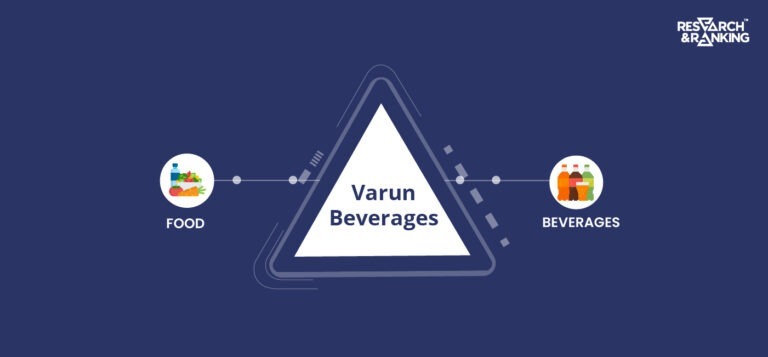
It is one of the largest beverage companies in India and is now expanding into food products as well. The company has multiplied investor wealth over the last seven years that it has been listed. Let’s try and understand the business better and assess its future performance.

Varun Beverages Overview

Varun Beverages Ltd (VBL) was incorporated on 16th June 1995 as a part of the RJ Corp group (a diversified business conglomerate with interests in beverages, quick-service restaurants, dairy, and healthcare). Varun Beverages is a key player in the beverage industry.

The company produces and distributes a wide range of carbonated soft drinks (CSDs) and a large selection of non-carbonated beverages (NCBs), including packaged drinking water. PepsiCo’s CSD brands produced and sold by VBL include Pepsi, Pepsi Black, Mountain Dew, Sting, Seven-Up, Mirinda Orange, Nimbooz Masala Soda, and Evervess.

PepsiCo’s NCB brands produced and sold by VBL include Tropicana Slice, Tropicana Juices (100% and Delight), Seven-Up Nimbooz, Gatorade, and packaged drinking water under the brand Aquafina. In addition, VBL has also been granted the franchise for the Ole brand of PepsiCo products in Sri Lanka.

VBL has been associated with PepsiCo since the 1990s and has over two and half decades, consolidated its business association with PepsiCo, increasing the number of PepsiCo licensed territories and sub-territories, producing and distributing a wider range of PepsiCo beverages, introducing various SKUs in their portfolio, and expanding their distribution network.

VBL has franchises for various PepsiCo products across 27 states and 7 union territories (except Jammu & Kashmir and Andhra Pradesh) in India. Although India is the largest market, VBL is the franchise for various PepsiCo products for Nepal, Sri Lanka, Morocco, Zambia, and Zimbabwe. VBL has 30 manufacturing plants in India and 6 manufacturing plants in international geographies.

Varun Beverages Journey

Varun Beverages Ltd (VBL) has had a long and illustrious history. Here are some of the critical milestones in the company:

Here is a timeline of Varun Beverages’ history:

  • 1995: Varun Beverages Ltd was incorporated as a Public Limited company
  • 1996: The Company started manufacturing operations in Jaipur
  • 1999: The Company started operations in Alwar, Jodhpur, and Kosi
  • 2004: DBL (Devyani Beverages Limited) was merged with VBL by the Order of Delhi High Court dated 6th Oct 2004
  • 2012: VBIL (Varun Beverages International Limited) was merged with VBL by the Oder of Delhi High Court dated 12th Mar 2013
  • 2013: Varun Beverages Ltd acquired the business of manufacturing and marketing of soft drink beverages in Delhi
  • 2015: VBL acquired PepsiCo’s India business of manufacturing, marketing, selling, and distributing soft drink beverages and syrup mix in the Indian States of Uttar Pradesh, Uttarakhand, Himachal Pradesh, Haryana, and the union territory of Chandigarh
  • 2015: VBL acquired PepsiCo’s India business of manufacturing, marketing, selling, and distributing soft drink beverage and syrup mix in Bazpur, Jainpur, Satharia, and Panipat
  • 2015:  VBL acquired the business of selling and distributing soft drinks beverages and syrup mix in one district undertaking situated in Punjab
  • 2015: Varun Beverages (Zimbabwe) (Private) Ltd was incorporated
  • 2016: VBL acquired the entire Shareholding of Arctic International Private Ltd in Varun Beverages (Zambia) Ltd
  • 2016: VBL was listed on Indian Stock Exchanges – NSE and BSE
  • 2017: Varun Beverages (Zambia) Ltd reached 90% from 60% after an increased stake in Zambia Subsidiary
  • 2017: Concluded acquisition of PepsiCo India’s previously franchised territories of the State of Odisha and parts of Madhya Pradesh, along with two manufacturing units at Bargarh (Odisha) and Mandideep (MP)
  • 2018: Concluded acquisition of PepsiCo India’s previously franchised territory of the States of Chhattisgarh, Bihar, and Jharkhand, along with two manufacturing units at Cuttack (Odisha) and Jamshedpur (Jharkhand)
  • 2018: Entered into a strategic partnership for selling and distribution of the larger Tropicana portfolio that includes Tropicana Juices (100%, Delight, Essentials), Gatorade, and Quaker Value-Added Dairy in territories across North and East India
  • 2018: Greenfield production facility was established in Zimbabwe
  • 2019: Concluded the acquisition of PepsiCo India’s previously franchised sub-territories of the State of Maharashtra (designated parts), Karnataka (designated parts), and Madhya Pradesh (designated parts).
  • 2019: Concluded the acquisition of West and South India sub-territories from PepsiCo
  • 2021: Incorporated a new subsidiary – Varun Beverages RDC SAS, in the Democratic Republic of Congo
  • 2022: Entered into an agreement to distribute and sell Lays, Doritos, and Cheetos for PepsiCo in the territory of Morocco
  • 2022: Commenced commercial production of Kurkure Puffcorn at the Kosi, Uttar Pradesh manufacturing plant for PepsiCo.

Varun Beverages Management Profile

Mr. Ravi Kant Jaipuria is the founder of Varun Beverages Ltd and RJ Corp. He is also the promoter and Chairman of the company. He has over three decades of experience conceptualizing, executing, developing, and expanding South Asia and Africa’s food, beverages, and dairy business. He is the only Indian bottler who got the PepsiCo “International Bottler of the Year” award in 1997. Under his leadership, Varun Beverages Ltd experienced significant growth and global expansion.

Mr. Varun Jaipuria is the promoter and Executive Vice Chairman of Varun Beverages Ltd. He joined the company in 2009. Varun has been instrumental in the comprehensive development of the Company’s business, including acquisitions and integration of acquired territories. Under his leadership, Varun Beverages was awarded PepsiCo’s Best Bottler in AMESA (Africa, Middle East, and South Asia) sector in 2021 in recognition of the Company’s operational excellence, governance practices, and sustainability initiatives.

Mr. Rajesh Chawla is the Chief Financial officer of Varun Beverages Ltd. He started his career at Varun Beverages in 2021 and has over 25+ years of experience in the Finance sector. Before joining VBL, he worked with reputed organizations like Whirlpool & SIS group. He is also a qualified Chartered Accountant.

Mr. Ravi Batra is the Chief Risk Officer and Group Company Secretary of Varun Beverages Ltd. He is also a member of the Institute of Company Secretaries of India and the Institute of Chartered Secretaries of London. He has a rich experience of 25 years in the field of Corporate Governance, Listing Regulations, FEMA, ESOPs, Policy framework, POSH, Inspection, and Investigations. He heads the administration, compliance, and Secretarial functions in the company. Under his leadership, VBL has won various awards for following the Best Corporate Governance practices.

Varun Beverages Shareholding Pattern

image 68
Source: BSE India

Varun Beverages Company Analysis

Varun Beverages is into the following business segments:

In Beverages following brands have been licensed to VBL:

  1. Carbonated Soft Drinks – Pepsi, Mountain Dew, 7UP, etc.
  2. Carbonated Juice-based Drink – 7UP Nimbooz Masala Soda
  3. Energy Drink – Sting
  4. Fruit Pulp/ Juice Based Drinks – Tropicana, Slice, Tropicana Delight, etc.
  5. Club Soda – Evervess, Duke’s
  6. Ice Tea – Lipton Ice Tea
  7. Sports Drink – Gatorade Sports Drink in different flavors
  8. Packaged Water – Aquafina, Aquavess

Dairy-Based Beverages – Mango Shake, Cold Coffee, Kesar Badam, etc

image 69
Source: VBL Investor Presentation Q1CY23

In Snacks following brands have been licensed to VBL in certain geographies like Morocco: Lays, Kurkure, Cheetos, Doritos

image 70
Source: VBL Annual Report CY22

Varun Beverages Fundamental Analysis

As per the agreement with PepsiCo, the responsibilities of both players are clearly pre-determined. VBL focuses on end-to-end execution, including Below the Line (BTL) marketing, whereas PepsiCo offers brand, concentrates, packaging R&D, and Above the Line (ATL) marketing support.

image 71
Source: VBL Investor Presentation Q1CY23

VBL’s expertise in sustainably scaling its existing and new territories made it easier for PepsiCo to aptly transfer most of its India’s business to them (VBL did 90%+ of the total beverage volume sold by PepsiCo in India in CY22 compared to 45%+ in CY17). Over the years, VBL has expanded its operations in India organically and inorganically. Through the in-organic route, they have acquired additional and previously franchised territories from PepsiCo.

image 72
Source: VBL Annual Reports CY17 to CY20

Revenue and Profitability

VBL grew its sales at a CAGR of ~27% from CY18 to CY22. The company has improved its EBITDA margin to 21.2% in CY22 against 19.7% in 2018.

Profit after tax has also jumped ~ five-fold from CY18 to CY22, driven by high growth in revenue from operations, improvement in margins, and transition to a lower tax rate in India.

image 73
Source: VBL Investor Presentation Q1CY23

Return on Capital Employed and Return on Equity:

Bottling is a capital-intensive business, due to which VBL sees a stable total asset turnover of ~1x. Still, the Company can sustain an ROE greater than 15% due to backward integration in manufacturing and packaging.

The company has consistently improved its ROCE and ROE to 32.9% and 17.10%, respectively, as shown in the chart below from the lows of CY20.

image 74
Source: Capital IQ

Varun Beverages Share Price History

Varun Beverages had its IPO in Nov 2016, and since then, the company has delivered multibagger returns to its shareholders. It has delivered a five-year stock price CAGR of 49% (INR 109 on 10th July 2018 to INR 825 on 10th July 2023).

Last month in June 2023, the company’s board approved splitting its shares in the proportion of 1:2. The company decided to issue two equity shares with a face value of INR 5 each for one share with a face value of INR 10 each.

image 75
Source: TradingView

Varun Beverages Share Price Target Future Growth Potential

Varun Beverages has delivered stellar growth over the last couple of years. Going forward, there are enough new opportunities like:

  • Strengthening position in new territories: VBL continues to improve its presence, product mix, and utilization levels. The Company is increasing its penetration in the newly acquired territories on the back of a robust distribution network, diversifying its product portfolio with an increasing focus on rural & semi-rural areas. Currently, VBL’s contribution to PepsiCo’s India sales Volume is 90%+ (in 2017, it was ~45%).
  • Entering into manufacturing, selling, and distribution of food products: VBL got into a co-agreement to manufacture Kurkure Puffcorn, and in Q3 CY22, they commenced trial production in their Uttar-Pradesh plant for PepsiCo India Holdings Private Limited. Apart from this, in the testimony of a strong relationship with PepsiCo, VBL entered into an agreement to distribute & sell Lays, Doritos, and Cheetos in the territory of Morocco from January 2023. If VBL can decode the manufacturing & distribution of the food business like the beverage business, it will have a long runway for growth.
  • Potential to add more visi-coolers: Currently, out of ~3 million retail outlets where VBL is present (out of the addressable market of ~10-11 million), ~60% don’t have a visi-cooler because of the non-availability of electricity or a competitor has already set up one of its visi-cooler. The company has a target to add 40,000-50,000 visi-coolers every year. Adding visi-coolers will help VBL gain customers’ attention, elevating volume growth. This creates a headroom for VBL to grow its volume organically.

Key risks:

  • There is little room for further inorganic growth in domestic markets: VBL handles more than 90% of PepsiCo’s India business. The Company operates in all the Indian states except Jammu & Kashmir & Andhra Pradesh. Thus, there is little room for inorganic growth within India. VBL can only focus on organic volume growth through increased penetration and winning market share from competitors in the beverage industry.
  • Change in contractual agreement with PepsiCo: VBL’s entire business depends entirely on its relationship with PepsiCo;. In contrast, the franchise agreement was extended till 2039, any future changes in the contractual arrangement could have major repercussions on VBL’s business dynamics.
  • Changes in lifestyle: An emerging trend of a healthy lifestyle can impact the consumption of CSD drinks, which accounts for 70%+ volume sold by VBL. Multiple new ventures have been launched based on flavored water, infused with natural flavors and free from artificial additives. It can gradually lead to a reduction in the consumption of CSD drinks in the long run.

*Disclaimer Note: The securities quoted, if any, are for illustration only and are not recommendatory. This article is for education purposes only and shall not be considered as recommendation or investment advice by Research & Ranking. We will not be liable for any losses that may occur. Investment in securities market are subject to market risks. Read all the related documents carefully before investing. Registration granted by SEBI, membership of BASL, and certification from NISM in no way guarantee the performance of the intermediary or provide any assurance of returns to investors.

FAQs

Is Varun Beverage good to buy for the long term?

Varun Beverages has created huge wealth for long-term shareholders in the past. The company continuously increases its product portfolio, distribution network, and geographical reach and hence should be able to deliver growth in the future. So, Varun Beverages can be a very good investment for long-term investors if purchased at the right valuation and held for the long term.

What is the face value of Varun Beverages Ltd. share?

The face value of Varun Beverages is INR 5 per share.

What is the Market cap of Varun Beverages?

The market cap of Varun Beverages is INR 10,721 crores as of 11th July 2023.

Introduction

Axis Bank, earlier known as UTI, was the first of the new private banks to have begun operations in 1994 after the Government of India allowed private banks to open shutters. The Bank has come a long way since then and has delivered excellent returns for its shareholders after Mr. Amitabh Chaudhary took over as the CEO of the bank in 2019.

This article tries to understand what led to the Axis Bank turnaround.

Axis Bank Overview

Axis Bank is the third largest private sector bank in India. The Bank offers financial services to customer segments covering Large and Mid-Corporates, MSME, Agriculture, and Retail Businesses.

Axis Bank is one of the first new-generation private sector banks to have begun operations in 1994. The Bank was promoted in 1993, jointly by Specified Undertaking of Unit Trust of India (SUUTI) (then known as Unit Trust of India), Life Insurance Corporation of India (LIC), General Insurance Corporation of India (GIC), National Insurance Company Ltd. (NIC), The New India Assurance Company Ltd. (NIA), The Oriental Insurance Company Ltd. (OIC), and United India Insurance Company Ltd. (UIIC). The shareholding of Unit Trust of India was subsequently transferred to SUUTI, an entity established in 2003. GIC, NIC, NIA, OIC, and UIIC have been reclassified from the promoter category to the public category. As of March 31, 2023, SUUTI and LIC are the promoters of the Bank.

The Bank has a large footprint of 4,903 domestic branches (including extension counters) with 15,953 ATMs & cash recyclers spread across the country as of 31st March 2023. The Bank’s Overseas operations are spread over eight international offices with branches in Singapore, Dubai (at DIFC), and Gift City-IBU; representative offices in Dhaka, Dubai, Abu Dhabi, and Sharjah; and an overseas subsidiary in London, UK. The international offices focus on Corporate Lending, Coverage Business, Trade Finance, Syndication, Investment Banking, Liability Businesses, and Private Banking/Wealth Management offerings.

Axis Bank Company Journey

Axis Bank has a long and illustrious history that spans over a century. Here are some of the critical milestones in the company’s journey:

  • 1993: UTI Bank is incorporated as a private sector bank in India. It begins its operations with a registered office in Ahmedabad, Gujarat.
  • 1994: UTI Bank opens its first branch in Ahmedabad
  • 1998: The Company went public. The public issue was subscribed by 1.2 times with over 1 lakh retail investors
  • 2003: Crossed the one-million mark in debit card issuance
  • 2004: Offered customers access to 7000 ATMs across the country, the largest to be offered by an Indian Bank, through bilateral agreements and multi-lateral consortiums for shared ATMs
  • 2005: UTI Bank enlisted on the London Stock Exchange and raised USD 239.30 million through Global Depository Receipts (GDRs)
  • 2007: UTI changes its name to Axis Bank, launches its new logo and a national ad campaign
  • 2010: Axis Bank acquired the Investment Banking and Equity Capital market business of Enam Securities
  • 2011: Launched retail broking business and online trading platform – Axis Direct
  • 2013: Launched overseas subsidiary Axis Bank UK Limited to commence banking operations in the United Kingdom
  • 2015: Introduced Burgundy – Wealth Management Services
  • 2018: Opened IFSC Banking Unit at Gift City Multi-Services SEZ in Gandhinagar, Gujarat
  • 2019: Amitabh Chaudhary takes over as MD & CEO from 1st Jan 2019
  • 2023: Axis Bank completes acquisition of Citibank India’s consumer businesses in India

Axis Bank Management Profile

Mr Amitabh Chaudhary is the Managing Director and CEO of Axis Bank. Before joining the Bank, Amitabh had a long and successful stint of nine years at HDFC Life. Under his leadership, HDFC Life emerged as the finest, most technology-savvy brand in the insurance space, and today, it is one of India’s largest private life insurers. Amitabh is also currently the Chair of the FICCI Committee on Banking.

Mr Rajiv Anand is the bank’s Deputy Managing Director, leading some of the most critical functions, including Wholesale Banking and Digital Banking, along with support functions like Marketing and Corporate Communications. Rajiv has had an illustrious career spanning more than 30 years and has focused on various facets of the financial services industry. He is widely recognized for his strengths in capital markets and for successfully building new businesses to scale.

Mr Ganesh Sankaran has been the Group Executive – the Wholesale Banking Coverage Group at Axis Bank since March 2019. He has nearly 25 years of experience across coverage, credit, and risk functions. He has handled verticals like Corporate Credit, Financial Institutions, Business Banking, Mortgages, Commercial Transportation, Equipment Finance & Rural Lending. Before joining Axis Bank, he was an Executive Director at Federal Bank. His responsibilities included creating a robust business architecture across the Wholesale Bank, Micro/Rural Bank, and Business Banking.

Mr Neeraj Gambhir has been the Group Executive – Treasury, Markets & Wholesale Banking Products of Axis Bank since May 2020. He has over 25 years of experience in the financial services industry with expertise in Fixed Income, Foreign Exchange, Capital Markets, Structured Finance, Derivatives Risk Management, and Investment Banking areas. Previously, he was the MD and Head of Fixed Income for Nomura Holding Inc. India, where he set up and grew their Fixed Income franchise in the country. Before that, he was the Managing Director of Lehman Brothers India and a Senior General Manager and Global Head of Structured Finance & Balance Sheet Management at ICICI Bank.

Axis Bank Shareholding Pattern

image 47
Source: BSE India

Axis Bank Company Analysis

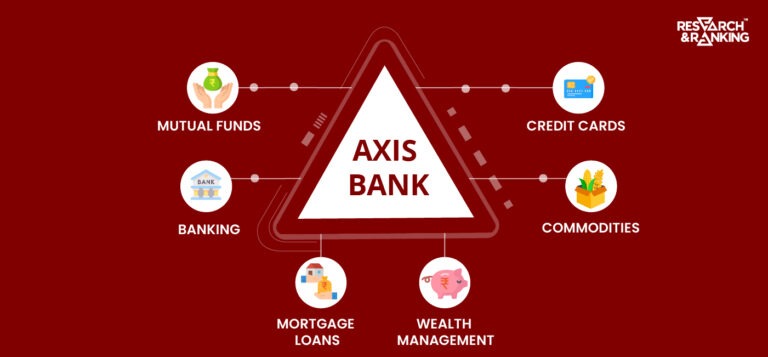
Axis Bank is a financial conglomerate. Through its various subsidiaries, it has a presence in asset management, broking & investment banking, special situations funding, structured financing & home loans.

Key Subsidiaries of Axis Bank are:

  1. Axis Finance
  2. Axis AMC
  3. Axis Capital
  4. Axis Securities

Within the bank, the loan mix is dominated by the retail book, which has led to significant improvement in the NPA ratio for the bank. As of FY23, the retail loan book is more than 50% of the total advances.

image 48
Source: Axis Bank Q4FY23 Investor Presentation

Axis Bank completed the acquisition of Citibank India’s Consumer Business, comprising loans, credit cards, wealth management, and retail banking operations. This strategic acquisition strengthens Axis Bank’s position among large private lenders in India and will help accelerate its premium market share growth. The acquisition was carried out in a record time of seven months post-receipt of CCI approval.

With the acquisition of Citibank India Consumer Business, Axis Bank added over 2.4 million new customers and ~3200 employees to the Axis family.

Axis Bank Financials

Core Operating Profit and Net Profit

Net Interest Income for FY23 grew 30% YOY to INR 42,946 Cr from INR 33,132 Cr in FY22. Core operating profit in FY23 grew 40% YOY to INR 32,291 Cr from INR 23,094 Cr in FY22.

Net Profit for FY23 (excluding exceptional items) grew 68% to INR 21,933 Cr from INR 13,025 Cr in FY22. Reported net profit for FY23 de-grew by 26% YOY to INR 9,580 crores due to the write-off of the acquisition cost of Citi’s India consumer business along with expenses related to one-time policy harmonization, banker fees, stamp duties, and taxes. * Excluding trading profit and exchange gain/loss on capital repatriated from overseas branches.

Financial Performance (in Cr)Q4FY23Q4FY22%GrowthFY23FY22%Growth
Net Interest Income11,7428,81933%42,94633,13230%
Other Income4,8954,22416%16,50115,2218%
Operating Revenue16,63713,04228%59,4474835323%
Core Operating Revenue(*)16,55412,81229%59,6894670528%
Operating Expenses7,4706,57614%27,39823,61116%
Operating Profit9,1686,46642%32,04824,74230%
Core Operating Profit(*)9,0846,23546%32,29123,09440%
       
Net Profit-5,7284,1189,58013,025-26%
Source: Axis Bank Q4FY23 Investor Presentation

Net Interest Income & Net Interest Margin

Net Interest Income (NII) is the difference between the interest earned on a bank’s assets (such as loans and investments) and the interest paid on its liabilities (such as deposits and borrowings).

Net Interest Margin (NIM) is calculated by dividing the NII by the average interest-earning assets. NIM continues to witness up-tick led by structural drivers like

image 49
Source: Axis Bank FY22 Annual Report & Q4FY23 Investor Presentation
  • Improvement in balance sheet mix
  • Reducing the share of low-yielding RIDF (Rural Infrastructure Development Fund) bonds
  • Improvement in CASA% (Current Account and Savings Account)
  • Asset Quality: NPA stands for Non-Performing Asset. It refers to a loan or an advance where the borrower has not paid the interest or the principal amount for a specified period, usually for 90 days or more.

Gross NPA refers to the total value of a bank’s non-performing assets. Net NPA, on the other hand, is the value of NPA after reducing the provisions made by the bank to cover the losses that may arise from such non-performing assets.

As of 31st March 2023, the Bank’s reported Gross NPA and Net NPA levels were 2.02% and 0.39%, respectively, as against 2.82% and 0.73% in FY22. The chart below shows that asset quality has improved significantly over the last five years due to a higher share of loan mix from retail books.

image 50
Source: Axis Bank FY22 Annual Report & Q4FY23 Investor Presentation

Advances & Deposits

An advance refers to a loan or credit extended by a bank to its customers. Banks offer various advances such as personal, business, home, education, vehicle, and credit card loans.

Deposits are a critical source of funding for banks, and they use these funds to provide loans and advances to customers. The Bank’s advances grew 19% YOY and 11% QOQ to INR 845,303 Cr on 31st March 2023. Retail loans grew 22% YOY and 14% QOQ to INR 487,571 Cr and accounted for 58% of the net advances of the Bank.

One of the reasons for the superior performance of the Bank has been the growth in the retail loan book. The share of CASA (Current Account & Savings Account) deposits in total deposits stood at 47%, up 215 bps YOY and 261 bps QOQ.

image 51
Source: Axis Bank FY23 Annual Report & Q4FY23 Investor Presentation

Improving Return ratios (ROA & ROE)

Axis Bank has been improving its RoA (A higher RoA suggests that a bank is more efficient in generating profits from its assets) & ROE (the higher the ROE, the more efficient a company’s management is at generating income and growth from its equity financing) over the last few years as seen in the chart below.

ROA is inching towards 2% from a low of 0.04% in FY18, and ROE is approaching 20% from a low of 0.53% in FY18. This shows the extent of turnaround the bank has seen in the last six years.

image 52
Source: Axis Bank FY22 Annual Report & Q4FY23 Investor Presentation

Payments & Digital

Axis Bank issued 42 lakhs new credit cards in FY23. The Bank has been one of the highest credit card issuers in the country over the last three quarters and has gained a total CIF market share of 17% in the previous six months.

Axis Bank Share Price history

Axis Bank’s share price has delivered a CAGR of 14% over the last ten years (from INR 229 on 20th June 2013 to INR 975 on 20th June 2023). However, the bank has delivered 33% CAGR over the last three years (From 20th June 2020 to 20th June 2023), and it remains one of the top picks in the banking space for the majority of the brokerage houses, given its superior financial performance, top-management stability/credibility, and strong capital/ provision buffers.

image 53
Source: TradingView

Axis Bank Strategy

The bank has already witnessed improvement in RoA and RoE and continues to work towards sustaining the momentum in the future. The management is confident about its business growth, reaping benefits from the acquired company, and focusing on the core business segments.

The bank has strengthened its retail segment with an aggressive focus on customer acquisition and improved granularity. CITI business integration may boost its business momentum and help capture market share in the retail segment.

*Disclaimer Note: The securities quoted, if any, are for illustration only and are not recommendatory. This article is for education purposes only and shall not be considered as recommendation or investment advice by Research & Ranking. We will not be liable for any losses that may occur. Investment in securities market are subject to market risks. Read all the related documents carefully before investing. Registration granted by SEBI, membership of BASL, and certification from NISM in no way guarantee the performance of the intermediary or provide any assurance of returns to investors.

FAQs

What is the 52 Week High and Low of Axis Bank?

Axis Bank had a 52 Week high of INR 989.7 per share while the 52-week low was INR 618.3 per share as of 21st June 2023.

What is the face value of the share of Axis Bank Ltd.?

Axis Bank’s face value is INR 2 per share.

Is Axis Bank good for the long term?

Axis Bank has improved on all business parameters, including profitability, NPAs, retail loan book mix, and return ratios, and is well-positioned to deliver good returns over the long term. That being said, investors must be cautious about their entry valuation, thoroughly study, and keep a decent margin of safety before investing.

Introduction

Did you know that Tata Chemicals is in almost every household in India? It’s true! In 1983, Tata Chemicals was the first company in India to introduce the iconic iodized-packaged salt brand Tata Salt. And since then, it has become a trusted household name nationwide. Over the years, Tata Chemicals has grown into a diversified chemical company with a presence in over 99 countries across six continents.

This article will dive deep into Tata Chemicals share price analysis and understand its prospects.

Tata Chemicals History

Tata Chemicals was initially set up as Okhamandal Salt Works in 1927 and later became part of Tata Group when JRD Tata took it over in 1939.

Initially started as the manufacturer of industrial salt and later diversified into manufacturing soda ash, sodium bicarbonate, and a range of science-based products. Tata Chemicals is the world’s third-largest producer of soda ash, sixth-largest producer of sodium bicarbonate, and a leader in crop protection and agri-input solutions.

Recently, Tata Chemicals expanded into health-based nutraceuticals, prebiotics under the brand Tata NQ, and the production and recycling of Li-ion batteries.

Tata Chemicals Business Overview

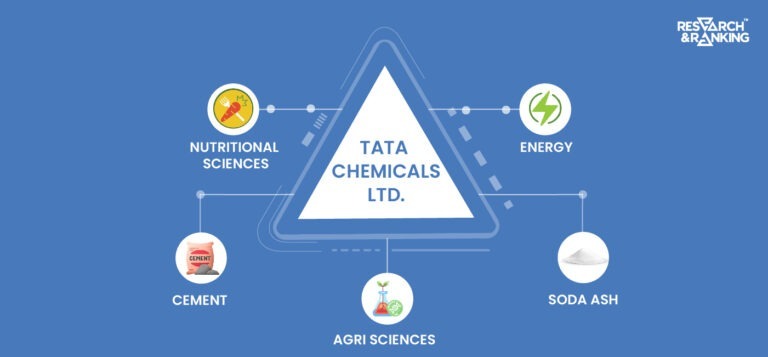
Tata Chemicals has divided its operations into two business segments- Basic Chemistry and Specialty Products.

The Basic Chemistry segment comprises inorganic chemicals like soda ash, sodium bicarbonate, and salt. It has manufacturing operations spread over four continents- North America, Europe, Africa (Kenya), and Asia.

While the Specialty Products segment comprises specialty silica, prebiotics, agri-inputs, and material sciences. Its listed subsidiary, Rallis India Limited, produces Agri inputs, including seeds for Indian and overseas farmers. In FY23, Tata Chemicals’ revenue from operations stood at ₹16,789 crores and EBITDA of ₹3,822 crores.

Tata Chemicals Management Profile

The leadership team of Tata Chemicals includes:

R Mukundan is the Managing Director and CEO of Tata Chemicals and joined Tata Administrative Services (TAS) in 1990 after completing his MBA from FMS, Delhi. Over 26 years, Mr Mukundan has served in the group’s hospitality, automotive, and chemical sectors.

Zarir Langrana is the Executive Director and currently heads the Global Chemicals Business of Tata Chemicals. Mr Langrana is an economics graduate from the University of Madras and did his management studies at XLRI-Jamshedpur. He was inducted into the Tata Group through the TAS.

Nandakumar S. Tirumalai is the Chief Financial Officer (CFO) of Tata Chemicals and joined Tata Group in 2012 as Head- Treasury and Investor Relations in Tata Power. Later, he moved to Titan Limited as Vice President- Corporate Finance in 2018. Before joining Tata Group, Mr Nandakumar worked with companies like ITC, Raymond, Reliance Securities, etc.

Rahul Pinjarkar is the Chief Human Resources Office at Tata Chemicals and has over 28 years of experience handling HR-related functions. Mr Pinjarkar joined Tata Group in 2018, leading the HR function at Trent Hypermarkets and moved to Tata Chemicals before joining the Tata Group. He worked with Novartis, Philips, and Saint Gobain Group.

Tata Chemicals Shareholding Pattern

image 35
*As of 31st March 2023

Tata Chemicals Financials

Revenue

In FY23, Tata Chemicals reported a 33% growth in revenue at ₹16,789 crores, compared to ₹12,622 crores.

image 36

Segment-wise Revenue

 FY21 (in ₹ crores)FY22 (in ₹ crores)FY23 (in ₹ crores)
Basic Chemistry Product7609975813597
Speciality Products258028263198

Geographical Revenue Distribution

 FY21 (in ₹ crores)FY22 (in ₹ crores)FY23 (in ₹ crores)
India4922.4659277216
Asia (other than India)321.89402902
Europe1406.2618982607
Africa247.66321495
America3287.6540575534
Others13.881735

EBITDA

In FY23, Tata Chemicals reported 66% growth in EBITDA at ₹3,822 crores, compared to ₹2,305 crores in FY22.

image 37

Segment-wise Profit Before Interest Cost

 FY21 (in ₹ crores)FY22 (in ₹ crores)FY23 (in ₹ crores)
Basic Chemistry Product728.5014863028
Speciality Products209.3316891

Net Profit

Tata Chemicals’ net profit in FY23 was ₹2,452 crores, up 75% from ₹1,400 crores in FY22.

image 39
image 40

Tata Chemicals Key Financial Metrics

Current Ratio: In FY23, Tata Chemicals’ current ratio decreased marginally to 2mes from 2.52 times.

Debt-to-equity Ratio: Tata Chemicals adjusted net debt to equity is 0.22 times in FY23, compared to 0.26 in FY22. The company has a gross debt of ₹6,296 crores in long and short-term borrowings. In FY23, the company repaid more debt than it had earlier guided and intends to repay USD 200-250 million in debt in FY24.

Return on Capital Employed (ROCE): During FY23, ROCE improved to 8.07% from 6.56% in FY22.

Tata Chemicals Share Price Analysis

Tata Chemicals launched its IPO on 21st September 1993 at an issue price of ₹18 per share and got a good response from investors. IPO was oversubscribed by five times. As of 24th June 2023, Tata Chemicals share price has grown at a CAGR of 23% in the last 10 years.

And the company has been consistently paying dividends to its shareholders. In the last three years, Tata Chemicals has paid ₹10 in 2021, ₹12.50 in 2022, and ₹17.50 in 2023 as dividends to shareholders.

image 41

Tata Chemicals share price has increased from around ₹160 level on 1st January 2013 to ₹980 as of 24th June 2023. It reached an all-time high level of ₹1,214 on 10th October 2022. As of 24th June 2023, the Tata Chemicals market cap is ₹24,968 crores.

Tata Chemicals Company Analysis

Basic Chemistry Business

The basic chemistry business at Tata Chemicals generates the majority of the company’s revenue. In FY23, the segment generated over 80% of the total revenue for the company. It consists of Soda Ash, Salt, and Sodium Bicarbonate.

Soda Ash

Tata Chemicals is the world’s third-largest producer of Soda Ash, with an installed annual capacity of 4.36 million MT. The overall long-term global demand for Soda Ash is expected to grow at a CAGR of ~3% and ~6% in India.

Soda Ash is a key raw material in glass and lithium carbonate manufacturing. While it has been traditionally used in various applications, the increasing global demand for solar glass and lithium carbonate, particularly for manufacturing electric vehicle (EV) batteries, is expected to drive the growth in Soda Ash demand.

The current global capacity for Soda Ash is 65 million MT, which will not be adequate to service the growing demand driven by new applications. As per estimates, an additional 16 million MT capacity is needed by 2030 to service the ever increasing demand for soda ash.

Tata Chemicals intends to double its soda ash capacity in a phased manner. During FY24, the company plans to add 1.85 lakh MT of capacity between FY24 and FY27, Tata Chemicals has planned ~30% incremental capacity addition.

Sodium Bicarbonate

Sodium Bicarbonate is mostly used in the food, feed, and pharmaceutical sectors, and its demand is expected to grow at a CAGR of ~3% globally and ~7% in India over the next five years. Its sustainable new applications include Industrial Flue Gas Treatment to reduce emissions and applications in poultry and cattle feed to increase productivity and reduce methane emissions in cattle.

Tata Chemicals’ carbon capture unit can produce 99.99% pure carbon dioxide enabling it to create high-grade carbon-neutral Sodium Bicarbonate. The company plans to increase its bicarbonate capacity by 2.5X in 5 to 7 years.

Salt

Tata Chemicals is the largest producer of vacuum-evaporated iodized salt in India. Apart from manufacturing edible-grade salt, Tata Chemicals also produces salt for industrial purposes used in manufacturing synthetic Soda Ash, Caustic Soda, and Chlorine Derivatives.

In between FY24 and FY27, Tata Chemicals plans to increase its capacity by five times.

Specialty Products

The specialty products business includes Specialty Silica, Prebiotics, and Agrochemicals & Seeds.

Specialty Silica

Tata Chemicals has extended its expertise in basic chemistry to manufacture specialty silica products used as an ingredient and intermediate in industrial, food, pharmaceuticals, and personal care applications.

HSD, or High-dispersible Silica, is used in automotive tyres for green labelling. Its use in tyres improves safety and performance, increasing fuel efficiency by 7%. Tata Chemicals is investing in sustainable green chemistry and focusing on becoming a world leader in producing HDS from renewable feedstock and rice husk.

Fermentation

Tata Chemicals is investing in tomorrow’s technologies aligned with sustainable green chemistry. Its fermentation platform has the potential to produce industrial materials and nutraceutical products. Its current product, fructooligosaccharide, is used in prebiotics and alternative sweeteners.

Agrochemicals & Seeds

Tata Chemical’s listed subsidiary Rallis India is engaged in producing agrochemicals, specialty crop nutrition, and seeds domestic and export markets.

Tata Chemicals Share Price Growth Potential

The strong demand for the Soda Ash segment in the domestic and international markets helped Tata Chemicals to report better earnings during FY23 across all segments.

EBITDA margin expanded by 500 bps to 23% during FY23, led by good growth in the basic chemicals segments. A tight soda ash supply scenario on the back of strong demand from emerging industries and geographies, China’s reopening is likely to support the continuance of upbeat financial performance in Tata Chemicals. The strong positive in the specialty products segments also drives the company’s operational performance.

Focus on R&D and Development of New Product Portfolio

In FY23, Tata Chemicals and Rallis India filed 14 new patent applications and have been granted 133 patents to date. In the last fiscal year, it also won the CII India’s Top 50 Innovative Company Award and Top Innovative Company (Large) in Manufacturing. Some of the next focus areas in innovations for Tata Chemicals are:

  • Tata Chemicals is building next-generation silica for applications in paints, silicones, and application-specific silica products in the speciality materials segment.
  • Focusing on developing sodium-based energy storage solutions for next-generation EV batteries.
  • Developing high-energy solutions from energy-rich biomass/ agri-waste.
  • In the FOS & Nutrition segment, the company is building an encapsulation technology platform to enhance thermo-stability and increase the shelf-life of minerals and bio-actives.
  • Development of efficient solvent recovery and recycling of reagents across all projects and development of safer formulations developments.

Key Risks for Tata Chemicals Share Price

However, global demand for soda ash is likely to remain stable in the medium to long term, but a global recession could disrupt supply-demand dynamics. Furthermore, as China reopens and grows its economy, increased supply may have an impact on international prices for soda ash and Tata Chemicals’ profitability.

*Disclaimer Note: The securities quoted, if any, are for illustration only and are not recommendatory. This article is for education purposes only and shall not be considered as recommendation or investment advice by Research & Ranking. We will not be liable for any losses that may occur. Investment in securities market are subject to market risks. Read all the related documents carefully before investing. Registration granted by SEBI, membership of BASL, and certification from NISM in no way guarantee the performance of the intermediary or provide any assurance of returns to investors.

FAQs

How has Tata Chemicals share price performed in the last 5 and 10 years?

As of 24th June 2023, Tata Chemicals share price has given an impressive CAGR return of 25% and 23% in the last 10 years and 5 years, respectively.

When was Tata Chemicals established?

Tata Chemicals was founded in 1927 as Okhamandal Salt Works and later became a part of the Tata Group when JRD Tata purchased it in 1939.

What does Tata Chemicals manufacture?

Tata Chemicals produces Soda Ash and Sodium Bicarbonate, primarily used in making soaps, detergents, glass, solar glass, etc. Its other specialty products segment includes specialty silica, prebiotics, agri-inputs, and material sciences. Tata Chemicals is the brand owner of iconic Tata Salt.

Read more:  How Long-term investing helps create life-changing wealth – TOI

In this dynamic world of finance, investors often face challenges when choosing between Bajaj Finserv and Bajaj Finance. These NBFC giants have excelled in creating shareholder value over the past decade and continue to be Dalal Street’s favorite stocks.

Let us understand more about Bajaj Finserv the company.

Bajaj Finserv Overview

Bajaj Finserv was spun off from Bajaj Auto Limited in April 2007 to focus solely on the group’s financial services businesses, unlock value in high-growth business areas such as Auto, Insurance, Finance, and Wind Power, and strengthen their competencies.

The company operates as a group holding company and operates through multiple subsidiaries. It has a 52.4% stake in Bajaj Finance Ltd., 74% each in Bajaj Allianz Life Insurance and Bajaj Allianz General Insurance, and 80.13% in Bajaj Finserv Direct.

The wholly-owned subsidiaries include Bajaj Finserv Health Ltd., Bajaj Finserv Ventures Ltd., Bajaj Finserv Asset Management Ltd., and Bajaj Finserv Mutual Fund Trustees Ltd.

Bajaj Finserv
Source: Bajaj Finserv

Bajaj Auto Limited was renamed Bajaj Finance Limited in September 2010. Read Bajaj Finance Share Price Analysis here.

Bajaj Finserv Company Analysis

The company operates through various subsidiaries, offering a comprehensive suite of financial solutions to cater to the diverse needs of individuals and SME customers throughout their life cycles. The company has divided its business into Products & Solutions and Platforms.

Products & Solutions

Bajaj Finance: It’s the lending arm of the company involved in consumer lending, personal loans, SME loans, rural lending, commercial lending, and loan against securities.

Bajaj Allianz Life Insurance Limited: It’s the life insurance division of Bajaj Finserv, with a strong presence in individual and group life insurance verticals.

Bajaj Allianz General Insurance Limited: It’s the general insurance division of the company offering insurance solutions for cars, two-wheelers, travel, health, home, etc., across both retail and commercial customers.

Platforms

Bajaj Finserv Direct Limited: It is like a marketplace platform where Bajaj Finserv Direct has partnered with respected names in the financial industry to provide financial product categories spanning secured and unsecured debt, insurance, investments, credit cards, etc.

Bajaj Finserv Health Limited: It is the group’s personalized healthcare platform providing access to services like health insurance, doctor teleconsultation, discounts on lab tests, free preventive health checkups, and others.

Bajaj Financial Securities Limited is a registered stockbroker and depository participant with SEBI who offers investment products and services to retail and HNI clients, including margin trade financing.

Bajaj Finserv has categorized its income sources into the following segments:

  • Life Insurance
  • General Insurance
  • Windmill
  • Retail Financing
  • Investments and Others

Bajaj Finserv Management Profile

Bajaj Finserv is led by Chairman and Managing Director Sanjiv Bajaj, and under his leadership, the company has emerged as a leading financial services provider. Sanjiv is a Harvard Business School, USA, alumnus and member of various prestigious industry bodies.

Mr. S. Sreenivasan is the President (Finance) and Chief Financial Officer (CFO) at Bajaj Finserv Limited. He is a member of the senior executive management team, which oversees long-term strategic and annual operating plans, annual operations, and corporate governance of the group. A qualified Chartered Accountant and CFA, Mr. Sreenivasan has played an instrumental role in the turnaround of the group’s insurance businesses.

Mr. V. Rajagopalan is the President of Legal & Taxation at Bajaj Finserv. He oversees the group’s new business initiative related to acquisition structuring, treasury, regulatory, and legal matters at the corporate level.

Bajaj Finserv Shareholding Pattern

image 32
*Shareholding Pattern as of 31st March 2023

Bajaj Finserv Financials

Revenue

In FY23, Bajaj Finserv reported total revenue from operations at ₹82,071 crores, a growth of 20% compared to the previous fiscal year at ₹68,406 crores.

image 33

Segment-wise Revenue Breakup

 FY21 (in ₹ crores)FY22 (in ₹ crores)FY23 (in ₹ crores)
Life Insurance12024.8416127.0519461.43
General Insurance12624.3813788.0715486.93
Windmill23.9429.3823.16
Retail Financing26683.0531640.4141405.69
Investments and Others480.19  995.531704.11

Segment-wise Profit Before Tax Breakup

 FY21 (in ₹ crores)FY22 (in ₹ crores)FY23 (in ₹ crores)
Life Insurance1383.2242.90-190.51
General Insurance2392.321735.311403.12
Windmill4.916.3210.49
Retail Financing6386.6410000.1516168.79
Investments and Others-304.75  -514.10-580.76

Net Profit

In FY23, Bajaj Finserv posted a net profit of ₹6,417 crores, up 41% compared to the previous fiscal at ₹4,557 crores.

image 34

Subsidiaries’ Contribution to Net Profit

 FY21FY22FY23
Bajaj Finance52%81%94%
BAGIC31%22%13%
BALIC21%5%2%
Others-4%-8%-9%

In FY23, Bajaj Finance contributed 94% to Bajaj Finserv’s consolidated profit. Bajaj Allianz General Insurance accounted for 19% of the profit, Bajaj Allianz Life Insurance contributed 2%, while other businesses reported losses, resulting in a negative contribution of 9%.

Bajaj Finserv Subsidiaries’ Operational Performance

Bajaj Finance Limited

Bajaj Finance boasts an impressive customer franchise of 6.91 crores, with a cross-sell customer base of 4.06 crores. The company strategically targets mass affluent and above clients. Additionally, Bajaj Finance places great importance on cross-selling, leveraging its existing customer base to drive additional product offerings and enhance customer relationships.

As of 31st March 2023, the company lending AUM mix for Urban: Rural: SME: Commercial: Mortgage stood at 32%: 10%: 14%: 13%: 31%.

Financial Performance Highlights of FY23 over FY22

  • The lending book size grew by 27% to ₹2,42,269 crores from  ₹1,91,423 crores.
  • Total income during the period went up by 31% to  ₹41,406 crores from  ₹31,648 crores.
  • And, profit after tax (PAT) went up by 64% to ₹11,508 crores from ₹7,028 crores
  • Net NPA stood at 0.34% as of 31st March 2023 as against 0.68% the previous year

The Capital Adequacy Ratio (CAR) remained strong at 24.97% as of 31st March 2023, against the minimum regulatory requirement of 15%.

Bajaj Allianz General Insurance

The company offers a diverse portfolio of insurance products in retail and corporate markets. It focuses on retail segments that target mass, mass affluent, and HNIs, while commercial segments primarily target SMEs and MSMEs.

In FY23, the company recorded a 12% growth in gross written premium at ₹15,487 crore compared to ₹13,788 crore in FY22. The profit after tax (PAT) increased marginally by 1% at ₹1,348 crores.

The solvency ratio of Bajaj Allianz General Insurance is 391% as of 31st March 2023, indicating a financially strong position of the company.

Bajaj Allianz Life Insurance

In FY23, the company recorded a 21% growth in gross premium written at ₹19,462 crores compared to ₹16,127 crores. The profit after tax (PAT) increased by 20% year-on-year to ₹390 crores from ₹324 crores in FY22.

As of 31st March 2023, the company’s solvency ratio stands at 591%

Bajaj Finserv Share Price History

Bajaj Finserv is the biggest wealth creator in the Indian stock market. Bajaj Finserv share price has grown at a CAGR of 37% in the last ten years.

It launched its IPO on May 5th, 2008, raising approximately ₹1650 crores, and the price of each share was set at ₹705.

Since its listing, Bajaj Finserv has issued 1:1 bonus shares once and has done a stock split in the ratio 5:1 on 13th September 2022. In the last three years, Bajaj Finserv has paid ₹3 in 2021 and ₹4 in 2022 as dividends of pre-split shares. In 2023, the company announced a dividend of ₹0.80 per share.

bfs ss
Source: Tradingview

On 1st July 2013, Bajaj Finserv share price was ₹58.65 and touched an all-time high level of ₹1,844 on 1st September 2022. (Bajaj Finserv is trading at split-adjusted value). As of 14th June 2023, Bajaj Finserv’s market capitalization is at ₹2,35,594 crores.

Bajaj Finserv Fundamental Analysis

Strong Performance in Lending Business

In FY23, Bajaj Finance continued its strong performance, driving up revenue and profits for the parent company. During the year, Bajaj Finance’s assets under management (AUM) grew by 25% to ₹2,47,379 crores and contributed over 90% to Bajaj Finserv’s profits.

Another encouraging development is the increase in the deposit book, which now stands at 44,666 crores, representing a 45% increase year on year. As of 31st March 2023, the company’s deposit book contributes 21% to consolidated borrowings, compared to 19% at the end of FY22. It will lower the company’s credit costs, increasing profitability.

Mixed Performances in Insurance Businesses

In FY23, the insurance arms of the Bajaj Finserv group showed positive business trends across different insurance segments. The general insurance business’s gross direct premium income (GDPI) was 12% compared to 20.2% for private sector players and 16.3% for the industry. Bajaj Allianz General Insurance also had a combined operating ratio (COR) of 100.5% in FY23, indicating that underwriting was not profitable.

Bajaj Allianz Life Insurance did well in the life insurance industry, achieving a growth rate of 41% in FY23. This outpaced the growth of private players (24%) and the industry (19%). The company grew second fastest in Individual Rated New Business (IRNB) among the top 10 private players. Additionally, in Q4FY23, Bajaj Allianz Life Insurance witnessed a 26% increase in renewals, supported by initiatives to improve persistence.

Bajaj Finserv Plans

Launch of Mutual Fund Business

Supported by its strong lending and insurance businesses, Bajaj Finserv is now venturing into the world of mutual funds. The company plans to launch mutual funds in the second quarter of FY24. Although the space is crowded, and top players like HDFCMF, SBIMF, and ICICI Prudential AMC dominate it, Bajaj Finserv’s superior cross-sell capability can help strengthen its position initially.

The company announced in a press release its plans to introduce a wide range of investment products spanning fixed-income, hybrid, and equity categories, catering to the varying needs of investors.

It has submitted seven schemes to SEBI for approval, encompassing liquid funds, money market funds, overnight funds, arbitrage funds, large and mid-cap funds, balanced advantage funds, and flexi-cap funds. Notably, the company aims to target the institutional segment and company treasuries, with a specific emphasis on short-term fixed-income categories.

Capitalizing on India’s Growing Economy

With the economy expanding rapidly compared to other developed global economies, Bajaj Finance’s strong presence in consumer lending and the retail segment will help it cover a wider customer base and capitalize on the increasing customer spending trends in India.

Furthermore, Bajaj Finance’s robust multichannel distribution network, combined with its digital-first approach and utilization of advanced technology and data analytics, can help it make the most of the opportunities in the market.

*Disclaimer Note: The securities quoted, if any, are for illustration only and are not recommendatory. This article is for education purposes only and shall not be considered as recommendation or investment advice by Research & Ranking. We will not be liable for any losses that may occur. Investment in securities market are subject to market risks. Read all the related documents carefully before investing. Registration granted by SEBI, membership of BASL, and certification from NISM in no way guarantee the performance of the intermediary or provide any assurance of returns to investors.

FAQs

What’s the difference between Bajaj Finance and Bajaj Finserv?

Bajaj Finance operates as a subsidiary of Bajaj Finserv. On the other hand, Bajaj Finserv Limited is a holding company that operates through its various subsidiaries, including Bajaj Finance, Bajaj Allianz General Insurance, Bajaj Allianz Life Insurance, etc. Its primary role is to oversee and manage the group’s overall financial services business and provide strategic direction, governance, and coordination among its subsidiary companies.

How has Bajaj Finserv share price performed in the last 10 years?

As of 14th June 2023, Bajaj Finserv share price has given a CAGR return of 37% in the last 10 years.

When was Bajaj Finserv established?

Bajaj Finserv was demerged from Bajaj Auto Finance in April 2007 to oversee the group’s financial services businesses.

Read more:  How Long-term investing helps create life-changing wealth – TOI.

Introduction

Britannia is a brand many generations of Indians have grown up with, with several cherished and loved brands in India and the world. It has also created a lot of shareholder wealth over the last two decades since it was listed.

In this article, we try and understand the strengths of Britannia Industries and its prospects in the future.

Britannia Industries Overview

Britannia Industries is one of India’s leading food companies with a 100-year legacy and annual revenues of over INR 16,000 Cr. Britannia is a part of the Wadia group (headed by Nusli Wadia), which comprises companies like Bombay Dyeing, Bombay Burmah Trading Corporation, National Peroxide, Go Air, etc.

Britannia is among the most trusted food brands manufacturing well-known brands like Good Day, Tiger, NutriChoice, Milk Bikis, and Marie Gold, which are household names in India.

Britannia Industries’ product portfolio includes Biscuits, Bread, Cakes, Rusk, and Dairy products, including Cheese, Beverages, Milk, and Yoghurt. It sells its products through more than 26.8 lakh direct outlets and 28k rural preferred dealers as of March 2023.

Britannia Industries Journey

  • 1892: Britannia Industry was founded in 1892 by a group of British businessmen with an investment of INR 295. Initially, biscuits were manufactured in a small house in central Kolkata. Here are some of the critical milestones in the history of the company.
  • 1918: The Company was incorporated on 21st March as a Public Limited Company under the Indian Companies Act, 1913
  • 1954: The development of high-quality sliced and wrapped bread in India was pioneered by the company
  • 1955: Britannia launched Bourbon biscuits
  • 1963: Britannia cakes hit the market
  • 1979: Effective 3rd October, the company’s name was changed from Britannia Biscuit Co. Ltd. to Britannia Industries Ltd.
  • 1983: Sales cross INR 100 crores mark
  • 1986: Good Day brand was launched
  • 1989: Executive office of the company was shifted to Bangalore
  • 1993: Little Hearts and 50-50 was launched
  • 1997: Britannia Incorporates the ‘Eat Healthy. Think better’ corporate identity
  • 2000: Britannia was voted in the top 300 small companies by Forbes Global
  • 2004: Britannia was accorded the status of being a ‘Superbrand.’
  • 2014: Tie up with Amazon for the launch of its latest product, Good Day Chunkies, a premium chocolate chip cookie
  • 2016: R&D facility launched in Karnataka
  • 2017: Entered into a joint venture agreement with Chipita S.A., a Greek company, to manufacture and sell ready-to-eat delicious croissants.
  • 2018: The Company celebrates 100 years of incorporation
  • 2021: Good Day re-launched, inspired by the smiles of India
  • 2022: The Company entered into a joint venture with BEL for cheese.

Britannia has faced numerous challenges throughout its journey, demonstrating resilience and commitment to innovation and sustainability. The company continues to evolve and adapt to changing market conditions while focusing on delivering high-quality products to its customers.

Britannia Industries Management Profile

Mr. Nusli Wadia is a well-known Indian industrialist. He is the Chairman of Britannia Industries and also the Chairman of Wadia group companies. He is also a Director on the board of several Indian companies. He was appointed to the Prime Minister’s Council on Trade and Industry between the period of 1998 to 2004. He has a distinct presence in public affairs and has been actively associated with leading charitable and educational institutions.

Mr. Varun Berry is the MD & Vice Chairman of Britannia Industries. He joined the company as Vice President and Chief Operating Officer on 1st Feb 2013. He has an experience of over 27 years with premier companies like Hindustan Unilever and PepsiCo, both in India and overseas, and a successful track record in leading start-ups, turnarounds, joint ventures, and growth businesses.

Mr. Ranjeet Kohli is the Executive Director & CEO of Britannia Industries. He joined the company on 26th September 2022. He has served in numerous senior leadership roles during his 25+ years career in sectors like FMCG & Retail and joins Britannia from India’s largest Food Services Company, Jubilant FoodWorks. He has an excellent track record of building & scaling up high-performance businesses and has been successful in shaping & executing winning strategies.

Mr. Venkataraman N is the Executive Director & CFO of Britannia Industries. He has over 35 years of rich experience and has been associated with Britannia Industries Limited since April 2007. Before this, he was heading the Finance functions of the two-wheeler and commercial vehicle businesses of Eicher Motors Limited. He leads Finance, Business Commercial, IT, Legal, Secretarial, and Business Strategy functions in Britannia and is also responsible for the Company’s Cost efficiency and IT Transformation initiatives.

Mr. Amit Doshi is the CMO of Britannia Industries. He joined the company on 17th Jan 2022. He is a marketing and sales leader with 19 years of diverse business & capability building experience in key innovation, brand marketing, digital, sales, and customer development roles. In his previous assignment, he was Director, Marketing and part of the Indian and Asia-Pacific Marketing leadership team at Lenovo.

Britannia Industries Shareholding Pattern

image 16
Source: BSE India

Britannia Industries Company Analysis

Various business segments of Britannia Industries are as follows:

1. Biscuits – Good Day, Marie Gold, Milk Bikis, 50-50, Jim Jam, etc.

2. Dairy – Britannia Cheese slice, Britannia WINKIN Cow thick shakes, Britannia Come Alive Paneer, etc.

3. Snacking – Britannia Treat Croissant, Britannia Time Pass Chips, Britannia Treat Cream Wafer, etc.

4. Cakes – Britannia Muffils cakes, Britannia Cake Roll YO!, Britannia Cake Tiffin fun, etc.

5. Rusk – Toastea

6. Bread – Sandwich White bread, Fruit bread, 100% Whole Wheat Sandwich bread, etc.

image 17
Source: Britannia Annual Report FY22

Under Varun Berry’s leadership, Britannia has consolidated its position in the core biscuits segment, while its non-biscuits execution has been sub-par. Over the last decade, despite multiple initiatives, the company has yet to be able to diversify from Biscuits. Share of non-biscuits hovers at 22-25%. Further to its aspiration to become a ‘Total Foods Company,’ Britannia aims “to move from the side of the plate to the middle”. Post Covid-19, the share of biscuits has seen expansion.

The company will focus on clocking equal revenue contributions from its biscuits and non-biscuits segments for the next decade (per an interaction between Britannia Management & CNBC – TV18). It has set a target of expanding non-biscuits’ contribution to ~35% in the next three years, to 40-45% in five years, and to ~50% in the coming ten years, with expected growth acceleration in the non-biscuits segment.

For the growth of their other business segment, Britannia took some significant steps, like

  • Entering into a joint venture with an international company like Chipita S.A. to boost the croissants segment
  • Partnering with BEL to boost Dairy products like cheese.
  • Britannia is also spending money on innovation and new product launches, including a new variety of cakes and dairy products.

Britannia Industries Fundamental Analysis

Revenue and Profitability

  • The Company reported consolidated revenue from operations at INR 16,301 Cr in FY23, up 15.3% Y-o-Y compared to INR 14,136 Cr in FY22.
  • It reported consolidated profit after tax (PAT) of INR 2,316 Cr for FY23, a 53% rise Y-o-Y.
  • Operating margins have stayed in the 16%-17% range for the last five years except for FY21, when it reached 19%, driven by higher home consumption of packaged food during the pandemic.
image 18
Source: Britannia Industries Annual Report FY20-22 & Q4FY23 Investor Presentation

Return on Capital Employed

  • Britannia Industries has been able to post consistent ROCE numbers on the back of its market leadership and ability to pass on price hikes to customers.
  • The company delivered 28% ROCE in FY23 against 23.2% in FY22. The company saw margins improving significantly in Q3 and Q4 of FY23, which led to higher PAT and return ratios.
image 19
Source: Capital IQ

Britannia Industries Share Price History

Britannia Industries is a stock that hasn’t disappointed investors. The company continues to deliver exceptional performance yearly, reflecting Britannia’s share performance. Britannia has delivered a 10-year CAGR of 31% from INR 280 on 25th June 2013 to currently trading at INR 3,438 per share on 25h June 2023.

The stock price was around INR 63 per share in 1999 (accounting for stock splits and bonus shares), and since then, the company has multiplied investor wealth by a whopping 54x times. The business has built strong moats around its brands, distribution, and marketing, which may be challenging to beat.

image 20
Source: TradingView

Britannia Industries Share Price Target Growth Potential

Biscuits market share continues to rise:

As seen in the chart below, Britannia Industries has consistently increased its market share and the gap between the largest and the 2nd largest player. It is well-positioned to continue its leadership march in the Biscuits category. Britannia follows a price-straddle approach, which hooks a consumer to the portfolio. This is unlike peer Parle — a strong mass-end player — which has yet to see success in the premium portfolio. On the other hand, ITC is looking to scale its business at the premium end with focused interventions.

image 21
Source: Britannia Industries Q4FY23 Investor Presentation

Adjacencies provide new levers of growth:

The company has been charting its business diversification for a long time, albeit dragging its feet on the execution front (non-biscuits share remains at 22-25% of sales). Factors such as robust opportunity in core biscuits, Britannia’s limited domain knowledge in adjacencies, and negative margin mix have hurt its diversification agenda. Britannia is looking to secure partnerships with domain experts, like its tie-up in the croissants/cheese space. Management aspires to achieve 35% revenue from non-biscuits in three years, expanding it to 40% in five years and 50% in ten.

Heightened capex plan till FY25

The company plans a capex of INR 500-600 crore in FY2024 towards investment in enhancing dairy capacity, a new facility in Bihar, and investments in an existing facility in Ranjangaon. Capex will moderate from FY26 onwards.

Key risks:

Key risks include:

  • Sustained inflation in key wheat flour
  • A surge in competitive intensity (spike at the premium end),
  • Company’s inability to execute in adjacencies, and
  • Sustained rural slowdown

*Disclaimer Note: The securities quoted, if any, are for illustration only and are not recommendatory. This article is for education purposes only and shall not be considerea d as recommendation or investment advice by Research & Ranking. We will not be liable for any losses that may occur. Investment in securities market are subject to market risks. Read all the related documents carefully before investing. Registration granted by SEBI, membership of BASL, and certification from NISM in no way guarantee the performance of the intermediary or provide any assurance of returns to investors.

FAQs

What is the face value of Britannia’s share?

The face value of Britannia’s share is INR 1 per share.

What is the Market Cap of Britannia Industries?

The market cap of Britannia Industries is INR 1.19 trillion.

Is Britannia good to buy for the long term?

Britannia Industries is a market leader in the biscuits segment. It has been trying to diversify beyond biscuits into snacks, dairy products, bread, cakes, etc., expanding its distribution footprint consistently. The company has very aggressive growth plans, which could help it grow. However, you must be cautious and do your due diligence before you decide to invest in Britannia Industries.

Read more:  How Long-term investing helps create life-changing wealth – TOI.

Frequently asked questions

Get answers to the most pertinent questions on your mind now.

[faq_listing]
What is an Investment Advisory Firm?

An investment advisory firm is a company that helps investors make decisions about buying and selling securities (like stocks) in exchange for a fee. They can advise clients directly or provide advisory reports and other publications about specific securities, such as high growth stock recommendations. Some firms use both methods, like Research & Ranking, India’s leading stock advisory company, specializing in smart investments and long-term stocks since 2015.

An investment advisory firm is a company that helps investors make decisions about buying and selling securities (like stocks) in exchange for a fee. They can advise clients directly or provide advisory reports and other publications about specific securities, such as high growth stock recommendations. Some firms use both methods, like Research & Ranking, India’s leading stock advisory company, specializing in smart investments and long-term stocks since 2015.

An investment advisory firm is a company that helps investors make decisions about buying and selling securities (like stocks) in exchange for a fee. They can advise clients directly or provide advisory reports and other publications about specific securities, such as high growth stock recommendations. Some firms use both methods, like Research & Ranking, India’s leading stock advisory company, specializing in smart investments and long-term stocks since 2015.

An investment advisory firm is a company that helps investors make decisions about buying and selling securities (like stocks) in exchange for a fee. They can advise clients directly or provide advisory reports and other publications about specific securities, such as high growth stock recommendations. Some firms use both methods, like Research & Ranking, India’s leading stock advisory company, specializing in smart investments and long-term stocks since 2015.